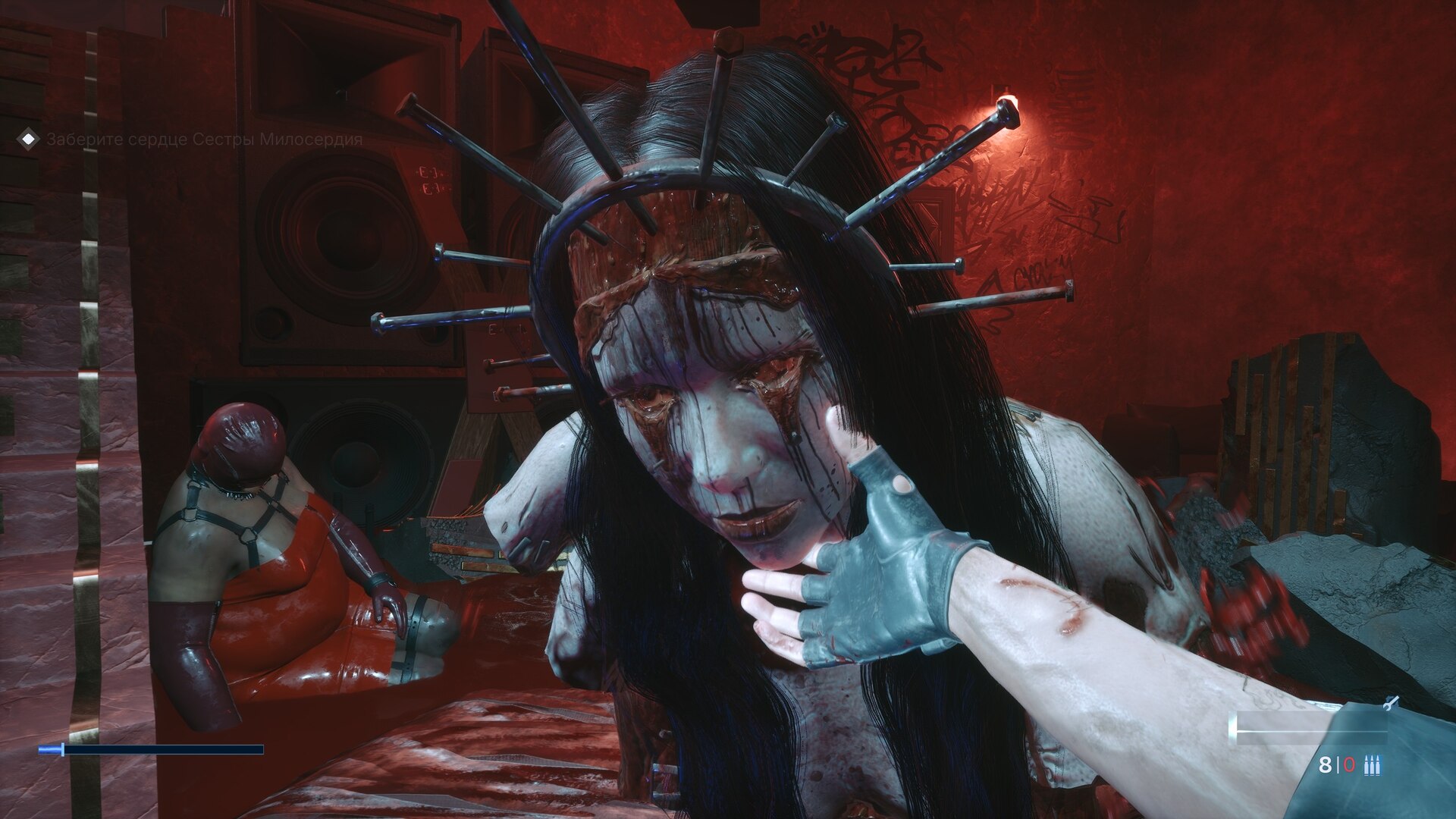
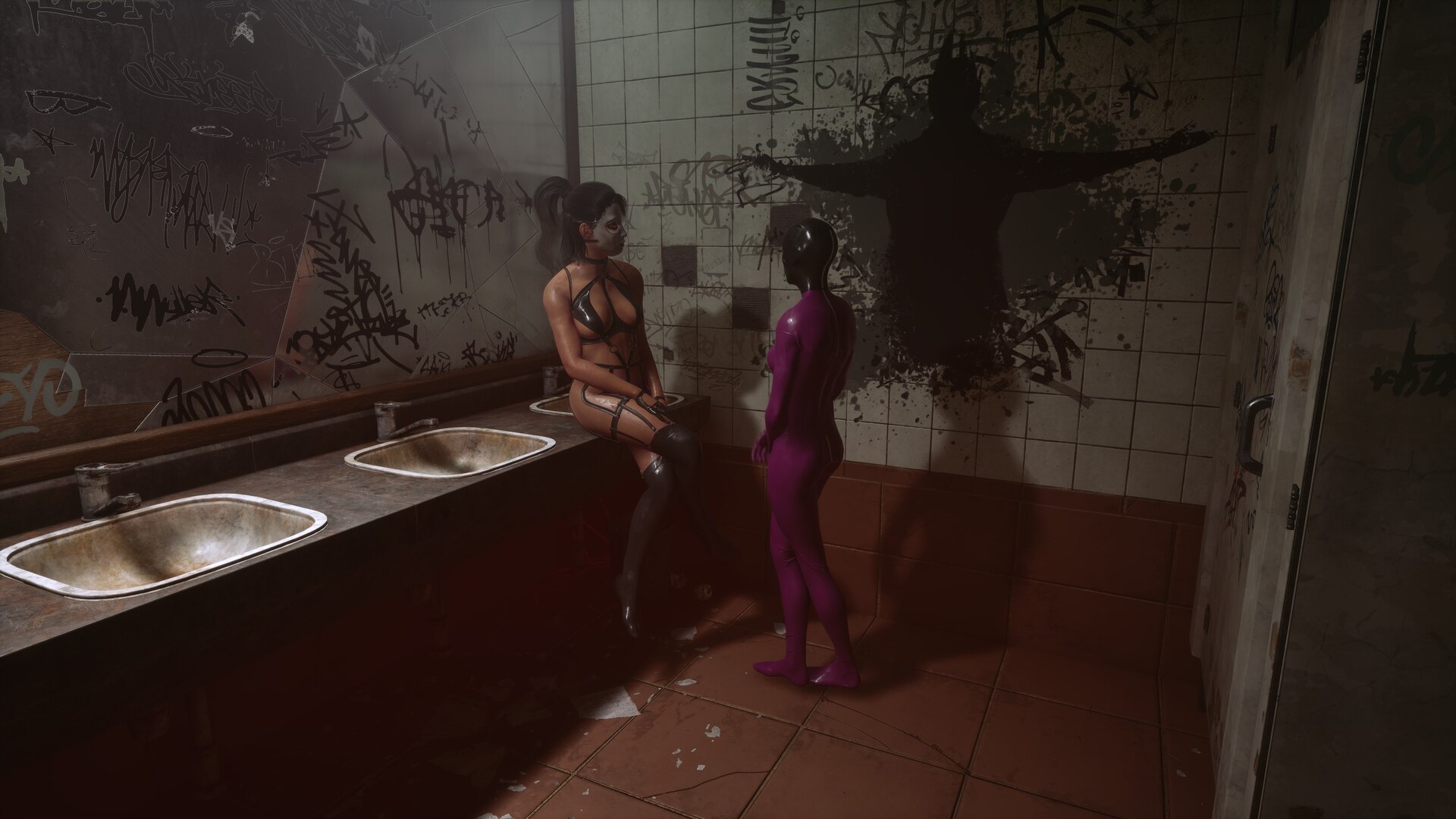
Clive Barker’s Hellraiser: Revival takes one of horror’s most disturbing fictional worlds and turns it into a first-person survival horror game. Developed by Saber Interactive, it follows Aidan Lynch as he attempts to rescue his girlfriend, Sunny, after she becomes entangled with the Cenobites and the nightmarish dimension known as the Labyrinth. The result is a game that draws heavily on the atmosphere, imagery, and unsettling ideas that made the original films memorable, while building its own story around the franchise’s familiar horrors.
The game does not shy away from the material that defines Hellraiser. Its world is filled with grotesque imagery, brutal violence, disturbing characters, and an ongoing fascination with the relationship between pain, pleasure, and obsession. The Genesis Configuration, the mysterious puzzle box at the heart of the story, also serves a practical role in gameplay, giving Aidan abilities that help him solve puzzles and survive encounters. These elements give the game a clear identity in a genre crowded with familiar survival horror conventions.
However, a strong setting and a recognisable licence do not automatically make a great game. Hellraiser: Revival has some effective horror sequences and striking environments, but its combat can feel less satisfying than its presentation suggests. Technical problems reported by reviewers also complicate the experience, with some encountering issues serious enough to interrupt progress. The result is an uneven adaptation: one that often understands what makes Hellraiser distinctive, even when its gameplay and technical execution struggle to match that ambition.
Story and Setting
The story follows Aidan Lynch as he tries to rescue Sunny from the forces that have drawn her into the Cenobites’ world. His journey brings him into conflict with the Scarlet Church, a cult whose disturbing activities provide much of the game’s human threat. Beyond that familiar survival horror setup lies the more unusual presence of Pinhead and the Labyrinth, which give the story a connection to the franchise’s central ideas about desire, suffering, and the consequences of pursuing experiences beyond ordinary limits.

The narrative benefits from the contrast between the human world and the Cenobites’ domain. The cult’s locations are unsettling in a recognisably human way, built around cruelty, obsession, and the exploitation of others. The Labyrinth is more abstract and disorienting, with spaces that feel hostile to ordinary logic. Moving between these environments gives the adventure a stronger identity than it would have if it relied entirely on dark corridors and conventional monster encounters.
Pinhead’s presence is an important part of that appeal. Doug Bradley returns to the role, helping maintain a direct connection with the original films. The character’s appearance and voice carry a weight that lesser antagonists could not easily reproduce, and the game benefits from treating the Cenobites as more than ordinary enemies. Their role in the story reflects the franchise’s interest in temptation and consequence, rather than reducing everything to a simple struggle against monsters.
Aidan himself is a more conventional protagonist. His personal motivation gives the story a clear direction, but the surrounding world is often more compelling than he is. The narrative is at its strongest when it explores the strange logic of the Cenobites and the disturbing ambitions of the Scarlet Church. At other times, the familiar rescue structure makes the journey feel more predictable than the setting deserves.
Even so, the story provides a solid foundation for the game. It offers fans recognisable elements without relying exclusively on references to the films, and the central conflict gives Aidan a clear reason to keep moving through increasingly hostile territory. The writing does not always reach the same level of imagination as the world around it, but the premise is well suited to a first-person horror adventure.
Gameplay and Mechanics
Hellraiser: Revival combines first-person combat with exploration, environmental puzzles, resource management, and supernatural abilities. Aidan encounters human cultists as well as more unusual threats, using melee weapons and firearms to survive. Ammunition and healing supplies matter, so players cannot always approach every encounter as a straightforward shooting gallery. The Genesis Configuration adds another layer by giving Aidan powers that can affect enemies and the environment.
These systems provide a familiar survival horror framework. Players explore new areas, search for supplies, work out how to progress, and fight when the game places enemies in their path. The structure is easy to understand, and the Genesis Configuration helps distinguish the game from a more conventional shooter. Its abilities can make encounters more varied, particularly when environmental objects and enemy weaknesses create opportunities to use something other than direct attacks.
The problem is that the basic combat does not always have enough impact. Melee attacks can feel less forceful than the animations suggest, while firearms do not consistently deliver the satisfying feedback needed to make shooting feel substantial. Enemies can absorb damage without encounters developing much tactical depth, and aiming can make some gunfights feel more awkward than tense. The gruesome presentation makes the violence memorable to look at, but the underlying mechanics do not always make it equally satisfying to play.
There are moments when the combat works better. Different weapons and supernatural abilities create opportunities to change tactics, and some encounters use the environment in ways that give the player more to consider than simply aiming and firing. The game’s more unusual enemies also help prevent every fight from feeling identical. However, these ideas do not always overcome the limitations of the basic systems. Some encounters become repetitive, and boss fights can last longer than their mechanics justify.
Resource management adds pressure, although it is not always enough to transform the combat into something particularly distinctive. Limited supplies encourage players to think about how they approach an encounter, but familiar shooting and melee mechanics remain at the centre of the experience. The result is a game that has the components of a competent survival horror system without consistently bringing them together in a compelling way.
The Genesis Configuration is one of the more distinctive ideas in the game because it connects the puzzle box to both the fiction and the practical business of surviving. Its powers offer variety and help tie the mechanics to the source material. Even so, the surrounding combat can feel conventional by comparison. Hellraiser: Revival is more successful when it lets its supernatural ideas shape an encounter than when it relies on straightforward firefights.
Exploration and Level Design
Exploration is one of the game’s stronger elements. The environments range from grim human locations to the impossible architecture of the Labyrinth, and the contrast gives the adventure a welcome sense of variety. Some areas encourage players to search for supplies, clues, and ways forward, while others are designed around traps, puzzles, or the need to avoid a pursuing threat.
The Labyrinth is particularly effective. Its cramped passages, shifting routes, and deceptive layouts create a sense of disorientation that suits the franchise. Rather than relying only on enemies jumping out from behind corners, these sequences make the environment itself feel hostile. The player has to pay attention to the route ahead and consider whether the space can be trusted. That uncertainty is a natural fit for a world in which ordinary rules no longer apply.
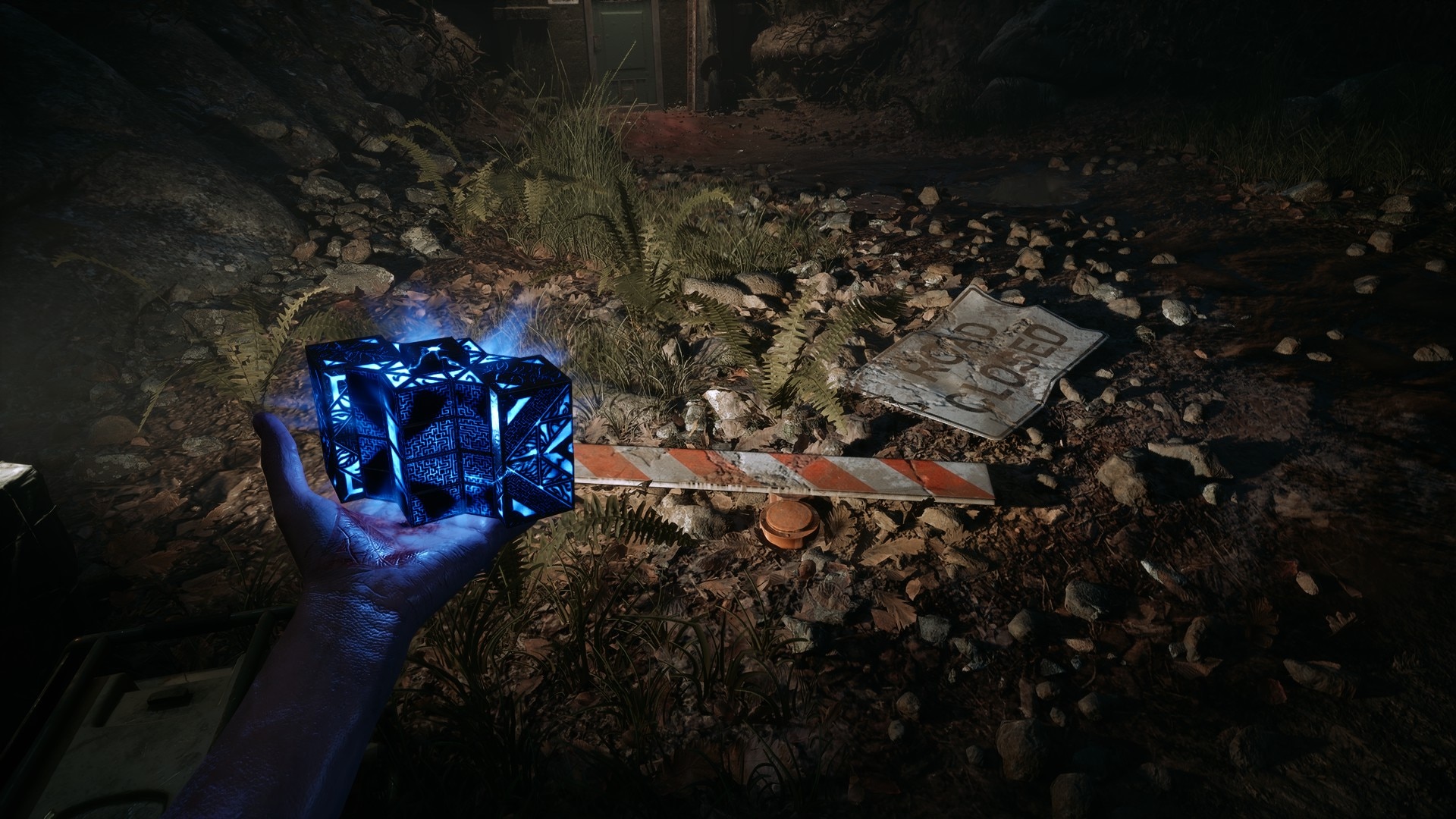
The Genesis Configuration also gives exploration a useful mechanical purpose. Its abilities can help manipulate parts of the environment or solve puzzles, connecting progression to the same object that drives the story. The puzzles generally support the adventure rather than overwhelming it, although the mechanics do not always feel as inventive as the setting around them. Their main value is that they give players something to do besides fighting through successive groups of enemies.
Not every location is equally memorable. Some environments have a stronger visual identity and a clearer sense of place, while others feel closer to familiar survival horror corridors. The contrast between the real world and the Labyrinth helps keep the campaign varied, but it cannot make every stretch of exploration equally interesting. The game is at its best when its environments reveal something unsettling or force the player to rethink the space they are moving through.
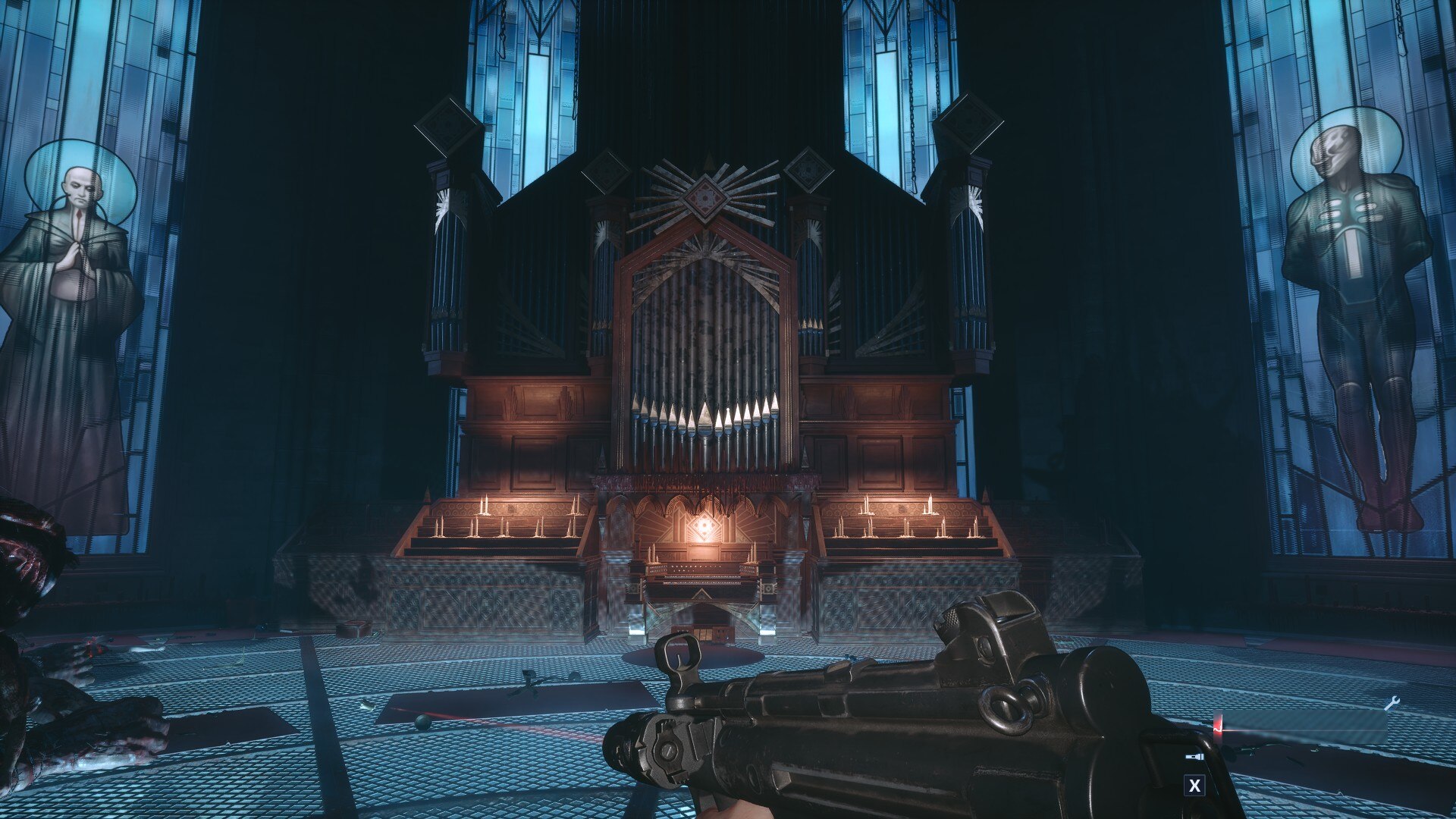
There is also a difference between atmosphere and level design. A disturbing environment can make a strong first impression, but it still needs interesting routes, encounters, and objectives to remain engaging. Hellraiser: Revival delivers some memorable spaces, especially in the Labyrinth, yet the quality of its exploration is less consistent across the full adventure. Even so, these sequences are among the clearest examples of the game translating the franchise’s identity into interactive form.
Horror, Gore, and Atmosphere
The atmosphere is the most consistent reason to spend time with Hellraiser: Revival. The game understands that the franchise’s horror is not simply about monsters appearing in dark rooms. Its imagery draws on bodily transformation, obsession, suffering, and the disturbing boundary between desire and pain. The result is an experience that can be grotesque without losing sight of the ideas behind its grotesquerie.
The visual presentation is frequently effective. Human locations can be unsettling because of what has happened within them, while the Labyrinth feels alien and oppressive. The game uses these contrasting spaces to keep players uncertain about what they might encounter next. Its most memorable moments often come from environmental details and set pieces rather than from combat alone, allowing the world to establish its own form of dread.
Gore is a major part of the experience, and the game is unapologetic about it. Bodies are mutilated, enemies are dispatched in graphic ways, and the environments contain imagery designed to provoke discomfort. That approach is appropriate for Hellraiser, but it will not suit every horror fan. The violence and sexual content are deliberately explicit, and the game’s appeal depends in part on whether the player is comfortable with that material.
The more successful scenes use disturbing imagery to support the atmosphere instead of treating it as an end in itself. The Labyrinth, in particular, gives the game room to create tension through strange geometry, confined spaces, and the threat of being pursued. These sequences are often more effective than straightforward combat because they make the player feel vulnerable without requiring a constant stream of enemies.
The game’s commitment to the source material is another strength. Pinhead and the Cenobites retain their importance, while the world reflects the franchise’s fascination with obsession and transgression. The result feels more specific than a generic horror game with familiar monsters added to it. Although not every sequence is equally unsettling, the atmosphere and art direction give Hellraiser: Revival a clear identity.
Technical Performance on PC
Visually, Hellraiser: Revival makes effective use of its dark settings, detailed environments, and grotesque character designs. The contrast between ordinary locations and the Labyrinth helps the game stand out, and the art direction often does more to establish its identity than the underlying gameplay systems. The strongest areas feel deliberately constructed to unsettle the player rather than simply provide a backdrop for combat.
The PC version includes settings for view distance, shadows, textures, global illumination, reflections, and other graphical features. It also supports NVIDIA DLSS 4, AMD FSR 3, and Intel XeSS 2, giving players several options for balancing image quality and performance. These features are useful because the demands of higher resolutions can vary considerably depending on the hardware being used.
Independent PC testing by DSOGaming found that its tested graphics cards could maintain 60 frames per second at 1080p with Epic settings in the test scene. More powerful cards also performed well at 1440p, while native 4K at Epic settings was substantially more demanding. The same analysis reported occasional traversal stutters. These results suggest that the game can run well on a range of PC hardware, but they should be understood as benchmark findings rather than a guarantee of performance on every system.
Frame rate is only one part of technical quality, however. Other reviewers reported glitches, texture pop-in, crashes, and bugs that could interfere with progression. Game Informer described encounters that failed to register as completed, along with enemy behaviour and animation problems. Tom’s Guide also reported increasingly disruptive issues during its playthrough. These reports do not establish that every player will experience the same problems, but they are serious enough that a review should not dismiss them as minor launch imperfections.
It is important to distinguish between performance and stability. A game can achieve a good frame rate and still be frustrating if objects appear late, animations fail, or a bug forces the player to reload a save. Conversely, reports from one machine or playthrough do not necessarily describe the experience on every PC configuration. The fairest conclusion is that the game has a capable graphical foundation and can deliver good frame rates, but its launch stability has been inconsistent according to some reviewers.
For PC players, the practical recommendation is to check performance and stability on their own hardware rather than assume that benchmark results tell the whole story. The visual presentation is one of the game’s strengths, but technical issues can undermine it when they interrupt an otherwise effective sequence. Whether these problems are addressed through patches will be important to the game’s long-term reputation.
Pacing and Overall Length
The campaign is a relatively compact horror adventure. Published reviews put completion time at roughly nine to ten hours, although the exact duration will depend on how quickly players solve puzzles, explore optional areas, and progress through combat encounters. That length helps the game avoid overstaying its welcome, even if some sections feel more drawn out than others along the way.
The pacing benefits from the shifts between exploration, combat, and trips into the Labyrinth. These changes provide some relief from the more conventional encounters and give the campaign a rhythm that suits its horror setting. The game is generally more engaging when it introduces a new environment or a different kind of threat than when it asks players to repeat similar fights.
Some boss encounters and stealth sections interrupt that momentum. Boss fights can feel prolonged when the combat mechanics do not provide enough variety, while stealth sequences can become frustrating if their rules are unclear or the player has little room to recover from a mistake. These sections do not define the whole campaign, but they stand out because the game is otherwise strongest when it keeps changing the nature of the challenge.
The length is therefore a mixed advantage. A shorter campaign helps preserve the impact of the setting and keeps the adventure moving, but it also leaves less room for the combat and exploration systems to develop beyond their initial ideas. The game has enough variety to sustain its runtime, though not every part of the journey feels equally well paced.
Final Verdict: 7.5/10
Clive Barker’s Hellraiser: Revival is at its best when it embraces the qualities that make its source material distinctive. The Labyrinth is an effective setting for exploration and tension, the grotesque art direction gives the game a strong visual identity, and the return of Pinhead helps connect the story to the original films. Its use of the Genesis Configuration also provides a meaningful link between the fiction and the gameplay.
The weaknesses are just as important. Combat can feel stiff and repetitive, with firearms and melee attacks lacking the impact needed to make every encounter satisfying. Some boss fights and stealth sections disrupt the pacing, and the technical problems reported by several reviewers are more concerning than minor visual flaws. Strong frame rates in independent PC benchmarks are encouraging, but they do not cancel out reports of crashes, glitches, or progression-blocking bugs.
For fans of Hellraiser, the game offers a distinctive horror setting and an adaptation that takes its grotesque imagery and unsettling themes seriously. Players looking primarily for polished, consistently satisfying survival horror mechanics may find it harder to recommend without reservations. Its atmosphere and commitment to the source material make it worth considering, but its uneven combat and reported technical issues prevent it from reaching the same level of success across the entire experience.
Ultimately, Clive Barker’s Hellraiser: Revival is a compelling but inconsistent adaptation. It captures much of the franchise’s disturbing identity and delivers memorable moments, yet its gameplay and technical execution do not always support the strength of its world. For dedicated fans, those qualities may be enough to make the journey worthwhile. For everyone else, the rough edges deserve serious consideration before taking the plunge.