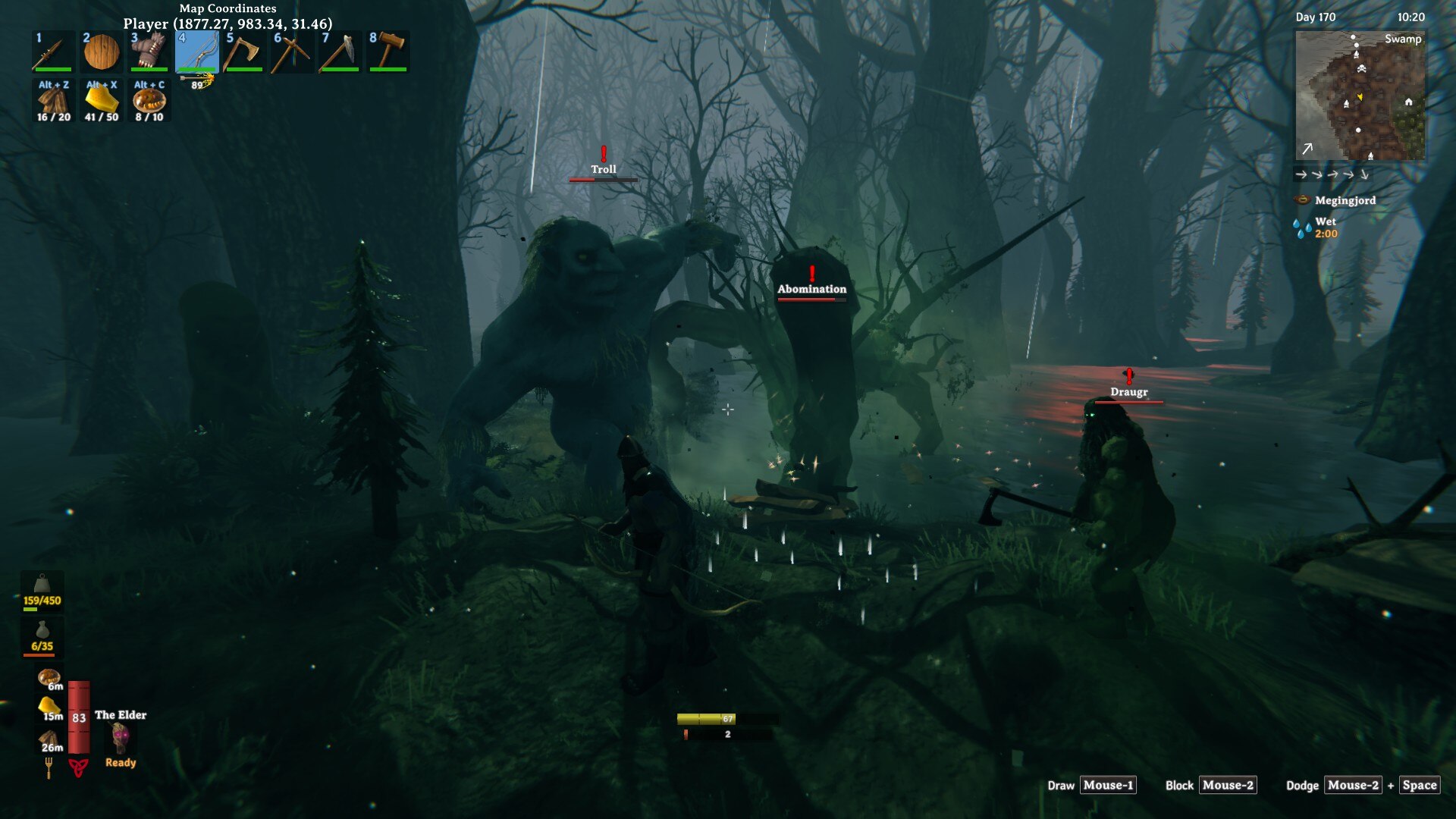
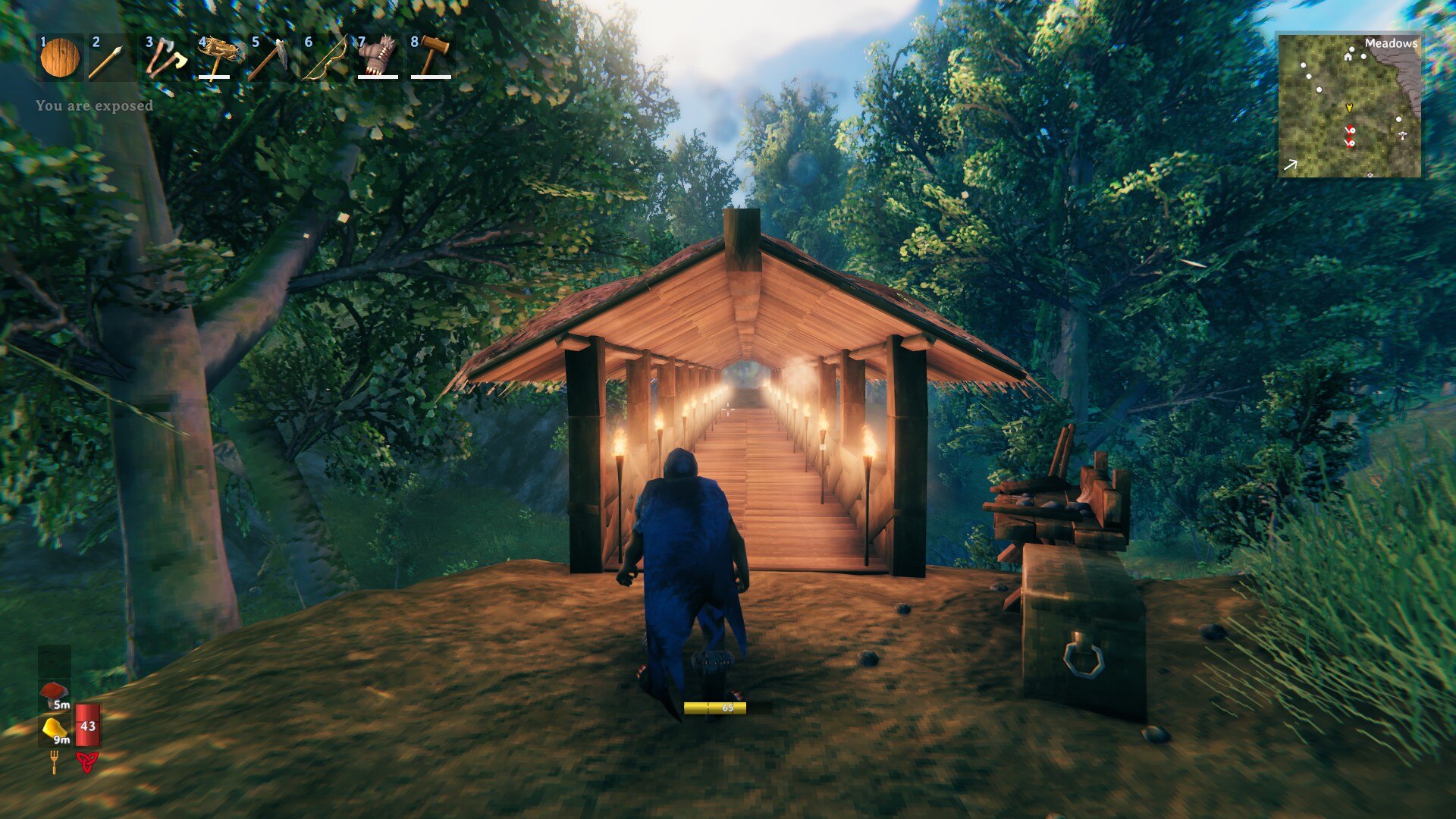
After more than five years in Early Access, Valheim has finally reached its finished 1.0 release. Iron Gate’s Viking survival game has grown considerably since it first appeared, but its basic approach has remained remarkably consistent. You arrive in a mysterious wilderness, gather what you can find, build somewhere to call home, make better equipment and gradually push into increasingly dangerous parts of the world. The difference now is that the progression extends all the way to the Deep North, with a final biome, new equipment, enemies, resources, locations and building options completing the main journey.
The 1.0 release adds more than 40 weapons, four armour sets, two capes, two trinkets, more than 80 building pieces, new creatures, crafting materials, food, locations, events and mechanics. It also introduces quality-of-life improvements, performance changes and other adjustments across the game.
That makes the finished game a different proposition from the version that spent years in development. The Meadows, Black Forest, Swamp, Mountains, Plains, Mistlands, Ashlands and Deep North now form a complete progression, with each biome introducing new resources and threats while moving the player towards the next stage of the game.
What has not changed is the game’s deliberately restrained presentation. Valheim does not bombard you with quests, map markers or constant instructions. There is a broad objective, but most of the work between one major milestone and the next is left to the player. You decide where to build, which resources to collect, when you are ready to explore somewhere new and how much time you want to spend improving your home before setting off again.
That freedom is a large part of what makes Valheim work. It also means that the game occasionally asks for more patience than it should. Resource gathering can become repetitive, inventory management remains awkward and some journeys can take considerably longer than necessary. Nevertheless, the underlying systems fit together unusually well, and the completed game remains one of the more distinctive survival experiences available on PC.
Gameplay and Mechanics
The basic structure of Valheim is easy to understand. You begin with almost nothing and gradually establish yourself in the Meadows, collecting wood, stone and food while learning how the crafting system works. As your equipment improves, you can venture into the Black Forest, then the Swamp, Mountains and Plains, with each biome providing materials required for the next stage of progression. Major bosses sit at the centre of this structure, and defeating them unlocks important new possibilities rather than simply providing another trophy.
The game handles survival differently from many of its competitors. Hunger, for example, is not a constant threat that requires you to keep eating simply to stay alive. Food instead affects your maximum health and stamina, with different meals providing different combinations of the two. This makes cooking part of character preparation rather than a maintenance task. Before heading into a dangerous area, you need to consider what kind of food will give you the health and stamina you are likely to need.
That system has a surprisingly large effect on how the game is played. A player preparing for a difficult boss will approach the kitchen almost as seriously as the forge, while an expedition into unfamiliar territory might require a different selection of meals from a building project close to home. Better food therefore feels like genuine progression because it expands what you can safely attempt.
Crafting follows a similar pattern. New materials unlock better weapons, armour and tools, but equipment never completely removes the need for preparation. Stamina management remains important, environmental hazards can still kill a well-equipped character and enemies continue to punish careless play. Progression makes you more capable without making earlier lessons irrelevant.
There is also considerable flexibility in how the game can be configured. World modifiers allow players to adjust resource rates, combat difficulty, death penalties and several other aspects of the experience. These options are useful because Valheim can demand very different amounts of time depending on how it is played. Someone interested primarily in exploration and construction can reduce some of the more repetitive elements, while players who want the standard survival experience can leave the default settings intact.
The problem is that some of the game’s friction is not really difficulty. It is inconvenience. Crafting and building still require materials to be carried in your inventory rather than being drawn from nearby storage, which becomes increasingly awkward as settlements grow. Armour also occupies inventory space, although 1.0’s new pocket upgrades increase carrying capacity. These are particularly noticeable limitations in a game where collecting and transporting large quantities of resources are such central activities.
Resource gathering itself can also become repetitive. Collecting enough material for a major construction project is satisfying at first, but after dozens of hours the same trips through familiar areas can start to feel like maintenance rather than progression. Valheim gives you ways to make those processes more efficient, but it rarely removes the work altogether.
Exploration and Progression
Exploration is where the structure of Valheim becomes particularly effective. Its procedurally generated worlds are large enough that travelling somewhere new can still feel like an expedition rather than simply another trip across a familiar map. Mountains, forests, rivers and coastlines all affect movement, while sailing provides a reason to establish connections between distant parts of the world.
The absence of a traditional quest system is important here. You are given enough information to understand the broad direction of your progression, but the game does not constantly tell you exactly what to do. You learn through experimentation and exploration, often discovering the importance of a resource only after encountering something that requires it.
This makes finding a new biome particularly satisfying. Crossing from one familiar area into another can immediately change the character of the game. The enemies are different, the resources are different and the environment itself can introduce new restrictions. You may arrive expecting to gather materials and instead discover that you are not remotely prepared for what lives there.
The world also encourages players to establish a network of bases rather than treating the starting location as the permanent centre of the game. A small outpost near a valuable resource can save enormous amounts of travel time, while a settlement close to a difficult biome can provide somewhere to repair equipment, store materials and recover after an expedition.
Travel does have its frustrations. Portals make moving around the world considerably more convenient, but certain materials cannot be transported through them, which means ships remain necessary for some types of progression. That restriction gives sailing a genuine purpose, but it also creates some of the game’s most time-consuming chores. A productive mining trip can turn into a long logistical exercise when the material has to be transported back by sea.
There is a good argument for keeping some friction in a survival game, since otherwise the world would quickly become a collection of disconnected resource nodes. The problem is one of proportion. A system that makes an occasional expedition memorable can become tedious when repeated throughout a long playthrough, particularly for solo players.
Combat System
Combat is relatively simple, but it has enough depth to support the rest of the game’s progression. Attacks consume stamina, shields allow blocking and parrying, and dodging can be crucial against stronger opponents. Weapon choice also matters, although the game does not attempt to provide the extensive character-building systems found in a traditional action RPG.
The most important aspect of combat is timing. A player who understands enemy attacks and manages stamina carefully can defeat opponents that initially seem much stronger. Conversely, even good equipment offers limited protection when the player becomes surrounded or runs out of stamina at the wrong moment.
The environment also plays a major role. Terrain can make an encounter easier or harder, and some enemies become significantly more dangerous when encountered alongside others. This means that fighting is often about deciding where and when to engage rather than simply attacking until something dies.
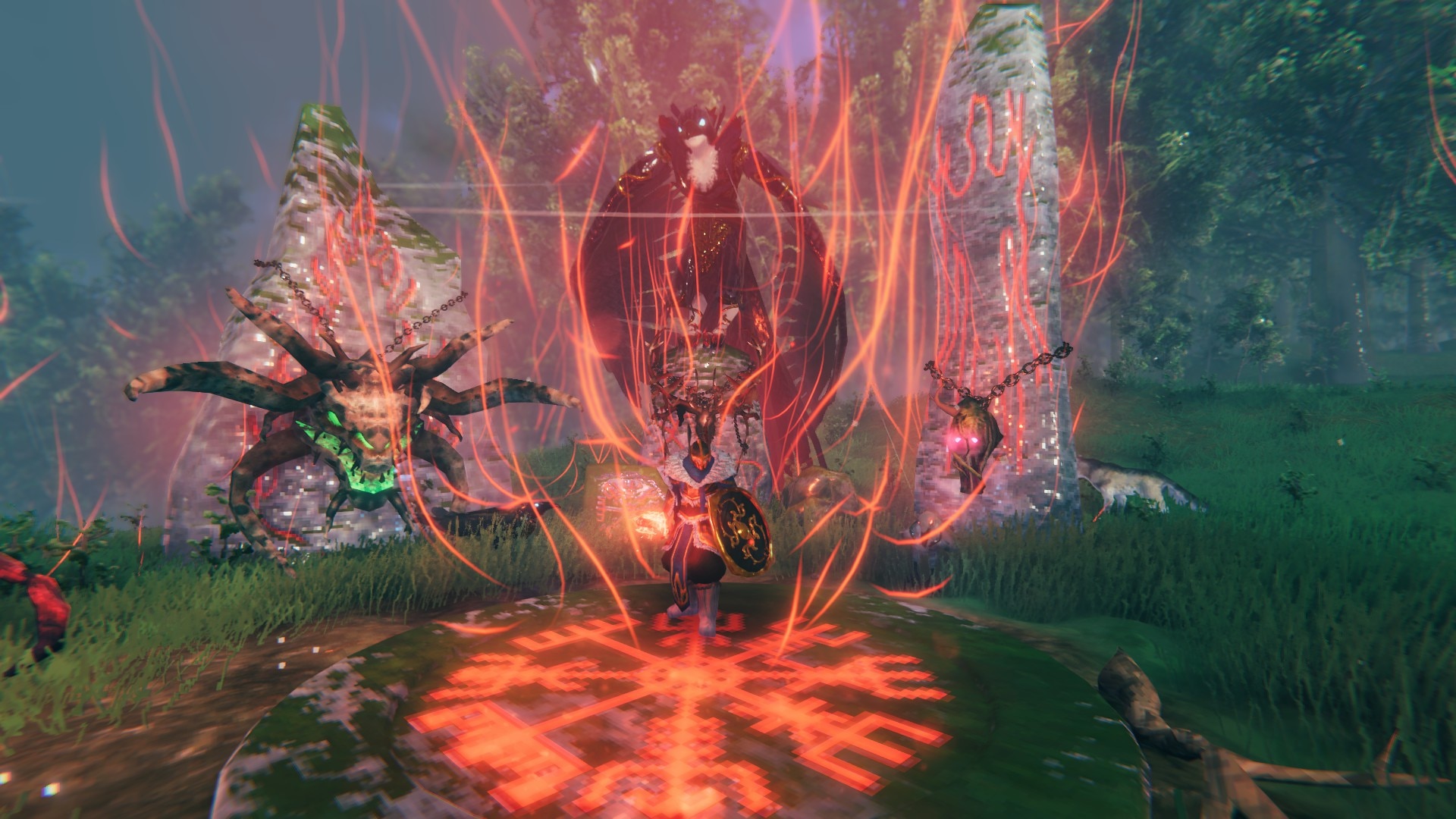
The boss encounters make good use of these principles. Each boss requires preparation, appropriate equipment and an understanding of its attacks, but the fights are also influenced by the terrain around them. Reaching a boss is therefore only part of the process. You still have to make sure you are equipped to survive the encounter.
There are limitations, however. The basic combat system does not evolve dramatically over a long playthrough, and some later encounters create difficulty primarily through numbers, damage and environmental pressure rather than substantially different combat mechanics. Ranged combat and magic also do not have the same consistency and versatility as the game’s core melee systems.
That does not make combat bad. It simply means that Valheim works better as a survival game with combat than as a combat game that happens to contain survival mechanics. The fighting is there to support exploration and progression, and within that context it works well.
Building and Crafting
Building remains one of Valheim’s greatest strengths. The construction system is accessible enough that a new player can put together a functional shelter within minutes, but its structural rules provide enough depth for much more ambitious projects.
Buildings have to be properly supported, so larger structures require some thought about foundations, walls and roofs. A simple house is easy to construct, but a large hall or fortress becomes an exercise in understanding how the pieces fit together. The system does not require specialist knowledge, but it rewards experimentation.

This creates a natural progression in the way settlements develop. A first shelter might contain little more than a bed, fire and workbench. Later, it can become a much larger home with dedicated crafting areas, storage rooms, farms, defensive walls and decorative spaces. As more resources and building options become available, these settlements can grow considerably in both size and complexity. The practical purpose of the building gradually becomes less important than the freedom to decide what the settlement should look like.
The finished release expands that system with more than 80 new building pieces and additional construction pieces related to crafting. These additions are useful because building is not merely a side activity in Valheim. Your settlements are where much of the game’s progression takes place, so having more options to customise them adds value even for players who are not particularly interested in elaborate architecture.
Building also provides a welcome change of pace. After spending time in a dangerous biome, returning to a familiar settlement and working on a construction project can be more relaxing than immediately setting out again. The game allows these two sides of the experience to complement each other rather than forcing one to replace the other.
The main weakness is the amount of organisation involved. Storage can quickly become overwhelming, particularly when a large settlement requires several different crafting stations and substantial quantities of materials. The inability to build directly from nearby containers makes this worse, because even a well-organised base can require repeated trips between chests and workbenches.
That is an odd weakness for a game with such a good building system. The construction itself is flexible and satisfying, but the logistical systems around it sometimes feel behind the standards of the modern survival genre.
The Biomes
The quality of Valheim’s progression depends heavily on its biomes, and this is where the game consistently succeeds. Each major area has its own visual identity, enemies, resources and environmental problems, but the differences are not merely cosmetic.
The Meadows provide a relatively forgiving introduction, allowing players to learn the basic systems without being overwhelmed. The Black Forest introduces tougher enemies and more valuable resources, while the Swamp makes survival considerably more difficult through hostile terrain and environmental hazards. The Mountains introduce freezing temperatures and vertical exploration, while the Plains demand greater preparation because of the strength of their enemies.
The Mistlands then change the experience again. Limited visibility makes navigation more difficult, while the terrain encourages players to think vertically. The biome succeeds at making the familiar act of travelling feel uncomfortable, but that same design can also become frustrating. Climbing steep terrain while trying to see through the mist is often more laborious than challenging, particularly when a death means retracing a long route.
The Ashlands take a different approach. They are more combat-heavy, with hostile enemies and a landscape that makes establishing a foothold difficult. Iron Gate adjusted enemy spawning for the 1.0 release, reducing some of the excessive pressure found in earlier versions, but the biome remains one of the most demanding sections of the game. The intensity can be exciting when everything goes right, but repeated deaths and long recovery trips can turn progression into a grind.
This is an important distinction because Valheim is generally at its best when difficulty comes from learning how a new environment works. The Mistlands and Ashlands sometimes lean more heavily on restricting movement or increasing the number of things trying to kill you. They remain substantial and interesting areas, but they are not as consistently enjoyable as the game’s better-designed biomes.
The Deep North
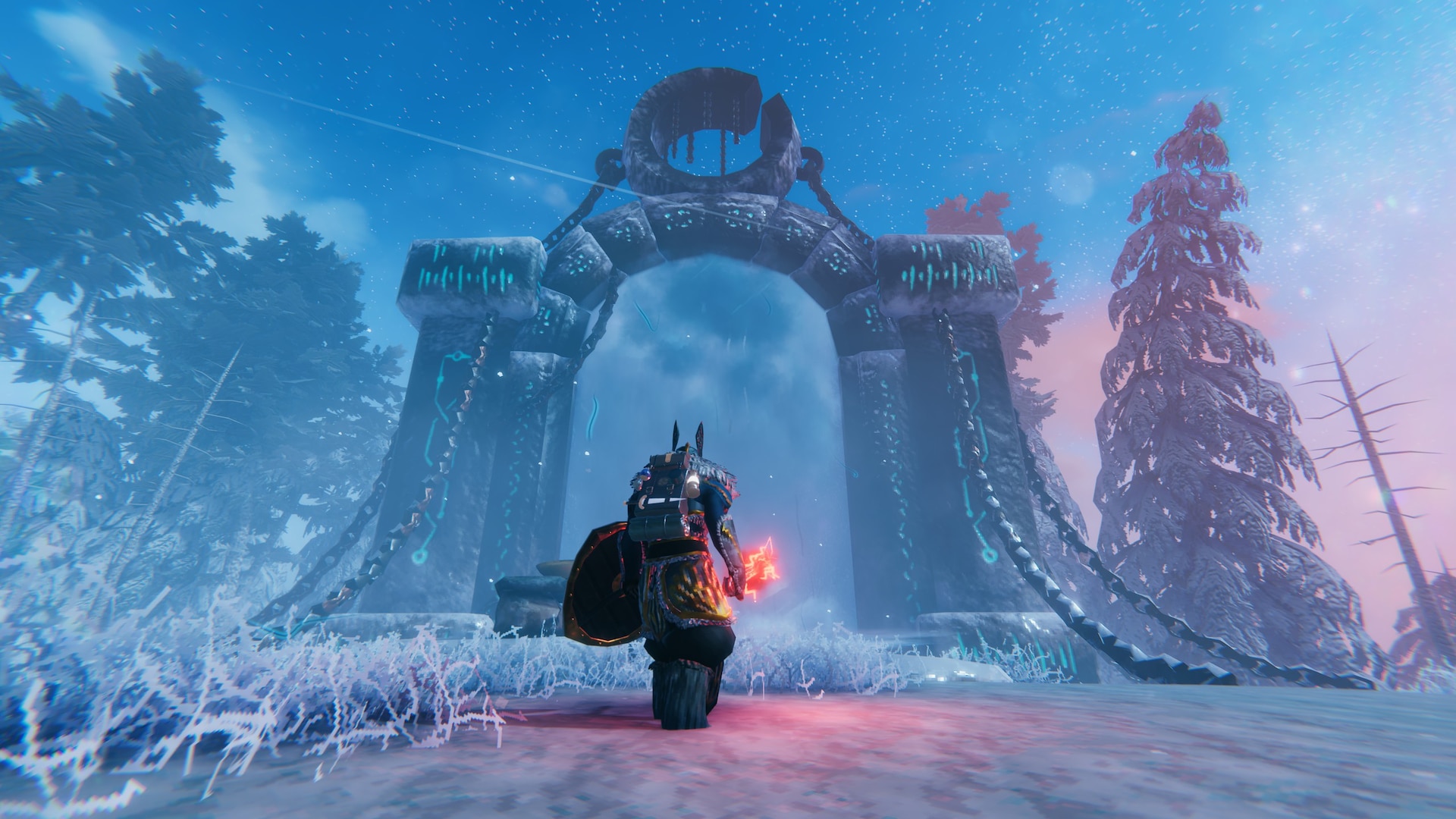
The Deep North is the final major biome, and its role is more important than simply adding another region to the map. It completes the main progression that has existed throughout Valheim, giving the player another equipment tier, new enemies and resources, new locations and another set of challenges to overcome.
The frozen environment gives the region a strong visual identity. Snow and ice dominate the landscape, but the area does not simply feel like another version of the Mountains. New creatures and mechanics give it its own character, while underground locations provide a different kind of exploration from the more open areas found elsewhere.
There is also a substantial amount of new equipment to pursue. The release adds more than 40 weapons, four armour sets, two capes, two trinkets and new tools, alongside more than 30 crafting materials and more than 20 food items. These additions give players who have already reached the endgame genuine reasons to explore rather than simply providing another landscape to visit.
The Deep North is not perfect, though. Some of its underground encounters and enemy designs feel familiar, and not every new encounter has the same impact as the biome’s more memorable additions. After progressing through several increasingly elaborate regions, there are moments when the final area feels more like an extension of established ideas than a complete reinvention of them.
That is not necessarily a serious problem. Valheim does not need to abandon its established systems simply because this is the last major biome. In fact, the Deep North works best when it tests everything the player has already learned while adding enough new equipment and threats to justify the trip.
The Final Boss
The final boss is an important part of any assessment of the completed game, and it is also one area where expectations should be kept in check. The journey towards the encounter is arguably more successful than the encounter itself.
Getting there requires substantial preparation and progression through the Deep North, including new resources, crafting systems and locations. The process gives the final stage a sense of purpose, and the requirements for reaching the boss make it feel like something the player has actually worked towards rather than an encounter that simply appears at the end of a dungeon.
The fight itself is less impressive. It provides the expected escalation in scale and difficulty, but it does not fundamentally change how Valheim’s combat works. The result is a conclusion that feels appropriate to the game’s systems without necessarily being the most memorable boss encounter in the entire progression.
That distinction matters because the finished release is more successful as a complete adventure than as a dramatic finale. The satisfaction comes from everything required to reach this point: building the equipment, surviving the biomes, establishing distant bases and finally having a reason to bring all of those systems together.
Multiplayer and Solo Play
Valheim supports both solo play and cooperative multiplayer, with up to ten players able to share a world. The game is particularly well suited to cooperation because its systems naturally divide responsibilities between players.
One person can concentrate on gathering wood while another explores for resources, someone else can maintain the farm and another player can work on the settlement. Larger construction projects become much more manageable when several people are contributing, while dangerous expeditions can be approached as group activities rather than solitary risks.
Sailing is especially enjoyable with friends. A long journey across the ocean can become an adventure of its own, particularly when the group discovers a new coastline or encounters something unexpected. The requirement to transport certain materials by ship can also become less burdensome when several players share the work.
Solo play is slower and considerably more demanding. Gathering, farming, building and preparing for expeditions all take more time when there is only one character performing every task. The travel restrictions around certain resources become more noticeable as well, since the player has to handle the entire logistics chain alone.
That does not make solo play unviable. The world is still perfectly capable of supporting a satisfying single-player campaign, and playing alone can make exploration feel more isolated and personal. The problem is that the game’s default pacing often feels more comfortable with a group, particularly once resource requirements become larger. The world modifiers help compensate for this, but players who intend to play entirely alone should expect a substantial time commitment.
Graphics and Performance
Valheim’s visual style remains one of its most distinctive features. The low-resolution textures and relatively simple models are immediately noticeable, but they are combined with modern lighting, atmospheric effects, fog and detailed environmental presentation. The result is a world that can look rough when examined closely but remarkably attractive when viewed as a whole, especially when lighting and weather transform the environment.
Lighting does much of the work. A forest at night, a storm approaching across the ocean or a settlement illuminated by fires can create scenes that are more memorable than the game’s relatively modest technical specifications would suggest. The stylised presentation also gives the game a consistent identity that has held up well throughout its development.
The 1.0 release includes a Unity engine upgrade, a new draw-distance setting and various performance improvements. Iron Gate has specifically highlighted reduced microstutters during zone loading and faster saving, although very large player-built structures are not expected to benefit significantly from the optimisation work.
The ocean is also worth mentioning because it remains one of the game’s most attractive but least developed environments. Sailing is an excellent means of travelling through the world, and weather, storms and sea creatures can make long voyages memorable, but the ocean itself does not have the same progression depth as the major land biomes. Iron Gate explicitly stated that 1.0 was focused on the Deep North rather than an ocean overhaul.
The game has also received post-launch fixes for problems discovered around release. Among them, the September 25 update addressed an issue where some Deep North terrain modifications could revert after unloading, excessive enemy spawning and several achievement problems. This means the version being played now is not identical to the initial September 9 release build, and that distinction is worth making when discussing performance and technical issues.
Final Verdict: 9/10
Valheim succeeds because its systems reinforce one another. Exploration provides resources, resources unlock crafting, crafting makes new areas accessible, new areas introduce stronger enemies and better materials, and that progression gives you reasons to improve your settlement and prepare for the next expedition.
That structure also explains why the game remains engaging despite its relatively simple combat and sparse storytelling. There is almost always a practical reason to do something. You need better food before travelling somewhere dangerous. You need more materials before upgrading your equipment. You need a larger settlement because the existing one no longer has enough room. You need to explore because the next crafting tier is somewhere beyond the area you already know.
The weaknesses are just as clear. Inventory management remains behind the standards established by newer survival games, particularly because crafting still depends on materials being in your personal inventory. Resource gathering can become repetitive, transporting certain resources over long distances can turn progression into a logistical chore, and the later biomes occasionally mistake friction for difficulty. The Mistlands can be exhausting to navigate, the Ashlands can be punishing for reasons that are not always especially interesting, and the final boss does not quite provide the payoff that the long journey towards it suggests.
The ocean is another example of a system that works without feeling fully developed. Sailing is useful and often beautiful, but the sea remains primarily a means of getting somewhere else rather than a destination with its own substantial progression. That is less a flaw in the sailing mechanics themselves than a reminder that not every part of Valheim received the same level of expansion before release. Iron Gate has confirmed that the Ocean was not a specific focus of the 1.0 update.
These shortcomings are more noticeable precisely because the rest of the game is so strong. The building system remains excellent, the food and stamina mechanics give preparation real importance, the biomes are generally distinct and exploration continues to produce memorable moments. The finished release also adds a considerable amount of content without fundamentally compromising the systems that made the original game work.
For returning players, the decision about whether to begin again is slightly complicated. Existing worlds and characters remain usable, but Iron Gate recommends starting a new world because newly generated content works properly in previously unexplored areas. A fresh playthrough also allows players to experience the complete progression and the 1.0 additions in their intended context.
For new players, there is no longer any uncertainty about whether the game’s principal progression will eventually reach its planned conclusion. The full journey is here, from the first wooden shelter in the Meadows to the Deep North and its final challenges. It is a long journey, and at times it asks for more patience than necessary, but there is enough variety along the way to keep the process from becoming purely mechanical.
Valheim is not a flawless survival game, and 1.0 has not erased every awkward system. Some quality-of-life features still feel overdue, certain late-game sections are more tedious than they should be, and the final confrontation does not quite match the strength of the progression leading to it. What the finished game does have is a remarkably effective core loop, an excellent construction system and a world that consistently gives players reasons to explore, prepare and build.
The Deep North provides the missing final stage, but it is not the sole reason Valheim remains compelling. The real strength is the progression that leads there: the gradual expansion from a rough shelter into a functioning settlement, from basic tools into specialised equipment, and from tentative exploration into expeditions across a dangerous world. For players willing to accept the grind and occasional inconvenience, Valheim offers a substantial survival adventure whose individual systems work together far better than its simple presentation might suggest.