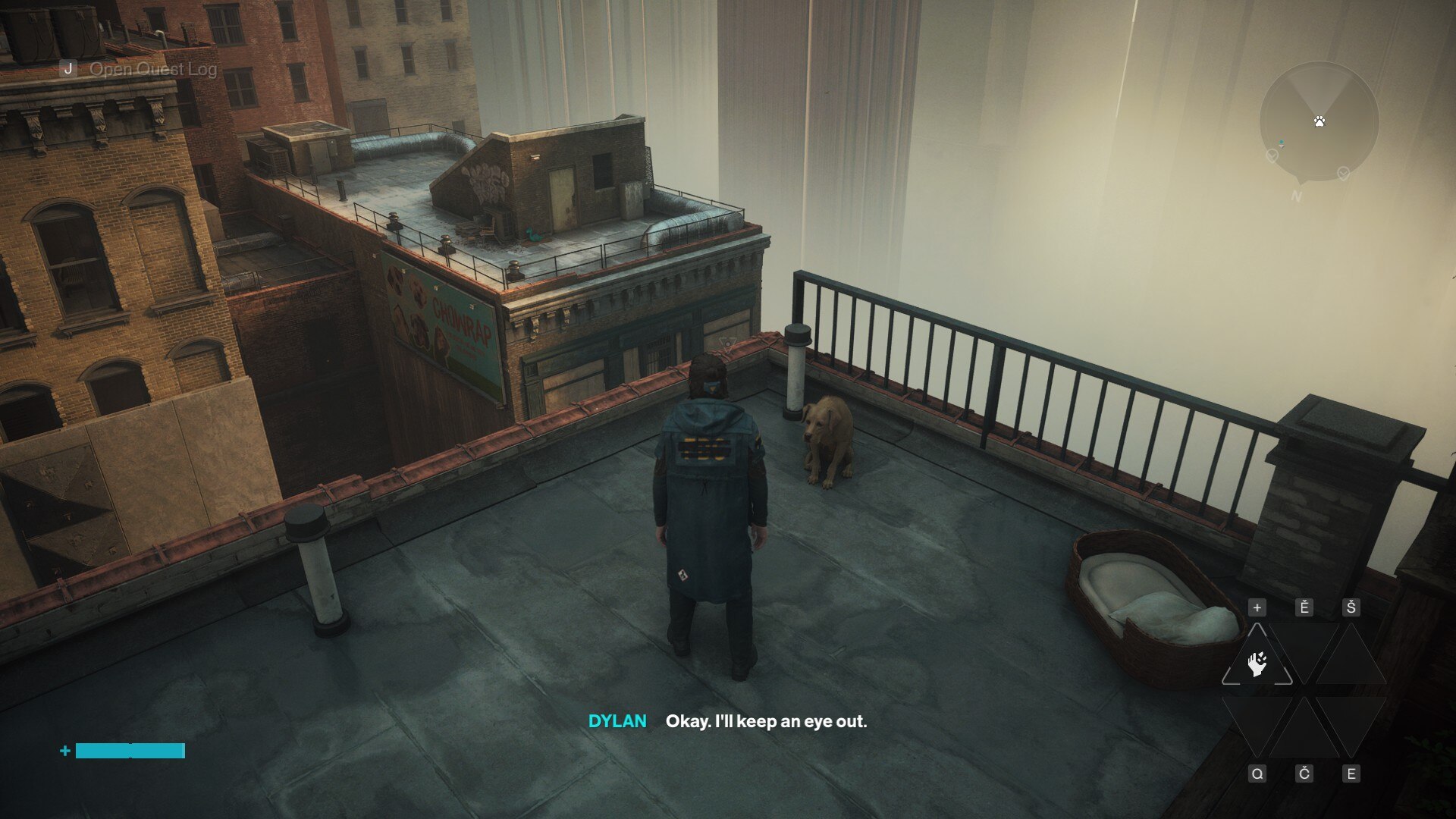
Control Resonant takes one of the strangest action games of the last decade and makes a surprisingly bold decision about where to take it next. Rather than simply expanding Jesse Faden’s supernatural arsenal and sending her back into another section of the Federal Bureau of Control, Remedy Entertainment puts Dylan Faden at the center of the story, moves the action into a distorted version of Manhattan, and replaces much of the original game’s shooting with a more elaborate melee-focused combat system. It is a substantial departure from Control, but it is not an arbitrary one. Resonant still understands that the appeal of this series comes from putting recognizable places, people and institutions into situations that operate according to completely different rules.
That transition does come with some problems. Combat takes a while to develop into the flexible system that Remedy clearly intended it to be, and even after unlocking more abilities, some encounters can still feel more drawn out than they need to be. Remedy has already addressed one of the most significant complaints about the combat with the game’s launch hotfix, reducing the base health and Falter requirements of most enemies and several bosses while increasing Dylan’s maximum combat strength. That makes the opening hours less punishing than they were in the review build, although it does not completely eliminate the game’s reliance on repeated combat encounters.
Control Resonant is therefore not simply a bigger Control. It is a different kind of Control game, with its own strengths and weaknesses. On PC, it is also an impressive technical showcase, particularly for players with hardware capable of taking advantage of its more demanding lighting features. More importantly, it remains recognizably a Remedy game even after changing almost every major component of its predecessor.
Story and Characters
Control Resonant begins with Dylan Faden awakening after years of confinement. Jesse Faden, his sister and the protagonist of the original game, has disappeared, while the supernatural crisis that was previously contained within the Federal Bureau of Control has spread into Manhattan. Dylan is consequently forced into a role he never expected to occupy, leaving the relative safety of the Bureau and entering a city being reshaped by paranatural forces.
The decision to make Dylan the protagonist works better than it has any obvious right to. He was an important part of Control’s backstory, but the first game deliberately kept him at a distance, turning him into someone Jesse was trying to understand rather than a fully developed character in his own right. Resonant has the advantage of being able to explore that history directly. Dylan’s relationship with Jesse provides the story with a straightforward emotional objective, while his years of isolation give him an awkwardness that separates him from the usual action-game protagonist.
That awkwardness is particularly effective because Remedy does not attempt to turn Dylan into another Jesse. He is capable of extraordinary things, but he does not always behave like someone who has spent his life preparing to save the world. His interactions with other characters give the story some welcome levity, while the more personal moments surrounding his childhood and his relationship with Jesse provide a reason to care about what happens beyond simply stopping the latest supernatural threat.
The narrative is also easier to follow than Control’s deliberately fragmented mystery. That can be both an advantage and a disadvantage. The first game made uncertainty part of its identity, with players gradually assembling an understanding of the Oldest House, the Bureau and the forces operating around Jesse. Resonant is more direct. Its central objective is easier to understand, and Dylan’s personal connection to the events gives the campaign a clearer emotional direction.
What it loses in mystery, however, it gains through character development. Some of the strongest material is found outside the critical path, where optional stories and smaller encounters allow Remedy to explore the strange people and situations created by a paranatural crisis. The side content is also where the game’s willingness to be funny, unsettling or simply bizarre is most apparent. Remedy has not abandoned the peculiar tone of Control; it has simply found more room in which to use it.
Gameplay and Mechanics
The most significant mechanical change is immediately obvious: Control Resonant is not primarily a shooter. Dylan’s main weapon is the Aberrant, a shapeshifting supernatural weapon designed around close-range combat. It can take different forms, giving Dylan different attack patterns and ranges, while his supernatural abilities add another layer to the system.
This is a considerable departure from the Service Weapon, and it changes the rhythm of almost every encounter. Jesse could often maintain distance, launch objects at enemies and switch between firearm configurations as the situation demanded. Dylan is much more likely to be in the middle of a fight, using dodges, movement abilities and melee attacks to create openings.
The system is at its best once the different elements begin working together. Dylan’s abilities allow him to disrupt enemies, create opportunities and move around the battlefield, while the Aberrant gives him a selection of attacks suited to different situations. Skill trees and upgrades further expand those options, allowing players to build toward particular approaches rather than simply increasing a handful of basic statistics. Remedy has designed the combat around combining weapon forms, abilities, combos and player choice rather than following one fixed sequence of attacks.
There is a genuine sense of progression here, but it still takes time to arrive. The opening hours are considerably less troublesome than they were in the pre-launch version thanks to the launch hotfix, which reduced enemy health and Falter requirements and increased Dylan’s combat strength as he progresses. Even with those changes, the combat does not immediately demonstrate the full potential of the system. Dylan begins with relatively limited options, and the more interesting combinations emerge gradually as new abilities and weapon forms become available.
The launch adjustment also changes how the game’s early combat should be assessed. The original enemy-health balance made some encounters feel excessively prolonged, and that was a legitimate criticism of the version played before release. The current version is less resistant to damage, making it easier to reach the execution and Dominance mechanics that give the combat much of its momentum. That does not make every encounter equally compelling, but it removes much of the most obvious friction from the opening portion of the game.
Some regular encounters can still feel repetitive once the novelty of the melee system has worn off. The problem is less about enemies simply having too much health and more about how frequently the game asks you to fight variations of the same groups. Resonant has enough combat systems to support more elaborate encounters, but not every battle makes particularly imaginative use of them.
When it does, however, the difference is considerable. Later encounters give Dylan more opportunities to combine movement, melee attacks and supernatural powers, and the resulting fights can be much more dynamic than the early battles suggest. Dodging through an attack, shifting position, breaking an enemy’s posture and following with a heavy attack feels substantially better than simply repeating the same combo against a stationary target.
The difficulty also deserves some qualification because Resonant gives players considerably more control over it than many action games. Assist Mode allows individual combat characteristics to be changed, including enemy aggression, incoming and outgoing damage, dodge timing, projectile speed, power recovery and melee assistance. These settings can be adjusted independently and do not disable achievements or trophies.
That is useful because the game’s combat is not uniformly difficult. Certain encounters can still be surprisingly demanding while others are considerably easier, and being able to adjust specific mechanics is more useful than simply selecting a broad difficulty setting. Players who enjoy demanding combat can make particular systems more unforgiving, while those who find a specific mechanic frustrating can modify that mechanic without turning the entire game into an effortless experience.
Exploration and World Design
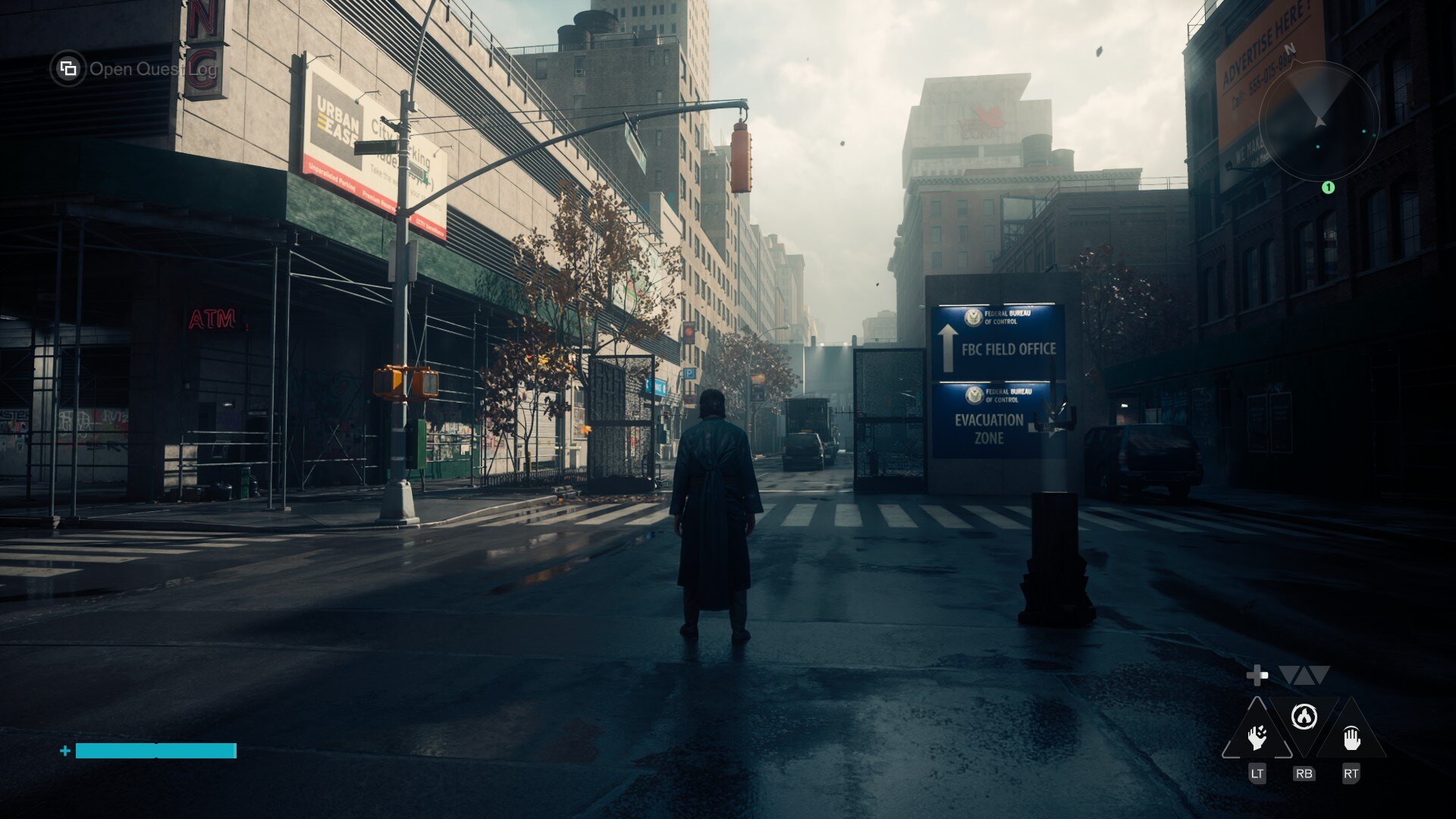
Manhattan is where Control Resonant makes its strongest case for being more than a conventional sequel. Moving outside the Oldest House gives Remedy a much larger environment in which to play with its ideas, but the game does not simply turn Manhattan into a huge collection of map markers.
Instead, the city is divided into interconnected areas containing story missions, optional activities, environmental challenges and hidden locations. Resonant is structured around exploration rather than requiring players to methodically clear every icon from the map, and that approach fits the series particularly well.

That approach suits Control remarkably well. The original game was already built around discovering strange rooms and areas that did not necessarily behave as expected, so a distorted city provides a natural extension of that design philosophy. A familiar urban environment can suddenly become impossible to navigate in conventional terms, with buildings, streets and interiors behaving according to paranormal rules. It gives the world a constant sense of uncertainty, making even familiar locations feel unpredictable.
Traversal makes this considerably more enjoyable. Dylan gradually acquires movement abilities that allow him to reach places that were previously inaccessible, and these abilities are not merely there to make travel faster. They are part of how the world is structured. A location that appears to be a dead end early in the game may become accessible later, while vertical spaces frequently contain secrets that are easy to miss if you only follow the most obvious route.
The result is a world that encourages curiosity. The best discoveries are often the ones that happen because you noticed something slightly unusual rather than because the game explicitly instructed you to investigate it. That sense of discovery is one of the things Resonant inherits most successfully from Control.
Navigation is not always as successful. With several objectives available simultaneously and different quest lines unlocking different traversal abilities, it can sometimes be unclear which destination actually advances the story. The game deliberately gives players freedom over the order in which they approach some objectives, but that freedom occasionally comes at the expense of clarity.
This is particularly noticeable when the environment itself is already designed to confuse the player. A deliberately disorienting paranormal location can be fascinating when you understand what you are looking for, but frustrating when the objective marker points somewhere that appears accessible and is not. The problem is not that Resonant expects players to explore; it is that the distinction between intentional mystery and ordinary navigational confusion is not always clear.
Even so, Manhattan is a more interesting playground than a conventional open-world structure might suggest. It is not simply larger for the sake of being larger. The additional space gives Remedy opportunities to construct strange encounters and optional stories that would have been difficult to accommodate inside the Oldest House.
Missions and Progression
Resonant’s progression is more flexible than the first game’s. The campaign is divided into several interconnected quest lines, including Dylan’s main journey, missions connected to finding Jesse and the Resonant encounters that form some of the game’s major challenges. Traversal-focused missions can also unlock abilities that subsequently open previously inaccessible areas.
This structure works because it gives the player reasons to leave the main path. Instead of treating side content as a collection of unrelated errands, Resonant uses optional stories to expand the world and introduce characters, locations and mechanics that the main campaign does not always have time to explore.
The quality of these missions is somewhat uneven, but the better ones are among the most memorable parts of the game. Remedy is clearly more comfortable with the idea of allowing a mission to become strange without immediately explaining why. A simple objective can lead somewhere completely unexpected, and the game is willing to alter the rules of an encounter rather than simply adding more enemies.
The lighter RPG mechanics are also integrated reasonably well. Dylan can develop different abilities and improve his combat options without the progression system overwhelming the underlying action. There is enough customization to encourage experimentation, and the launch hotfix also reduced the cost of respeccing and increased the availability of Reset Items, making it easier to experiment with different builds without feeling overly committed to an early choice.
That balance is important because the game’s strongest moments come from actually playing with its abilities. Progression works best when it gives you another way to interact with the world, rather than simply making Dylan deal slightly more damage.
Sound and Presentation
The sound design complements the game’s visual style without constantly drawing attention to itself. Manhattan is often at its most convincing when there is relatively little happening. Distant noises, environmental effects and the occasional disruption of paranormal activity make the city feel like a place that continues to exist beyond the immediate objective.
The voice performances are similarly important because Resonant spends more time developing Dylan’s relationships than Control sometimes did with its supporting cast. Dylan’s conversations with other FBC personnel help establish him as a person rather than simply an excuse to introduce another set of supernatural abilities.
The writing also benefits from Remedy’s willingness to let the bizarre coexist with the mundane. The world contains plenty of strange terminology and elaborate supernatural concepts, but Resonant does not need every scene to explain the significance of what is happening. Some of its funniest and most effective moments come from characters reacting to impossible situations with relatively ordinary human responses.
That restraint helps prevent the game’s mythology from becoming exhausting. Resonant has plenty of lore for players who want to dig deeper, but the central story does not require every document or conversation to be treated as a puzzle that needs solving.
Visuals and Technical Performance
Visually, Control Resonant is an exceptional showcase for Remedy’s Northlight technology. The warped version of Manhattan provides far more visual variety than the original game’s brutalist interiors, but Remedy retains its ability to make relatively ordinary architecture look unsettling.
Lighting is particularly important. Buildings, streets and interiors can appear perfectly recognizable one moment and completely unnatural the next, while paranormal effects transform familiar spaces without requiring them to be rebuilt from scratch. The result is often more effective than a world that was designed to look alien from the beginning.

The PC version is also clearly intended to push modern hardware. Remedy’s official requirements specify a 120GB SSD and 16GB of RAM across all PC configurations. The minimum profile targets 1080p at 30fps with ray tracing disabled, while the recommended configuration targets 1440p at 60fps using a balanced upscaler and medium settings. Higher profiles go considerably further, and Remedy lists dedicated requirements for ray tracing and path tracing, making the highest visual settings considerably more demanding.
The PC version supports DLSS 4.5 and FSR 4.1, frame generation, DLSS Ray Reconstruction, ray tracing, path tracing, HDR and ultrawide displays. This makes Resonant one of those games where the graphics settings can have a major effect on both image quality and performance.
Path tracing is particularly demanding, and it should not be treated as an essential setting simply because the game supports it. The most advanced rendering modes require considerably more hardware, particularly at higher resolutions, while conventional rendering and upscaling options provide a much more practical balance for a wider range of systems.
Fortunately, Resonant does not become an ugly game the moment you turn those features down. Its art direction does most of the heavy lifting, and sensible settings can still produce an excellent image. That is an important distinction for the PC version because the most demanding graphical features are best understood as additional options rather than requirements for enjoying the game.
There are, however, some current PC issues worth mentioning. Remedy’s current support information lists performance problems affecting some AMD Radeon 7000- and 9000-series GPUs, screen tearing during live-action videos, a possible persistent black-bar issue after executions when using an ultrawide resolution, a significant FPS drop that can occur after changing ray-tracing quality, and some oversaturated colors when HDR is enabled. Remedy says these issues are being investigated and are planned to be addressed in a future update. This does not undermine the overall quality of the PC version, but it is something prospective buyers should be aware of at launch.
The game also includes an unusually comprehensive collection of accessibility settings. Alongside standard control and visual options, players can independently adjust combat parameters, subtitle behavior, audio settings, color compensation and movement-related effects. The flexibility of Assist Mode is particularly useful given the uneven difficulty of some combat encounters.
Final Verdict: 8/10
Control Resonant is a more ambitious sequel than its premise initially suggests. Remedy could have retained Jesse, kept the Service Weapon and simply built another supernatural adventure inside the Oldest House. Instead, it has changed the protagonist, combat system, setting and structure while still attempting to preserve the strange identity that made Control distinctive.
The melee combat remains the most divisive part of the package. The launch hotfix has substantially improved the early-game balance by reducing enemy health and Falter requirements and strengthening Dylan’s combat progression, so the most severe complaints about enemies simply taking too long to kill no longer describe the current version to the same extent. There are still moments when encounters become repetitive, and the system takes time to reveal its full potential, particularly before Dylan has accumulated more abilities and weapon forms.
There are also moments when the open-ended structure makes it unnecessarily difficult to determine what the game actually expects you to do next. Players looking for the clean immediacy of Control’s shooting may find the new combat system less satisfying, particularly during the early sections, even after the launch balance changes.
But the larger experiment works.
Manhattan is an excellent setting for the series, and the combination of exploration and traversal gives the game a sense of discovery that would have been difficult to achieve with a conventional linear sequel. The optional missions are often worth pursuing, while the progression system provides enough new abilities to make returning to previously visited areas worthwhile.
Most importantly, Dylan gives the sequel a different personality. He is not simply Jesse with another moveset, and the story makes good use of the opportunity to explore a character who was previously defined almost entirely by other people’s perceptions of him. His relationship with Jesse gives the campaign a clear emotional center without requiring the game to abandon the strange science-fiction and supernatural ideas that define the series.
The PC version adds another reason to experience it on the platform. With extensive graphics options, ultrawide support, modern upscaling technologies, ray tracing and path tracing, Resonant is a serious technical showcase, although the highest settings require correspondingly serious hardware. The underlying presentation remains strong even without pushing every setting to its limit.
Control Resonant ultimately succeeds because it does not try to be another Control. It takes the series somewhere considerably more open, more movement-focused and more combat-heavy, and accepts that some of those changes will be divisive. The result is uneven in places, particularly when combat begins to repeat itself, but the strongest parts are genuinely impressive.
The Oldest House was an unforgettable setting because it felt as though it was operating according to rules the player could never completely understand. Resonant cannot reproduce that exact feeling, because Manhattan is a more recognizable and conventional environment. What it does instead is give Remedy enough space to distort that familiar world in increasingly inventive ways.
For all of its rough edges, that makes Control Resonant a worthwhile continuation of the series: not a safer sequel, but one that understands that Control is at its best when Remedy is willing to make the player wonder what, exactly, they have just walked into.