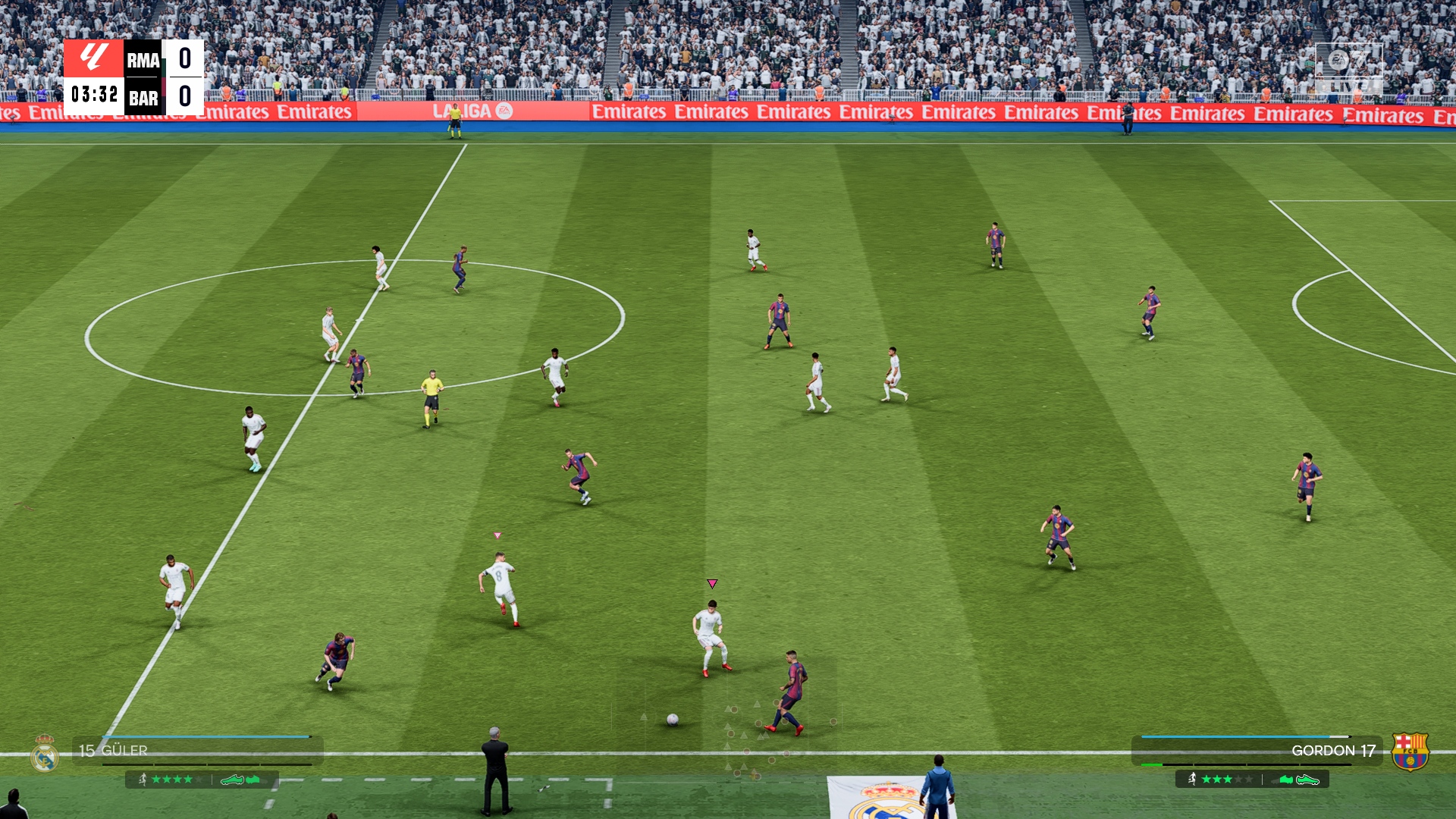
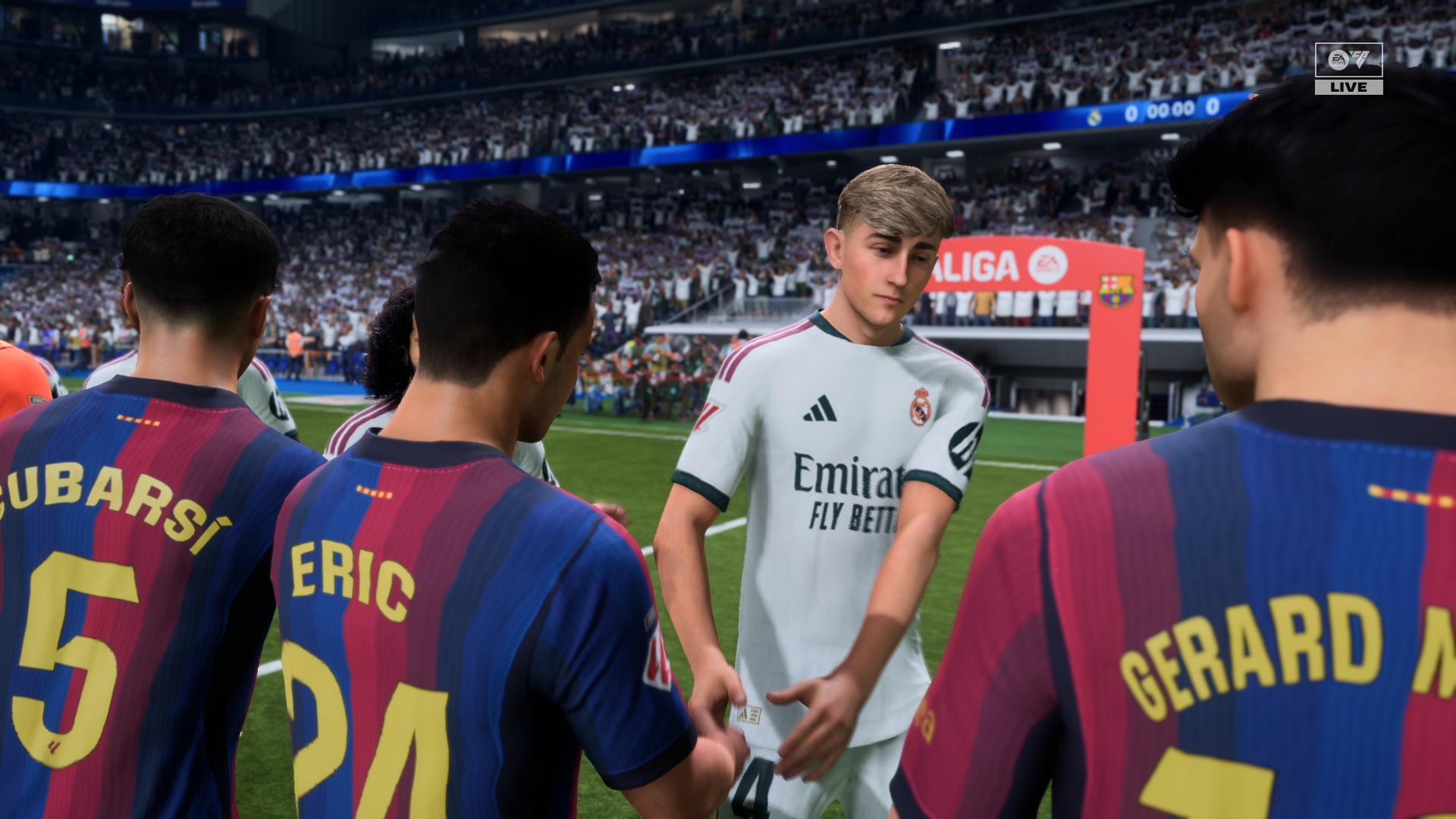
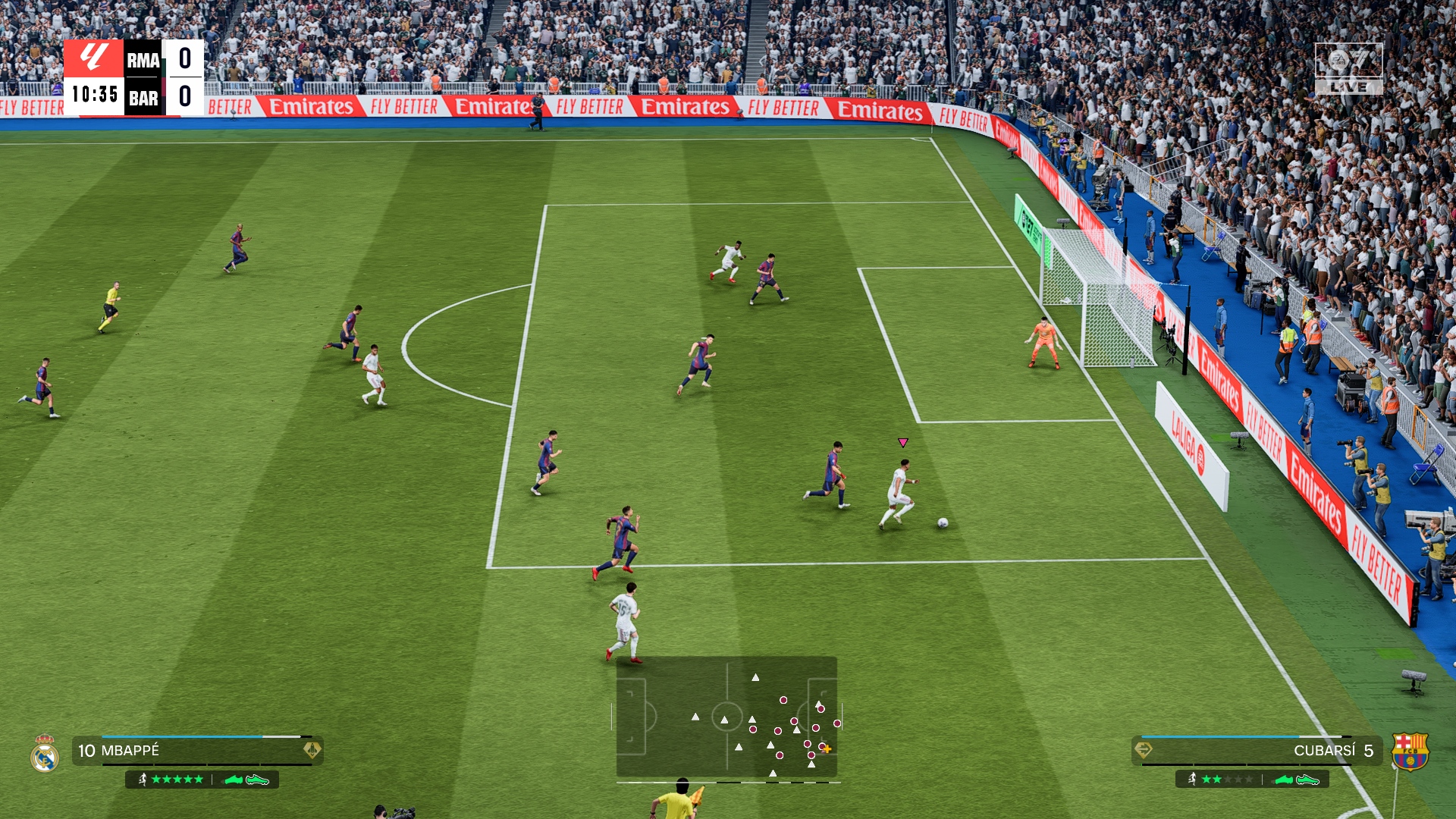
There is a familiar problem facing every annual sports game: once the basic formula is established, meaningful improvement becomes harder to demonstrate. EA Sports FC 27 does not attempt to solve that problem by throwing another enormous collection of features at the player. Instead, EA has concentrated on some of the fundamentals that have increasingly determined whether an FC game is enjoyable or frustrating, particularly the behaviour of defenders, attacking movement, the transfer system in Career Mode and the overall PC experience. The result is a game that looks familiar but plays differently enough to make the changes worthwhile.
The biggest improvements are found on the pitch. FC 27 reduces the influence of defensive automation and puts more responsibility on the player, while attacking movement has been adjusted to make forwards behave more intelligently when searching for space. Passing, crossing and set pieces have also received attention, although not every change is equally successful. Away from the pitch, Career Mode gets a more substantial transfer system and additional ways for seasons to develop unpredictably, while The Grounds introduces a new social space that brings Clubs and smaller-sided football together in a way the series has not attempted before.
On PC, EA has finally given the platform more than the minimum amount of attention. New graphics presets, a VRAM indicator, redesigned keyboard controls, improved startup behaviour and additional performance options make FC 27 a more configurable game than its predecessor. None of this turns the series into something completely new, and some familiar issues remain, but FC 27 feels like a deliberate attempt to improve the experience rather than simply maintain the annual cycle.
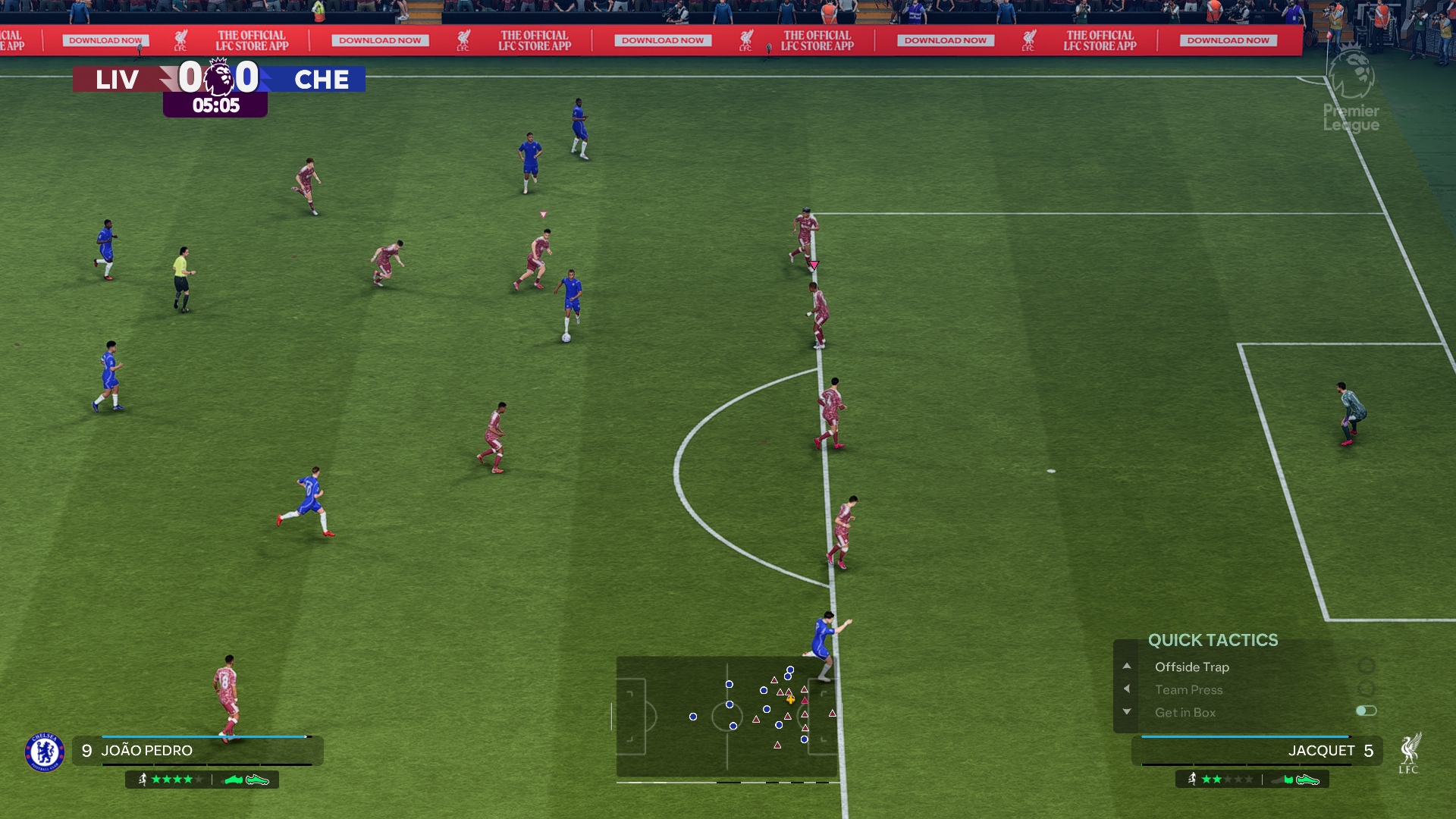
Gameplay and Mechanics
The most significant change in FC 27 is the reduced reliance on defensive automation. Defenders controlled by the computer are less inclined to make aggressive interventions on their own, meaning the player has to take greater responsibility for positioning, tracking runners and deciding when to challenge. That sounds like a relatively technical adjustment, but it changes the rhythm of a match because defending is no longer something that can be left so heavily to the game’s systems.
A player who pulls a centre-back out of position can now create a much more obvious problem, leaving space for an attacker to exploit. At the same time, someone who reads an attacking move correctly and switches to the appropriate defender can stop it before it develops. This makes defensive positioning more important, as reacting to where the attack is going can be just as valuable as challenging the player with the ball.
This is particularly noticeable in midfield. In previous games, it could be tempting to concentrate almost entirely on the player nearest the ball while trusting teammates to maintain a reasonable defensive structure. FC 27 makes that approach less reliable. Closing down the ball carrier is only part of the job; maintaining the shape behind the challenge matters just as much. The change creates a clearer distinction between defending aggressively and defending intelligently, and it gives experienced players more control over the outcome of an attack. It also means that mistakes can feel more directly attributable to the person playing rather than to an apparently unpredictable defensive system.
The adjustment does expose some of the limitations of the underlying AI, however. When the automated assistance is reduced, the remaining behaviour becomes easier to scrutinise, and there are situations where defenders can appear too passive or fail to react as naturally as they should. That is an important distinction because manual control alone does not make a defensive system sophisticated. FC 27 is at its best when it gives the player responsibility while still maintaining a believable defensive structure around them; when those two elements fall out of balance, the reduction in automation can occasionally feel like the removal of help rather than an improvement in intelligence.
Attacking movement is more successful. Wide players are less prone to making the same automatic runs over and over, while central forwards have been given more intelligent movement and are better at using curved runs to attack space without immediately drifting offside. The difference is most apparent when building attacks patiently. Rather than having to wait for a predetermined run to appear, the player can look for a developing gap and trust the forward to make a more useful movement into it. That creates more variety in attacking sequences and makes passing into space feel less like a gamble.
The combined effect of these changes is a game that rewards attention. FC 27 still has the speed, quick transitions and spectacular moments that have always been part of the series, but there is more value in understanding what is happening away from the ball. A good attack can come from recognising where a forward is moving rather than simply selecting the fastest player and running toward goal, while defending requires more awareness of space and less faith in the computer to clean up mistakes. The difference is subtle in individual moments but becomes increasingly noticeable over the course of a match.
Passing and crossing have also been refined, with greater emphasis placed on the player’s input and the direction and weight of the delivery. Set pieces have received a more extensive overhaul, including new approaches to corners and free kicks. These systems add another layer of control, although they are less convincing than the broader changes to movement and defending. More options do not automatically produce a better system, and some of the new set-piece mechanics can feel more complicated than necessary while players are still learning their nuances. They will probably benefit from further balancing as the online community settles on the most effective techniques.
Despite those reservations, the fundamental gameplay changes are the reason FC 27 feels fresher than its presentation suggests. EA has not attempted to turn the game into a slow, rigid simulation, nor has it abandoned the accessibility that has always been important to the series. Instead, it has shifted more responsibility toward the player while trying to make computer-controlled teammates behave in ways that support rather than dominate the experience. It is not a flawless overhaul, but it is a meaningful one.
Career Mode
Career Mode receives the sort of structural improvements that have been overdue for several years. The transfer market is no longer quite as straightforward as identifying a player, offering a fee and waiting for the negotiation to end. Clubs have more defined recruitment policies and expectations, while negotiations can involve different structures and clauses. Expected Transfer Value provides another indication of what a player might be worth, giving the manager more information to consider before entering negotiations. These changes do not turn FC 27 into a dedicated management simulation, but they make the process of building a squad considerably more engaging.
Dynamic OVR is another useful addition because it gives player ratings more connection to what happens during a season. Form, fitness and morale can influence how players perform and develop, which makes the squad feel less static. A player who looks like an obvious starter at the beginning of a season may not necessarily remain the best option several months later, and managing that situation becomes part of the challenge. It also gives the manager more reason to rotate the squad and pay attention to performance rather than treating overall ratings as permanent measurements of ability.

Unexpected Events add further variety to long-term saves by introducing situations that require the manager to respond rather than simply moving from one fixture to the next. The idea is not revolutionary, but it helps address one of Career Mode’s long-standing problems: repetition. Once the initial excitement of taking control of a club has passed, the structure of a season can become predictable. Anything that creates a genuine decision or forces the player to reconsider a plan has value, particularly when it does not overwhelm the core football experience.
The important thing is that Career Mode remains accessible. It would have been easy for EA to respond to demands for a deeper management experience by adding layers of administration that turn every transfer window into paperwork. Instead, FC 27 generally keeps the emphasis on football. The manager still has to build a squad, negotiate transfers and deal with changing circumstances, but the player can quickly return to the pitch and actually play the matches. That balance makes the improvements more useful than simply adding complexity for its own sake.
Career Mode is therefore one of the year’s more convincing improvements, even though it is not the feature EA is likely to put at the centre of its advertising. It addresses the mode’s structure rather than adding another superficial activity, and the changes should become increasingly valuable the longer a save continues. For players who primarily play offline, this is one of the strongest arguments for FC 27.
The Grounds
The Grounds is the most obvious new addition to FC 27 and the feature that gives the game its clearest sense of novelty outside the match itself. It provides a shared social environment in which players can meet, customise their Pro and participate in smaller-sided activities before moving into Clubs and other forms of play. The idea is to make the social side of FC feel like an actual part of the game rather than a series of disconnected menus, and in that respect the concept makes sense.
Its greatest strength is that it gives Clubs a more natural home. Players who regularly play together can spend time developing their Pro, participating in casual activities and then move into more structured matches without feeling as though they have jumped between completely unrelated modes. The smaller-sided games also provide a useful change of pace from traditional eleven-a-side football, particularly for players who want something more immediate and less demanding of a full team.
The question is whether The Grounds itself is deep enough to justify becoming a permanent destination. At launch, its value comes largely from how it connects existing activities rather than from a huge amount of new football content. That makes it difficult to judge solely as a traditional game mode. Its long-term success will depend on whether EA continues to give players meaningful reasons to return, whether the social environment remains populated and whether future updates expand its activities instead of simply adding more cosmetic rewards.
For now, The Grounds is a useful addition rather than a revolution. It gives Clubs a stronger identity and makes social football feel more integrated into FC 27, but its ultimate importance will be determined over the course of the game’s lifespan. That is not necessarily a criticism. A social space of this type is inherently dependent on its community and ongoing support, so there is a limit to what can be established in the first release.
Ultimate Team
Ultimate Team remains the mode most closely associated with FC’s long-term progression, and FC 27 does not attempt to dismantle the established formula. Division Rivals, Champions, Squad Battles and live content remain central, while the broader progression system has been adjusted to provide players with more ways to earn rewards and develop their club. The FUT Gallery is another addition, giving collected Player Items a dedicated space and introducing progression around the act of collecting them rather than simply using them in a squad.
That is a sensible expansion of Ultimate Team, although it is not particularly transformative. The Gallery gives collecting more of a purpose, but its appeal depends heavily on how interested a player is in the collection aspect of FUT itself. The competitive side remains the more important part of the mode, and the basic loop of improving a squad, completing objectives and competing for rewards remains familiar to anyone who has spent time with previous editions.
The bigger issue is that the same monetisation structure remains firmly embedded in the experience. Optional purchases and randomised content continue to sit alongside the football itself, meaning the experience can feel very different depending on how a player chooses to approach progression. FC 27 does provide plenty to do without spending additional money, but the presence of purchasable content remains an unavoidable part of the mode’s design. That does not make Ultimate Team inherently unplayable or unenjoyable, but it is part of understanding what the mode is and how it is intended to keep players engaged over an entire season.
For returning FUT players, the changes are sufficient to make the mode feel familiar without being completely untouched. For anyone hoping for a fundamental redesign of its progression philosophy, FC 27 is considerably more conservative. The football remains the reason to play it, while the surrounding progression systems continue to provide the long-term structure.
Presentation and PC Performance
FC 27 is not a major visual leap over its predecessor, and that is immediately apparent on PC. Player models, stadiums, lighting and broadcast presentation remain polished, but the overall appearance represents refinement rather than a generational transformation. That is not particularly surprising for an annual sports game, especially one that has to maintain a huge collection of licensed teams and stadiums while running across a wide range of hardware. The presentation remains convincing without making FC 26 suddenly look ancient.

The PC version itself has received more meaningful attention. EA has introduced Performance and Balanced graphics presets alongside High and Ultra options, while high-end machines can make use of Enhanced Ultra Visuals. The graphics menu also includes a VRAM indicator that estimates memory usage as settings are changed, giving players a much clearer idea of whether their chosen configuration is appropriate for their hardware. These are practical additions rather than flashy features, but they are exactly the kind of flexibility PC players should expect.
Startup has also been addressed. EA has reduced the number of visible loading stages on Steam and says its internal testing showed launch-time improvements of around 50 percent in some configurations, although actual results naturally vary according to hardware. The company has also made changes intended to reduce the effect of high CPU usage on responsiveness. Those changes are difficult to appreciate in screenshots or feature lists, but they matter because a football game is unusually sensitive to small delays between input and response.
Keyboard support has received a particularly welcome overhaul. FC 27 introduces redesigned WASD and arrow-key layouts, along with additional keyboard shortcuts for tactical adjustments during matches. Mouse and keyboard can still be used together, and the controls remain customisable. A controller remains the more natural choice for many players, particularly for a game built around analogue movement, but the redesigned keyboard system is a considerable improvement for anyone who prefers a traditional PC setup.
The PC version still comes with the expected complications of EA’s ecosystem, including its additional software requirements and anti-cheat technology, but the actual feature set is much more thoughtful than simply porting the console configuration to Windows. The new options make it easier to balance image quality and performance, while the improved controls acknowledge that PC players do not all interact with the game in the same way. It is not a revolution for PC gaming, but it is a clear step toward treating the platform as something more than another box on the back of the package.
Final Verdict: 7/10
EA Sports FC 27 does not reinvent the series, but it does something more useful: it improves several areas that directly affect how the game is played. The reduced defensive automation is the most important change because it puts more responsibility in the player’s hands without turning every match into a slow simulation. Attacking movement is also more convincing, particularly when forwards use space intelligently rather than relying on predictable automated runs. There are still weaknesses in the AI and some of the new set-piece systems need refinement, but the underlying gameplay is more engaging because individual decisions matter more.
Career Mode is another significant improvement, with a transfer system that gives recruitment greater depth and player ratings that respond more naturally to form and circumstances. The Grounds is a more experimental addition, and while its integration of Clubs and social football is promising, its long-term success will depend on the content and support that follow launch. Ultimate Team, meanwhile, remains familiar territory. Its progression has been adjusted and the FUT Gallery provides another reason to collect, but the fundamental structure and monetisation model remain intact.
For PC players, the improvements are more substantial than the usual list of technical tweaks. Better graphics presets, VRAM information, Enhanced Ultra Visuals, redesigned keyboard controls, improved Steam integration and work on startup and responsiveness all make the Windows version more flexible. EA has not eliminated every frustration associated with playing FC on PC, but it has at least addressed several of the practical complaints that have accumulated around the platform.
The most important thing about FC 27 is that its improvements are concentrated in places where they can actually be felt. It is still the same broad football game, with the same enormous collection of teams and competitions, the same Ultimate Team structure and the same annual-service model. What has changed is the relationship between the player and the game. Defending requires more thought, attacking movement is less predictable, Career Mode provides better reasons to manage a squad carefully and the PC version gives players more control over how the game runs.
That makes EA Sports FC 27 a more satisfying football game than a simple list of new features might suggest. It is not without flaws, and it will inevitably need balancing and additional content as the season develops, but the core improvements are meaningful enough to give this year’s edition its own character. After several annual releases where the distinction between refinement and repetition could be difficult to see, FC 27 makes a stronger case for itself by improving the fundamentals rather than merely adding more things around them.