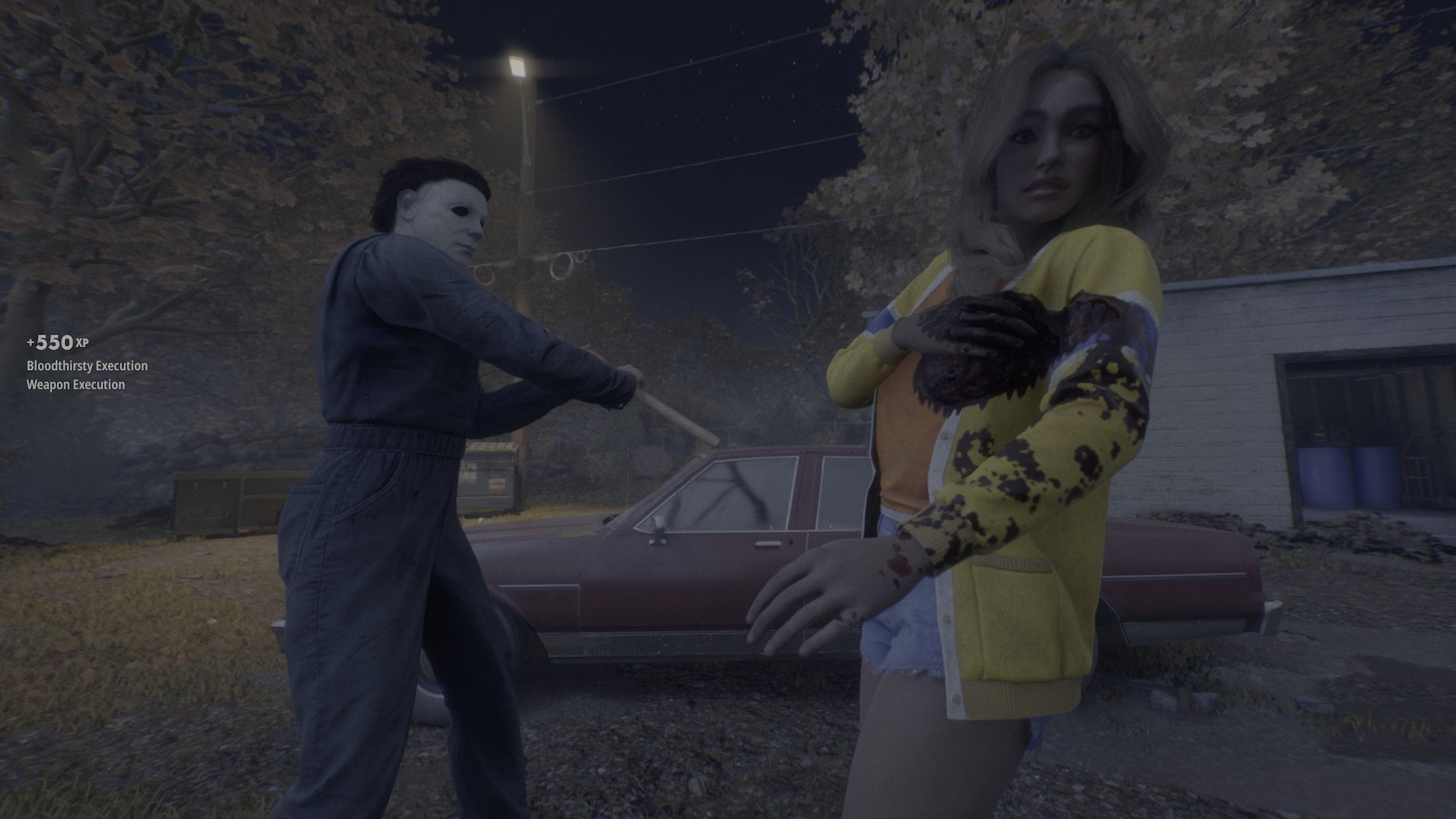
Few horror villains are as naturally suited to video games as Michael Myers. He does not need to run through corridors at impossible speed or possess an elaborate collection of supernatural powers to be threatening. Much of what makes him effective comes from the opposite approach. He walks, watches and waits, often remaining just far enough away to make his victims question whether they actually saw him. John Carpenter’s 1978 Halloween built much of its tension around that simplicity, and any game based on the film faces the challenge of preserving it without making the experience too slow to be enjoyable.
Halloween: The Game takes an interesting approach to that problem. Developed by IllFonic, it is primarily an asymmetrical multiplayer horror game in which one player controls Michael Myers while four others take on the roles of civilians trying to survive the night in Haddonfield. There is also a single-player story consisting of a prologue and five main chapters, recreating events from the original film while introducing players to Michael’s abilities. The multiplayer component is clearly the main attraction, but the inclusion of a dedicated story mode gives the game more substance than a purely online experience.
The good news is that Halloween: The Game understands Michael Myers better than many licensed horror games understand their central characters. He is most effective when he is stalking rather than simply chasing, and the game does a good job of making Haddonfield feel like an ordinary suburban town that happens to contain something very dangerous. The less encouraging news is that the experience is held back by technical problems, inconsistent animations, some rough edges in its systems and a single-player mode that is more introductory than substantial. Halloween: The Game is often entertaining and occasionally very effective, but it falls short of being the polished adaptation the license deserves.
Gameplay and Mechanics
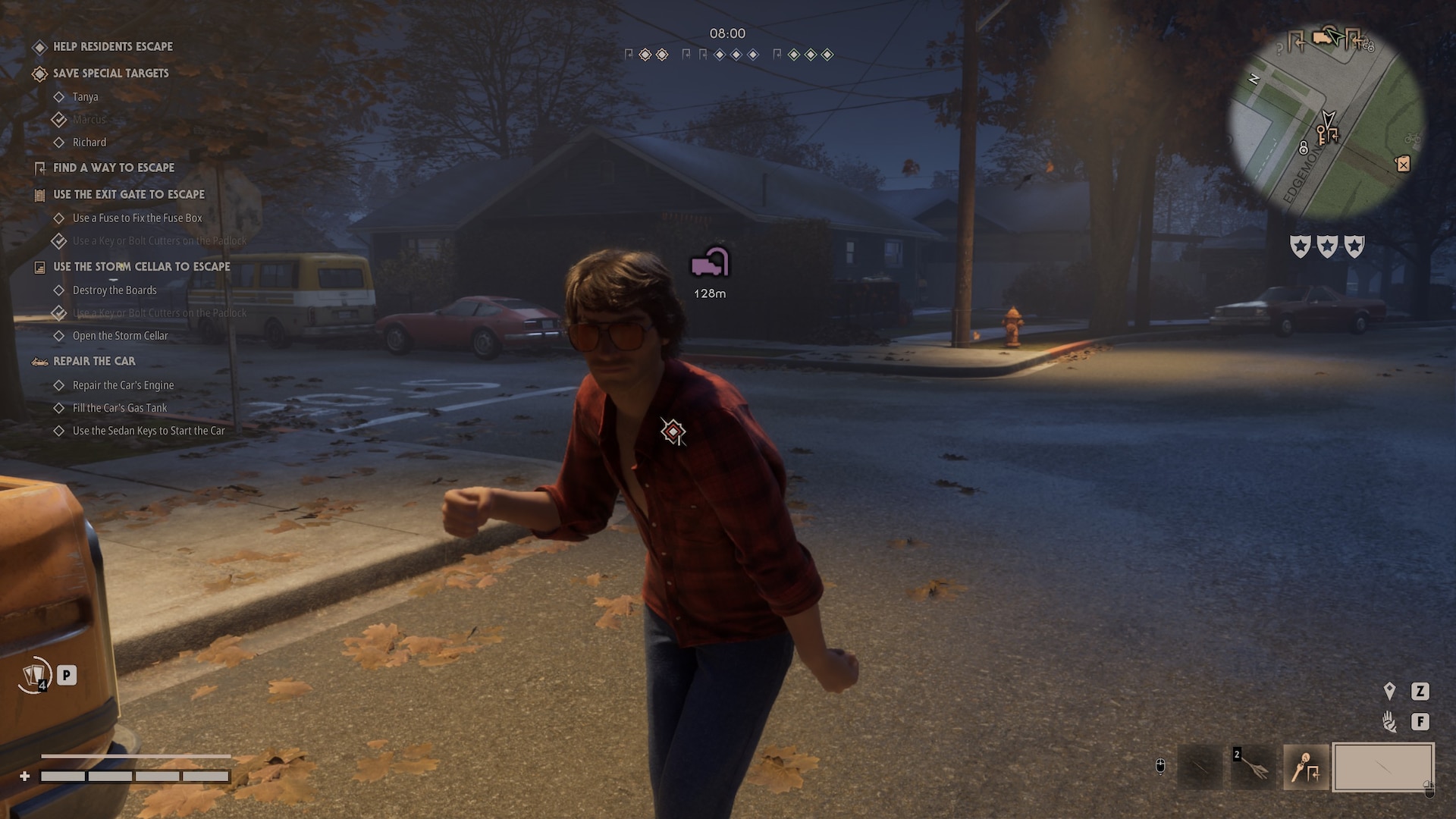
The basic structure is familiar to anyone who has played an asymmetrical multiplayer horror game. One player controls Michael Myers, while four others play civilians who must work together to survive. The important difference is what those players are actually expected to do. The civilians are not simply running from one objective to another while waiting for an opportunity to escape. They have to explore Haddonfield, help residents, find useful items, discover escape options and work toward getting themselves and others to safety.
That gives the civilian side more purpose than it initially appears to have. Important residents are part of the environment, and interacting with them becomes part of the larger objective. Players therefore have to decide how much risk they are willing to take. Helping someone can provide an advantage, but it also requires time, and every additional minute spent exploring gives Michael another opportunity to find them.
This creates some of the game’s best situations. A player may have a relatively safe opportunity to move toward an escape but choose to remain behind because another resident still needs help. Another player may decide to investigate a building while the rest of the group continues toward another objective. These decisions are not especially complicated, but they create situations in which players have to balance efficiency against survival.
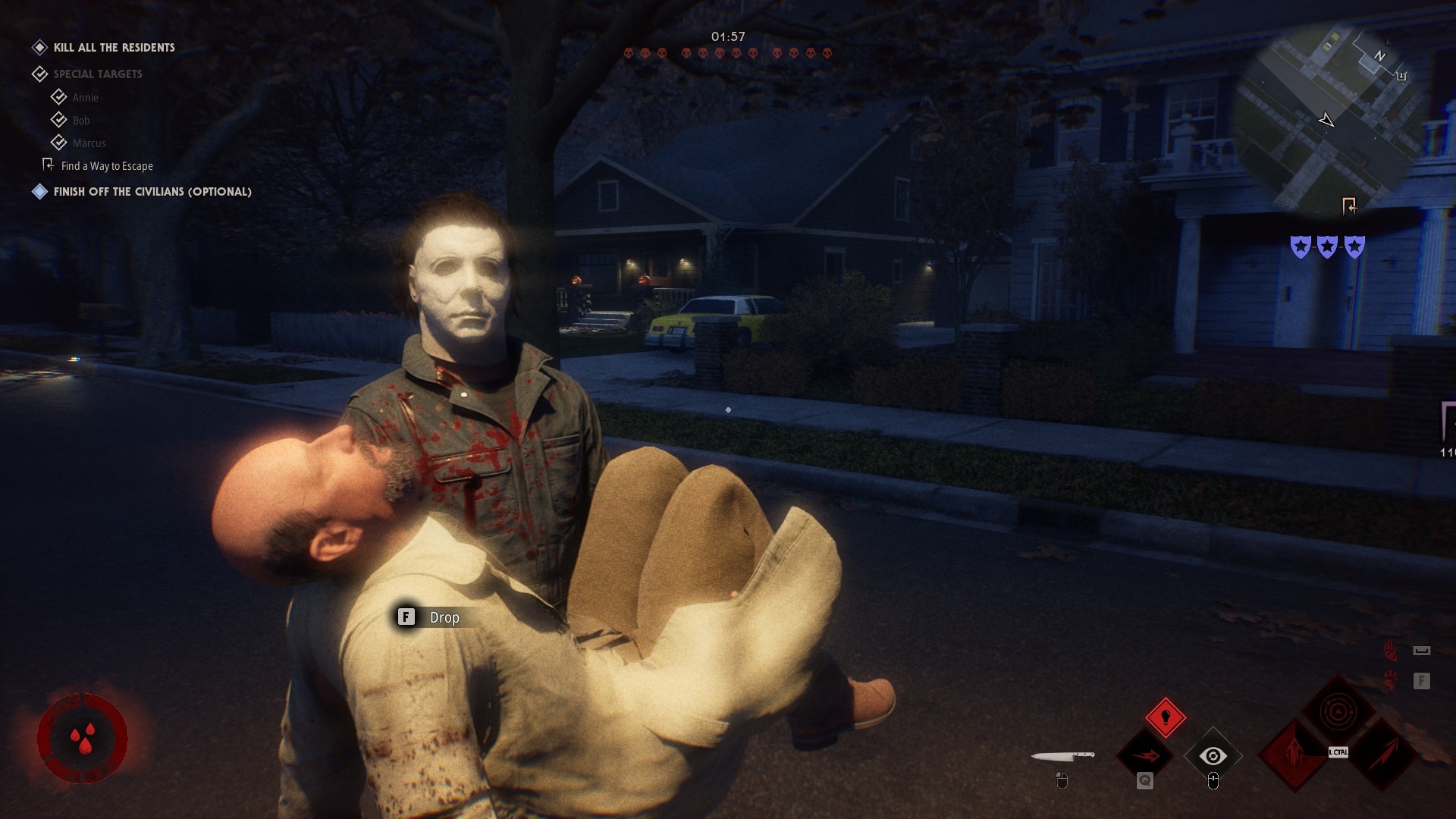
Michael’s gameplay is considerably more distinctive. He is not designed as a fast-moving killer who simply chases the nearest civilian. His movement and abilities encourage players to stalk their targets, use the environment and choose when to reveal themselves. This is much closer to the way Michael operates in the original film.
The Shape Jump is particularly useful in reinforcing that identity. It gives Michael a way to reposition himself rapidly while remaining difficult for civilians to predict, allowing him to close distance without turning him into a conventional sprinting killer. Combined with his stalking mechanics, it gives experienced players tools for controlling the flow of an encounter rather than simply reacting to it.
The underlying idea is very good, although the game does not always explain its systems particularly well. New players can initially struggle to understand what they should be doing, which residents matter, how the objectives fit together or how Michael’s abilities are best used. The game becomes much more enjoyable once these systems are understood, but the learning process could have been considerably clearer.
Singleplayer Campaign
The single-player story is a welcome addition, although its role in the overall package needs to be understood correctly. The story mode consists of a prologue and five larger chapters that cover events from the original film, including Michael’s escape from Smith’s Grove and the events leading toward his arrival in Haddonfield.
That perspective is the campaign’s main appeal. Controlling Michael as he escapes Smith’s Grove, acquires the clothes and mask associated with his appearance in the film and begins stalking his victims gives fans something that has obvious novelty value. The game is effectively allowing the player to become the character who was traditionally the source of the audience’s fear.
The campaign also serves a practical purpose by introducing Michael’s abilities. Players can learn how stalking works and become familiar with his movement and powers without having to learn everything in the middle of an online match. In that respect, the campaign is useful even for players who intend to spend almost all of their time in multiplayer.
The problem is that it is not substantial enough to stand on its own. The campaign is relatively short, and its missions do not offer enough depth or variety to make it a major reason to purchase the game. It is better thought of as an extended introduction to Michael and the game’s mechanics, with fan service built around it.
Technical problems can also be noticeable here. Bugs and performance problems have been reported in the single-player experience, which is particularly disappointing because this should be the most controlled part of the game. The mode remains worth playing for fans because of the opportunity to experience familiar events from Michael’s perspective, but expectations should be kept in check.
Multiplayer and Co-op Experience
Multiplayer is where Halloween: The Game earns most of its value. The four-versus-one format is straightforward, but the combination of Michael, civilians and important residents gives the matches more character than a simple killer-versus-survivors setup. The game currently launches with four maps, each representing a different part of Haddonfield, including residential, rural and commercial environments.
Playing as a civilian requires a mixture of cooperation and independence. Staying together makes it easier to respond when Michael appears, but it also makes the group less efficient when several objectives need attention. Splitting up allows players to cover more ground but gives Michael opportunities to isolate individuals. Neither approach is completely safe, which is exactly what the game needs.
Michael’s side is even more dependent on how well the player understands the map and the behavior of the other players. The most effective approach is rarely to reveal yourself immediately. Watching civilians, learning where they are going and waiting until one of them is vulnerable can be much more rewarding than simply pursuing the first target you see.
This is where the game feels most faithful to Halloween. Michael is frightening because the civilians know he is somewhere nearby but do not necessarily know what he is doing. A good Michael player can exploit that uncertainty, forcing civilians to change their plans simply because they suspect they are being watched.
The four launch maps provide enough environmental variation to keep the basic encounters from feeling identical. East Haddonfield offers a more rural setting, Haddonfield Heights focuses on residential streets and includes Michael’s house, Orange Grove Streets presents a more affluent neighborhood, and Haddonfield Center moves the action into a more commercial part of town.
The multiplayer experience is nevertheless heavily dependent on the people involved. Communication can make the civilian side much more effective, while inexperienced players can make matches feel chaotic or directionless. That is a normal weakness of multiplayer games, but it is particularly relevant here because so much of Halloween: The Game’s tension comes from players making sensible decisions under pressure.
Level Design
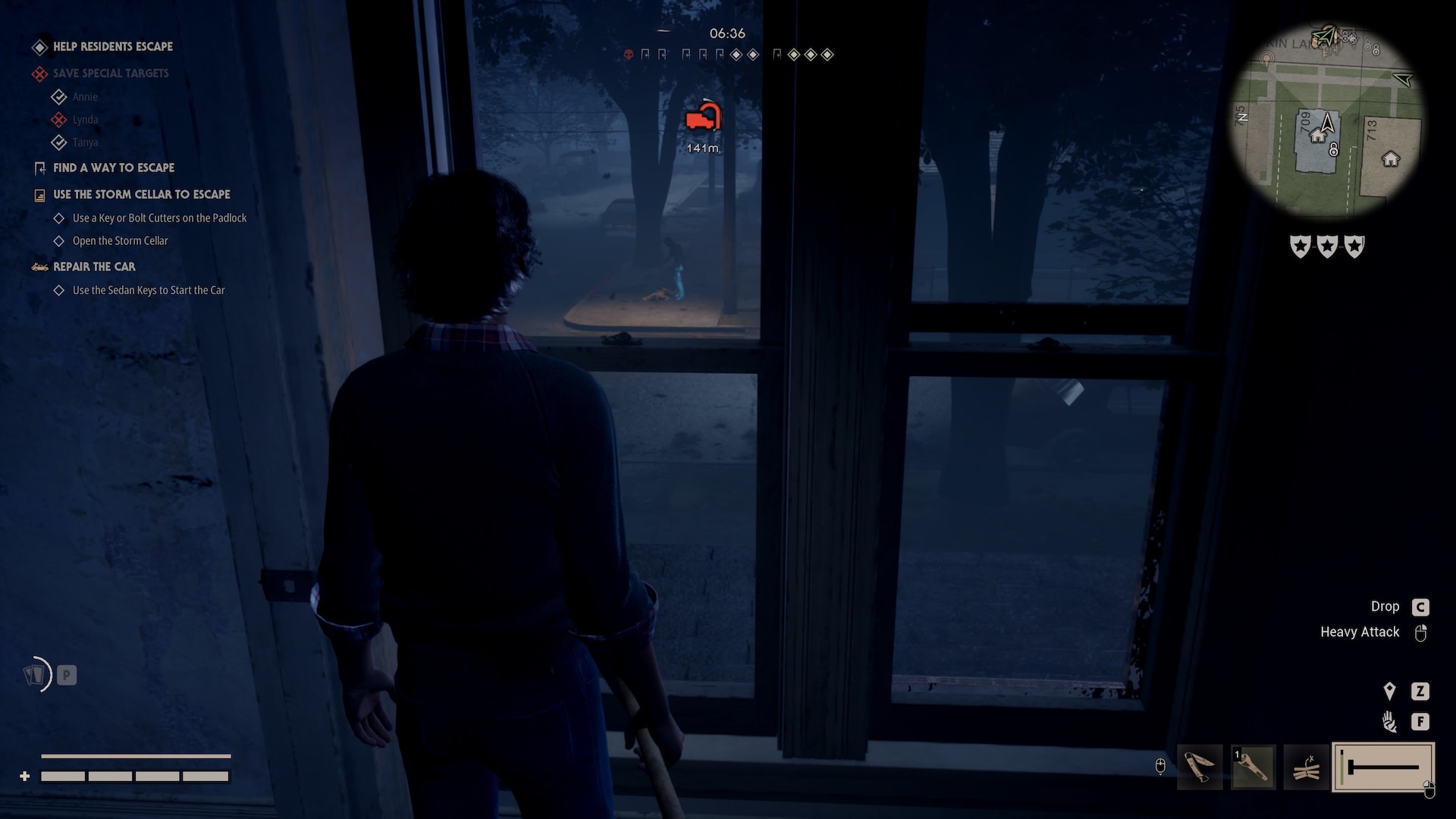
The level design is one of the game’s more important successes because Haddonfield is not merely a backdrop. The streets, houses, businesses and open spaces all affect how players move and how Michael approaches his victims. The environments provide enough variation to make different encounters possible without abandoning the suburban character that defines the property.
The residential areas are especially effective because houses create natural divisions between open and enclosed spaces. A civilian can move through a street with relatively good visibility before entering a building where the situation becomes much less predictable. Michael can use those transitions to stalk from outside, disappear around a corner or wait for somebody to leave a building.
The commercial areas provide a different rhythm because there are more open spaces and different sightlines. Rural sections offer their own advantages and disadvantages, while the more familiar residential locations benefit from the fact that players can quickly learn the general layout and begin thinking about how it can be used strategically.
There is a trade-off here. Once players have learned the maps, some of the discovery disappears. The environments are designed primarily for repeated multiplayer encounters rather than exploration, so there is only so much visual or structural variety available. That is not necessarily a major problem for an asymmetrical game, but it does mean the long-term appeal will depend heavily on continued support and additional content.
For the launch version, though, the level design provides a solid foundation. The maps feel appropriate for Halloween, support both sides of the multiplayer experience and give Michael enough opportunities to stalk without making civilians feel completely powerless.
Graphics and Presentation
The strongest aspect of Halloween: The Game’s visual presentation is its recreation of Haddonfield. Instead of turning the town into an exaggerated horror environment, IllFonic has preserved the suburban character that is so important to the original movie. Houses, gardens, streets, shops and interiors look like places where ordinary people might actually live, which makes Michael’s presence more unsettling. The game does not need to fill every location with obvious signs of danger because the normality of the environment is part of what makes it work.
Lighting is particularly important. Much of the game takes place at night, and the contrast between illuminated houses and darker streets creates opportunities for Michael to disappear from view. A player can look down a street and see nothing, only to realize moments later that Michael was standing somewhere in the darkness. The lighting is not always technically spectacular, but it serves the gameplay well because it supports the central idea of not knowing exactly where the killer is.
The environments also benefit from the game’s commitment to the original 1978 film. Familiar locations and details have been recreated with enough care to make them immediately recognizable to fans, and the game generally avoids the temptation to redesign Halloween into something more contemporary but less authentic. That is important because the original film’s suburban setting is one of its defining characteristics. The game feels most convincing when it allows that setting to remain ordinary.
The character models are less consistent. Michael himself looks appropriately faithful to the source material, but some civilian animations lack the smoothness expected from a modern release. NPC movement can occasionally look unnatural, and certain interactions lack the polish found in more established multiplayer games. These problems do not destroy the atmosphere, but they become more noticeable precisely because the environments do such a good job of establishing the illusion of a living neighborhood. Recent reviews have continued to point out awkward animations and other visual rough edges even after launch patches.
Visually, then, Halloween: The Game is effective rather than exceptional. It does not need to push PC hardware simply to demonstrate what the engine can do. Its strongest visual quality is its ability to reproduce the look and feel of Carpenter’s Haddonfield, and that is considerably more important for this particular game than having the most technically impressive character models or effects.
Sound and Music
Sound plays an equally important role in creating the game’s atmosphere. Halloween: The Game uses music and environmental audio to make Haddonfield feel quiet without making it feel lifeless. The sound of movement inside a house, footsteps outside or activity somewhere nearby can become important because players are constantly trying to determine whether Michael is close.
Michael’s breathing is particularly effective. It is a simple sound, but it provides an immediate indication that the character is nearby and reinforces the connection with the film. When visibility is limited, audio can become just as important as the image on screen. Hearing something without being able to immediately locate it creates the kind of uncertainty that works naturally with Michael.
The musical presentation also benefits from the game’s faithfulness to the original movie. Halloween’s identity is closely tied to its music, and the game understands that the score should contribute to the atmosphere rather than simply provide background noise. The familiar musical style works particularly well during moments when Michael is stalking civilians and the situation is beginning to escalate. The game’s atmosphere and audio presentation have been among the more consistently praised elements of the adaptation.
The sound design is not flawless. Repetition becomes noticeable during longer sessions, particularly for players spending many hours in multiplayer, but that is a relatively minor problem compared with the effectiveness of the overall presentation. Sound is one of the areas where Halloween: The Game consistently feels like Halloween rather than simply another asymmetrical horror game.
Progression and Replayability
The long-term appeal of Halloween: The Game rests almost entirely on its multiplayer. The basic gameplay loop is well suited to repeated matches because Michael and the civilians can approach the same situations in different ways. Player behavior also creates natural variety. A match against an experienced Michael can feel very different from one against somebody still learning how to use his abilities, just as a coordinated group of civilians can create an entirely different experience from four players acting independently.
Challenges and progression provide additional reasons to continue playing, but they are not enough by themselves to transform the experience. The important thing is whether the underlying matches remain enjoyable, and fortunately there is enough variation in the core gameplay to support repeated sessions.
The future of the game will nevertheless depend on continued support. Four maps provide a reasonable starting point, but an asymmetrical multiplayer game needs new content, balance adjustments and technical improvements if it is going to maintain a healthy player base. The foundation is there, but the game would benefit considerably from additional maps, characters and refinements.
This is also where the game’s current technical problems become more important. Players are more likely to overlook rough edges in a short single-player game, but a multiplayer title needs to function reliably over dozens or hundreds of hours. If the performance and bugs are brought under control, Halloween: The Game has a much better chance of developing the long-term audience its structure requires.

Technical Performance on PC
The biggest weakness of the PC version is its technical performance. Halloween: The Game can look good, particularly when its lighting and environmental design are working together, but it does not consistently perform as well as it should. Reviews have reported stuttering, frame-rate drops, bugs, animation problems and other technical issues, with some problems remaining noticeable even after launch fixes.
That is especially unfortunate because the game relies so heavily on atmosphere. A carefully constructed stalking sequence can lose its tension immediately if the image stutters, an NPC behaves strangely or an animation breaks. Technical problems are always frustrating, but they are particularly damaging in a horror game because they interrupt the player’s immersion at exactly the wrong moment.
It is worth noting that IllFonic has already begun addressing these issues. The game’s launch update included critical fixes, balance adjustments and gameplay improvements, with additional fixes and improvements following afterward. That is encouraging and shows that the developer is actively responding to problems rather than leaving the game untouched after release.
The patches do not completely erase the technical criticism, however. Reports following the fixes still describe performance slowdowns, awkward animations and other rough edges. That makes the PC version difficult to recommend without qualification, particularly for players expecting a polished experience at launch.
The game’s system requirements also make performance worth considering. The official PC requirements are relatively demanding for a game targeting 1080p and 30 frames per second at its minimum specification, while the recommended hardware is aimed at higher-resolution play. Given the technical issues that have been reported, the requirements feel less comfortable than they would if performance were consistently stable.
The current state is therefore better described as promising but unfinished around the edges rather than fundamentally broken. The continued patches are a positive sign, but the technical side still needs further attention.
Final Verdict: 7/10
Halloween: The Game is a good Halloween adaptation that is frustratingly close to being a great one. The most important thing is that it understands Michael Myers. Rather than turning him into a generic multiplayer killer, the game makes stalking an important part of his identity. Watching civilians from a distance, using the environment to approach them and choosing the right moment to attack feels much more appropriate for Michael than simply sprinting after victims. The result is a killer who can be genuinely intimidating when controlled by somebody who understands how to use him.
Haddonfield is equally important to the game’s success. The ordinary suburban setting, lighting, sound and familiar locations create an atmosphere that feels faithful to the original movie without becoming a simple collection of references. The civilian mechanics also give the multiplayer side more purpose, particularly when players have to decide whether helping residents is worth the additional risk.
The single-player campaign is enjoyable but limited. It provides a useful introduction to Michael’s mechanics and gives fans the opportunity to revisit familiar events from his perspective, but it is too short and straightforward to carry the game by itself. Multiplayer is clearly where the majority of the game’s replay value lies.
Unfortunately, the PC version’s technical problems are difficult to overlook. Stuttering, bugs, awkward animations and inconsistent NPC behavior can interfere with an otherwise effective atmosphere, and the game’s hardware requirements make those problems more difficult to excuse. The patches released around launch are encouraging, and IllFonic has demonstrated that it is actively addressing problems, but the game still needs further technical refinement.
That leaves Halloween: The Game in an awkward but ultimately promising position. It is not a revolutionary asymmetrical horror game, and some of its systems could be explained better, but it has a strong identity and a surprisingly good understanding of its source material. More importantly, its best moments are genuinely enjoyable rather than merely appealing because they feature a famous horror character.
For Halloween fans, that may be enough to make the game worthwhile. There is real satisfaction in walking through Haddonfield as Michael Myers, watching unsuspecting civilians from the shadows and deciding when to make your move. For players less invested in the license, the technical issues and relatively limited solo content make it harder to recommend without reservation.
Halloween: The Game is therefore a solid but flawed start. The atmosphere is convincing, Michael is the right kind of terrifying, and the multiplayer has enough interesting ideas to support a longer life. What it needs now is polish. If IllFonic can continue improving PC performance, address the remaining bugs and expand the multiplayer experience, there is a much better game underneath the current rough edges.
For now, though, Halloween: The Game is worth experiencing primarily for its excellent interpretation of Michael Myers and its faithful recreation of Haddonfield, provided you are willing to accept the technical shortcomings that remain.