
No More Room in Hell 2 is a cooperative zombie survival shooter that puts more emphasis on staying alive than on killing everything in sight. Ammunition is limited, useful equipment has to be scavenged, objectives take time to complete and extraction is never guaranteed. It is a slower and more deliberate experience than most modern zombie shooters, with its best moments coming from the decisions a team makes when resources are running low and the safest option is not always obvious.
The 1.0 release gives the game a considerably stronger foundation. The finished package includes Objective and Survival modes, nine maps, 38 weapons, 10 zombie types, four difficulty levels, expanded progression, infection and extraction systems, a new tutorial and Solo Mode. It also represents a major technical improvement over the earlier version, with substantial work done on performance, visual effects, audio, loading and stability.
That makes No More Room in Hell 2 a much more complete game, but not necessarily a flawless one. The strongest parts of the experience come from the interaction between its systems rather than from any individual mechanic. Shooting consumes ammunition, melee can conserve supplies but exposes players to greater danger, exploration can provide valuable equipment while increasing the risk of an encounter, and infection can turn a relatively minor mistake into a serious problem.
The weaknesses are just as apparent. Objective missions can become repetitive once their structure becomes familiar, combat occasionally feels rough around the edges and the progression system is more functional than deep. Solo Mode is useful for learning the game but does not offer the same long-term experience as multiplayer.
For players who enjoy cooperative games that reward communication and careful resource management, however, there is a lot to appreciate here. No More Room in Hell 2 does not reinvent the zombie shooter, but it understands how to make limited resources and uncertain situations create tension.
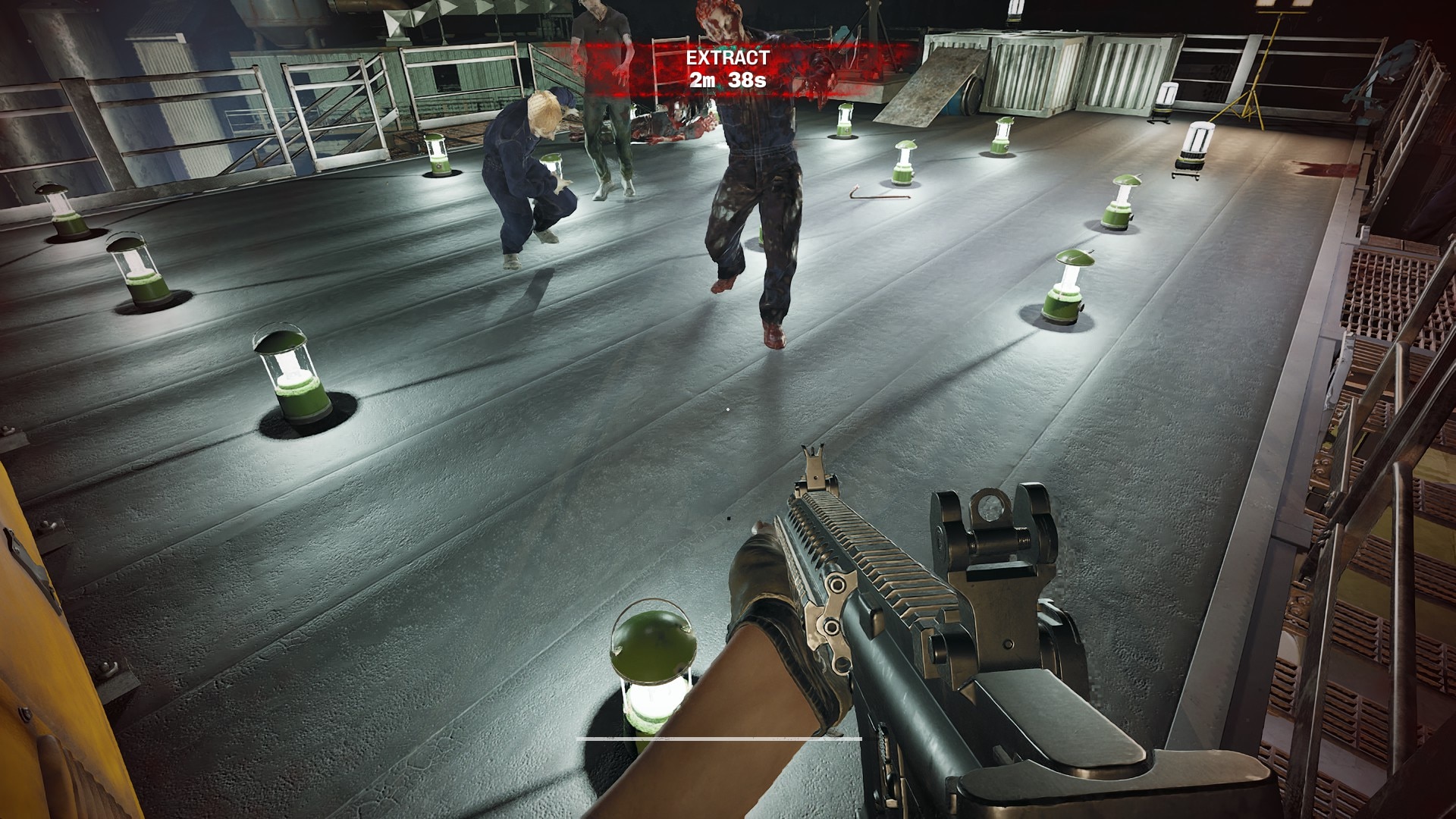
Gameplay and Mechanics
The basic structure is straightforward. Players take control of Responders, enter a large environment, complete a series of objectives, gather supplies and eventually attempt to extract. Objective mode is designed around cooperative groups, and the game becomes increasingly interesting as players begin making decisions about how closely they should stick together, which areas are worth searching and how much risk they are willing to accept.
Scavenging is central to the experience. Buildings and other locations contain ammunition, weapons, medical supplies and equipment, but searching every available room is rarely the safest approach. Time spent looking for supplies is time spent in an environment where something can go wrong.
That creates some of the game’s most effective decisions. A team may spend several minutes searching a building for ammunition and medical equipment, only to discover that the extra supplies were not worth the danger. Another group may rush toward its objective and later regret not taking the time to prepare. The game rarely tells players which approach is correct, which makes these decisions feel more meaningful.
The inventory system supports this design well. Carrying space is limited, so players have to decide what is actually worth keeping. A powerful weapon is useful, but it may occupy space that could be used for ammunition or medical equipment. In multiplayer, this naturally creates reasons for players to communicate and share resources.
The large environments also contribute to the experience. They provide enough space for teams to choose different routes and make decisions about how aggressively they want to explore. Staying together is generally safer, but splitting up can make scavenging more efficient. The problem is that a split group can quickly become vulnerable when a situation deteriorates.
This is where No More Room in Hell 2’s slower pace works particularly well. The game does not need to fill every minute with combat. Moving through an apparently empty building can create tension because the player knows that the next room may contain useful supplies, a handful of zombies or something considerably worse.
The slower approach is not always successful, though. There are stretches where players are travelling between objectives without enough meaningful activity to justify the time involved. A large map works when it provides interesting choices, but distance by itself does not create depth.
The final release does a good job of making the overall loop coherent. The individual systems are not especially complicated, but they constantly force the player to consider what should happen next rather than simply following a marker.
Combat and Weapons
Combat is built around resource management rather than unlimited firepower. Guns are useful and generally satisfying to use, but ammunition is valuable enough that shooting every zombie is rarely the best solution. Noise, positioning and the possibility of attracting additional enemies all have to be considered.
The firearm system received a significant overhaul before 1.0, with changes to weapons, ammunition, attachments, recoil and other aspects of ranged combat. This gives firearms greater distinction while keeping them within the game’s broader survival philosophy.
A gun therefore feels like a resource rather than an answer to every problem. Using ammunition to eliminate a small group may make the immediate situation safer, but that decision can leave the team poorly equipped when a much larger encounter arrives later.
Melee combat has also improved substantially. Strong and charged attacks are more responsive, stability damage has been adjusted and different weapon types have clearer characteristics. Melee is important because it gives players a way to conserve ammunition, but it carries greater risk because enemies have to be dealt with at close range.
It is still the less polished side of combat. Fighting several zombies at once can become awkward, particularly when the player is trying to manage stamina, positioning and incoming attacks. The system rewards familiarity with individual weapons, but it does not always feel as precise as it should.
The zombies can expose some of those weaknesses as well. Large groups can be dangerous when they surround a player or block an escape route, but individual enemies occasionally move or react in ways that undermine the otherwise serious atmosphere. The 1.0 release fixed numerous problems involving zombie spawning, ragdolls, sliding and animation, although some roughness remains.
The gore system helps considerably. Weapon impacts provide clear visual feedback, and heavier attacks can produce suitably brutal results. More importantly, the effects make combat feel consequential rather than weightless.
The most interesting aspect of the combat system is therefore not the moment-to-moment shooting or melee itself. It is deciding whether combat is worth initiating in the first place.
Objective Mode
Objective mode remains the heart of No More Room in Hell 2. Its six maps give players large environments to explore while completing objectives and eventually reaching extraction.
The maps are generally one of the game’s strongest aspects. They feel like locations rather than conventional multiplayer arenas, with buildings and outdoor spaces arranged in ways that encourage players to think about routes and positioning.
A house may contain valuable supplies but offer limited escape options. An open area may be easier to navigate but leave the group exposed. A longer route may appear safer than the direct path, but it can also consume more time and resources.
That makes exploration meaningful. The player is not simply searching for decorative objects or optional collectibles. The contents of the environment can directly affect the chances of surviving the rest of the mission.
The problem is the objective structure itself. Once players become familiar with the types of tasks they are asked to complete, the overall rhythm becomes predictable. Random encounters and changing circumstances can make individual missions different, but the underlying framework does not change enough.
This becomes particularly noticeable for experienced players. A group that knows where it needs to go and what it needs to accomplish can move through a mission far more efficiently than a group learning the map for the first time.
That does not make Objective mode bad. In fact, the uncertainty created by other players, resource shortages and zombie encounters can still produce memorable runs. A mission can go from routine to desperate because someone becomes infected, a teammate is separated or the group discovers that it does not have enough ammunition to handle the next encounter comfortably.
The problem is that the objectives themselves are rarely the reason those moments are memorable. The surrounding systems are doing most of the work.
Survival Mode
Survival provides a useful change of pace. Instead of travelling through a large environment while completing a sequence of objectives, players defend speakers against waves of zombies.
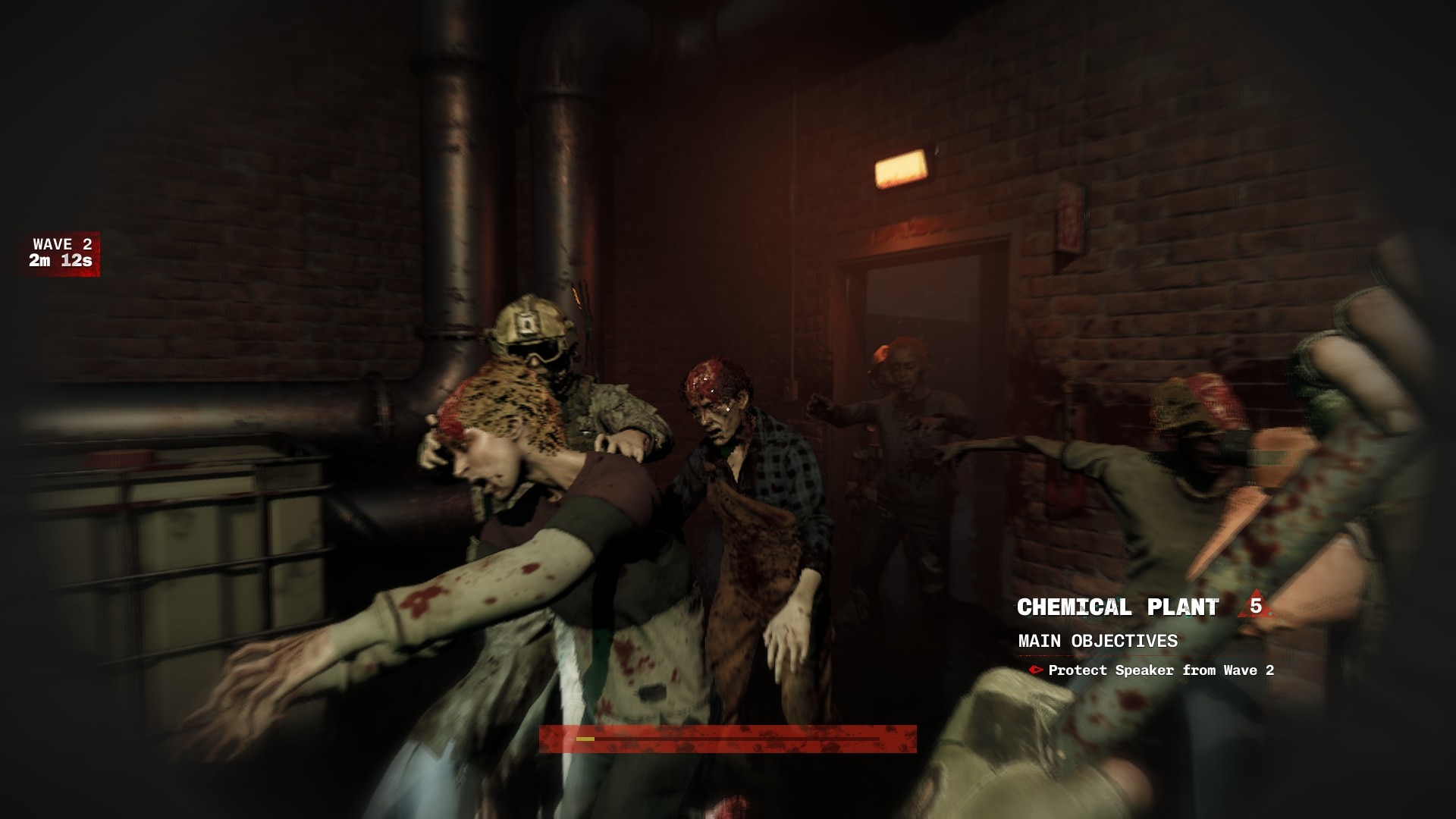
There is a short preparation period at the beginning of each wave, allowing the team to search for supplies, organize equipment and arrange its defenses. Once the wave begins, players have to protect the speakers for five minutes while dealing with increasingly intense pressure from the infected. Successful waves are followed by another supply drop and a short period to regroup and prepare for what comes next, giving the team a chance to reassess its resources before the next assault.
This is faster and more combat-focused than Objective mode, but it still makes use of the game’s resource-management systems. Ammunition has to be conserved, defensive positions have to be chosen carefully and players have to react when a safe position becomes compromised.
The mode does not radically reinvent wave-based survival, but it fits naturally into the game’s design. It gives players somewhere to go when they want more immediate action without abandoning the emphasis on preparation and resource management.
The Survival maps also provide useful environmental variety. Different defensive locations encourage different approaches, with some offering more confined spaces and others giving players greater room for longer-range weapons and movement.
Its main limitation is longevity. Once players understand the defensive layouts and basic rhythm of the mode, the underlying structure becomes familiar. Survival works well as a complement to Objective mode, but it is unlikely to be the sole reason players continue returning to the game.
Progression and Permadeath
Progression gives the game a reason to extend beyond individual matches. Players develop their account, improve skills and invest in their Responders and equipment. Individual characters also become more valuable as they survive successful missions.
That gives extraction additional importance. A successful run is not simply about completing an objective; it can also preserve a character that the player has invested time and resources into developing.
The progression system is functional rather than particularly deep. There are useful decisions surrounding skills and equipment, but Responders do not develop into dramatically different classes. The system is mainly there to give repeated play a sense of accumulation.
Permadeath is more important to the game’s identity. The possibility of losing a developed Responder gives failure consequences that most cooperative shooters avoid.
The final version also makes that system more approachable by tying its harshest consequences more closely to the higher difficulties. Players who are learning the game can spend more time understanding its systems before committing themselves to the most punishing version.
That is a sensible approach. The game can be demanding without making every new player immediately feel as though one mistake has erased hours of progress.
Solo Mode and Multiplayer
Solo Mode is a useful addition, but it should not be mistaken for a traditional single-player campaign. It gives players a way to enter the maps alone, practice combat and objectives, and experiment with equipment without the normal progression and permadeath consequences. This makes it particularly useful for learning the game before joining a multiplayer session.
It is much less convincing as a long-term alternative to cooperative play. The systems have clearly been designed around multiple players sharing resources, communicating and responding to one another’s mistakes.
That is where the game is at its best. One player may have medical equipment while another has ammunition. Someone may wander too far from the group and need assistance. A teammate may become infected and force the rest of the group to change its plans.
These situations give the game an unpredictability that cannot be replicated by simply increasing the number of enemies in a solo mode.
Players who prefer single-player experiences should therefore understand what they are getting. Solo Mode is a useful tool and a welcome option, but No More Room in Hell 2 remains fundamentally a cooperative game.
Infection and Extraction
Infection is one of the mechanics that gives the game a stronger survival identity. Taking damage is not simply a matter of watching a health bar decrease. Medical supplies and the condition of the Responder can affect the team’s ability to continue safely.
This makes medical equipment valuable and gives players another reason to think about how much they are willing to risk.
Extraction brings the rest of the game’s systems together. Players have reasons to continue exploring for supplies and completing objectives, but there is always a point where continuing becomes more dangerous than it is worthwhile.
That creates an important decision at the end of a mission. The team may have enough resources to continue, but that does not necessarily mean it should. If ammunition is low or several players are already in poor condition, leaving may be the smarter option.
The game’s best extraction moments therefore do not depend on throwing the largest possible number of zombies at the player. They depend on making the team question whether it has already taken enough risks.
Visuals, Audio and Performance
The PC version has benefited significantly from the technical work carried out for 1.0. No More Room in Hell 2 is not trying to be a graphical showcase, but its environments and lighting create an effective atmosphere that supports the slower pace of the game.
Lighting is particularly useful. Dark interiors make flashlights important without turning them into a simple cosmetic effect, while the contrast between enclosed buildings and open areas helps give the maps their own character.
The environments themselves are detailed enough to feel believable without becoming distracting. Houses, industrial areas and other locations contain enough visual information to make exploration interesting, and the maps generally have distinct identities.
The zombies are less convincing. Their models work for the setting and the gore effects are effective, but animation can still look awkward when several enemies interact with one another or the environment. The 1.0 release improved ragdolls, spawning and movement, but the technical roughness has not disappeared entirely.
Audio is stronger. Footsteps, zombie sounds, gunfire and environmental effects provide useful information about what is happening outside the player’s immediate view. Sound is not merely there to establish atmosphere; it regularly helps the player understand the situation.
Performance is where the PC version has made perhaps its most important improvement. The developers targeted VFX, audio, loading latency, shadows, lighting, model detail and distance rendering, while DLSS 4.5 support and Frame Generation were added for compatible RTX hardware.
The difference matters because performance problems are particularly damaging in a game like this. When a large group of zombies attacks, responsive controls and consistent performance are essential. Reducing the cost of visual and audio effects therefore improves the gameplay itself.
The final version is considerably more stable than the earlier builds, although it is not completely free from technical problems. Launch-period hotfixes continued to address crashes, memory issues and server stability, so the PC version should not be described as technically flawless.
Controller support also deserves a more measured assessment than the previous draft gave it. The final version supports controllers, and the developers addressed an important Steam Input detection problem around launch. However, controller behaviour and interface support have remained an area of player feedback and ongoing refinement. Mouse and keyboard remain the most natural choice on PC, particularly for inventory management and precise aiming.
Overall, though, the technical improvements are substantial. The PC version now allows the game’s core atmosphere and gameplay to come through without the performance problems that previously distracted from them.
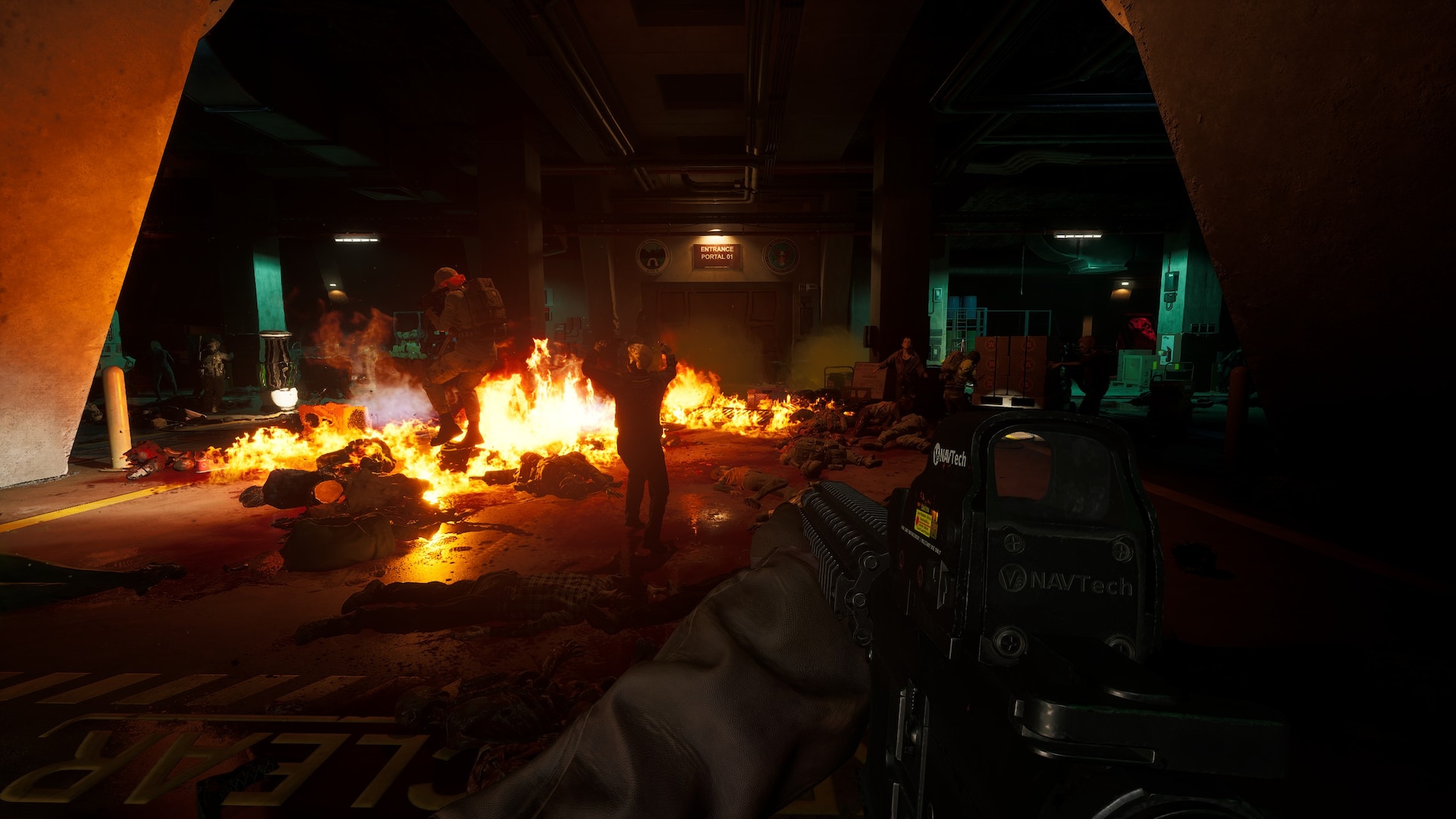
Replayability
There is enough content in the 1.0 release to provide a reasonable amount of replayability. The combination of Objective and Survival modes, multiple maps, different weapons, difficulty levels, progression and Responders gives players plenty to learn, while the unpredictable nature of each run can make familiar locations feel different depending on the team, equipment and circumstances. The strongest source of replayability is the multiplayer experience itself.
A familiar map can feel different when a group chooses another route, loses a teammate or runs short of supplies. A straightforward mission can suddenly become memorable because a player becomes infected or the group has to improvise after something goes wrong.
That makes the game particularly well suited to a regular group of players. Communication and cooperation create a degree of variety that the mission structure itself does not always provide.
The weakness is that the underlying objectives eventually become familiar. Once players understand a map, there is less uncertainty about what they need to accomplish. Random encounters can still change the course of a run, but they cannot completely disguise the repetition in the basic structure.
That is the main reason No More Room in Hell 2 does not quite reach the next level. Its systems are good enough to make individual missions interesting, but the content structure does not consistently provide enough new situations to sustain that interest indefinitely.
Final Verdict: 7/10
No More Room in Hell 2 is a good cooperative zombie survival shooter that finally feels like a complete product. The 1.0 release brings together a substantial amount of content with revised combat, expanded progression, Survival and Solo modes, improved onboarding and considerably better PC performance.
Its greatest strength is the way its systems work together. Ammunition matters because shooting is not always the best option. Exploration matters because useful supplies are limited. Infection makes medical equipment important. Extraction gives players a reason to consider whether they have pushed their luck far enough.
The combat is good without being exceptional. Firearms are satisfying and the revised melee system is more responsive, but close-range encounters can still become awkward and zombie behaviour occasionally reveals the game’s rougher edges.
The maps are generally stronger than the objectives placed inside them. The environments provide meaningful opportunities for exploration and route selection, but the mission structure becomes predictable with repeated play. That places more pressure on the game’s other systems to keep each run interesting.
Survival is a worthwhile addition because it provides a faster alternative to the slower Objective mode. It does not reinvent wave-based defence, but it makes good use of the game’s resource-management mechanics and adds useful variety.
Progression works without being particularly deep, while the revised approach to difficulty and permadeath gives players more control over how punishing they want the experience to be. Solo Mode is useful for learning and experimentation, but cooperative play remains the clear focus.
The PC version is in considerably better shape than the earlier builds. The improvements to performance, rendering and audio make a noticeable difference, while DLSS support gives compatible hardware additional options. There are still technical rough edges, but they no longer overshadow the game’s strengths.
Ultimately, repetition is what holds No More Room in Hell 2 back. The core survival systems are good, the atmosphere is effective and cooperative play can produce genuinely tense situations, but the objective structure does not always provide enough variety to maintain that tension over the long term.
That makes the game easy to recommend to players who enjoy slower cooperative shooters and have a regular group with which to play. Those players are likely to get the most out of its resource management, communication and unpredictable emergent situations. Players primarily looking for a deep solo experience or constantly changing mission structure should temper their expectations.
No More Room in Hell 2 is not an essential classic, but it is a solid and distinctive cooperative zombie game. The 1.0 release delivers on much of the potential behind its survival-focused design, while its remaining weaknesses keep it from becoming something exceptional.


