For years, the cozy farming genre has been searching for an identity beyond simply following in Stardew Valley’s footsteps. Some games have leaned into automation, others into town-building, while a growing number have experimented with fantasy settings to distinguish themselves from the increasingly crowded field. Moonlight Peaks immediately stands out because it understands that simply replacing chickens with bats or pumpkins with blood-red vegetables is not enough. Instead, it builds nearly every aspect of its world around supernatural folklore, casting the player as the rebellious child of Dracula who escapes an overbearing family legacy to start a quieter life in a secluded valley populated by witches, werewolves, ghosts, mermaids and vampires. It is an amusing premise that could easily have become a one-note joke, but developer Little Chicken Game Company commits to it far more than expected.
Rather than treating its gothic aesthetic as a novelty layered over familiar farming mechanics, Moonlight Peaks integrates the supernatural into its progression systems, world-building and everyday activities. Crops are magical rather than mundane, spellcasting becomes part of routine farm work, potion brewing replaces more traditional artisan crafting in several areas, and life unfolds under the cover of night rather than beneath the morning sun. The game constantly reminds the player that they are living in a community where the unusual is perfectly ordinary. That commitment gives the game an identity that many competitors struggle to establish, especially during its opening hours.
That distinctive setting alone, however, cannot carry a farming simulation for dozens of hours. Like every game in the genre, Moonlight Peaks ultimately succeeds or fails based on the quality of its daily gameplay loop. Players spend the overwhelming majority of their time tending crops, gathering resources, improving their property, expanding production chains, exploring surrounding regions and gradually becoming part of the local community. Those activities need to remain engaging long after the novelty of playing as a vampire has worn off.
Fortunately, Moonlight Peaks gets many of the fundamentals right. Its progression is steady without becoming overwhelming, its exploration constantly unlocks meaningful rewards and its crafting systems feed naturally into one another. At the same time, it also inherits several long-standing problems that continue to plague the genre. Character writing does not always match the quality of the world itself, repetitive daily routines occasionally outstay their welcome, and certain progression bottlenecks create periods where advancement feels slower than it should. These shortcomings do not ruin the experience, but they prevent it from becoming the definitive supernatural farming simulator that its premise promises.

The result is a game that feels both comfortably familiar and refreshingly different. It rarely reinvents life simulation mechanics, yet it consistently finds small ways to make established ideas feel new again. While some reviews have praised it as one of the strongest newcomers in the cozy genre and others have been more reserved about its repetitive structure and uneven writing, the consensus is remarkably consistent on one point: Moonlight Peaks possesses a personality that sets it apart from countless farming simulators released over the past few years.
Gameplay and Mechanics
Anyone familiar with modern farming simulations will feel at home within minutes. Each evening begins by waking inside your coffin before stepping outside to water crops, harvest produce, gather resources, visit townsfolk, complete quests and slowly improve both your farm and your standing within the community. The structure follows an intentionally comfortable rhythm, encouraging players to settle into routines while gradually introducing new mechanics through natural progression rather than overwhelming tutorials.
The game’s greatest strength lies in how confidently it layers supernatural mechanics onto these familiar foundations. Instead of presenting magic as an occasional gimmick, it becomes another practical tool for everyday life. Spellcasting can simplify certain chores, potion brewing becomes a significant part of crafting, and your vampiric abilities subtly influence exploration and movement throughout the world. None of these additions fundamentally alter the genre’s formula, but together they create enough variety to keep routine tasks feeling distinct from those found in competing games. The supernatural theme extends well beyond visual presentation and becomes part of the game’s mechanical identity.
Progression is also paced thoughtfully. New tools, crafting stations, recipes and exploration opportunities arrive frequently enough to provide a constant sense of forward momentum during the opening dozen hours. Unlocking additional regions introduces fresh resources that feed directly back into farm expansion, encouraging players to alternate naturally between tending crops and venturing beyond their property. Rather than separating farming and exploration into unrelated activities, Moonlight Peaks allows each system to reinforce the other. New ores unlock stronger equipment, upgraded equipment grants access to previously unreachable areas, and those areas in turn contain resources necessary for expanding production on the farm.
Quest design deserves particular mention because it avoids becoming purely transactional. While fetch quests certainly exist, many objectives encourage players to engage with multiple mechanics simultaneously. Completing requests often requires farming, gathering, crafting and exploration rather than repeating a single activity. This interconnected design prevents the game from becoming too compartmentalised, even if individual quests occasionally fall into familiar genre patterns.
Energy management returns as another core mechanic, limiting how much work can be completed each night before rest becomes necessary. Like many life simulations, these restrictions initially feel restrictive, especially when tools consume substantial stamina during the early game. Gradually upgrading equipment and improving your character’s capabilities softens these limitations, creating an enjoyable sense of growth over time. The progression feels earned rather than arbitrary, although the earliest hours may test the patience of players hoping to accomplish everything immediately.
One welcome decision is the complete absence of combat. Instead of filling mines or forests with enemies to justify exploration, Little Chicken Game Company focuses entirely on gathering, traversal and environmental progression. This reinforces the game’s cozy atmosphere while distinguishing it from farming RPG hybrids that frequently interrupt peaceful routines with lengthy dungeon excursions. Exploration remains rewarding because of resource discovery and environmental puzzles rather than constant fighting. Reviews consistently highlight this choice as one of the game’s defining characteristics, allowing its relaxing pace to remain uninterrupted even during longer expeditions.
That said, familiar genre frustrations still appear. Inventory management can become cumbersome once resource collection expands, requiring regular trips back to storage unless players stay organised. Certain upgrade requirements create noticeable bottlenecks where progression briefly slows while waiting for seasonal crops or specific materials. Some players will appreciate this deliberate pacing, while others may find themselves grinding for resources longer than necessary before the next meaningful unlock appears.
There are also moments where the game’s systems feel slightly more conservative than its premise suggests. Playing as the offspring of Dracula sounds like an opportunity for wildly imaginative mechanics, yet many activities remain recognisably similar to traditional farming simulations despite their supernatural presentation. Blood Grapes may replace ordinary grapes, magical livestock may replace conventional farm animals and potions may replace preserves, but the underlying interactions often function almost identically. The game’s creativity shines brightest in its atmosphere rather than mechanical innovation.
Fortunately, strong pacing helps maintain engagement. There is rarely a sense that the game has run out of ideas during its early and middle stages. New regions continue opening, additional crafting opportunities emerge steadily, and the expanding farm offers enough long-term goals to keep daily routines satisfying. The result is a gameplay loop that rarely surprises but consistently entertains.
Farming, Crafting and Progression
If the supernatural setting provides Moonlight Peaks with its personality, farming remains the foundation supporting everything else. Nearly every progression system eventually loops back to cultivating crops, expanding production and transforming raw materials into increasingly valuable goods. The game understands that players spend dozens of hours interacting with these mechanics, so even relatively small improvements to workflow have an outsized impact on the overall experience.
Crop management follows familiar seasonal rules, though the catalogue of plants is considerably more imaginative than in most farming games. Instead of cultivating entirely realistic produce, players raise enchanted crops that fit naturally within the game’s gothic setting. Harvesting never feels like a cosmetic reskin because every aspect of the farm contributes to the illusion of maintaining a supernatural estate rather than an ordinary countryside homestead.
Crafting builds naturally upon this foundation. Raw crops become ingredients for potions, processed goods and numerous other products that significantly increase their value before sale. Like many genre contemporaries, Moonlight Peaks rewards players who invest time in production rather than simply selling freshly harvested materials. Various crafting stations gradually unlock, expanding the number of ways resources can be refined while simultaneously increasing the complexity of farm management. Instead of becoming overwhelming, however, these additions arrive gradually enough that each new machine feels like a meaningful upgrade rather than another obligation demanding constant attention.
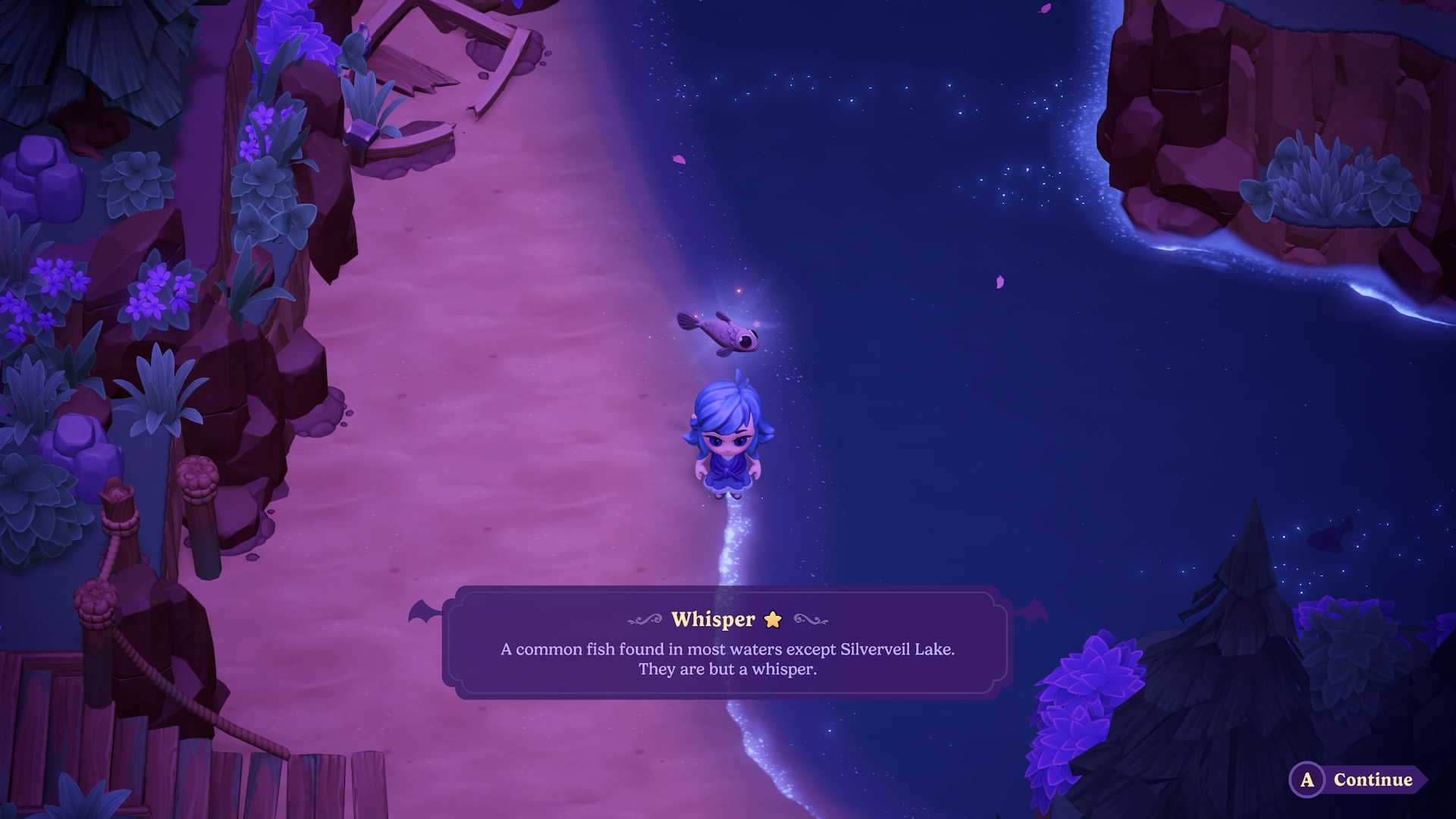
Resource gathering complements farming exceptionally well. Mining, logging, fishing and foraging all contribute directly to crafting progression, ensuring that no individual activity exists in isolation. Spending an evening exploring caves yields ores for improved equipment, stronger equipment unlocks new regions and those regions contain ingredients necessary for increasingly advanced recipes. The constant interplay between systems gives progression a satisfying sense of cohesion, making every excursion outside the farm feel productive regardless of whether you return with rare minerals or a backpack full of mushrooms.
Where the system occasionally falters is in its pacing during longer play sessions. Several reviewers noted that some upgrade paths require a significant investment of time and materials, particularly when waiting for seasonal opportunities or collecting rarer resources. PC Gamer similarly observed that while the game’s opening hours are filled with memorable interactions and engaging progression, the later routine becomes more dependent on repeating established activities than introducing meaningful new developments.
Despite these occasional slowdowns, the farming loop remains consistently enjoyable because it is supported by excellent presentation and logical progression. Every improvement to the farm feels visible, every new crafting station expands player possibilities, and every upgraded tool opens another corner of the world for exploration. Rather than chasing constant novelty, Moonlight Peaks focuses on refining familiar mechanics within a distinctive supernatural framework. It does not completely reinvent the genre, but it demonstrates that thoughtful execution and a strong thematic identity can often be just as valuable as radical innovation.
Story and Characters
While farming and crafting occupy the majority of your time, Moonlight Peaks places considerable emphasis on becoming part of its supernatural community. Like most life simulations, relationships are built gradually through conversations, gift-giving and completing requests, eventually leading to friendships and romance. The difference is that instead of meeting ordinary villagers, you are surrounded by witches experimenting with spells, ghosts lingering around familiar haunts, merfolk who have found a home inland, werewolves trying to balance everyday life with their transformations and fellow vampires who each have their own perspective on what immortality should look like.
The central premise gives the game a stronger narrative framework than many of its competitors. Rather than arriving in town simply because you inherited a farm or wanted a slower lifestyle, your character is actively trying to escape the expectations attached to being Dracula’s child. The story is less about saving the world than defining your own identity outside your family’s shadow. It is a straightforward concept, but one that fits comfortably within the game’s relaxed pace. Narrative progression unfolds naturally alongside everyday routines instead of interrupting them with lengthy story sequences, making the plot feel like another thread woven into daily life rather than a separate campaign.
The world itself reinforces this premise remarkably well. Supernatural creatures are not treated as oddities or jokes; they simply exist as neighbours living ordinary lives. Conversations rarely stop to explain why ghosts run errands or witches own shops because, within Moonlight Peaks, those things require no explanation. That confidence helps the setting feel believable despite its fantasy elements. Instead of constantly drawing attention to how unusual everything is, the game trusts players to accept its rules and move on.
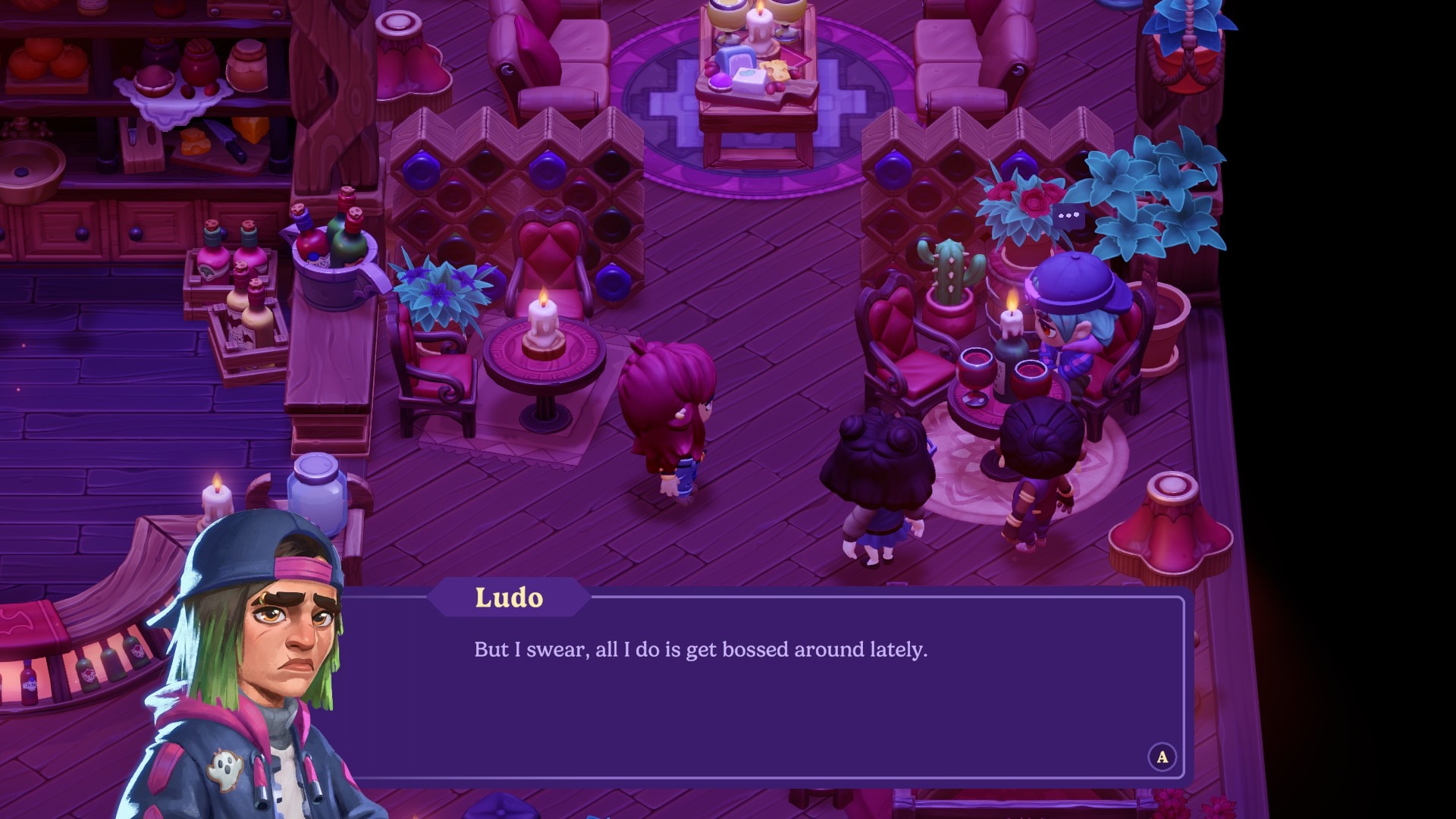
Unfortunately, the quality of individual character writing does not always reach the same standard as the world-building. Many residents make a strong first impression thanks to distinctive visual designs and amusing introductions, but those early interactions sometimes give way to dialogue that struggles to develop them into genuinely memorable personalities. Initial quirks are established quickly, yet deeper conversations often fail to reveal the emotional complexity that players have come to expect from the genre’s best relationship-focused games.
This is one area where several reviewers arrived at remarkably similar conclusions. While the cast is generally likeable and the supernatural setting gives everyone an immediate hook, conversations can become repetitive as relationships progress. Dialogue pools are not especially deep, causing characters to repeat themselves sooner than expected, particularly if you speak to everyone every day. The issue becomes increasingly noticeable over longer play sessions because relationship building represents such a significant part of the experience.
PC Gamer highlighted this problem after spending around forty in-game days with the title, noting that the lively social drama and amusing rivalries established during the opening weeks gradually lose momentum as repeated dialogue begins exposing the limits of the writing. The article argues that the characters remain charming enough to encourage interaction, but they rarely develop into the nuanced personalities found in the strongest examples of the genre. That observation aligns with criticism found across multiple reviews, suggesting this is one of the game’s more consistent weaknesses rather than an isolated opinion.
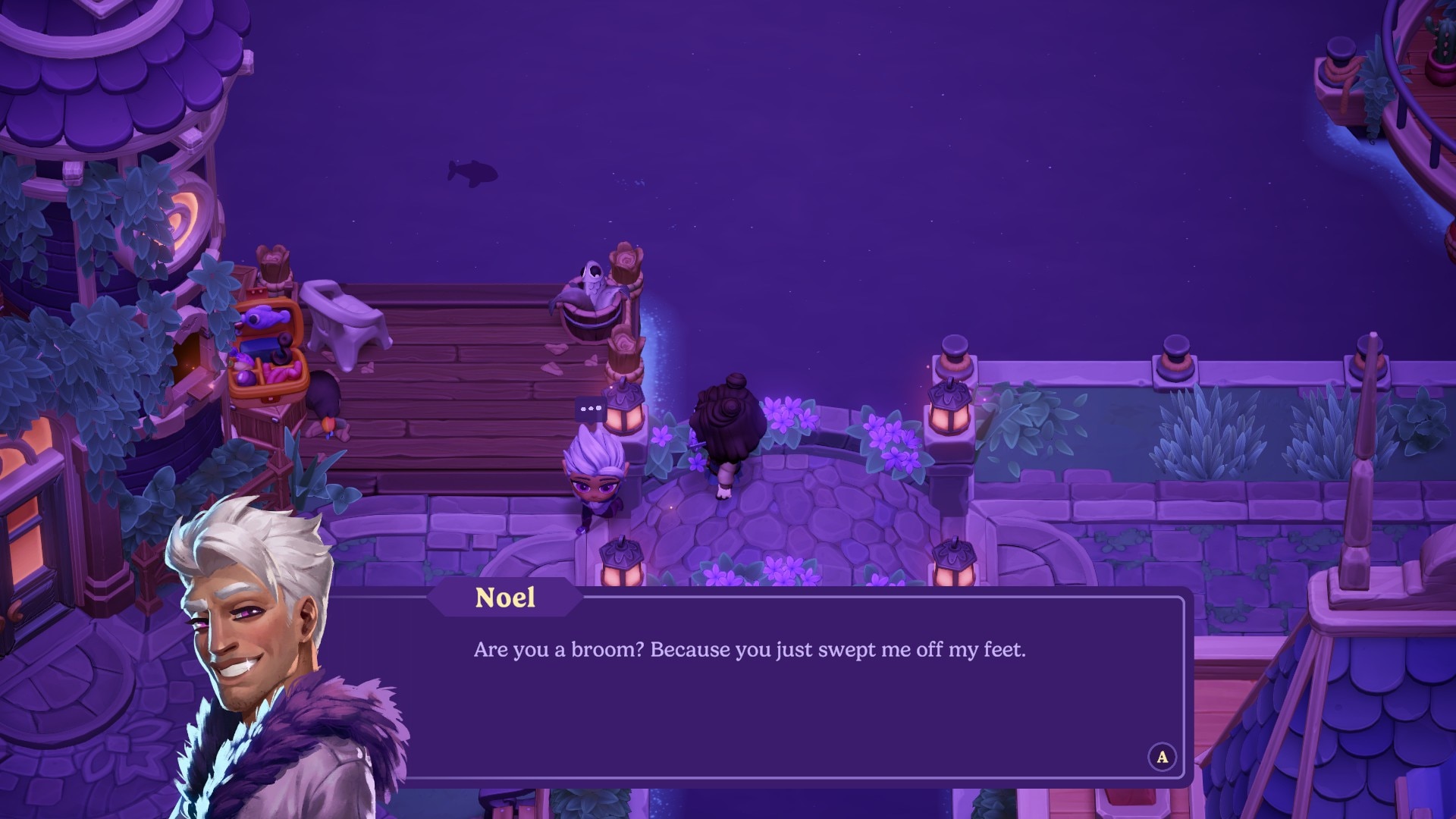
Romance follows a similarly familiar trajectory. Each eligible character possesses their own preferences, schedules and personal events, encouraging players to spend time learning about them beyond simply delivering gifts. The romance options are diverse both visually and thematically, and the supernatural setting gives each relationship a distinctive flavour. Even so, the emotional payoff depends heavily on how invested players become in the dialogue itself. Because the conversations occasionally lack depth, romantic storylines can feel more charming than genuinely moving.
That is not to say the cast is disappointing. On the contrary, the residents are pleasant company, and their visual presentation does a great deal of heavy lifting. Excellent character portraits, expressive animations and consistently attractive designs help conversations remain enjoyable even when the writing itself becomes predictable. Spending time in town still feels rewarding because the world is inviting enough that simply seeing familiar faces contributes to its atmosphere.
The supporting narrative also deserves credit for maintaining the game’s relaxed tone. Rather than forcing high-stakes conflicts into a cozy farming simulator, the story remains appropriately intimate throughout. Personal growth, community relationships and finding a place to belong remain the central themes, allowing the narrative to complement the gameplay instead of competing with it. It may not leave a lasting emotional impact, but it succeeds in giving players enough motivation to continue investing in both the town and its inhabitants.
Exploration and World Design
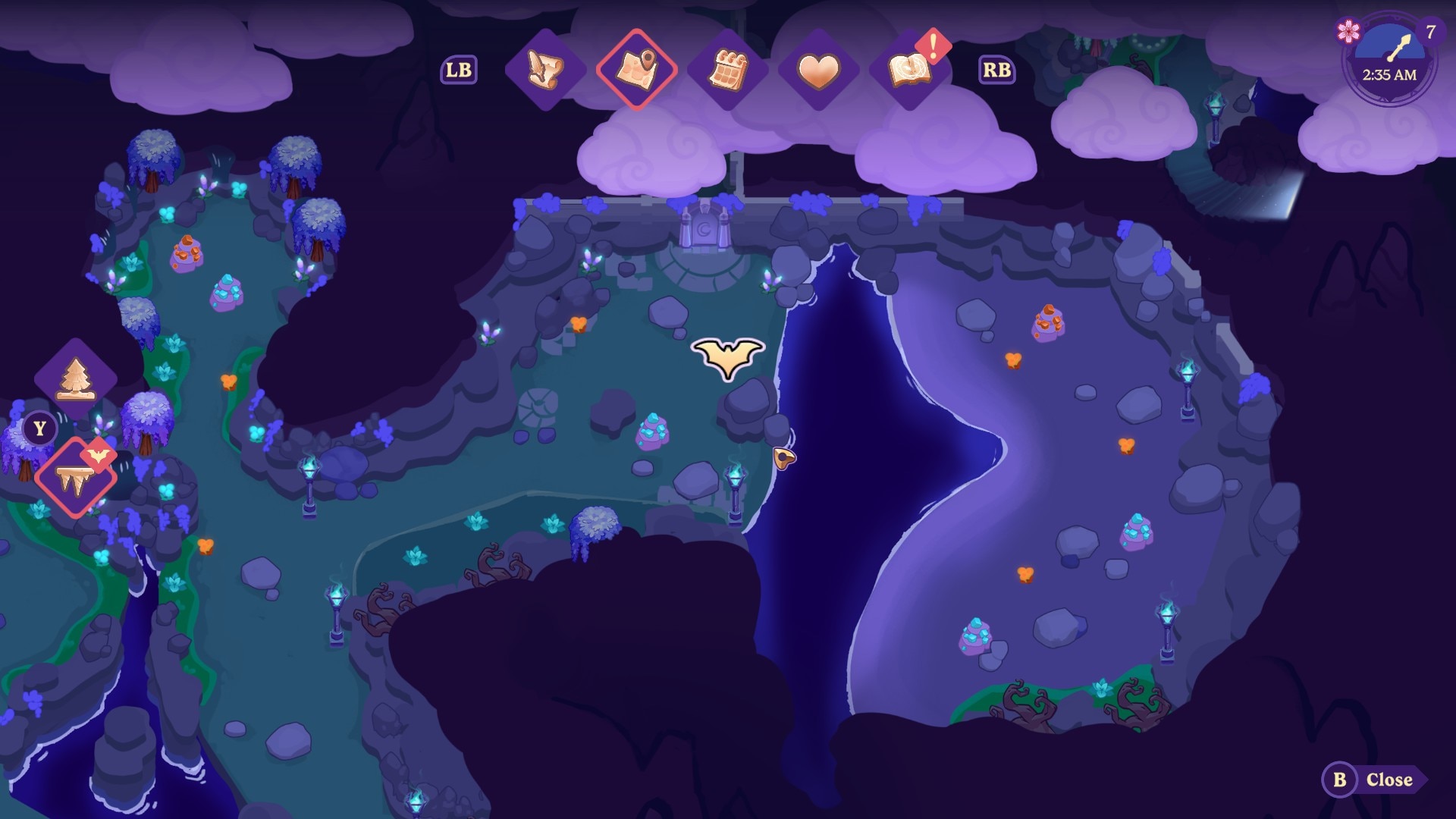
One of Moonlight Peaks’ greatest accomplishments is creating a world that feels considerably larger than its individual mechanics might suggest. Exploration unfolds gradually, revealing forests, caves, beaches and magical locations at a pace that constantly rewards curiosity without overwhelming new players with too many options at once. Unlocking additional areas rarely feels arbitrary because each new region introduces valuable resources, different environmental aesthetics and practical reasons to revisit previous locations with upgraded equipment.
The map strikes an effective balance between familiarity and discovery. It is compact enough that travelling never becomes tedious, yet varied enough that each biome possesses its own identity. Rather than relying solely on visual differences, environmental progression is supported mechanically through resource availability, encouraging players to plan excursions according to current crafting goals instead of wandering aimlessly.
Environmental storytelling also benefits from the game’s confident commitment to its supernatural premise. Ordinary villages, enchanted forests and mysterious ruins coexist naturally, creating a setting that feels whimsical without becoming overly sentimental. There is a playful darkness to the world that distinguishes it from the brightly coloured countryside common throughout the genre. Lantern-lit streets, moonlit landscapes and gothic architecture establish an atmosphere that remains inviting rather than oppressive.
This visual identity extends to farm customisation. Decorating your property becomes a meaningful long-term goal thanks to an extensive selection of furniture, pathways, magical ornaments and themed decorations. Rather than merely increasing efficiency, players are encouraged to shape their estate into a reflection of their own tastes. Because the game’s art direction remains consistent throughout every decorative item, even heavily customised farms still feel like part of the same world instead of disconnected collections of objects.
Exploration does become somewhat routine during the latter stages, largely because the excitement of discovering entirely new regions inevitably gives way to repeated resource collection. While this is hardly unique to Moonlight Peaks, it does mean the sense of adventure gradually shifts toward optimisation rather than discovery. Fortunately, the world remains pleasant enough to traverse that revisiting familiar locations rarely becomes a chore.
Presentation and Audio
Visually, Moonlight Peaks is consistently impressive. Rather than chasing photorealism or excessively detailed pixel art, it embraces a stylised aesthetic that successfully blends cozy comfort with gothic fantasy. Rich colour palettes, expressive lighting and beautifully designed environments create a world that feels distinct from almost every other farming simulator currently available.
Perhaps the game’s greatest artistic achievement is how restrained it remains. It would have been easy to lean into exaggerated horror imagery or cartoonish Halloween aesthetics, but instead the developers opt for something considerably more elegant. The world feels magical rather than spooky, with moonlit blues, deep purples and warm amber lighting replacing the oranges and blacks often associated with supernatural settings. The result is a game that feels appropriate throughout the entire year rather than resembling a seasonal novelty.
Character design is another standout element. Every resident possesses a distinctive silhouette and visual personality, making the town immediately memorable. Portrait artwork is particularly strong, communicating warmth and expression even when dialogue occasionally falls short. Animation quality is similarly solid, helping everyday activities feel lively despite their repetitive nature.
The soundtrack complements the presentation perfectly. Gentle melodies support the relaxed pace without fading entirely into the background, while ambient sounds reinforce the sense of spending peaceful evenings in a magical valley. Audio design is subtle rather than attention-grabbing, but that restraint works in the game’s favour. Music enhances the atmosphere without constantly demanding the player’s attention.
If there is a criticism to be made, it is that visual variety eventually plateaus. After dozens of hours, players will naturally become accustomed to the environments and seasonal changes are not dramatic enough to completely refresh familiar locations. Nevertheless, the consistently high quality of the art direction ensures that the game remains visually appealing throughout its entire runtime.
Technical Performance on PC
On PC, Moonlight Peaks delivers a polished experience that largely avoids technical distractions. Reviews across multiple outlets reported stable performance during ordinary gameplay, with only relatively minor bugs appearing during extended sessions. None of the issues documented by reviewers appear severe enough to undermine the overall experience, and most amount to the kind of small inconveniences commonly addressed through post-launch updates rather than fundamental technical problems.
Load times are brief, controls feel responsive and the interface translates comfortably to keyboard and mouse. Inventory management occasionally requires more menu navigation than ideal, but the layout remains intuitive enough that new systems are easy to understand as they unlock.
The game also scales well across different hardware configurations thanks to its stylised presentation, making it considerably less demanding than many modern releases. Steam Deck testing has likewise been broadly positive, with reviewers praising both performance and portability, further reinforcing the game’s suitability for shorter daily play sessions.
Perhaps the most encouraging aspect of the PC release is simply how complete it feels. Farming simulators often launch with rough edges that take months to smooth out, yet Moonlight Peaks arrives in a noticeably stronger state than many recent entries in the genre. While there is certainly room for quality-of-life improvements, especially regarding inventory organisation and dialogue variety, the underlying experience feels stable from the outset.
Final Verdict: 7/10
Moonlight Peaks succeeds because it understands that atmosphere is not simply decoration; it is part of the gameplay itself. Every crop, spell, potion, building and character contributes toward maintaining the illusion of living inside a supernatural community where magic is ordinary and monsters are simply neighbours. That commitment gives the game an identity that immediately separates it from the ever-growing collection of farming simulators competing for players’ attention.
Its strongest moments come not from radical innovation but from thoughtful refinement. The farming loop is satisfying, exploration remains rewarding for much of the adventure and progression introduces new goals at a pace that keeps players engaged without becoming overwhelming. Excellent art direction consistently elevates familiar mechanics, while the absence of combat allows the relaxed atmosphere to remain intact throughout the experience.
At the same time, the game does not entirely escape the genre’s recurring weaknesses. Character writing often begins stronger than it finishes, repeated dialogue gradually exposes the limits of the social systems and certain progression bottlenecks can briefly interrupt the otherwise satisfying rhythm of expansion. None of these issues are severe enough to overshadow the experience, but they do prevent Moonlight Peaks from joining the very highest tier of life simulations.
Perhaps its greatest achievement is that it never feels like a gimmick. Playing as Dracula’s child could easily have been reduced to little more than an amusing marketing hook wrapped around conventional farming mechanics. Instead, Little Chicken Game Company treats its premise as the foundation upon which every system is built. Magic is practical, monsters are ordinary, and the world consistently supports the fantasy it presents. That level of thematic consistency is surprisingly rare within the genre.
Players looking for deep relationship writing comparable to the very best life simulators may leave wanting more, particularly after spending dozens of hours getting to know the town’s residents. Those hoping for a fresh aesthetic, polished progression and an inviting world to settle into, however, will find plenty to enjoy. Moonlight Peaks may not completely redefine cozy farming games, but it confidently proves that the genre still has room for distinctive ideas when developers commit to them wholeheartedly.
For PC players, it stands as one of the stronger farming simulations released in recent years. It combines an imaginative premise with polished fundamentals, wraps both in beautiful presentation and delivers a consistently enjoyable routine that remains engaging long after the novelty of its gothic setting has worn off. Its imperfections are real, but so are its strengths, and in the end those strengths prove far easier to remember than the occasional frustrations encountered along the way.