Remaking Gothic was always going to be a difficult task. The original 2001 release remains one of the most influential cult RPGs ever made, but it is also a game that many players bounced off almost immediately. Its controls were awkward even by the standards of its era, its combat demanded patience, and its approach to progression often felt deliberately hostile toward newcomers. At the same time, those very qualities helped establish the sense of identity that made Gothic memorable. The Valley of Mines was not designed around player comfort. It was a dangerous place governed by self-interest, faction politics, and the constant threat of violence, and much of the game’s appeal came from learning how to survive within it.
The challenge facing Alkimia Interactive was therefore not simply to modernize an old RPG. The larger question was whether Gothic could be updated for a contemporary audience without losing the qualities that made it distinctive in the first place. The answer, perhaps surprisingly, is yes. Gothic Remake makes significant changes to presentation, controls, combat, and overall accessibility, but it remains recognizably Gothic throughout. It preserves the original game’s emphasis on gradual progression, meaningful exploration, faction-based advancement, and a world that feels largely indifferent to the player’s existence.
That does not mean every change is equally successful, nor does it mean the remake suddenly becomes a universally appealing RPG. Many of the design decisions that made Gothic divisive more than twenty years ago remain intact. The game can be demanding, occasionally frustrating, and unwilling to provide the level of guidance that modern players may expect. Yet those qualities often work in its favor because they reinforce the feeling of inhabiting a believable place rather than progressing through a carefully managed theme park of quests and rewards.
The result is a remake that demonstrates a clear understanding of what mattered about the original. Rather than treating Gothic as a collection of story beats or recognizable locations, Alkimia Interactive has focused on preserving the systems and world design principles that defined the experience. For long-time fans, that commitment is likely to be the remake’s greatest strength. For newcomers, it offers an opportunity to experience one of PC gaming’s most influential role-playing games in a form that feels considerably more approachable without sacrificing its identity.
Gameplay and Mechanics
One of the most striking aspects of Gothic Remake is how little interest it has in following contemporary RPG trends. While many modern role-playing games are built around constant progression, frequent rewards, and systems designed to ensure players rarely feel vulnerable, Gothic remains committed to a slower and more deliberate structure. The player begins the adventure with very limited capabilities, and the game makes little effort to disguise that fact. Early encounters are dangerous, equipment is scarce, and many of the people inhabiting the Colony have no particular reason to respect or assist a newly arrived prisoner.
This structure creates a sense of progression that feels markedly different from most modern open-world RPGs. Growth occurs gradually, and every improvement carries weight because it is earned through effort rather than granted automatically. Acquiring a stronger weapon, learning a new skill, or gaining access to a faction’s resources often requires substantial investment. The player is expected to work within the world’s social structures and power dynamics rather than simply following a sequence of level-based upgrades.
Combat has received extensive revisions compared to the original game, and these changes are among the remake’s most important improvements. Gothic’s original control scheme remains one of the most frequently criticized aspects of the 2001 release, even among its admirers. The remake replaces those controls with a far more intuitive system while preserving the slower pace and sense of physicality that characterized combat in the original. Attacks feel deliberate, positioning matters, and enemies remain dangerous enough that careless aggression is often punished.
The combat system does not attempt to compete directly with dedicated action RPGs, nor does it need to. Gothic has always derived its tension from the broader context surrounding combat rather than from intricate mechanical complexity. Encounters matter because resources are limited, healing is valuable, and the consequences of failure can be significant. The remake preserves this dynamic effectively. Even when individual fights are relatively straightforward, they retain a sense of importance because survival cannot be taken for granted.
Character development remains one of the game’s strongest systems. Rather than reducing progression to a series of menu selections, Gothic continues to tie advancement directly to the world itself. Skills are improved through trainers, faction relationships influence opportunities, and learning new abilities often requires seeking out specific individuals who possess the necessary knowledge. This approach strengthens immersion because progression feels grounded within the setting rather than existing as a detached layer of game mechanics.
The remake also benefits from improvements to inventory management, interface design, and general usability. These changes do not fundamentally alter the experience, but they remove many of the frustrations that could make the original difficult to recommend. The result is a version of Gothic that feels considerably more welcoming while still demanding patience and attention from the player.
World Design and Exploration
The Valley of Mines remains one of the most impressive RPG settings ever created, and Gothic Remake succeeds largely because it understands why the original world worked so well. Unlike many contemporary open worlds that prioritize sheer scale, Gothic’s environment focuses on density and interconnectedness. The map is relatively modest by modern standards, but nearly every area serves a purpose. Paths connect naturally, landmarks are memorable, and exploration consistently rewards curiosity.
What makes the world particularly effective is the way it communicates danger. Players quickly learn that not every location is intended to be explored immediately. Stronger enemies inhabit certain regions, valuable resources are often guarded by significant threats, and wandering too far from familiar territory can have serious consequences. This creates a natural progression system that emerges from the environment itself rather than from artificial barriers or level requirements.
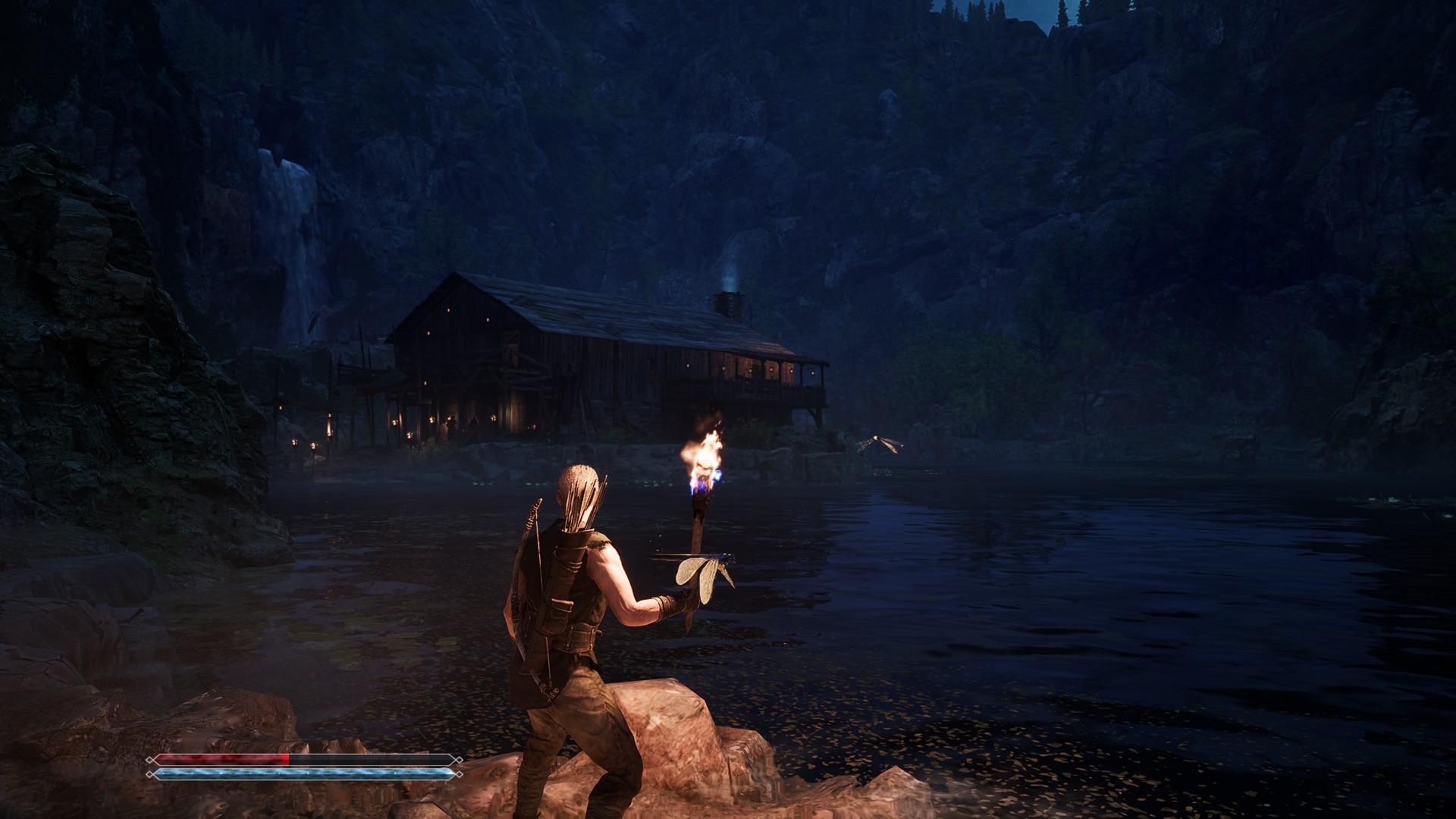
The remake’s visual overhaul strengthens these qualities considerably. Forests appear denser, settlements feel more lived in, and the Colony possesses a stronger sense of physical presence than ever before. Improvements to lighting, environmental detail, and terrain design help reinforce the oppressive atmosphere that has always been central to Gothic’s appeal. The Valley of Mines feels isolated, dangerous, and believable in a way that many larger open worlds struggle to achieve.
Exploration is further enhanced by the game’s refusal to over-explain itself. Players are encouraged to learn the geography of the world through observation and experience. Familiar landmarks gradually become navigational tools, shortcuts are discovered naturally, and knowledge of the environment becomes valuable in its own right. This approach requires more effort than simply following markers across a map, but it also makes exploration considerably more rewarding.
The sense of place remains one of Gothic’s defining strengths. Every camp, road, cave, and wilderness area contributes to the larger impression of a functioning society existing within a hostile environment. The remake preserves this quality remarkably well, demonstrating that strong world design depends far more on thoughtful construction than on raw scale.
Story and Writing
At first glance, Gothic’s premise appears relatively straightforward. The player assumes the role of the Nameless Hero, a prisoner thrown into a penal colony surrounded by a magical barrier. Within that barrier, various factions compete for power while attempting to survive under increasingly unstable conditions. While the central narrative eventually expands into larger conflicts, much of the game’s appeal comes from the smaller stories and interpersonal dynamics that define everyday life within the Colony.
The writing succeeds because it treats the setting as a functioning society rather than a backdrop for heroic adventures. Most characters are motivated by practical concerns, personal ambition, or simple survival. Relationships are often transactional, trust is difficult to earn, and individuals frequently pursue their own interests regardless of the player’s goals. This creates a world that feels more grounded than many fantasy RPG settings.

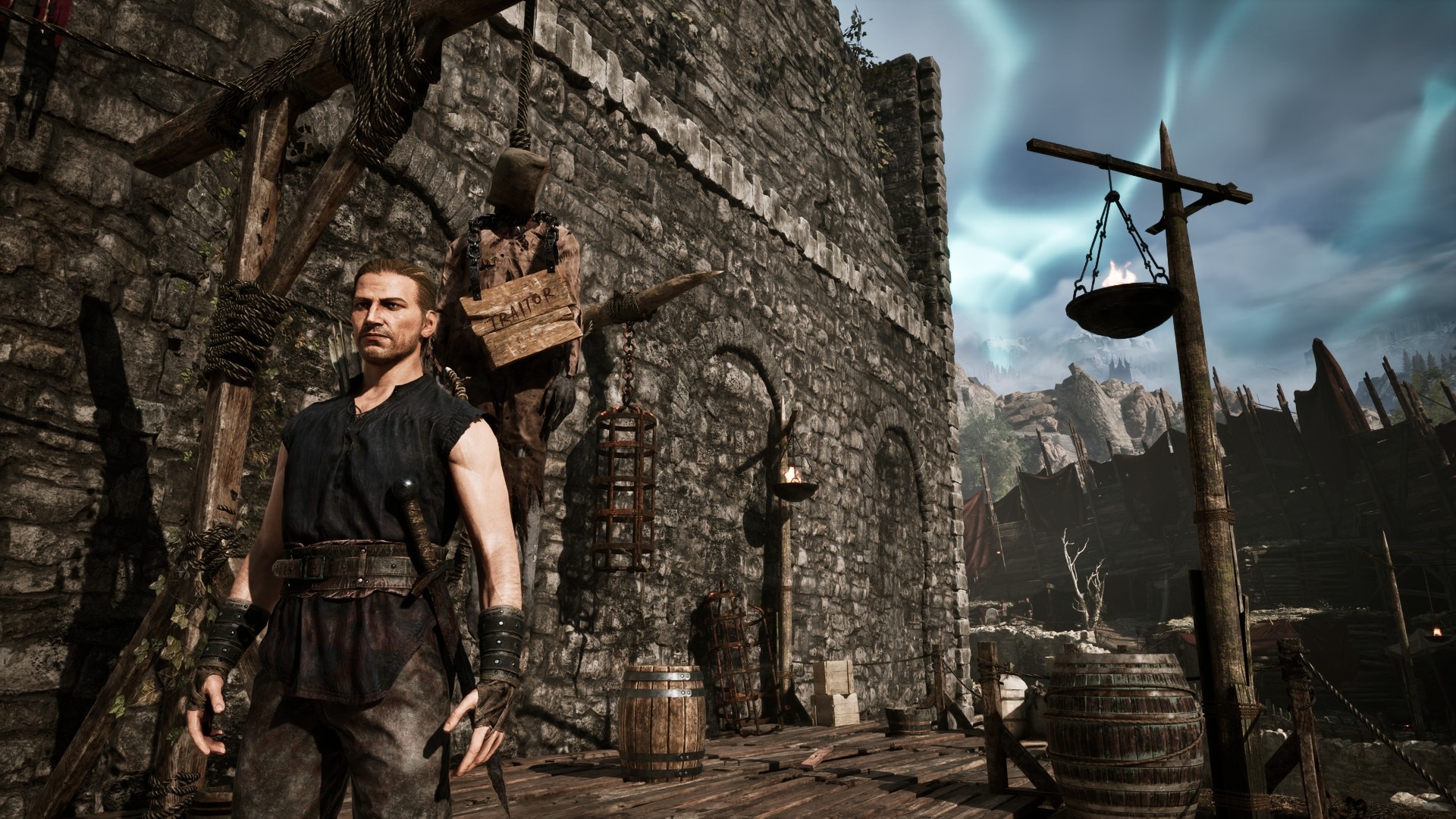
The remake’s improved presentation enhances these strengths. Conversations benefit from better animation, stronger cinematic direction, and more expressive character models, with subtle facial movements and improved camera framing adding extra weight to even simple exchanges. While the writing itself remains rooted in the original game’s structure, the updated presentation makes interactions feel more engaging and believable, helping the world feel more reactive and grounded without changing the underlying dialogue design.
One of the most refreshing aspects of Gothic’s narrative is its willingness to allow characters to be flawed, selfish, and occasionally unpleasant. The game rarely divides its cast into clearly defined heroes and villains. Instead, it presents a collection of individuals attempting to navigate difficult circumstances. This ambiguity contributes significantly to the setting’s authenticity and helps distinguish Gothic from many fantasy RPGs that rely on more conventional moral frameworks.
The story’s pacing generally works well because it grows naturally from the player’s increasing involvement in the Colony’s affairs. What begins as a struggle for survival gradually expands into something larger, but the transition feels earned rather than forced. Even when the broader narrative takes center stage, the social and political dynamics of the Colony remain central to the experience.
Factions and Progression
Few RPGs have handled faction design as effectively as Gothic, and the remake preserves one of the original game’s greatest strengths. Joining a faction is not simply a matter of selecting a preferred storyline. It represents a meaningful commitment that influences progression, equipment access, social relationships, and the player’s broader role within the world.
Each major group possesses its own priorities, internal conflicts, and distinct identity. More importantly, these differences extend beyond aesthetics. The decision to align with a particular faction affects how the player experiences the game and how other characters respond to them. This gives faction choice a level of significance that many RPGs struggle to achieve.
The remake successfully preserves the feeling that advancement must be earned. Gaining acceptance within a faction requires effort, and the process of proving oneself often feels more rewarding than the rewards themselves. Players begin as outsiders and gradually establish their place within the Colony’s social hierarchy. This progression reinforces one of Gothic’s central themes: respect is acquired through action rather than granted automatically.
Because faction systems are deeply integrated into character development and world-building, they contribute substantially to replay value. Different choices lead to different experiences, encouraging players to approach subsequent playthroughs from new perspectives.
NPCs and World Simulation
Long before dynamic NPC schedules became common throughout the genre, Gothic was already experimenting with systems designed to make its world feel alive. Characters followed routines, traveled between locations, performed jobs, and interacted with one another in ways that helped create the illusion of an independent society. While such features are no longer unusual, they remain an important part of Gothic’s identity.
The remake modernizes these systems through improved animations, more detailed environments, and stronger presentation overall. NPCs appear more believable as they go about their daily lives, and the Colony benefits significantly from the increased level of detail. Guards patrol settlements, workers perform assigned tasks, and inhabitants gather in social spaces according to the rhythms of daily life.
These details may seem minor individually, but collectively they contribute enormously to immersion. The world feels as though it exists independently of the player, which in turn makes exploration and interaction more meaningful. Rather than functioning as static quest dispensers, many characters appear to occupy genuine roles within the setting.
This emphasis on simulation remains one of Gothic’s most distinctive qualities. Even decades after the original release, relatively few RPGs have managed to create such a convincing sense of place through the interaction of simple but effective systems.
Visual Design and Atmosphere
The most immediately noticeable change in Gothic Remake is its presentation. While the original Gothic succeeded through atmosphere and world design rather than graphical fidelity, the remake benefits enormously from modern technology. The Valley of Mines has been rebuilt with a level of environmental detail that allows many of the locations that players remember from the original game to feel more tangible and convincing than ever before. Dense forests, rugged cliffs, weathered camps, and decaying structures all contribute to a stronger sense of place, while improvements to lighting and environmental effects help reinforce the harsh atmosphere that defines the setting.
What stands out most is that the remake generally avoids the temptation to dramatically reinterpret the world. There are modern visual flourishes throughout the experience, but the overall artistic direction remains recognizable. The Colony still feels like a rough and dangerous prison settlement rather than a conventional fantasy kingdom, and the wilderness continues to project a sense of isolation and unpredictability. Familiar landmarks retain their identity even as they benefit from vastly improved textures, geometry, and environmental detail.
Character models have also received a substantial upgrade. Conversations are supported by more expressive facial animations and stronger cinematic presentation, making interactions feel more natural than they did in the original game. Creature designs similarly benefit from modern rendering techniques while remaining faithful to their established appearance. The result is a visual overhaul that succeeds not because it transforms Gothic into something new, but because it allows the original artistic vision to be realized with a level of detail that was impossible in 2001.
Sound Design and Voice Acting
Audio plays an important role in maintaining the atmosphere of the Valley of Mines, and Gothic Remake generally handles this aspect well. Environmental sound design contributes significantly to the sense of immersion, with wildlife, weather effects, distant activity, and ambient noises helping the world feel active even when little is happening directly in front of the player. Exploring remote wilderness areas sounds noticeably different from navigating the crowded camps, which helps individual locations establish their own identity.
The soundtrack remains one of the game’s strongest atmospheric tools. Rather than overwhelming the experience with constant musical accompaniment, the score is often used selectively, allowing quieter moments to rely on environmental audio. This approach suits Gothic particularly well because so much of the game’s appeal comes from simply existing within the world and observing its rhythms. Music enhances important moments without constantly demanding attention, creating a balance that feels appropriate for the setting.
Voice acting represents one of the more difficult aspects of any remake because comparisons with the original are inevitable. The performances generally succeed in conveying the rough personalities and social tensions that define life within the Colony, while the improved presentation helps conversations feel more engaging overall. As with most large RPGs, some performances are stronger than others, but the overall quality remains consistent enough that voice work rarely detracts from the experience.

Technical Performance on PC
From a technical perspective, Gothic Remake is a far more ambitious production than the original game, and that ambition inevitably places greater demands on hardware. The combination of modern graphical features, detailed environments, advanced lighting systems, and complex NPC simulation creates a significantly more demanding experience than anything associated with the series in the past.
Performance is generally dependent on hardware configuration and graphical settings, but the game manages to deliver its visual improvements without fundamentally compromising the experience. Large settlements, dense wilderness areas, and visually complex scenes naturally place greater strain on systems than quieter locations, though the overall experience remains stable enough that performance concerns rarely overshadow exploration or progression.
As is often the case with large open-world role-playing games, minor technical issues occasionally appear. Animation glitches, pathfinding inconsistencies, camera quirks, and other small problems can emerge during extended play sessions. Most of these issues are relatively minor rather than progression-blocking, and they tend to be the sort of imperfections commonly associated with complex RPGs built around extensive world simulation systems. While they can occasionally break immersion, they rarely undermine the strengths that define the broader experience.
Ultimately, the technical side of Gothic Remake feels less like a source of major concern and more like a reflection of the game’s scope. The occasional rough edge is noticeable, but it does little to diminish the effectiveness of the world, progression systems, or atmosphere that form the foundation of the experience.
Value and Pricing
The one area where Gothic Remake is likely to generate debate among players has little to do with its design and more to do with its asking price. While the game is far more ambitious than a simple remaster and includes substantial visual, technical, and mechanical improvements, it is still fundamentally a remake of a role-playing game that first appeared in 2001. At launch, Gothic Remake carries a price tag that places it alongside entirely new RPG releases, and that comparison inevitably raises questions about value.
To the remake’s credit, this is not a minimal-effort modernization. Alkimia Interactive has rebuilt the game from the ground up, expanded certain areas, revised systems, and invested heavily in recreating the original experience for modern hardware. Players who have a strong attachment to Gothic or who are specifically interested in old-school RPG design will likely find enough content and replayability to justify the cost. The faction system, open-ended progression, and lengthy quest structure still provide dozens of hours of gameplay, particularly for those who enjoy exploring every corner of the Colony.
At the same time, the price becomes harder to ignore when considering the game’s rough edges. Technical issues, occasional bugs, uneven voice performances, and some lingering design frustrations make it difficult to view Gothic Remake as a polished premium release in the same way as the genre’s biggest modern productions. The remake often feels like a very good recreation of a cult classic rather than a large-scale reinvention of it.
For dedicated Gothic fans, the asking price will probably be acceptable simply because there are few RPGs that offer a similar experience. Newcomers, however, may find that waiting for a discount represents the more attractive option, especially if they are curious about the game’s unique design but not necessarily committed to revisiting a classic RPG through a modern lens.
Final Verdict: 7.5/10
Gothic Remake succeeds because it approaches its source material with a clear understanding of what made the original special. Rather than attempting to reinvent Gothic as a contemporary action RPG or streamline every aspect of its design, Alkimia Interactive has focused on preserving the systems, progression structure, and world design philosophy that established the series’ reputation in the first place.
The result is not a game that will appeal to everyone. It remains demanding, occasionally unforgiving, and noticeably less interested in player convenience than many modern RPGs. Yet those qualities are also central to its appeal. Gothic’s world feels meaningful because it does not revolve entirely around the player. Progression feels rewarding because it requires effort. Exploration feels satisfying because discovery emerges naturally from the environment rather than being dictated by interface design.
For longtime fans, the remake offers a respectful and thoughtfully modernized return to one of PC gaming’s most memorable settings. For newcomers, it provides an opportunity to experience a foundational RPG whose influence continues to be felt throughout the genre. More importantly, it demonstrates that some design principles remain effective regardless of age. Gothic may have been rebuilt for modern hardware, but the qualities that made it memorable more than two decades ago remain firmly intact.