Few survival games have left the kind of lasting impression that the original Subnautica managed to create. Unknown Worlds combined open-ended survival mechanics with environmental storytelling and genuine psychological tension in a way that very few games in the genre have successfully replicated since. Its underwater setting was not simply a visual gimmick. The ocean itself became the defining mechanic. Fear came from distance, silence, and uncertainty rather than scripted horror sequences or cheap jump scares. Because of that, expectations surrounding Subnautica 2 were unusually high.
The sequel arrives in Early Access carrying a difficult responsibility. It needs to preserve the identity of the original while also justifying its existence as something larger than a graphical upgrade or a recycled survival sandbox. After spending dozens of hours exploring its current build on PC, it is clear that Unknown Worlds understands exactly what made the series work in the first place. More importantly, the studio appears determined to push the formula forward rather than merely reproduce familiar ideas.
Subnautica 2 immediately feels more ambitious than either previous game. The environments are larger and denser, creature behavior is more dynamic, base building is substantially deeper, and the move to Unreal Engine 5 gives the world an atmosphere that often borders on intimidating. The addition of optional cooperative multiplayer fundamentally changes the rhythm of exploration, sometimes for better and occasionally at the expense of the isolation that defined the original experience. At the same time, this remains an unfinished game. Story arcs are incomplete, balancing issues still exist, and portions of the world clearly require further iteration.
Even with those limitations, the current version of Subnautica 2 already demonstrates remarkable confidence. Unlike many Early Access survival titles that launch with promising concepts but little structure, this already feels like a cohesive experience. The foundation is strong, the atmosphere is exceptional, and the core gameplay loop remains as addictive as ever.
Gameplay and Mechanics
At its core, Subnautica 2 still revolves around the same survival loop that defined the series from the beginning. Players gather resources, craft tools, establish safe habitats, improve their ability to survive in increasingly hostile environments, and gradually descend deeper into dangerous territory. That structure remains compelling because the game constantly ties progression to discovery.
Every new biome introduces unfamiliar materials, every crafted upgrade opens another path forward, and every expedition into unexplored water creates a mixture of excitement and anxiety that very few survival games manage to sustain for long periods.
What separates Subnautica 2 from its predecessors is how interconnected its systems feel. The original game occasionally reduced progression to a straightforward climb toward better equipment and deeper regions. Here, survival mechanics are more reactive and specialized. Environmental hazards vary significantly between ecosystems, meaning players cannot rely on a single universal strategy for exploration. Certain regions punish reckless movement through narrow cave systems filled with unstable flora, while others focus on navigation through open water with extremely limited visibility. Infected ecosystems introduce additional complications, including hostile environmental effects and creatures that behave less predictably than the fauna in safer areas.
The survival mechanics themselves remain accessible without becoming trivial. Oxygen management, food, water, temperature regulation, and power systems all play important roles, but the game wisely avoids turning them into constant interruptions. Resource gathering is smoother than before, inventory management is less frustrating, and crafting flows naturally into exploration rather than slowing it down. This balance is essential because Subnautica has always worked best when survival systems support the atmosphere instead of overwhelming it with unnecessary busywork.
The pacing is also noticeably stronger than it was in Below Zero. That game often interrupted exploration with frequent story beats and character interactions, which weakened the sense of solitude that made the original so effective. Subnautica 2 takes a more restrained approach. Long stretches of silence are common, and the game trusts players to create their own momentum through curiosity rather than constant narrative direction. That decision benefits the atmosphere enormously because exploration once again feels personal and self-motivated.
Combat remains intentionally limited, which is exactly the right approach for this series. The focus is still on survival, avoidance, and adaptation rather than direct confrontation. Dangerous creatures are obstacles to navigate around rather than enemies to eliminate. This design philosophy preserves the vulnerability that makes the ocean feel threatening. Even after dozens of hours, entering a new biome without knowing what lives there can still produce genuine tension.
Exploration and World Design
Exploration has always been the defining strength of the series, and Subnautica 2 improves upon that aspect in several meaningful ways. The world feels more organic, more reactive, and significantly more intimidating than previous entries. Creature ecosystems behave with greater complexity, environmental animation creates a stronger sense of motion throughout the ocean, and visibility changes dynamically depending on depth, weather conditions, and environmental effects.
One of the most impressive aspects of the game is how effectively it manipulates visibility and scale. Unreal Engine 5 allows Unknown Worlds to create underwater spaces with extraordinary density and atmosphere. Light behaves differently depending on the surrounding environment, and deeper regions frequently become oppressive simply because players lose all sense of spatial awareness. Massive shapes emerge slowly through darkness, distant sounds echo through enclosed spaces, and the ocean often feels far larger than it actually is.
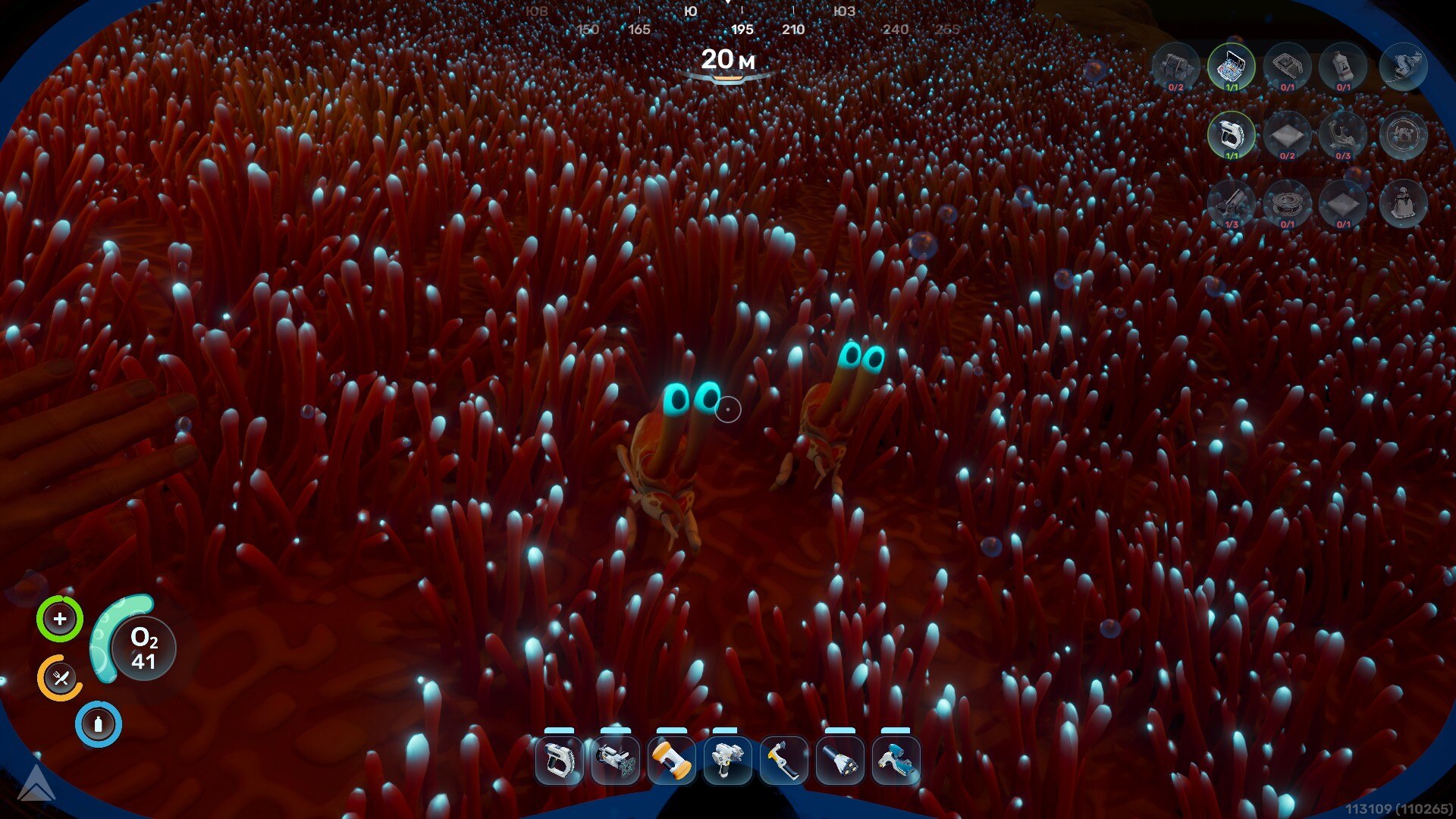
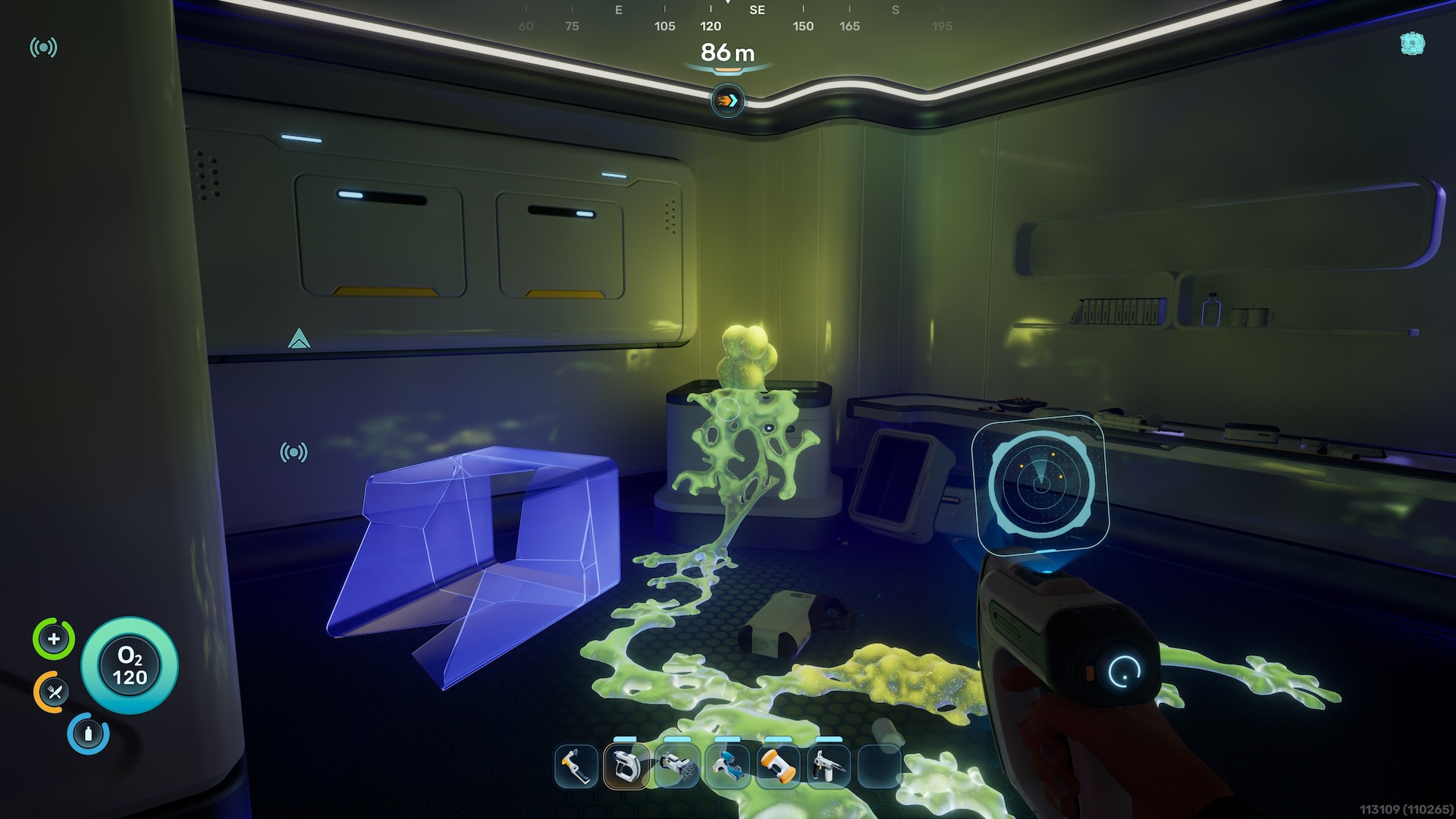
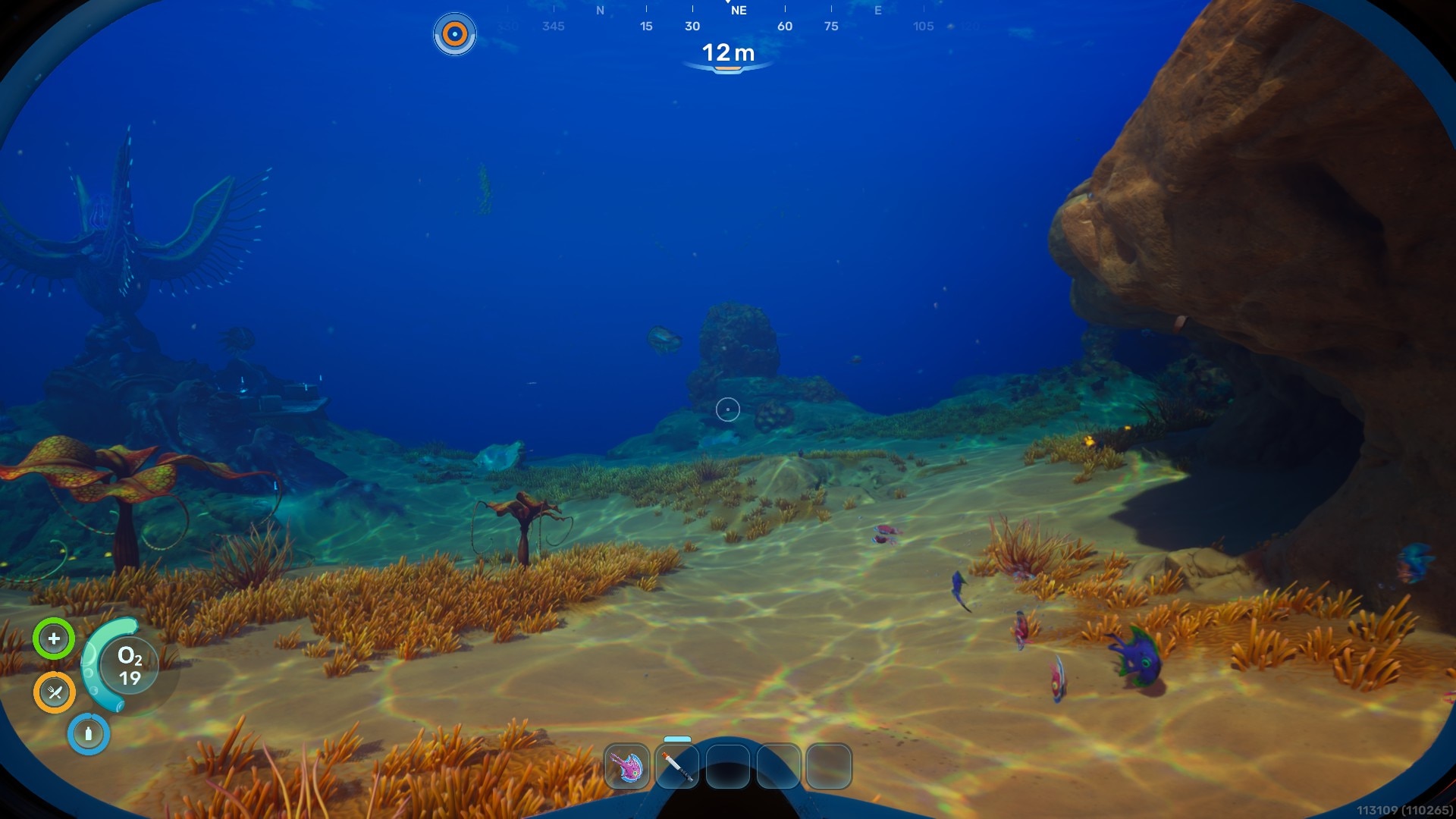
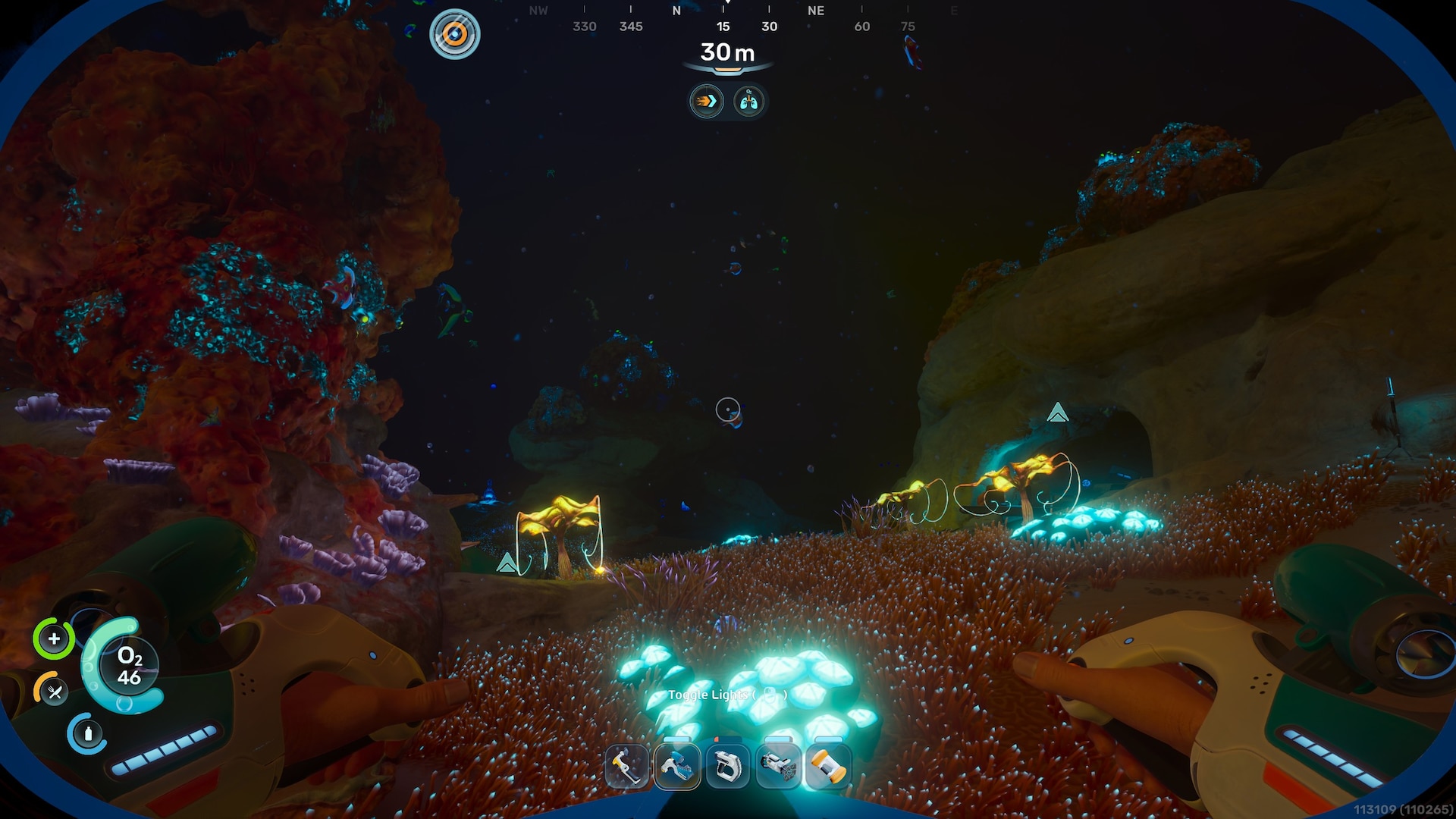
Biome variety is already impressive for an Early Access release. The opening areas intentionally resemble familiar Subnautica territory, using bright coral formations and relatively manageable wildlife to create a temporary sense of comfort. The deeper players travel, however, the more unsettling the world becomes. Certain biomes emphasize vertical traversal through enormous underwater trenches, while others become dense labyrinths of organic tunnels and narrow cave systems. Some environments focus heavily on environmental storytelling through abandoned facilities, damaged research equipment, and evidence of failed expeditions.
Unknown Worlds continues to excel at environmental storytelling because it rarely explains too much. Instead of relying on lengthy exposition, the game encourages players to piece together information naturally through exploration. Discovering traces of previous survivors while searching for resources creates a sense of mystery that feels organic rather than forced. Even small discoveries become memorable because players uncover them at their own pace.
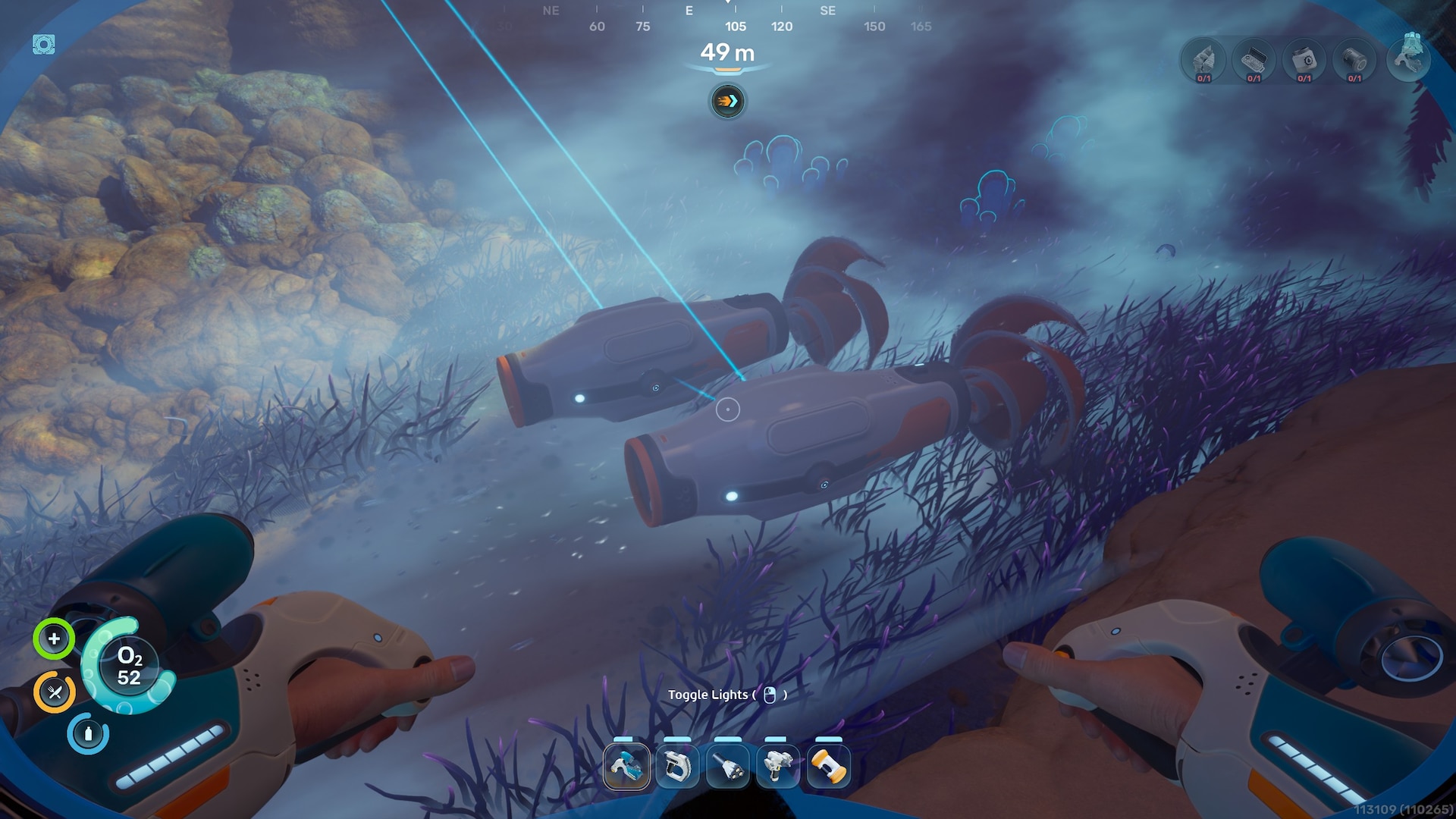
Traversal has also improved considerably. Vehicles feel more responsive, movement through open water is smoother, and the new submersibles appear designed around specialized functions instead of serving as simple linear upgrades. Some are optimized for scouting and maneuverability, while others focus on cargo transport or defensive capabilities. The world design complements these vehicles effectively, making travel feel smoother and less cumbersome than in previous games.
The only major limitation at the moment is the unfinished nature of certain regions. Some progression paths currently lead toward obvious development boundaries or incomplete areas that clearly require further work. While this does not ruin the experience, it occasionally disrupts immersion and serves as a reminder that the game remains in active development.
Base Building and Progression
Base building has received one of the most substantial upgrades in the sequel. The original Subnautica featured a satisfying but somewhat rigid construction system built around modular corridors and compartments. Subnautica 2 expands that concept significantly by allowing players far greater freedom in how they design and organize underwater habitats.
Habitats now feel more like believable living spaces rather than collections of identical utility rooms. Interior customization options are broader, room layouts are more flexible, and environmental lighting plays a much larger role in establishing atmosphere. Returning to a carefully designed base after a stressful expedition into dangerous territory creates a genuine sense of relief, and the game understands how important those emotional contrasts are.
The progression systems tied to construction are also more engaging. Power management requires more thoughtful planning because different energy sources function better in specific environmental conditions. Instead of discovering one clearly optimal solution and relying on it indefinitely, players are encouraged to adapt their infrastructure depending on where they choose to build.
Crafting and resource processing are generally streamlined in smart ways. Fabrication is faster, blueprint tracking is clearer, and storage management is more convenient than before. Importantly, the game avoids falling into the common survival genre trap of confusing tedium with depth. Gathering materials remains important, but it rarely becomes so repetitive that it interrupts the sense of exploration.
There are still balancing issues, particularly during the later stages of the current Early Access build. Some advanced construction projects demand extremely large quantities of rare resources, which can slow progression more than necessary. A few crafting branches also feel incomplete, with upgrade paths that end abruptly or systems that appear designed for future expansion. These issues are understandable given the game’s unfinished state, but they are noticeable enough to occasionally affect pacing.
Even with those shortcomings, the overall building systems are excellent. Base construction no longer feels like a secondary mechanic supporting exploration. Instead, it has become one of the central pillars of the experience.
Multiplayer and Co-op Experience
Perhaps the most significant change in Subnautica 2 is the addition of optional cooperative multiplayer. For years, fans requested the ability to explore the series’ underwater worlds alongside friends, and Unknown Worlds has finally implemented support for four-player co-op.
The inclusion of multiplayer fundamentally changes the tone of the experience. The original Subnautica relied heavily on isolation to create tension. Being completely alone in an alien ocean amplified every sound, every creature encounter, and every descent into darkness. Cooperative play naturally softens some of that vulnerability because players can rely on one another during dangerous situations.
Surprisingly, the game still manages to preserve a surprising amount of tension even in multiplayer sessions. Deep-water expeditions remain chaotic and stressful because visibility is often poor, navigation becomes complicated, and large predators can easily separate groups. Some of the strongest moments emerge naturally when coordinated plans suddenly collapse during a dangerous encounter.
Base building benefits enormously from cooperative play. Constructing large underwater facilities with friends feels genuinely rewarding because players naturally divide responsibilities between exploration, resource gathering, and infrastructure management. The systems support that kind of teamwork effectively, and multiplayer progression generally feels smooth.
That said, the current implementation still needs refinement. Progress synchronization occasionally behaves inconsistently, base permissions are somewhat limited, and certain survival mechanics become dramatically easier with multiple players. Resource scarcity matters less, dangerous encounters become more manageable, and exploration loses some of its oppressive atmosphere.
As enjoyable as cooperative play can be, Subnautica 2 still feels strongest as a single-player experience. The ocean is simply more frightening when nobody else is there to help.
Story, Tone, and Atmosphere
Subnautica 2 adopts a more restrained narrative style than Below Zero, and that decision improves the overall experience considerably. The story remains important, but it rarely interrupts exploration or overwhelms the atmosphere with constant dialogue. Instead, Unknown Worlds returns to a structure where players uncover information gradually through environmental clues, transmissions, research logs, and isolated discoveries.
Without delving into major spoilers, the current storyline focuses heavily on biological corruption, failed scientific operations, and the psychological strain of surviving within unstable ecosystems. The tone is noticeably darker than previous entries, occasionally bordering on survival horror without fully embracing that genre.
Audio design plays an enormous role in establishing that atmosphere. Distant creature calls echo through enclosed cave systems, damaged machinery emits distorted mechanical noises in abandoned facilities, and radio transmissions frequently degrade into unsettling static. Just as importantly, the game knows when to remain quiet. Long stretches of exploration occur with little more than environmental ambience, which allows tension to build naturally.
The soundtrack is subtle but highly effective. Rather than overwhelming scenes with dramatic orchestration, the music quietly enhances exploration and emotional transitions. It complements the world instead of competing with it.
Voice acting is also integrated more carefully than it was in Below Zero. Character interactions provide context without constantly breaking the sense of solitude, and most dialogue remains concise enough to avoid becoming intrusive.
Environmental storytelling continues to be one of the series’ greatest strengths. Discovering evidence of previous expeditions deep beneath the surface remains remarkably effective because the game resists the temptation to explain every detail. Players are left to interpret many events for themselves, which makes the world feel more believable and mysterious.
The most obvious weakness is that the narrative remains incomplete due to the game’s Early Access status. Major story arcs currently end abruptly, several mysteries lack proper resolution, and certain sequences clearly function as placeholders for future content. Anyone expecting a fully realized narrative should keep that limitation in mind.
Visual Design and Presentation
Subnautica 2 is one of the most visually striking survival games currently available on PC, not because it pursues photorealism, but because every artistic decision consistently supports the atmosphere. The ocean is beautiful without ever feeling entirely safe, and the game constantly shifts between wonder and dread with impressive confidence.
Bioluminescent ecosystems glow with remarkable color and detail, yet even the most visually stunning environments can become deeply uncomfortable once visibility changes or unfamiliar sounds emerge from the darkness. Unknown Worlds understands that underwater horror depends less on sudden shocks and more on uncertainty.
Creature design remains exceptional throughout the current build. The series continues to avoid generic monster design in favor of strange, alien lifeforms that feel biologically distinct. Some species are visually mesmerizing until the moment they become hostile, which creates a fascinating contrast between curiosity and fear.
The infected creatures are especially memorable. Corruption spreads across their bodies in disturbing ways that suggest ecosystem collapse rather than exaggerated mutation, reinforcing the darker tone of the narrative.
Environmental scale has improved dramatically as well. Massive underwater structures create a powerful sense of insignificance, while enormous open-water regions feel intimidating without appearing empty. The game regularly produces unscripted moments where players simply stop moving to observe the surrounding environment.
Outside the world itself, presentation remains less polished. User interface elements still require refinement, menu design is fairly plain, and inventory readability occasionally becomes cluttered during extended crafting sessions. These are relatively minor issues, but they stand out because the rest of the visual presentation is so strong.
PC Performance and Technical Aspects
The transition to Unreal Engine 5 raised understandable concerns prior to release. Many recent UE5 titles have struggled with optimization problems, inconsistent frame pacing, and shader compilation stutter, particularly on PC. Subnautica 2 performs better than expected, although it is not entirely free of technical issues.
Performance is generally stable across a wide range of hardware configurations, especially considering the complexity of the environments. Dense underwater regions occasionally produce frame-time spikes during rapid traversal, and certain biome transitions still reveal noticeable loading behavior, but the overall experience is surprisingly polished for an Early Access survival game.
The PC version includes a respectable range of graphics options, and upscaling technologies help maintain performance on mid-range systems without severely compromising visual quality. CPU utilization also appears more stable than it was in the original Subnautica, which occasionally struggled with inconsistent performance regardless of hardware power.
The environmental rendering is arguably the game’s greatest technical achievement. Water simulation, volumetric lighting, particle effects, and visibility systems combine to create underwater spaces with extraordinary atmosphere. Light filtering through different depths dramatically changes the emotional tone of each biome, while dense fog and particulate matter make deeper regions feel physically oppressive.
Creature animation quality has improved significantly as well. Larger predators move with convincing weight and momentum, smaller fauna display more varied behavior, and ecosystems feel far more reactive than before. Base interiors also benefit heavily from the new engine, with improved reflections, lighting bounce, and environmental detail making constructed habitats feel genuinely believable.
The audio mix deserves equal praise. Positional sound design is excellent throughout the experience, and players frequently learn to identify threats through audio cues before they become visible. This contributes enormously to the constant feeling of uncertainty that defines the series.
Naturally, bugs still exist. Creature pathfinding occasionally breaks, physics glitches can occur during vehicle interactions, and multiplayer synchronization issues remain present in larger cooperative sessions. However, most problems feel relatively minor compared to the technical instability commonly associated with Early Access survival games.
Early Access State
Any serious evaluation of Subnautica 2 must acknowledge the reality of its Early Access status. This is not a finished game, and players expecting a fully polished experience with complete narrative arcs, finalized systems, and perfectly balanced progression should approach it with the understanding that substantial changes will continue throughout development.
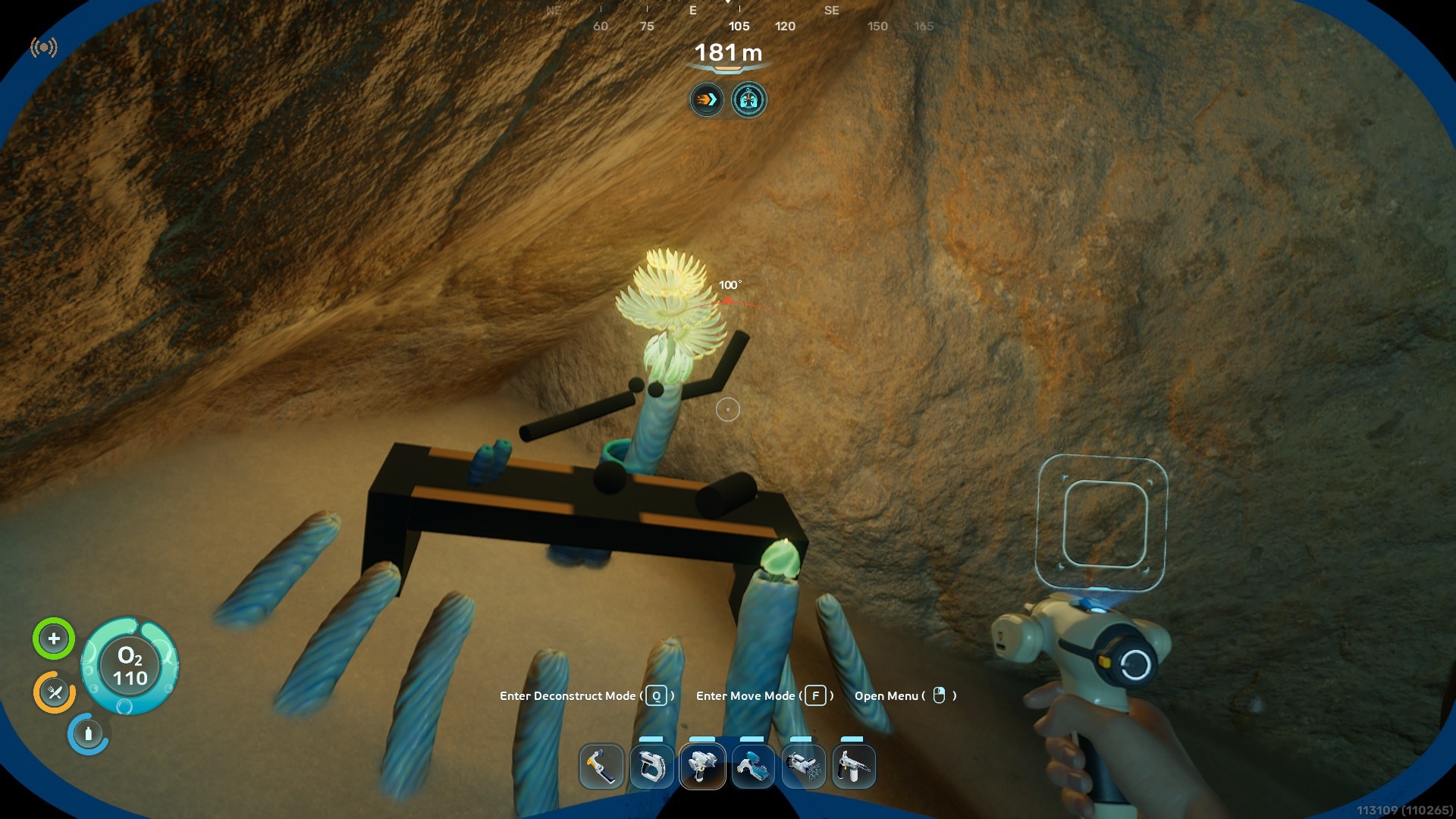
At the moment, the game already offers a surprisingly large amount of content, but there are visible gaps across nearly every major system. Certain crafting trees end abruptly, some advanced technologies clearly exist in placeholder form, and a handful of progression paths currently feel incomplete. There are moments where exploration naturally pushes players toward areas that are either blocked off entirely or only partially implemented, which occasionally disrupts the sense of immersion the game works so hard to establish.
Narrative structure is another area where the unfinished nature of the project becomes immediately obvious. The current storyline introduces several compelling mysteries and strong thematic ideas involving ecosystem collapse, biological corruption, and survival in hostile environments, but many of those threads stop suddenly without meaningful resolution. Some late-game sequences feel more like framework than finished content, and a few story events appear designed primarily to establish systems or locations that will become more important later in development.
Balance also remains inconsistent in places. Resource gathering is generally smoother than it was in previous games, but certain late-game crafting requirements become noticeably grind-heavy, especially when constructing larger bases or advanced technology upgrades. Some materials appear too infrequently relative to their importance, while other resources become almost irrelevant after the early hours. These issues are not severe enough to ruin progression, but they do create pacing fluctuations that occasionally slow the momentum of exploration.
Multiplayer introduces another layer of unpredictability. Cooperative play is already functional and surprisingly enjoyable, but synchronization problems still appear during larger building sessions or complicated expeditions. Players may occasionally encounter inventory inconsistencies, delayed environmental interactions, or temporary desync issues involving creature behavior and vehicle positioning. None of these problems are catastrophic in the current build, though they remain noticeable enough to remind players that the multiplayer systems are still evolving.
Technical issues are present as well, even if the overall state of the PC version is stronger than expected for an Early Access Unreal Engine 5 title. Frame-time spikes can occur during rapid traversal between dense environments, physics glitches occasionally produce strange interactions with terrain or vehicles, and creature pathfinding sometimes breaks in confined areas. The encouraging part is that most problems feel manageable rather than fundamentally disruptive.
Perhaps the most important thing to understand about Subnautica 2 in its current state is that the game already feels directionally confident. Many survival games enter Early Access with broad ideas but little understanding of what their final identity should be. Subnautica 2 does not have that problem. Even in unfinished form, the atmosphere is exceptional, the exploration loop is compelling, and the emotional tension that defined the original game is already fully present.
That foundation matters far more than temporary balancing issues or incomplete storylines because those problems can be refined over time. The difficult part is creating a world that players genuinely want to explore despite the danger it represents. Subnautica 2 succeeds at that almost immediately, which is why the current version remains so impressive despite its obvious limitations.
Final Verdict: 8/10
Subnautica 2 already demonstrates a remarkable understanding of what made the original game so memorable. Rather than simply recreating familiar ideas with improved graphics, Unknown Worlds has expanded nearly every major system while preserving the atmosphere of vulnerability and curiosity that defined the series from the beginning.
The world is larger, stranger, and more reactive than before. Exploration remains consistently rewarding, base building has evolved into a far deeper system, and Unreal Engine 5 gives the ocean an extraordinary sense of physical presence. Cooperative multiplayer changes the emotional tone of the experience, sometimes reducing the isolation that originally made the series so frightening, but it also creates new forms of emergent tension that work surprisingly well.
The game’s unfinished state inevitably creates limitations. Narrative arcs remain incomplete, balancing still requires work, and technical issues occasionally interrupt immersion. Even so, the current version already stands above most survival games available on PC.
What ultimately makes Subnautica 2 so compelling is its understanding of curiosity as a gameplay mechanic. The game constantly persuades players to descend deeper into dangerous environments simply because they need to know what is waiting below. Very few games manage to create that feeling consistently.
Subnautica 2 does, and even in Early Access, that makes it one of the most impressive survival experiences currently available.