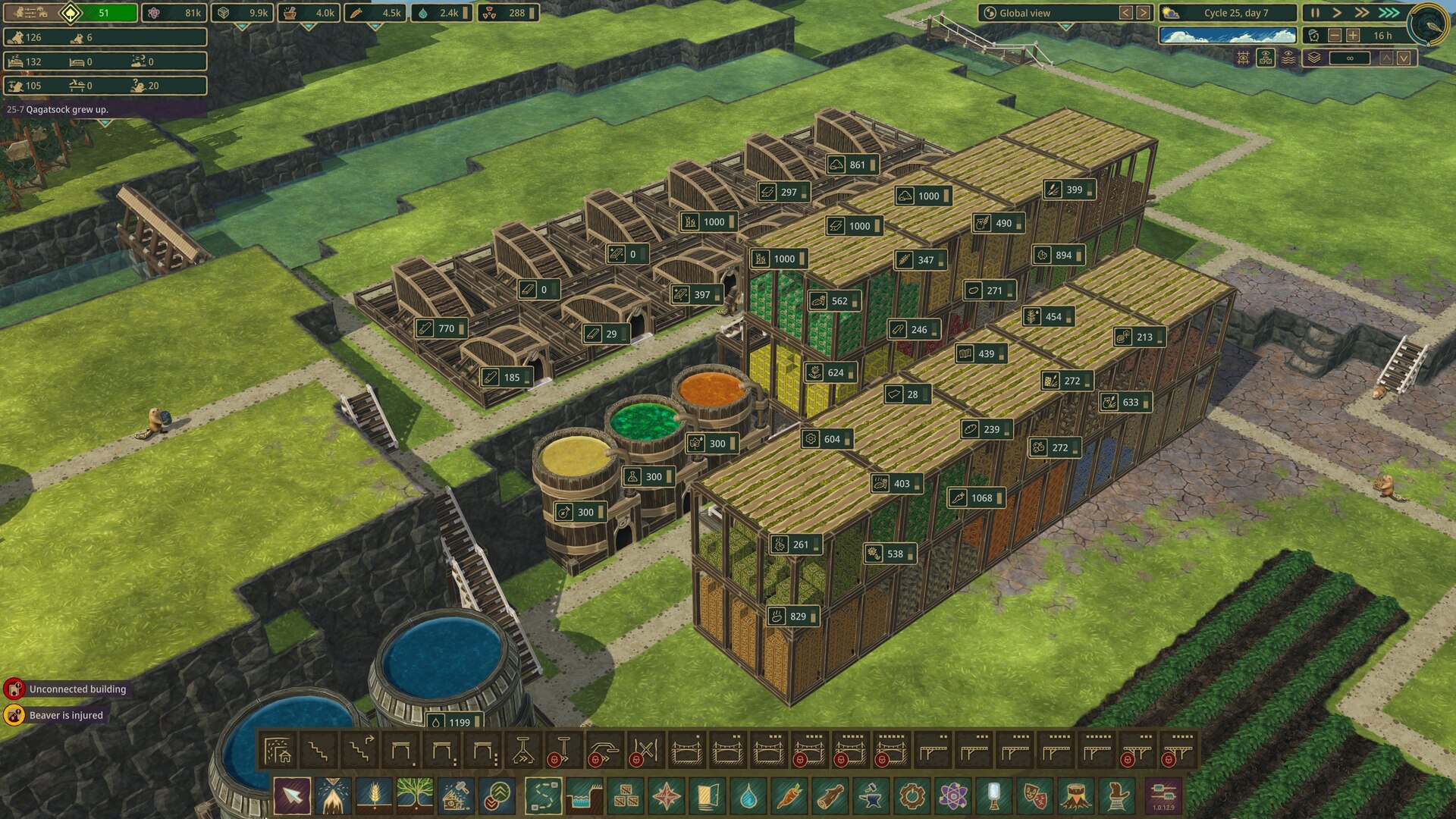
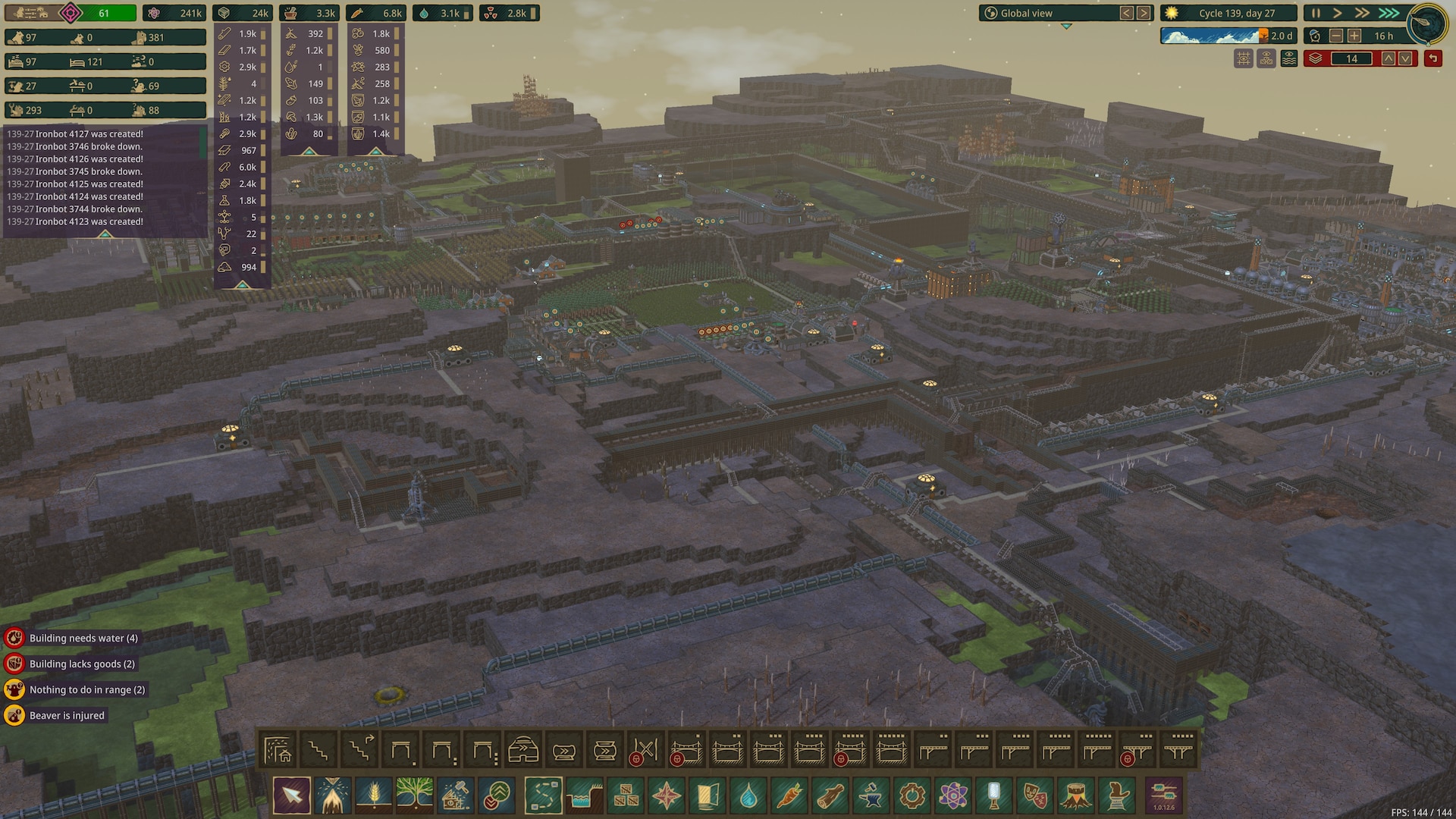
City-building games tend to follow familiar rhythms, gradually layering complexity on top of a stable foundation until players are managing sprawling, intricate systems that operate with minimal direct input. While many titles in the genre succeed through scale or variety, only a few manage to introduce a central mechanic that meaningfully reshapes how every decision is made. Timberborn distinguishes itself by doing precisely that, anchoring its entire design around water management while presenting a world in which beavers have inherited the remnants of human civilization.
What initially appears to be a charming and slightly eccentric premise quickly evolves into something far more deliberate and mechanically rich. The absence of humanity is not merely a narrative backdrop but a justification for the systems that define the game, as beavers naturally lend themselves to construction, water control, and environmental adaptation. This thematic cohesion strengthens the overall experience, giving purpose to mechanics that might otherwise feel abstract in a more conventional setting.
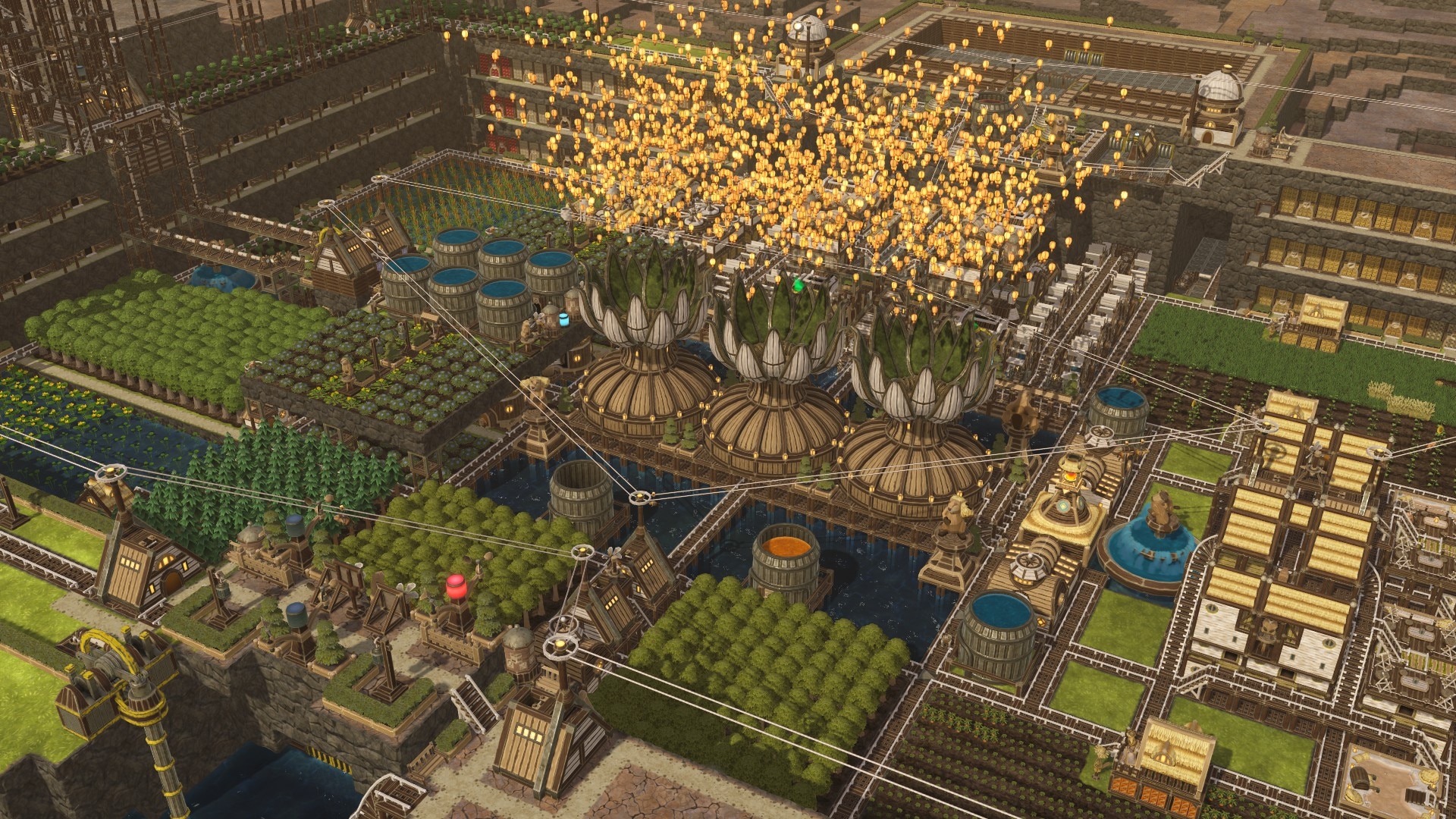
Following its full release after an extended early access period, Timberborn arrives with a level of refinement that reflects years of iteration and community feedback. It does not attempt to overwhelm players with sheer content volume or excessive complexity at the outset, instead opting for a measured progression that gradually reveals its depth. This approach makes the game accessible without sacrificing long-term engagement, although it also introduces pacing challenges that become more apparent over time.
Gameplay and Mechanics
At its foundation, Timberborn operates within the well-established framework of colony management, tasking players with guiding a small population from fragile beginnings to long-term sustainability. The early stages emphasize the essentials, requiring players to gather wood, construct basic housing, establish food production, and create the infrastructure necessary to support growth. These opening hours are intentionally straightforward, allowing players to become familiar with the interface and core systems without feeling overwhelmed.
However, even in these initial moments, the game begins to hint at its defining feature. Water is not simply a resource to be collected or consumed but a dynamic force that shapes the entire environment. Rivers flow continuously across the map, and their behavior changes over time, requiring players to think beyond immediate needs and consider how the landscape itself can be altered to ensure survival.
The introduction of seasonal cycles transforms this system into the central challenge of the game. Periods of abundant water create opportunities for expansion, encouraging players to increase food production, extend their settlements, and invest in new infrastructure. These moments of growth are inevitably followed by droughts, during which water levels drop, irrigation fails, and previously stable systems can quickly collapse if adequate preparation has not been made.
This cyclical structure creates a constant tension that drives the gameplay forward. Success is not measured solely by how much a player can build, but by how well they can anticipate and prepare for future scarcity. Constructing a dam becomes a strategic decision rather than a simple upgrade, as its placement and capacity determine whether a settlement can endure extended dry periods. Similarly, the layout of farmland and the positioning of water sources require careful planning to ensure that crops remain viable even when conditions become unfavorable.
What makes this system particularly effective is the way it integrates seamlessly with the rest of the game. Resource management, population growth, and infrastructure development are all influenced by water availability, creating a cohesive experience in which no system feels isolated. Every decision carries weight, and even small mistakes can have cascading effects that force players to adapt their strategies.
City Building and Automation
As settlements expand and stabilize, Timberborn gradually introduces more complex production systems, shifting the focus from survival to optimization. This transition is a natural evolution of the gameplay, as players move beyond meeting basic needs and begin to refine their cities for efficiency and resilience.
Production chains become increasingly interconnected, requiring multiple steps and resources to produce advanced materials. This added complexity encourages players to think more strategically about how different parts of their settlement interact, as inefficiencies in one area can create bottlenecks that affect the entire system. Managing these relationships becomes a central aspect of the mid-game experience, requiring careful planning and constant adjustment.

The introduction of automation systems further expands these possibilities, allowing players to create settlements that respond dynamically to changing conditions. While not as intricate as the systems found in dedicated automation-focused games, these tools provide enough flexibility to enable meaningful experimentation. Players can adjust water flow based on seasonal changes, prioritize certain production chains during periods of scarcity, and create more resilient systems that require less direct intervention.
Despite its strengths, the transition into automation is not perfectly paced. The game spends a significant amount of time in its earlier stages before these systems become fully available, which can make the mid-game feel somewhat constrained. Once unlocked, however, automation adds a new layer of engagement, transforming the experience from reactive management into proactive design.
Map Design and Vertical Construction
One of the most distinctive aspects of Timberborn is its emphasis on verticality, which fundamentally alters how players approach city design. Unlike traditional city-builders that primarily expand across a flat surface, this game encourages players to build upward, creating multi-layered settlements that maximize available space.
This approach introduces a spatial complexity that extends beyond simple placement decisions. Players must consider how different levels connect, ensuring that pathways remain efficient and accessible while avoiding unnecessary congestion. The ability to stack buildings and create elevated infrastructure allows for creative solutions, particularly in environments where space is limited or terrain is uneven.
The interaction between vertical construction and water management further enhances this system. Elevation can be used to protect critical infrastructure from flooding or to ensure that farmland remains irrigated during droughts. Players may find themselves reshaping entire sections of the map, constructing terraces, channels, and reservoirs that integrate seamlessly with their multi-level cities.
Map design plays a crucial role in supporting these mechanics, offering varied landscapes that encourage different approaches. Some maps provide ample space for expansion, while others present natural obstacles that require careful planning and adaptation. This variety helps maintain engagement across multiple playthroughs, even if the core gameplay loop remains consistent.
Factions and Strategic Variety
The inclusion of two distinct factions adds a layer of strategic variation to Timberborn, giving players the opportunity to approach the game from different perspectives. The Folktails emphasize sustainability and long-term balance, focusing on agricultural efficiency and renewable systems that align closely with the natural environment. In contrast, the Iron Teeth adopt a more industrial approach, prioritizing productivity and mechanical solutions that allow for faster expansion and greater output.
These differences influence how players manage resources and plan their settlements, encouraging experimentation with different strategies. However, the underlying mechanics remain largely the same, limiting the extent to which each faction feels truly distinct. While their unique buildings and efficiencies provide meaningful variation, they do not fundamentally change the structure of the gameplay.
This limitation becomes more apparent over extended playtime, as players may begin to notice similarities between different runs. Expanding the range of factions or introducing more pronounced differences could enhance replayability, but even in its current form, the system provides enough variety to keep the experience engaging for multiple playthroughs.
Progression and Pacing
Progression in Timberborn is driven by a research system that gradually unlocks new technologies and buildings, allowing players to expand their capabilities over time. This structure provides a clear sense of direction, guiding players through increasingly complex systems while maintaining a steady sense of advancement.
Each new unlock tends to have a tangible impact on gameplay, whether by introducing new production methods, improving efficiency, or expanding the range of available strategies. This ensures that progression feels meaningful, as players are constantly gaining tools that enhance their ability to manage and optimize their settlements.
However, the pacing of this system can be uneven, particularly during the mid-game. Unlocking certain key structures may require extended periods of resource accumulation, which can slow momentum and create moments where progress feels temporarily stalled. These slower phases are not necessarily detrimental, as they encourage players to refine their existing systems, but they can disrupt the otherwise steady flow of the game.
Despite these issues, the overall progression remains satisfying, as the gradual increase in complexity keeps the experience engaging. The transition from a small, vulnerable settlement to a large, self-sustaining city is handled effectively, providing a strong sense of accomplishment.
Visual Design and Audio
The visual presentation of Timberborn strikes a careful balance between stylization and clarity, using a voxel-based aesthetic that allows for detailed environments without sacrificing readability. Terrain is constructed in a clean, modular way that makes elevation changes immediately understandable, which is especially important in a game where height and water flow play such a central role. Structures are distinct and easily recognizable at a glance, ensuring that even in dense, late-game settlements, players can quickly identify production chains, housing areas, and infrastructure without unnecessary confusion.
This clarity becomes increasingly valuable as cities grow more complex. With multiple layers of construction, overlapping systems, and intricate waterworks, the risk of visual clutter is high, yet the game consistently maintains a sense of order. Color coding, subtle animations, and well-defined building silhouettes all contribute to making the interface between player and simulation feel intuitive rather than overwhelming. The ability to zoom in and out smoothly, combined with a flexible camera angle, further enhances visibility, allowing players to shift effortlessly between macro-level planning and micro-level inspection of individual systems.
The animation of the beavers adds a significant amount of personality to the experience, elevating what could have been a purely mechanical simulation into something more lively and engaging. Their movements are purposeful and readable, whether they are hauling logs, operating machinery, or simply moving through the settlement. These small details help reinforce the illusion of a functioning society, making the city feel inhabited rather than abstract. Over time, it becomes easy to associate certain areas with activity and routine, as the visual feedback from the beavers themselves reflects the efficiency—or inefficiency—of your designs.

Environmental effects also play an important role in shaping the atmosphere. Changes in water levels are visually clear and satisfying to observe, particularly when large-scale infrastructure projects begin to influence the landscape in noticeable ways. Watching a reservoir fill during a wet season or slowly recede during a drought provides immediate, tangible feedback on your planning decisions. Similarly, shifts in vegetation, dryness of terrain, and irrigation coverage subtly communicate the health of your settlement without relying solely on numerical data or overlays.
Audio design complements these visuals by reinforcing the game’s calm but purposeful tone. The soundtrack leans toward gentle, melodic compositions that support long play sessions without becoming repetitive or distracting. Rather than commanding attention, the music sits comfortably in the background, creating a sense of continuity that matches the steady rhythm of city-building. While it may not be particularly memorable on its own, it succeeds in maintaining a consistent mood that aligns with the game’s pacing.
Sound effects are used effectively to provide feedback for player actions and environmental changes. The creaking of wooden structures, the soft rush of flowing water, and the ambient noises of a working settlement all contribute to a cohesive soundscape. These elements are subtle but important, as they help ground the player in the world and reinforce the connection between action and outcome. The sound of water, in particular, becomes a key part of the experience, serving as both an atmospheric element and an auditory cue for how systems are functioning.
Together, the visual and audio design of Timberborn create an experience that is both functional and immersive. The game prioritizes readability and usability without sacrificing charm, resulting in a presentation that supports its complex mechanics while still giving the world a distinct identity. It may not aim for realism or spectacle, but its consistency and attention to detail ensure that it remains engaging throughout extended play sessions.
Difficulty and Learning Curve
Timberborn manages to be both accessible and challenging, offering systems that are easy to grasp on a surface level while still providing depth for players who wish to explore them fully. The early stages serve as an effective introduction, allowing players to build confidence before encountering more complex mechanics.
However, the game does not always provide detailed explanations for its systems, which can leave players uncertain about optimal strategies. This lack of guidance encourages experimentation, but it may also create frustration for those who prefer more structured tutorials.
Difficulty customization helps mitigate this issue, allowing players to adjust environmental factors and tailor the experience to their preferences. This flexibility ensures that the game can accommodate a wide range of playstyles, from relaxed sandbox building to more demanding survival challenges.
Late Game and Longevity
As with many city-building games, Timberborn faces challenges in maintaining engagement during the late game. Once a settlement reaches a point of stability, the sense of urgency that drives earlier stages begins to diminish, and the focus shifts toward optimization rather than survival.
Automation systems provide additional goals and opportunities for refinement, but they do not entirely replace the tension created by resource scarcity. Without new challenges or evolving conditions, the experience can become more routine over time.
Despite this, the core mechanics remain engaging enough to support multiple playthroughs, particularly for players who enjoy experimenting with different layouts and strategies. The game’s longevity ultimately depends on how much satisfaction players derive from refining and optimizing their settlements.
Performance and Technical Aspects
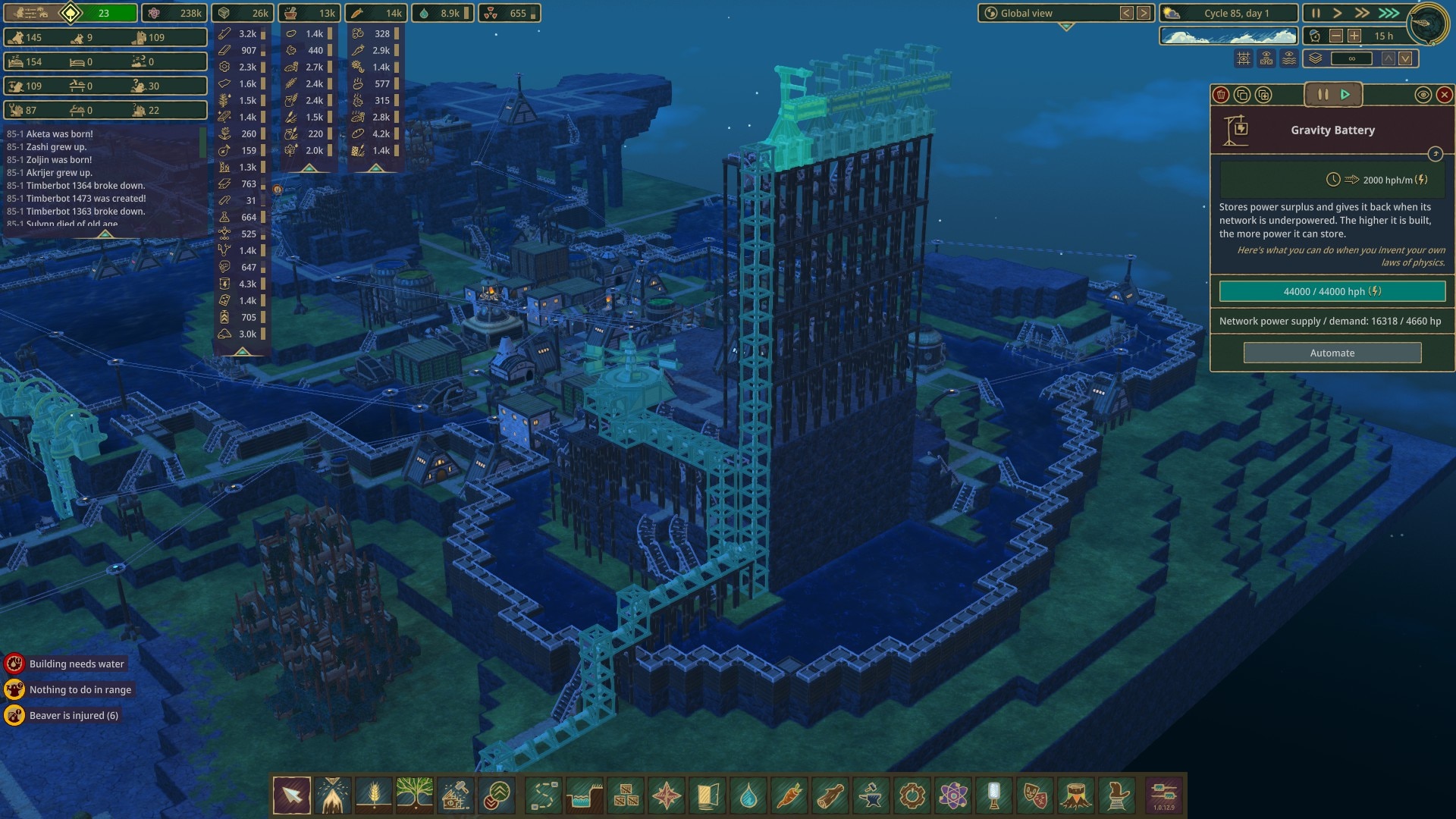
From a technical standpoint, Timberborn stands out as a notably stable and well-optimized simulation, particularly when considering the number of interdependent systems it is constantly managing in the background. City-builders often struggle under the weight of their own complexity as settlements grow, but here the game maintains a consistently smooth experience across most stages of progression, which speaks to the effectiveness of its underlying architecture.
One of the most impressive aspects of its performance is how it handles scale. As populations increase and production chains expand, the game must simulate pathfinding for dozens or even hundreds of individual beavers, track resource flow across multiple layers of infrastructure, and calculate water physics in real time. These are systems that, in many comparable titles, tend to introduce noticeable slowdowns or instability. In Timberborn, however, performance degradation is gradual rather than abrupt, and in most cases remains manageable even in large, densely constructed cities.
The water simulation in particular deserves closer attention, as it represents one of the most technically demanding features of the game. Unlike static resource systems, water flows dynamically across terrain, responding to player-built structures such as dams and floodgates. The game continuously recalculates water levels, pressure, and direction, especially during seasonal transitions when rivers either swell or begin to dry up. Despite this complexity, the system operates reliably, with only occasional minor stutters during significant environmental shifts. These moments are typically brief and do not interfere with gameplay in a meaningful way, but they do highlight the computational demands of the simulation.
Pathfinding is another area where the game performs well, although not perfectly. Beavers navigate multi-level environments with a surprising degree of efficiency, even in settlements that feature extensive vertical construction. The ability to stack buildings and create layered pathways introduces additional complexity, yet the game manages to process these routes without frequent errors or delays. That said, in particularly dense cities with highly intricate layouts, players may notice slight inefficiencies, such as longer-than-expected travel times or occasional congestion in high-traffic areas. These issues are relatively minor and tend to be more a consequence of player design than systemic failure.
Frame rate stability is generally strong across a wide range of hardware configurations. Early to mid-game performance is consistently smooth, with minimal fluctuations even when multiple systems are operating simultaneously. In the late game, especially in large settlements with extensive automation and water manipulation, some frame drops can occur. These are usually tied to specific events, such as autosaves or major changes in water flow, rather than being constant performance issues. Importantly, the game avoids the kind of severe slowdowns that can make late-game management frustrating in other city-builders.
Load times are also handled efficiently, with maps loading quickly and transitions between sessions remaining relatively seamless. Autosave functionality is frequent enough to provide security without becoming intrusive, although the brief pause that accompanies each save can become more noticeable as settlements grow larger. While not disruptive, it is one of the few areas where the game reminds the player of the underlying processes at work.

From a technical design perspective, the user interface plays a significant role in maintaining performance clarity. Information is presented in a clean and readable manner, allowing players to monitor complex systems without overwhelming the screen. Overlays for water, irrigation, and resource distribution are particularly useful, providing real-time feedback that helps players understand how their decisions impact the broader simulation. This level of transparency reduces the need for trial and error, making the game feel more responsive and predictable.
It is also worth noting the impact of ongoing optimization throughout the game’s development cycle. Improvements made during early access have carried into the full release, resulting in better handling of large populations and more efficient system processing. The game feels like it has been refined with scalability in mind, ensuring that players can push its systems without encountering hard technical limits too early.
While Timberborn is not entirely free of technical quirks, these are relatively minor and rarely affect overall enjoyment. Occasional visual glitches or brief performance dips may occur, particularly in edge cases involving complex water systems or highly compact city layouts, but these instances are infrequent and do not detract significantly from the experience.
Overall, the technical performance of Timberborn reflects a careful balance between ambition and execution. It manages to deliver a simulation that feels both complex and stable, supporting long play sessions and large-scale experimentation without the instability that often accompanies such depth. For a game built around dynamic environmental systems and layered construction, this level of reliability is a significant achievement and one of the key factors that enables its gameplay to shine.
Final Verdict: 8.5/10
Timberborn succeeds by committing to a clear and focused vision, combining traditional city-building mechanics with a water system that fundamentally reshapes how the game is played. Its emphasis on planning, adaptation, and environmental management creates an experience that feels both distinctive and rewarding.
While it does not offer the breadth of content or variety found in some of its competitors, it compensates with depth and cohesion, delivering a gameplay loop that remains engaging even as its limitations become apparent. The pacing issues and late-game slowdown prevent it from reaching its full potential, but they do not overshadow the strengths that define the experience.
For players who appreciate thoughtful design and are willing to invest time in mastering its systems, Timberborn stands out as a compelling and memorable entry in the city-building genre, offering a unique perspective on survival, growth, and the delicate balance between nature and control.