There’s a certain kind of strategy game that doesn’t try to charm you—it tries to break you. Xenonauts 2 is very much that kind of game. Developed by Goldhawk Interactive and published by Hooded Horse, it positions itself as a spiritual successor to the original X-COM formula rather than the streamlined modern approach popularized by XCOM: Enemy Unknown. That distinction matters, because everything about Xenonauts 2—from its mechanics to its pacing—leans into a design philosophy that prioritizes systemic depth, tension, and player-driven outcomes over accessibility or cinematic presentation.
Set in an alternate version of the early 2000s shaped by a prolonged Cold War, the game imagines a world where geopolitical tensions never fully cooled—and where a covert alien presence has been manipulating events from the shadows. You take command of the Xenonauts, a multinational military project tasked with identifying and resisting this threat. It’s not a power fantasy. You begin underfunded, under-equipped, and largely in the dark about what you’re facing.
What makes Xenonauts 2 compelling is not just its premise, but how fully it commits to it. This is a game about uncertainty, about operating with incomplete information, and about making decisions that often feel uncomfortable. It doesn’t try to smooth over its rough edges or guide players gently through its systems. Instead, it invites you to engage with its complexity—and to accept that failure is part of the process.
Gameplay and Mechanics
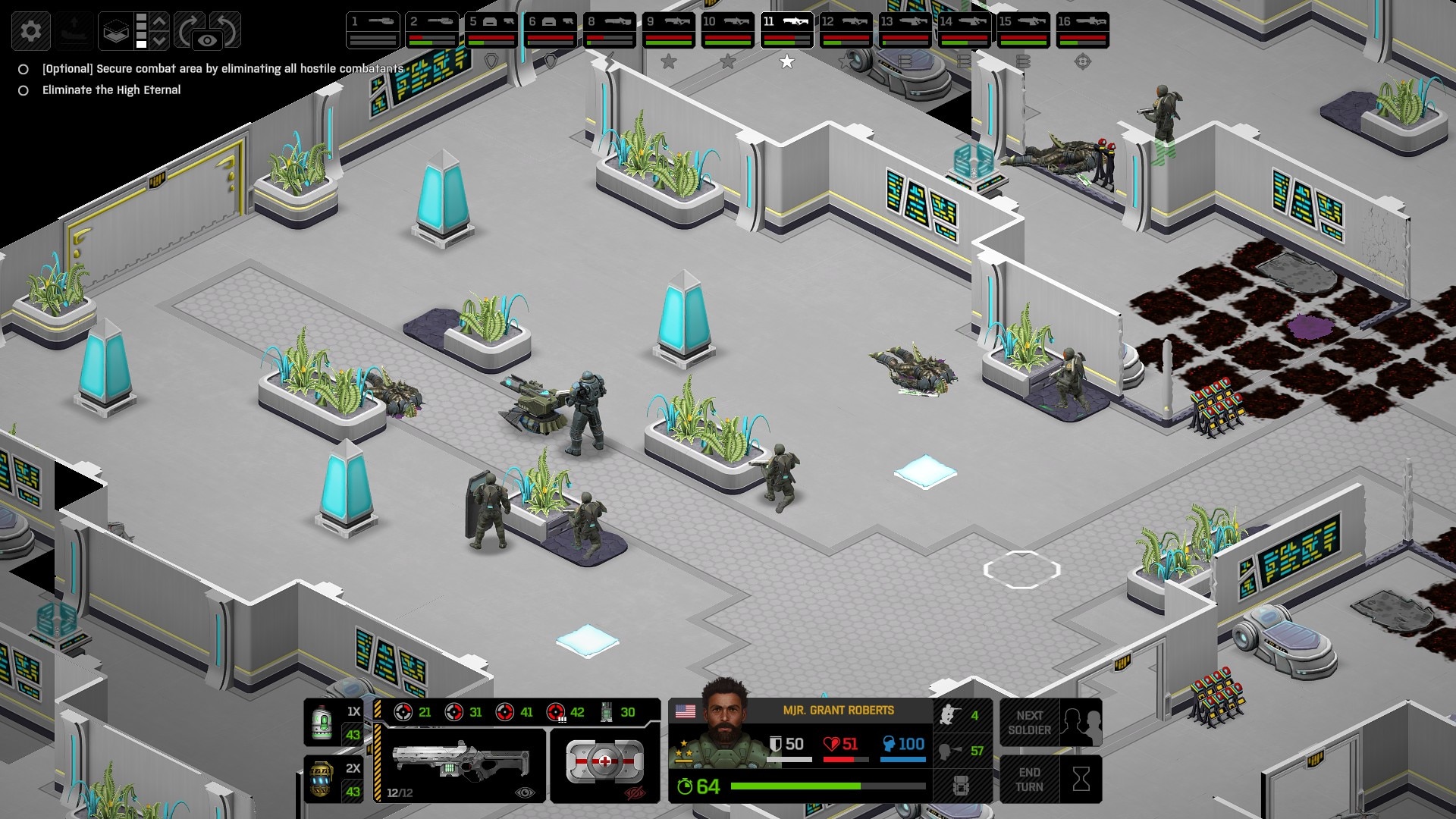
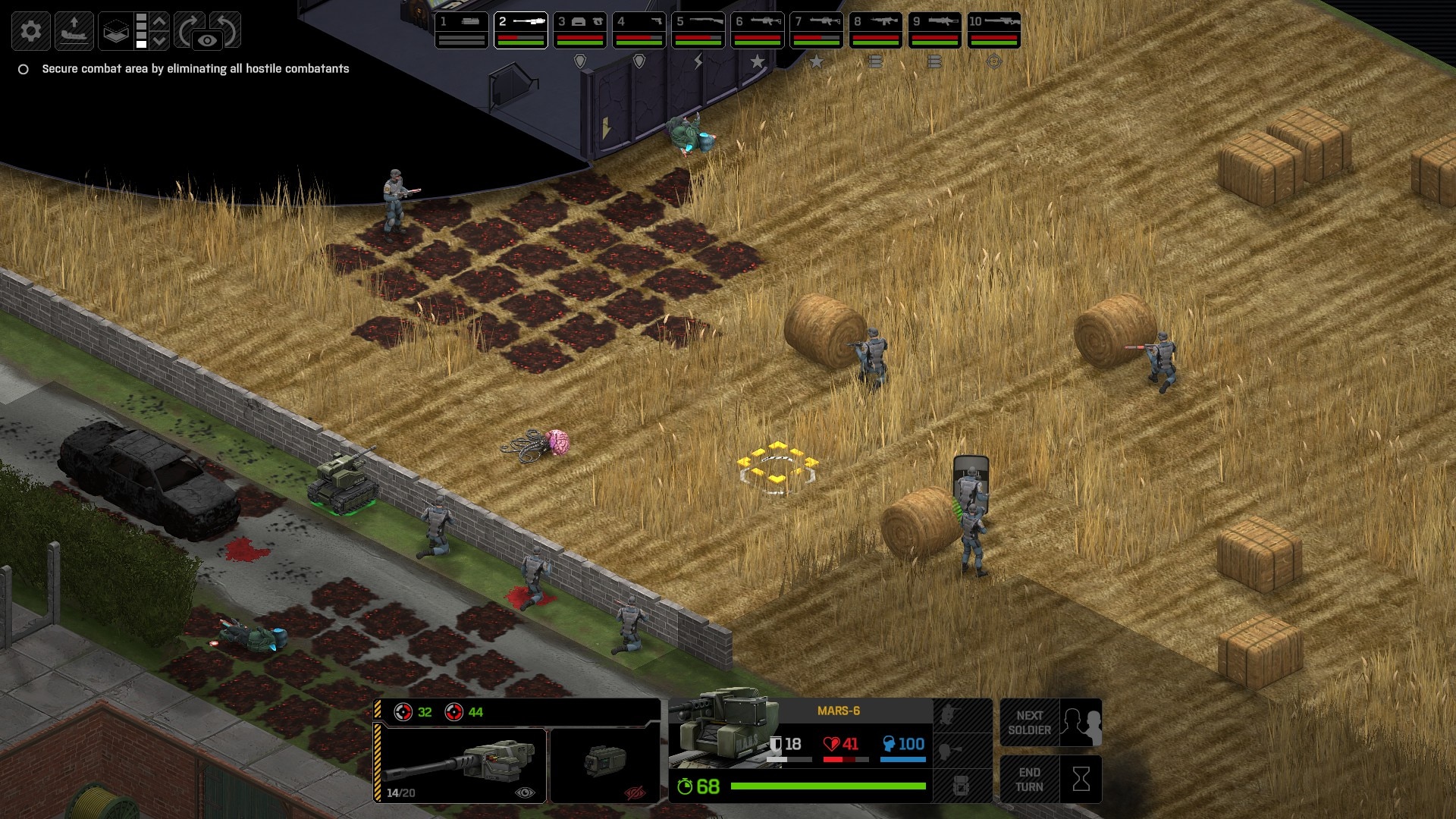
At the mechanical level, Xenonauts 2 is built around the classic time units (TU) system. Every action a soldier takes—moving, turning, firing, crouching, reloading, throwing equipment—consumes a portion of their available time units for that turn. This contrasts sharply with the two-action system used in many modern tactics games and results in a far more granular and expressive decision space.
This system allows for a wide range of tactical possibilities. You can move a soldier cautiously, leaving enough time units for a reaction shot, or commit fully to repositioning at the cost of being unable to respond during the enemy turn. You can fire a quick, low-cost shot or spend more time units for a more accurate burst. Even small details, such as turning a soldier to face a particular direction, have a cost—meaning that positioning is not just about location, but orientation.
The pacing that emerges from this system is deliberate and often tense. Missions rarely feel routine. Advancing across a map is a slow, methodical process where every tile matters. Players are encouraged to think in terms of overlapping fields of fire, careful spacing, and incremental progress. Rushing forward is almost always punished.
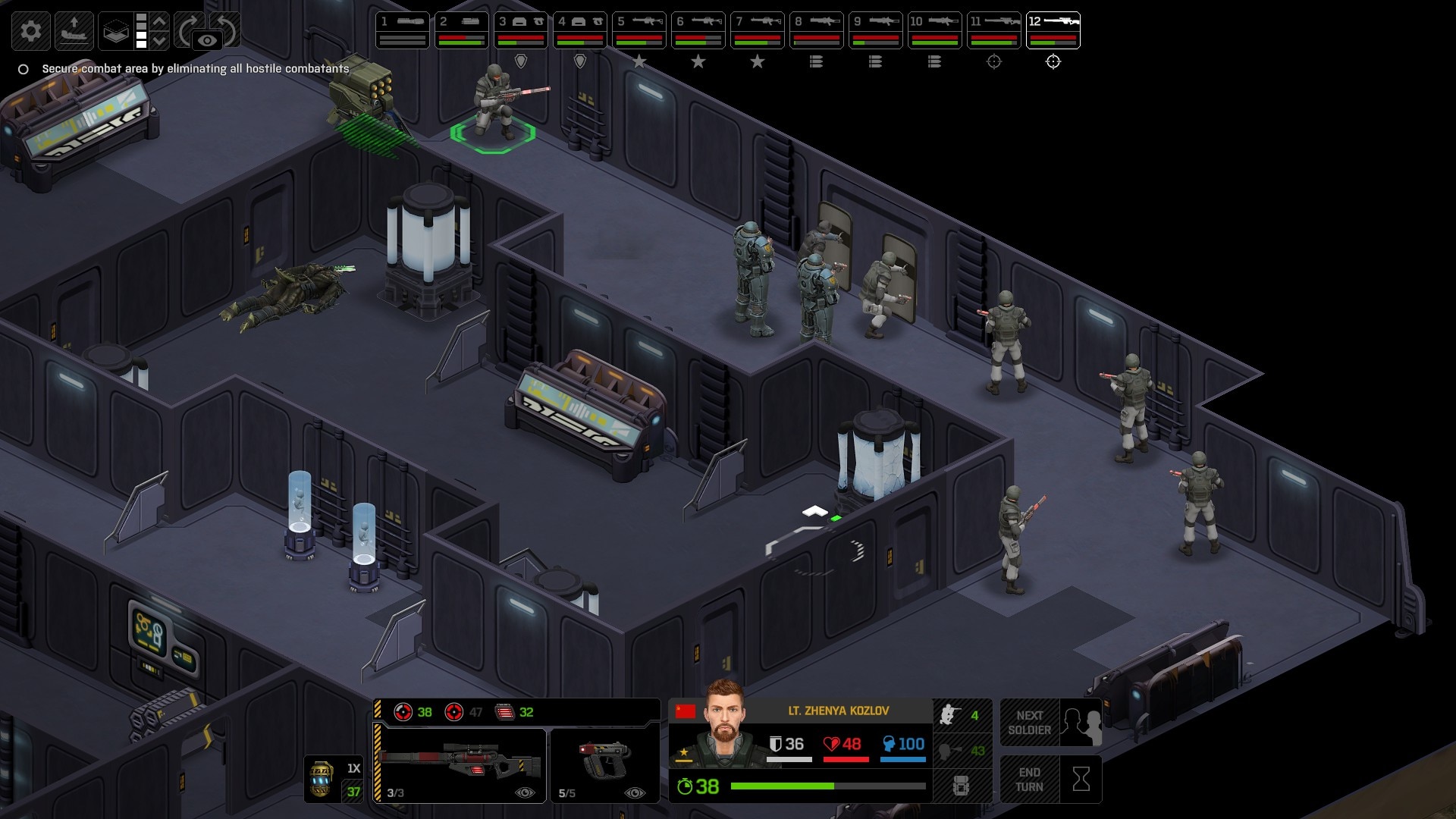
Line-of-sight mechanics further reinforce this cautious approach. Vision is directional, meaning soldiers can only see within a defined cone. This makes flanking both a powerful tactic and a constant threat. You’re not just managing where your soldiers are—you’re managing what they can see, and what might be just outside their awareness.
Ballistics and accuracy introduce another layer of unpredictability. Shots are not guaranteed to land, even at high percentages, and cover plays a significant role in mitigating damage. Suppression mechanics also come into play, allowing certain weapons to reduce an enemy’s effectiveness rather than eliminate them outright. This creates situations where controlling the battlefield can be just as important as dealing damage.
Reaction fire replaces the more predictable overwatch systems found in other games. If a soldier has enough time units remaining and detects an enemy action, they may automatically fire during the enemy turn. This system feels more organic, but also more volatile. It rewards careful planning—reserving time units, setting up angles—but it can also produce unexpected outcomes, including missed shots or unintended friendly fire.
Destructible environments add yet another dimension. Walls can be breached, cover can be destroyed, and terrain can be reshaped mid-mission. This prevents the battlefield from feeling static and encourages adaptive thinking. A position that was safe one turn may be completely exposed the next.
All of these systems combine to create combat that is both methodical and unpredictable. You are constantly making decisions with incomplete information, balancing risk against reward. There is no single optimal strategy—only approaches that work better or worse depending on the situation.
Strategic Layer and Campaign Structure
The strategic layer in Xenonauts 2 is where the game’s long-term depth truly emerges. While tactical missions provide immediate challenges, it’s the global campaign that determines whether you ultimately succeed or fail.
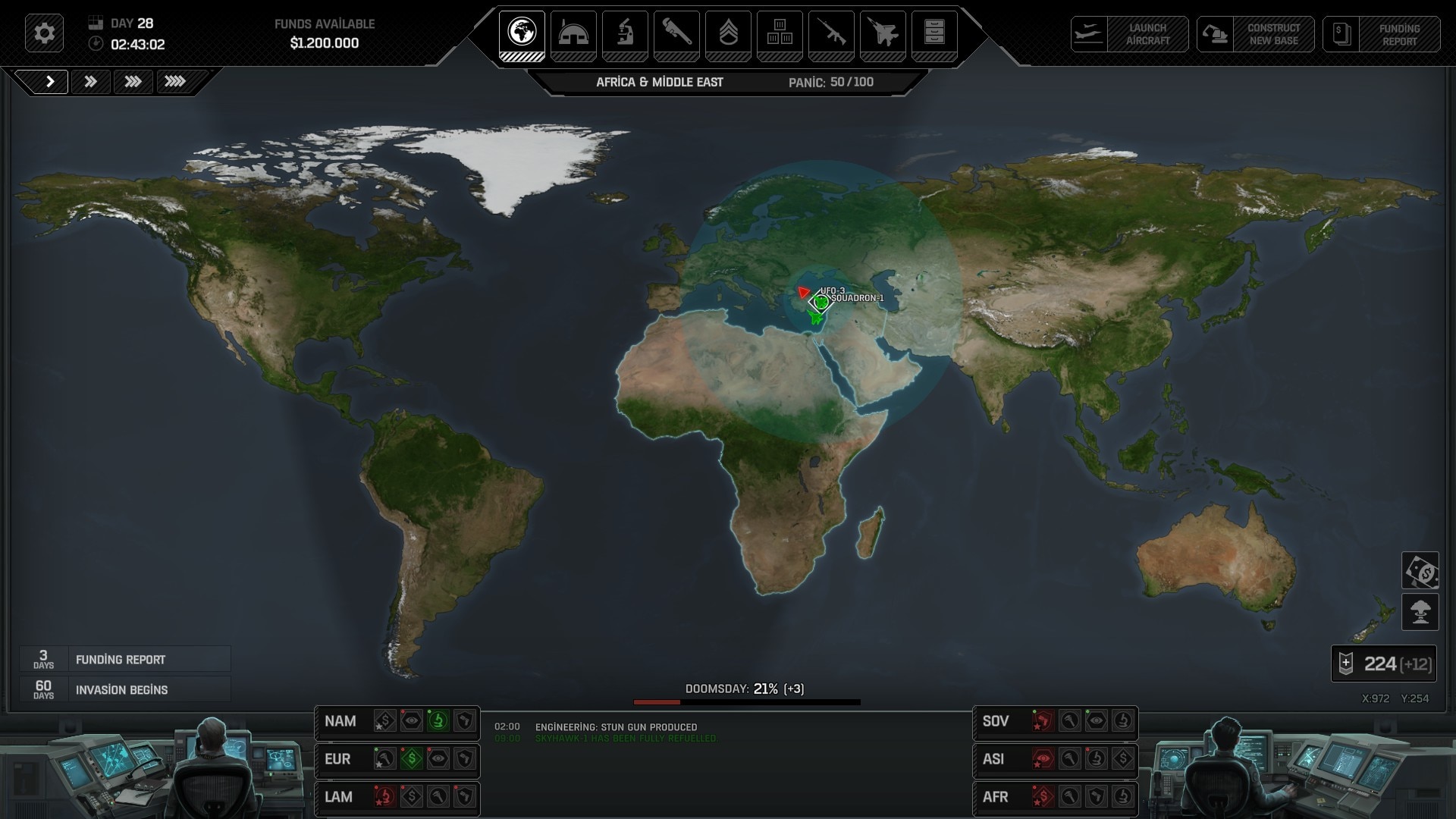
You begin with a single base and limited resources. From there, you must expand your operations, build new facilities, recruit personnel, and establish a network capable of responding to alien activity around the world. Each decision carries weight. Constructing a new radar installation might improve detection coverage, but it also consumes funds that could have been used for research or manufacturing.
Funding is tied to regional support, which fluctuates based on your performance. Each region contributes financially, but their willingness to do so depends on your ability to protect them. Allow too many UFOs to operate unchecked, and support will decline. Lose enough support, and a region may withdraw entirely, reducing your income and making the campaign significantly harder.
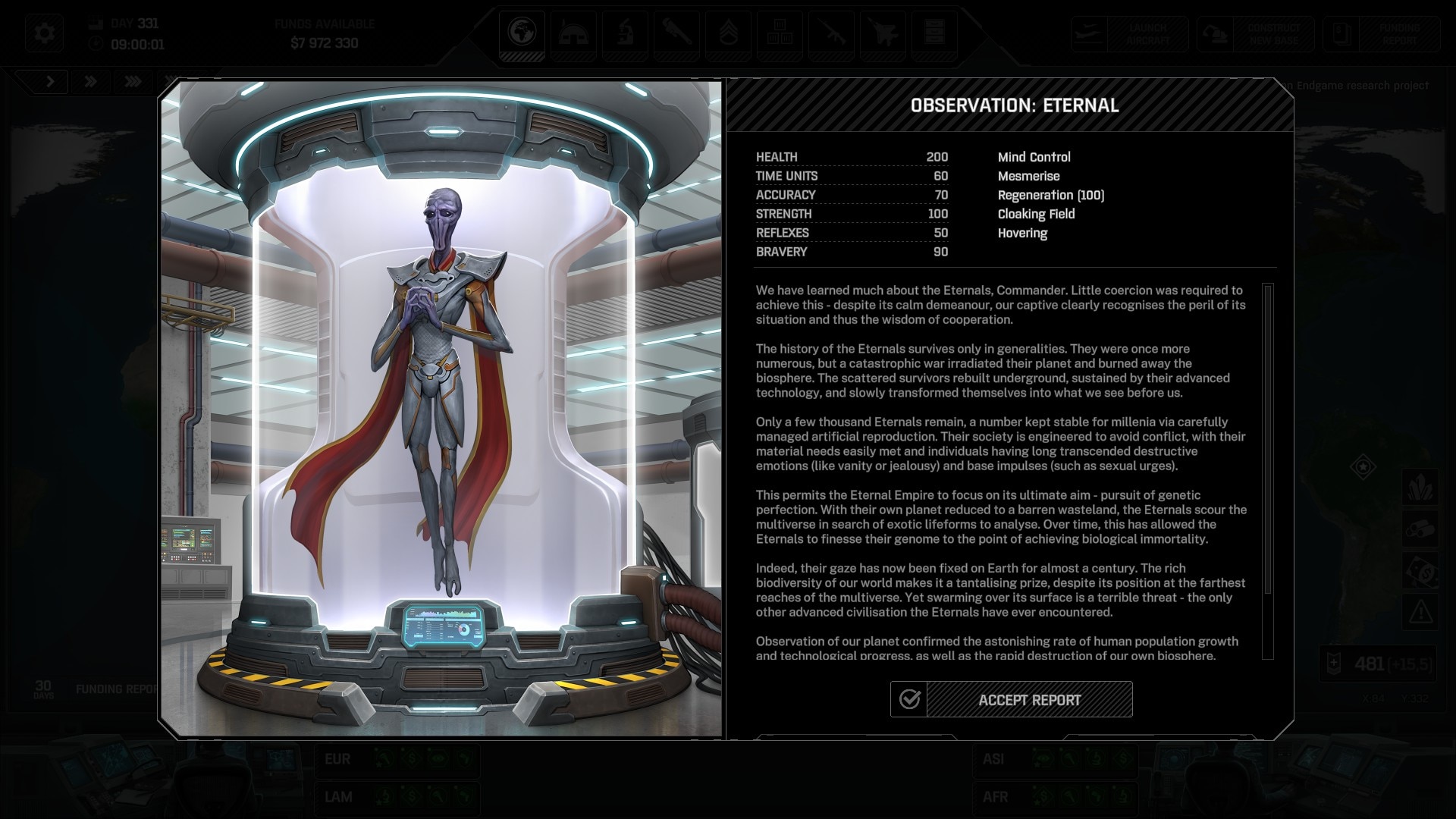
The research system is one of the most important—and occasionally most opaque—elements of the game. Scientists analyze recovered alien technology to unlock new capabilities, from improved weapons and armor to entirely new systems. However, the research tree is not strictly linear. Some projects are optional but useful, while others are critical for progression. The game does not always clearly distinguish between the two, which can lead to situations where players fall behind without realizing it.
Engineering complements research by allowing you to manufacture equipment, construct base facilities, and produce aircraft. Managing production queues, allocating resources, and balancing short-term needs against long-term goals becomes increasingly complex as the campaign progresses.
Air combat introduces a distinct gameplay layer. Interceptor aircraft engage UFOs in real time, requiring players to manage positioning, speed, and weapon systems. While not as deep as the ground combat, these encounters are important for securing crash sites and preventing alien missions from succeeding. Losing too many air engagements can have cascading effects on the campaign.
One of the defining features of the strategic layer is its pacing. The game does not rush you, but it also does not wait. Alien activity increases steadily, and the pressure to keep up is constant. There are moments of relative calm, but they are always temporary.
The result is a campaign that feels dynamic and often unforgiving. Success requires not just tactical skill, but strategic foresight. Every decision contributes to a larger picture, and mistakes can take hours to fully reveal their consequences.
Difficulty and Learning Curve
Xenonauts 2 is unapologetically difficult. It does not attempt to ease players into its systems with extensive tutorials or gradual onboarding. Instead, it expects you to learn by engaging directly with its mechanics—and by accepting that failure is part of that process.
The early game provides a manageable introduction, but this sense of control quickly fades. As alien forces become more aggressive and technologically advanced, the margin for error shrinks. Missions that once felt straightforward become tense and unpredictable.
The learning curve is steep not just because of the number of systems, but because of how they interact. Understanding time units, line of sight, suppression, and reaction fire individually is only the first step. Mastery comes from understanding how these elements combine in real scenarios.
Information is not always presented clearly. Some mechanics are explained only partially, while others must be inferred through experimentation. This can be frustrating, particularly when mistakes have significant consequences. However, it also contributes to the sense of discovery that defines the experience.
Difficulty spikes can occur, particularly when new enemy types are introduced or when the strategic layer begins to demand more precise decision-making. These moments can feel abrupt, but they often serve as turning points—forcing players to reassess their approach and adapt.
What makes the difficulty work, more often than not, is that it feels systemic rather than arbitrary. Failures usually have identifiable causes, even if they are not immediately obvious. Over time, players develop a deeper understanding of the game’s mechanics, leading to more consistent success.
For those willing to invest the time, the learning process itself becomes part of the appeal. Progress is not just measured in completed missions, but in improved decision-making and greater confidence in navigating the game’s systems.
Combat Design and Enemy Variety
Enemy design in Xenonauts 2 is closely tied to its core philosophy of unpredictability and adaptation. Rather than relying on sheer numbers, the game introduces a variety of alien units with distinct roles and behaviors. Some enemies are heavily armored, requiring players to consider angles and positioning carefully. Others rely on speed or specialized abilities, forcing different tactical responses.
There are units designed to suppress, units that excel at close-range combat, and others that challenge visibility and detection. These differences are not just cosmetic—they fundamentally change how encounters unfold. A strategy that works against one type of enemy may be ineffective against another. This encourages players to remain flexible and to avoid relying too heavily on a single approach.
AI behavior contributes significantly to this dynamic. Enemies do not simply advance toward your position; they take cover, reposition, and respond to perceived threats. This creates a sense of opposition rather than automation, making each encounter feel more engaging.
Environmental interaction further enhances combat variety. Destructible terrain allows both players and enemies to alter the battlefield, removing cover or creating new pathways. This ensures that maps remain dynamic and that no position is completely secure.
Mission design also evolves over time. While early missions focus on straightforward engagements, later scenarios introduce additional objectives and constraints. These variations prevent the gameplay loop from becoming repetitive and encourage players to think creatively.
The combination of varied enemies, responsive AI, and interactive environments results in combat that feels consistently fresh. Even after many hours, the game retains its ability to surprise.
Progression and Customization
Progression in Xenonauts 2 is gradual but meaningful. It is driven primarily by research and engineering, with each new technological breakthrough opening up additional options.
The transition from early to late game is particularly noticeable. Soldiers who once relied on basic equipment eventually gain access to advanced gear that significantly improves their effectiveness. This shift changes not only how missions are approached, but how they feel.
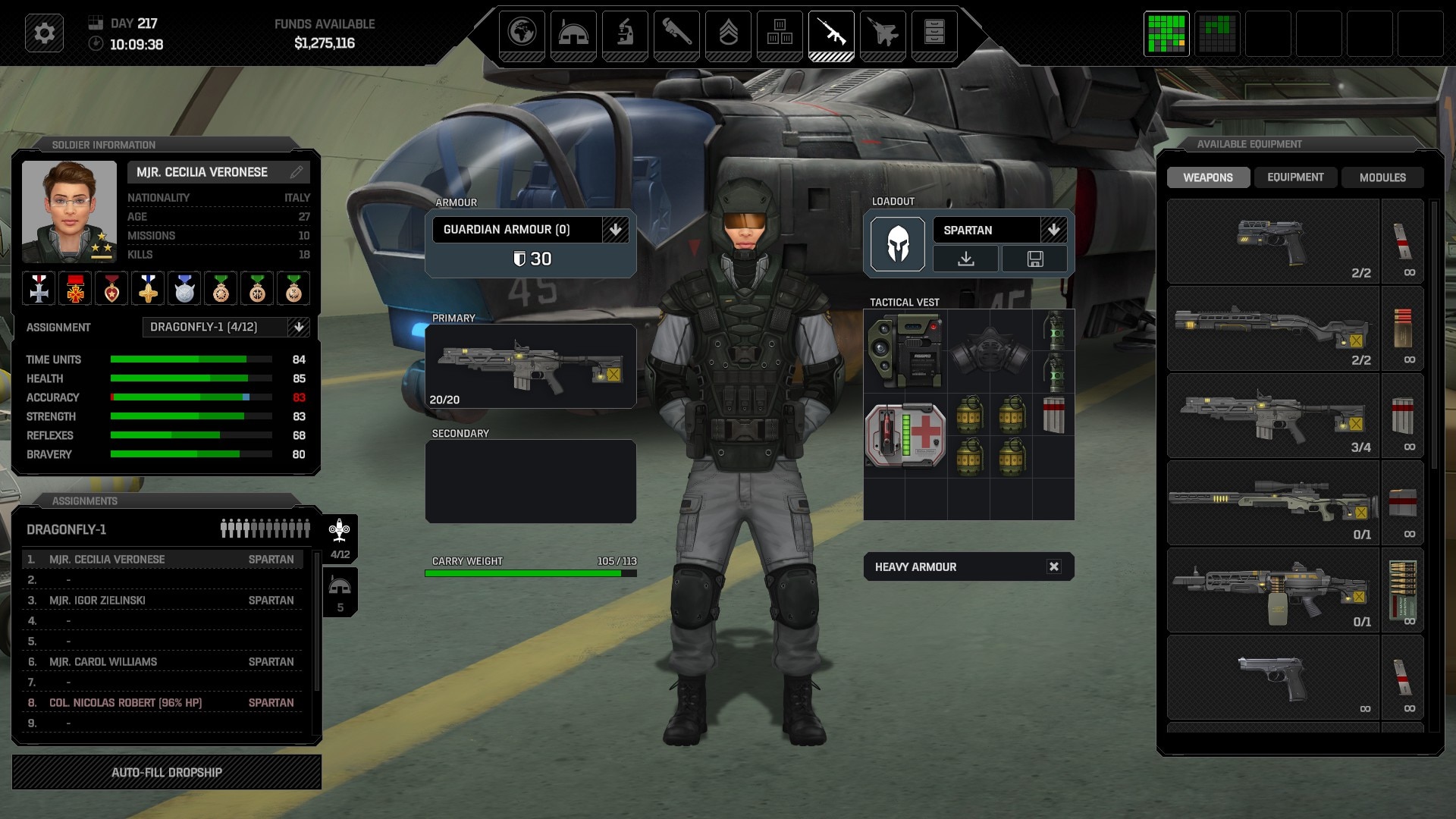
Customization plays a central role in this process. Players can equip soldiers with a wide range of weapons, armor, and support items, tailoring each unit to a specific role. This flexibility allows for diverse squad compositions and encourages experimentation.
However, this depth comes with a cost. Managing equipment, particularly in the late game, can become time-consuming. Preparing for missions involves multiple layers of decision-making, from selecting loadouts to assigning personnel. While some players will appreciate this level of control, others may find it slows the pace.
Soldier progression adds an emotional dimension. Units gain experience over time, becoming more effective and more valuable. This creates a natural attachment, making losses feel significant. Permadeath ensures that every decision carries weight, reinforcing the game’s emphasis on consequence.
Despite occasional friction, the progression system is one of the game’s strongest elements. It provides a clear sense of advancement while remaining closely tied to the core mechanics.
Story and Atmosphere
The narrative in Xenonauts 2 is understated, but effective. It provides context without overshadowing the gameplay, allowing players to focus on the systems that define the experience.
The alternate Cold War setting is particularly well-suited to the game’s tone. It creates a world that feels tense and uncertain, where the alien threat is just one part of a larger picture. This grounding in a familiar historical framework adds credibility to the scenario.
Storytelling is delivered primarily through briefings, research reports, and environmental details. These elements build a sense of mystery and gradually reveal more about the alien presence. The lack of explicit exposition encourages players to piece together the narrative themselves.
Atmosphere is reinforced through pacing and design. Quiet moments of preparation contrast with intense combat encounters, creating a rhythm that keeps players engaged. Sound design plays a key role here, with audio cues enhancing the sense of tension.
Emergent storytelling remains one of the game’s most compelling aspects. The systems naturally produce memorable moments—unexpected victories, costly mistakes, and everything in between. These experiences often carry more weight than scripted events, making each campaign feel unique.
Visuals and Presentation
Visually, Xenonauts 2 adopts a practical approach. The emphasis is on clarity and readability rather than visual spectacle. This aligns with the game’s overall design philosophy, ensuring that players can focus on decision-making without unnecessary distractions.

Environments are varied and functional, providing clear information about cover, elevation, and line of sight. Character models are detailed enough to convey equipment changes and status, but not so elaborate as to obscure gameplay.
The user interface is dense, reflecting the complexity of the game’s systems. While it may feel overwhelming at first, it becomes more intuitive with experience. Access to detailed information is essential in a game like this, and the UI generally succeeds in providing it.
Animations are straightforward and serve their purpose without drawing attention to themselves. While they lack the polish of higher-budget titles, they do not detract from the experience.
Sound design is more impactful. Audio cues provide important feedback and contribute to the overall atmosphere. The combination of ambient sounds and combat effects helps bring the game world to life.
Technical Performance
Technically, Xenonauts 2 is stable and reliable, which is essential for a game built around long campaigns and cumulative progress. Crashes and major bugs are rare, and the game performs consistently across most scenarios.
Performance can dip in larger missions, particularly when many units are active. Turn processing times may increase, and the overall pace can slow slightly. These issues are noticeable but generally manageable.
The interface, while functional, could benefit from further refinement. Navigating complex menus and managing large amounts of information can be cumbersome, particularly for new players. Improvements in usability would enhance the overall experience without compromising depth.
Despite these minor issues, the technical foundation is solid. The game’s systems operate as intended, allowing players to engage fully with its mechanics.
Final Verdict: 8/10
Xenonauts 2 is a demanding and deeply systems-driven strategy game that stays true to the spirit of classic tactical design. It does not attempt to modernize itself for broader appeal, nor does it compromise on complexity. Instead, it offers a focused experience built around careful planning, meaningful decisions, and constant tension.
Its strengths are clear: a robust tactical system, a layered strategic campaign, and a progression model that rewards long-term investment. Its weaknesses—steep learning curve, occasional opacity, and moments of friction—are often inseparable from those same strengths.
This is not a game for players looking for immediate gratification or streamlined mechanics. It is a game for those who enjoy learning complex systems, adapting to evolving challenges, and building success over time.
For that audience, Xenonauts 2 stands as one of the most rewarding strategy experiences available.