The Carmageddon franchise has always occupied a unique space in racing games, blending vehicular combat, dark humor, and open-ended destruction in ways that few series ever attempted. Since its debut in the late 1990s, it has built a reputation not just for controversy but for mechanical freedom. With Carmageddon: Rogue Shift, developer 34BigThings takes the brand in a new direction, reimagining the formula as a roguelite combat racer rather than a sandbox destruction playground.
This shift is immediately noticeable. Rogue Shift is not trying to recreate the exact structure of earlier entries such as Carmageddon 2: Carpocalypse Now or the more recent Carmageddon: Max Damage from Stainless Games. Instead, it attempts to modernize the concept by incorporating progression loops, branching campaigns, and build-based experimentation that align with contemporary roguelite design trends.
The result is a game that feels both familiar and unfamiliar. It carries the violent tone and destructive energy associated with the series while restructuring the experience into something more contained and progression-focused. Rogue Shift ultimately becomes an ambitious experiment—sometimes exciting, sometimes uneven, but rarely boring.
Gameplay and Mechanics
At its core, Rogue Shift revolves around a gameplay loop that blends racing, combat, and roguelite progression. Players enter a sequence of events structured as runs across a branching campaign map. Each event can include traditional racing objectives, combat encounters, or hybrid challenges that combine both elements. Success yields currency, perks, and upgrades, while failure still contributes to long-term progression through permanent unlock systems.
The roguelite structure introduces strategic decision-making between events. Players must choose paths leading toward shops, elite encounters, boss fights, or safer progression nodes. These decisions add a tactical layer that complements the moment-to-moment driving and combat, encouraging players to think beyond immediate performance.
Combat plays a major role throughout gameplay. Vehicles are equipped with a variety of weapons ranging from machine guns and rockets to more experimental armaments. Weapons can be upgraded during runs, and perks significantly alter their behavior. Some perks amplify damage at the cost of durability, others modify boost mechanics, and some provide regeneration or resource bonuses. Discovering synergistic combinations becomes a central source of enjoyment.
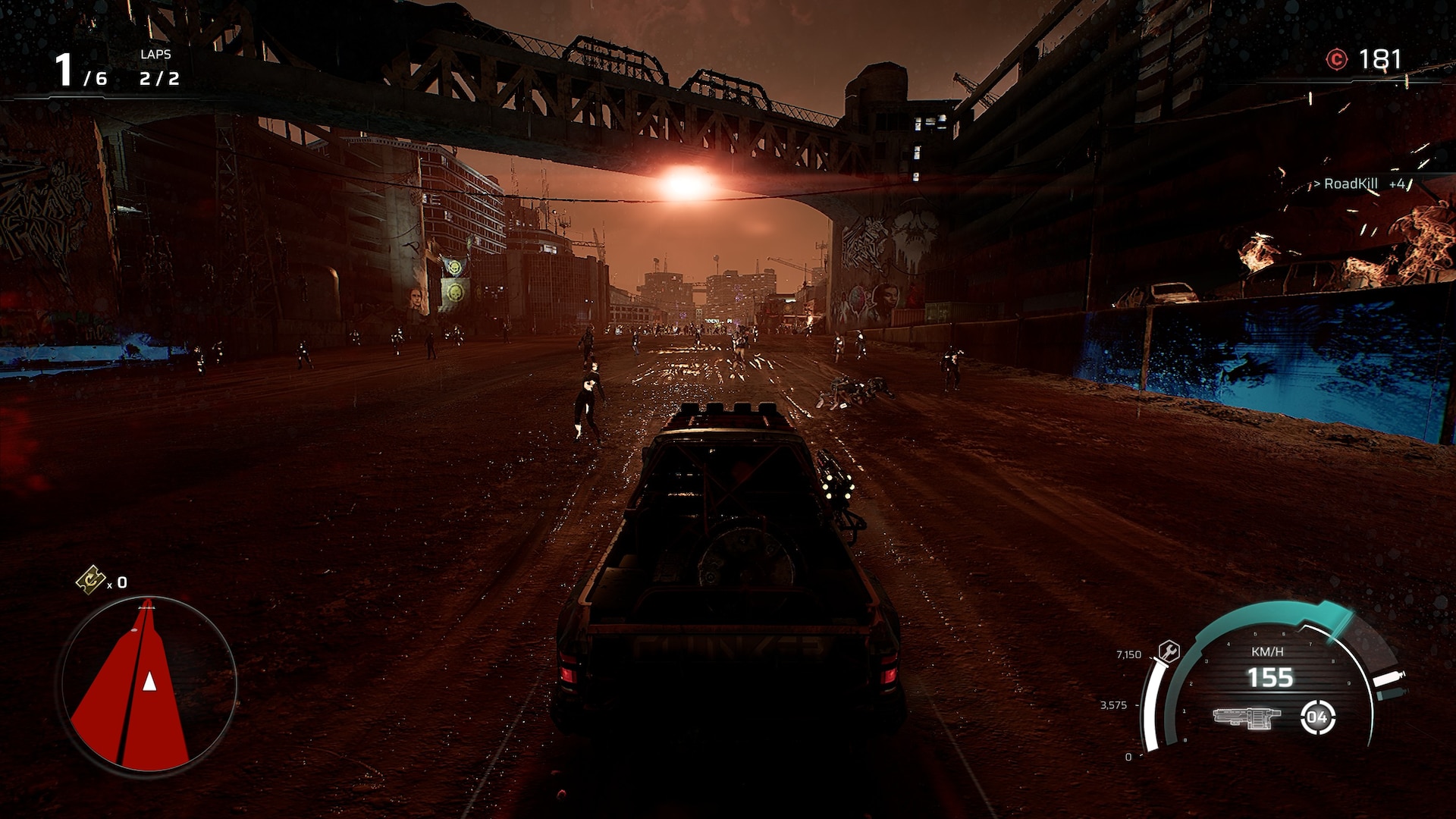
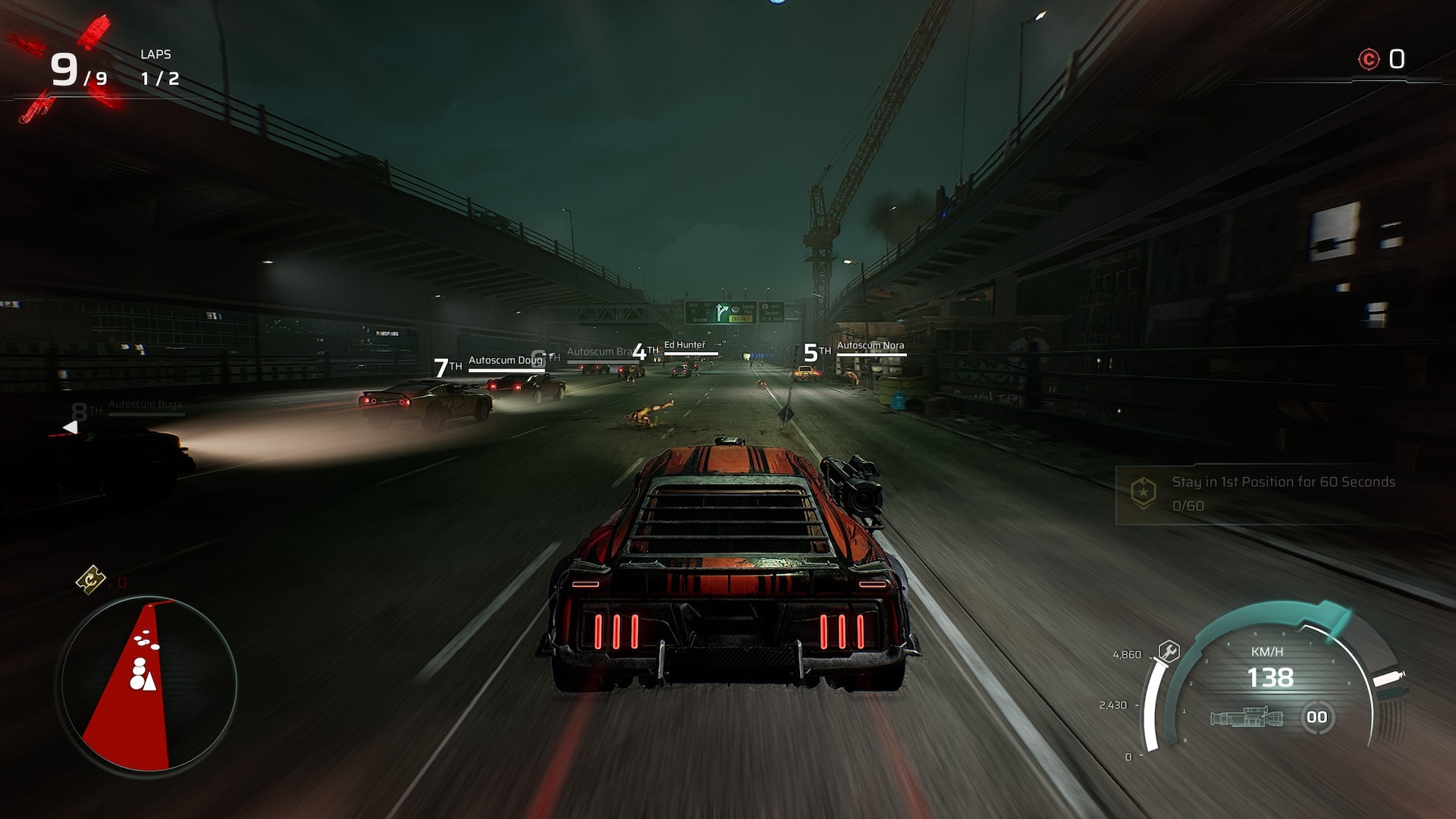
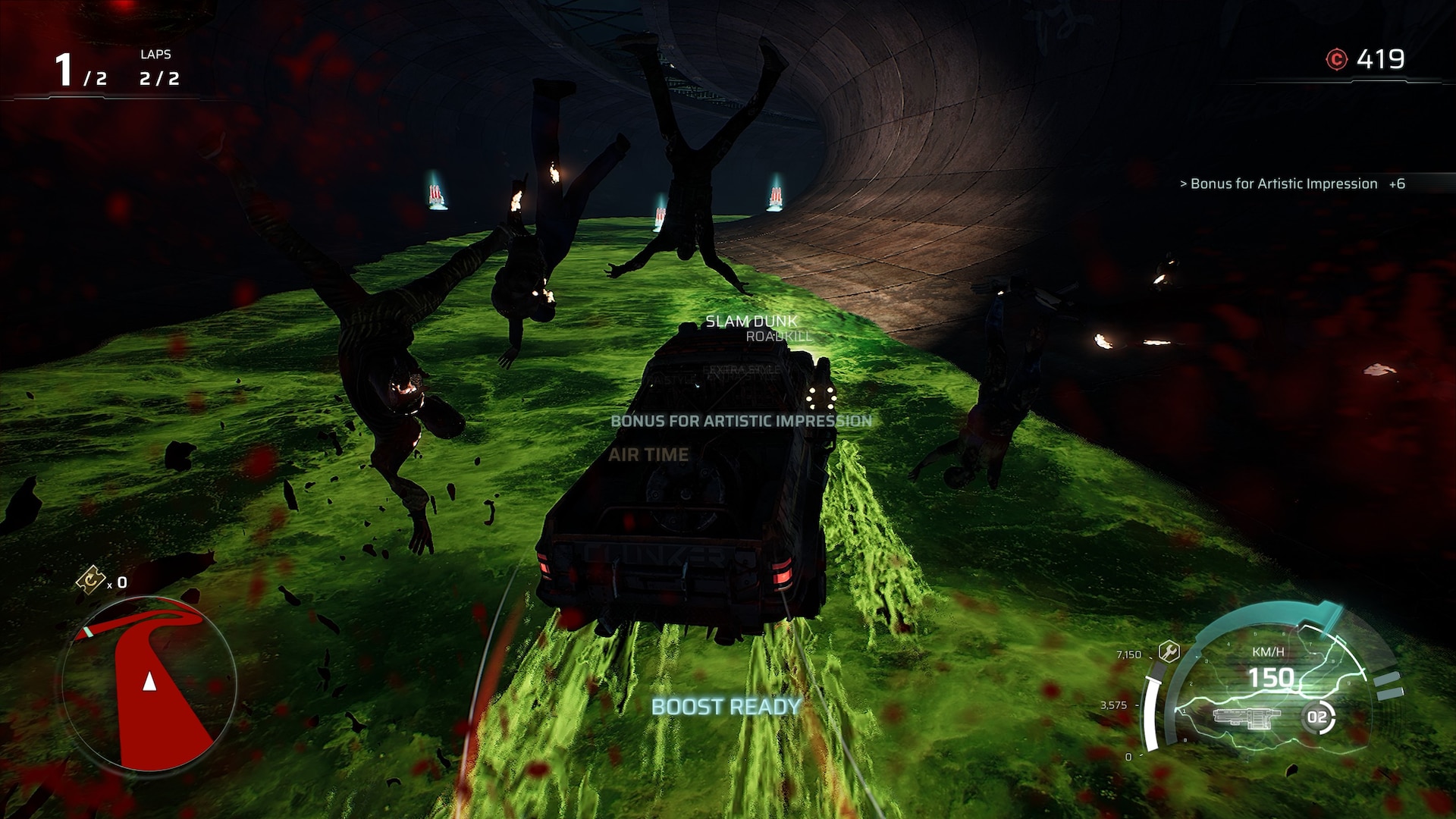
Enemies include rival racers, zombie hordes that appear during nighttime phases, and specialized Enforcer units designed to pressure players aggressively. Destroying enemies provides boost energy and currency, encouraging active engagement rather than passive racing strategies. This dynamic creates a constant sense of motion and conflict, aligning well with the franchise’s chaotic tone.
Boss encounters punctuate runs with larger challenges. Some bosses introduce unique mechanics requiring adaptation, while others rely more heavily on durability and sustained damage output. The best encounters highlight the depth of the combat system, forcing players to use builds strategically.
During the early hours, the gameplay loop is compelling and addictive. Unlocks arrive frequently, experimentation feels rewarding, and each run carries the possibility of discovering powerful new combinations. Over time, however, repetition becomes more noticeable due to limited event types and environmental variety.
Driving and Vehicle Handling
Driving mechanics are arguably the most important aspect of any racing game, and Rogue Shift delivers mixed results in this area.
Vehicles are divided into multiple classes with different attributes for speed, acceleration, durability, and handling. Players can modify these attributes through upgrades and perks, enabling diverse build strategies. Some vehicles favor agility and speed, while others emphasize survivability and combat effectiveness.
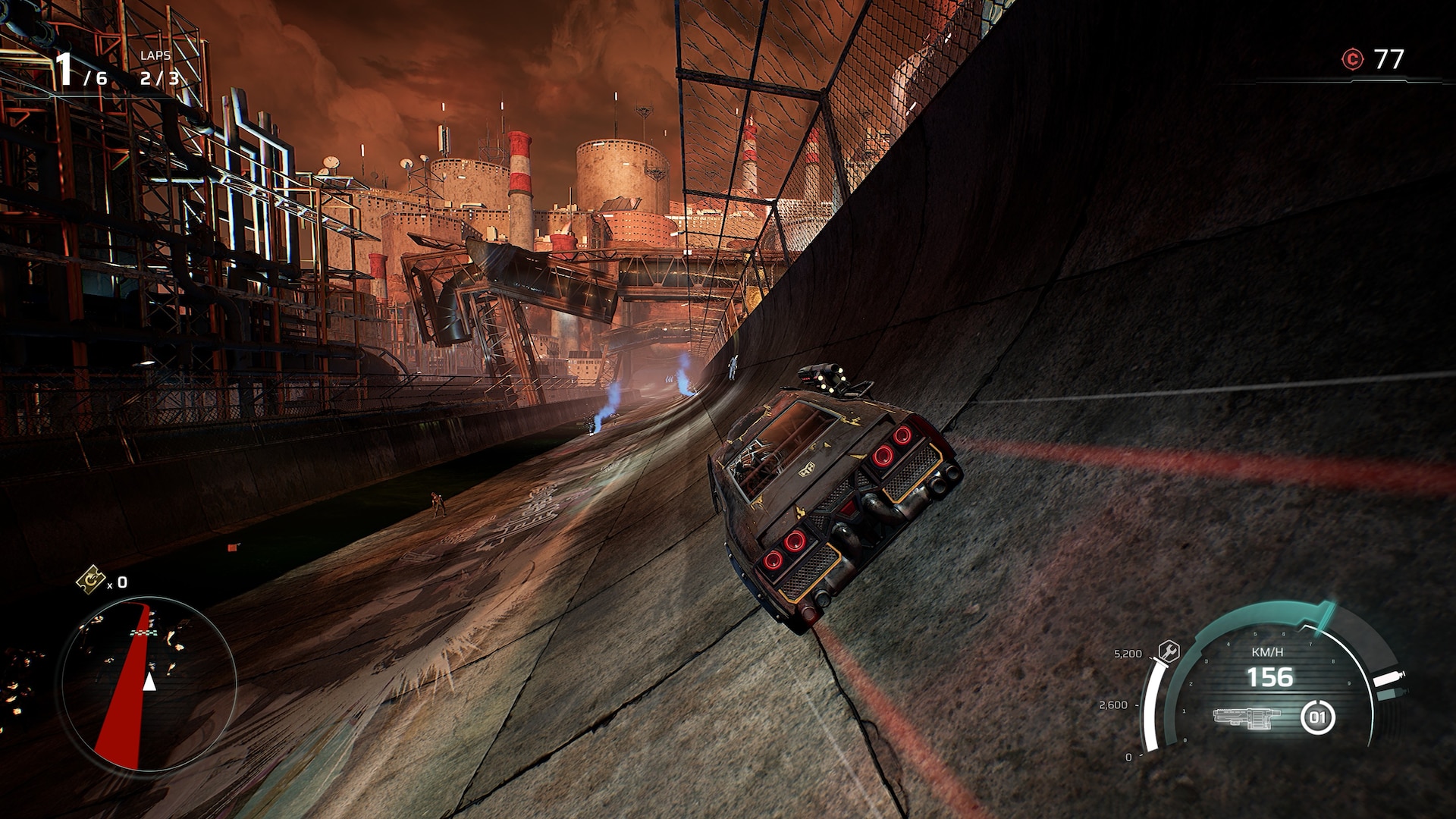
Despite this variety, the handling model can feel inconsistent. Cars often exhibit loose traction, with sudden oversteer or spinning during aggressive maneuvers or collisions. While some unpredictability fits the chaotic nature of vehicular combat, the physics occasionally feel unstable rather than intentionally arcade-styled. High-speed sections can become particularly challenging due to limited control precision.
Recovery after crashes sometimes feels sluggish, which disrupts gameplay flow and reduces the sense of momentum. The sensation of speed also varies, with visual feedback not always matching the numerical velocity displayed. These factors combine to create a driving experience that functions adequately but rarely becomes truly satisfying.
With practice and sensitivity adjustments, players can adapt to the handling, but the learning curve can feel more like compensation for quirks than mastery of a refined system. This inconsistency represents one of the game’s most significant shortcomings.

Progression and Customization
The progression systems are among Rogue Shift’s strongest elements. The game uses a dual-layer approach combining temporary upgrades during runs with permanent meta-progression between runs. During gameplay, players spend earned currency on repairs, weapon upgrades, and perks at shops encountered along the campaign path. These decisions create tactical depth, forcing players to balance immediate survival against long-term potential.
Between runs, permanent progression occurs through a marketplace system that unlocks vehicles, perks, and passive bonuses. Even failed runs contribute to advancement, reducing frustration and maintaining motivation. This structure aligns well with modern roguelite design principles and provides a consistent sense of growth.
Build diversity is significant. Different combinations of perks, weapons, and vehicle stats can produce dramatically different playstyles. Some runs may emphasize speed and evasion, while others prioritize heavy armor and destructive firepower. Discovering effective combinations becomes a key driver of engagement.
However, the depth of progression contrasts with the limited variety of scenarios in which builds are used. While customization remains interesting, environmental repetition eventually becomes noticeable.
Artificial Intelligence and Challenge
AI behavior is functional but inconsistent. Opponents display varying personalities, with some focusing on racing positions and others prioritizing combat. Enforcer units add pressure by actively pursuing the player, preventing overly cautious strategies.
Difficulty scaling across the campaign can feel uneven. Early stages are often forgiving, while later encounters introduce sharp spikes in challenge. Elite events and boss fights tend to provide the most satisfying difficulty balance, suggesting that AI systems perform best when built around specific mechanics.
Although inconsistency exists, the challenge level generally maintains engagement without becoming excessively punishing.
Graphics and Visual Design
Visually, Rogue Shift delivers a strong and cohesive aesthetic. Environments depict ruined cities, industrial complexes, and hazardous landscapes that reinforce the post-apocalyptic setting. Dynamic weather and day-night cycles enhance immersion and gameplay variation, particularly when nighttime introduces zombie hordes.
Vehicle damage modeling is especially impressive. Collisions visibly deform panels, detach components, and degrade performance, reinforcing the brutality of combat. Explosions, sparks, and debris effects contribute to a chaotic spectacle during intense encounters.
While the graphics may not rival the highest-budget AAA racing titles, the art direction is consistent and effective. The game successfully conveys atmosphere and tone without overreaching technically.
Sound and Music
The audio design complements the visual presentation effectively. Engines sound heavy and mechanical, weapon effects carry impact, and collisions convey weight. The soundtrack leans toward aggressive rock and metal styles, matching the intensity of gameplay.
Ambient sounds and environmental audio help reinforce immersion. While the music may not stand out as memorable outside the game, it performs its role well during play sessions.
Technical Performance (PC)
The PC version is technically solid. Performance remains stable across a variety of hardware configurations, with scalable graphical settings accommodating different systems. Frame rates are generally consistent, and load times are reasonable.
Controller support functions smoothly, while keyboard customization allows flexibility for different preferences. Bugs appear relatively minor, mostly involving interface quirks or progression tracking issues, and do not significantly disrupt gameplay.
Overall optimization is reliable, making the PC version one of the more dependable aspects of the experience.
Strengths and Limitations
Rogue Shift’s greatest achievement lies in its willingness to experiment with the Carmageddon formula. The hybrid design combining vehicular combat with roguelite progression creates a gameplay loop that can be genuinely addictive, especially during the early and middle stages of play. Meaningful build experimentation, strong weapon variety, and the constant pursuit of upgrades provide clear motivation to keep playing.
The dystopian atmosphere is convincing, the destruction effects are satisfying, and the technical performance on PC is dependable. At its best, the game delivers moments of chaotic intensity that feel true to the spirit of vehicular combat.
At the same time, these strengths coexist with notable weaknesses. Inconsistent vehicle handling undermines the enjoyment of driving, which should be a core pillar of any racing experience. Limited event variety and environmental repetition become increasingly apparent over longer sessions, reducing long-term excitement. AI behavior and difficulty scaling can feel uneven, with occasional spikes that seem disconnected from player progression.
Perhaps most significantly, the structural departure from the open-ended chaos traditionally associated with Carmageddon creates a disconnect for longtime fans, making the experience feel more like a genre experiment than a true continuation.
The result is a game that feels creative yet constrained, polished in certain areas while underdeveloped in others. It is enjoyable and occasionally impressive, but rarely exceptional.
Overall Experience and Longevity
Replay value depends heavily on player preference. Those who enjoy roguelite mechanics and experimentation with builds will likely find substantial longevity through unlock systems and progression goals. The branching campaign structure encourages multiple attempts, and mastering different vehicles adds further motivation.
Players seeking diverse racing scenarios may encounter fatigue sooner. The gameplay loop remains engaging, but environmental repetition limits long-term novelty. Longevity is driven more by progression systems than by content variety.
Final Verdict: 7/10
Carmageddon: Rogue Shift represents a bold reinterpretation of a cult franchise. Its roguelite structure, combat depth, and progression mechanics create an engaging experience that can be genuinely addictive, particularly during the early and middle stages of play. Visually and technically, the PC version performs well, delivering satisfying destruction and consistent performance.
At the same time, inconsistent driving mechanics, limited variety, and identity shifts prevent the game from fully realizing its potential. It feels less like a definitive revival and more like an experimental branch of the series—one that demonstrates creativity but stops short of mastery.
Approached as a roguelite vehicular combat game inspired by Carmageddon rather than a traditional sequel, Rogue Shift offers a fun and sometimes compelling experience. It may not completely recapture the anarchic magic that defined the franchise, but it provides enough innovation and excitement to justify its existence, standing as a solid, if imperfect, entry in the vehicular combat genre.