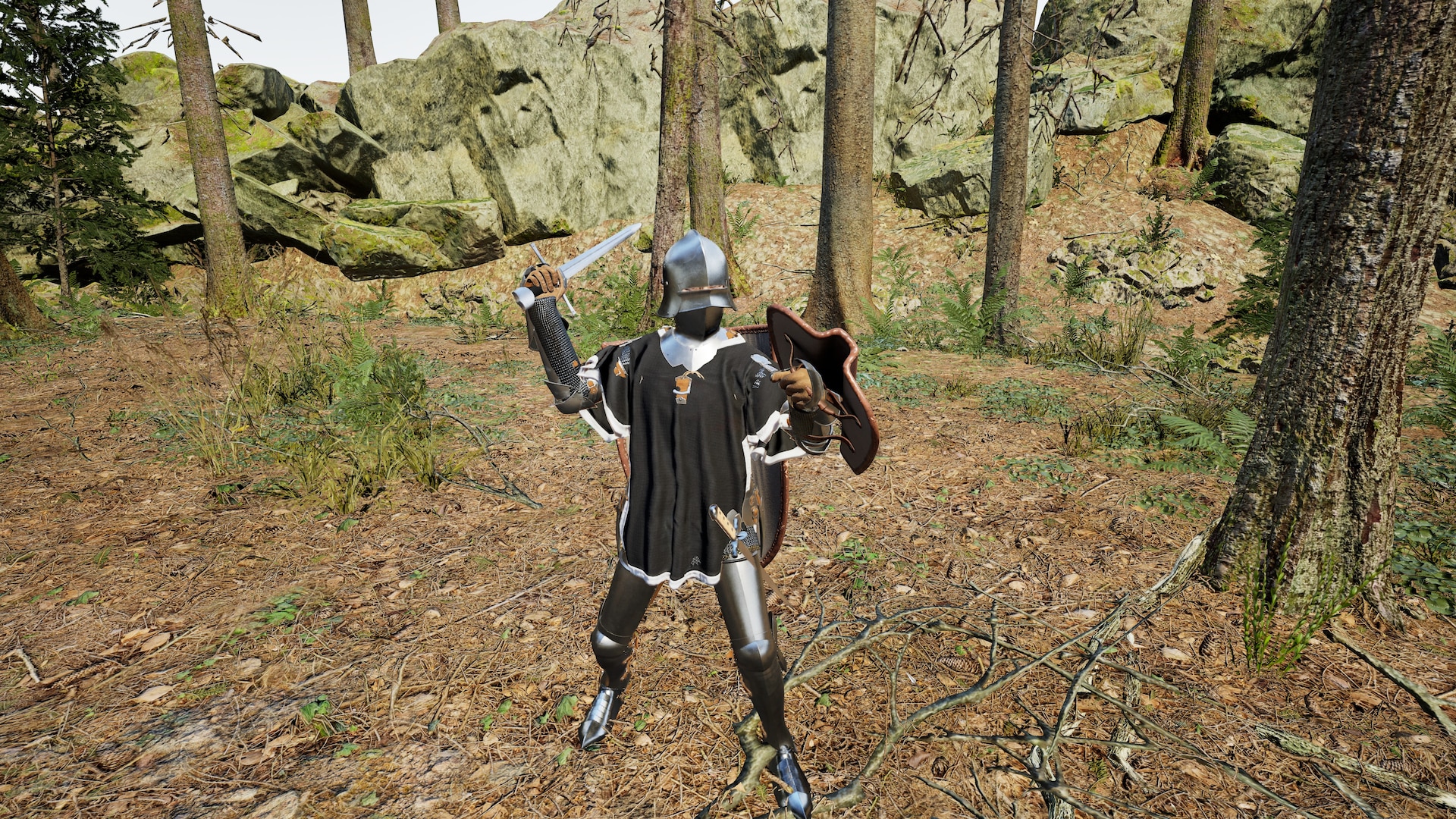
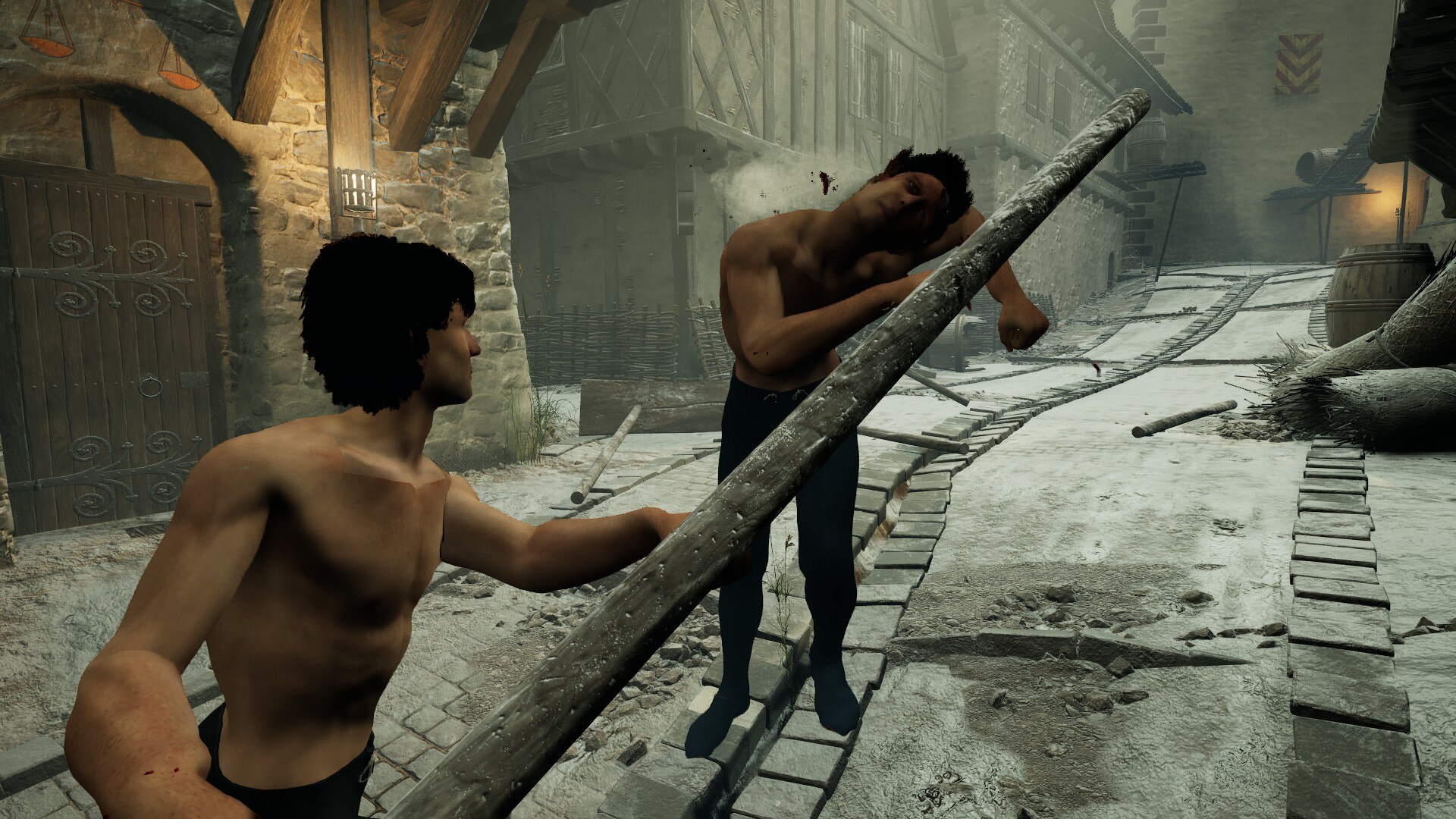
Half Sword is an unusually focused and uncompromising medieval combat simulator that attempts to reframe how melee fighting works in video games. Rather than refining the animation-driven systems popularized by titles such as For Honor or Mount & Blade, it rejects most genre conventions outright. Combat is built almost entirely around physics simulation, with the player directly controlling weapons and limbs in a way that prioritizes physical plausibility over readability or spectacle.
This design philosophy immediately places Half Sword in a narrow niche. It is not a power fantasy, nor is it particularly interested in accessibility or comfort. Instead, it aims to model the clumsiness, violence, and unpredictability of real armed combat, including the frequent loss of balance, ineffective strikes, and sudden, unceremonious deaths that such encounters often entail. The result is a game that feels more like an experimental simulator than a conventional action title, and one that can feel deeply rewarding or deeply frustrating depending on the player’s expectations and tolerance for rough edges.
As an Early Access release, Half Sword is also incomplete in important ways. Core systems are present, but content, performance, and structural cohesion lag behind the ambition of its combat model. This review evaluates the game as it currently exists, while also considering the potential implied by its underlying mechanics.
Gameplay and Mechanics
The defining feature of Half Sword is its physics-driven combat. Unlike most melee games, where attacks are selected from a set of predefined animations and resolved through hit detection, Half Sword treats weapons as physical objects governed by mass, momentum, and collision. The player does not press a button to perform a slash or thrust; instead, they manipulate the weapon directly, using mouse movement or controller input to guide its trajectory in real time.
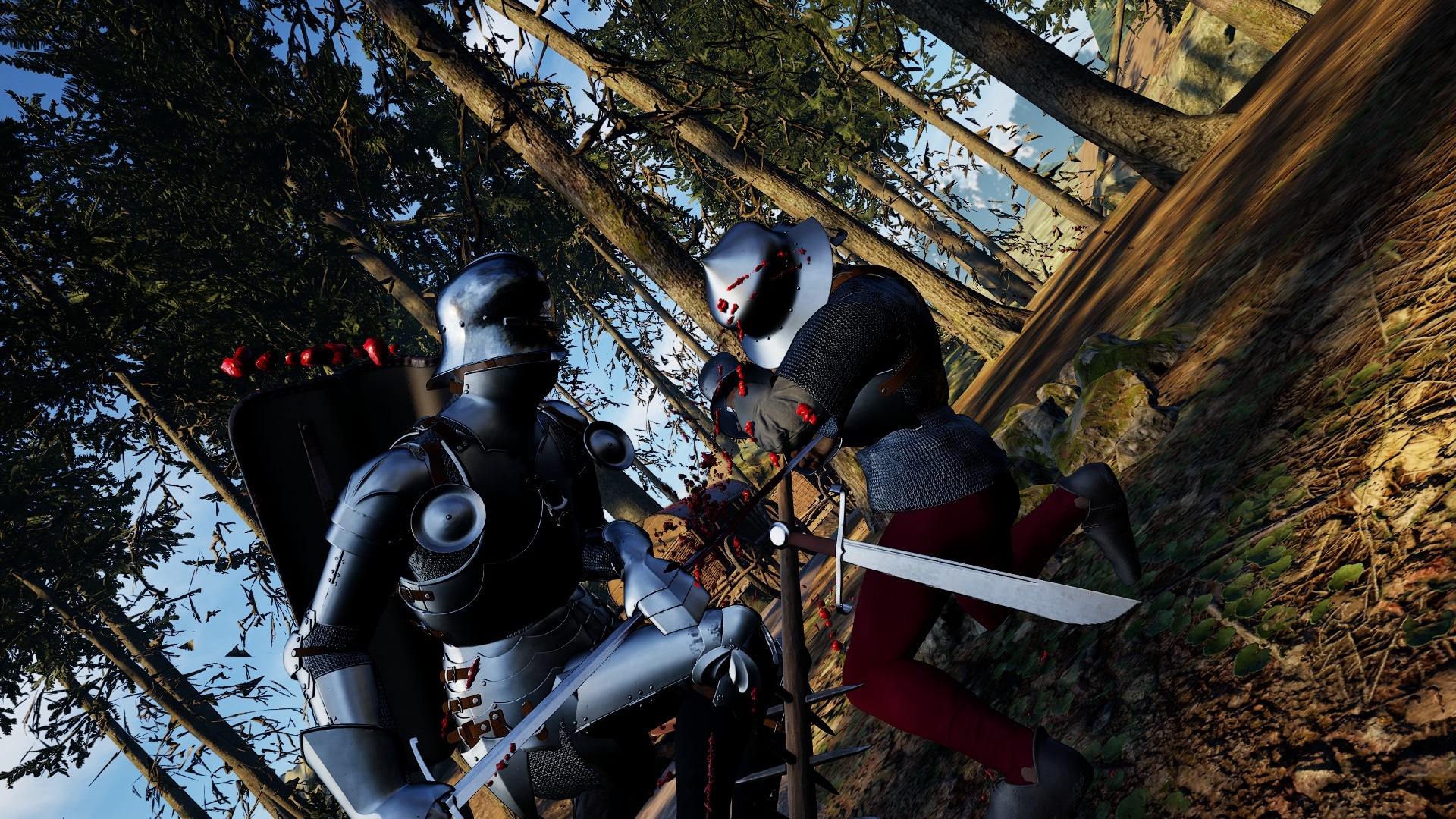
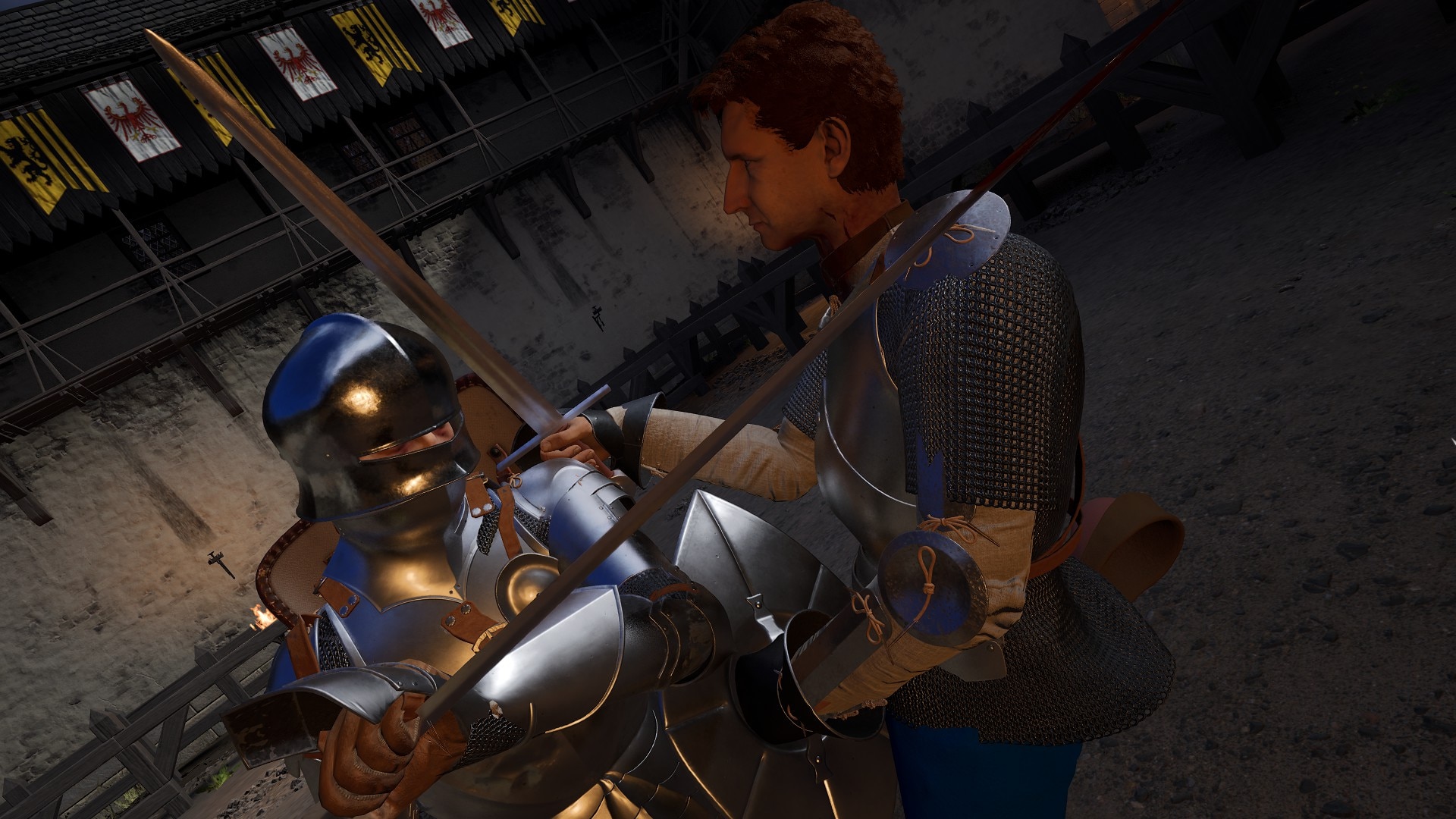
This approach fundamentally changes how combat feels. Attacks must be aligned correctly, timed properly, and delivered with sufficient force to be effective. A sword swung too close to the hilt lacks leverage. A thrust that glances off armor dissipates its energy without effect. Even successful strikes can be mitigated by poor angle or insufficient follow-through. In many encounters, the player will find themselves locked in awkward clinches, weapons tangled, bodies colliding and stumbling as each combatant struggles for positional advantage.
When the system works well, it produces moments of striking authenticity. A carefully aimed strike that slips past a guard and connects with an exposed joint feels earned in a way that few games manage. Victories often come not from aggressive button-mashing, but from patience, positioning, and an understanding of how weapons behave under physical constraints. There is a genuine sense of learning involved, as players gradually internalize concepts such as distance management, balance, and the limitations imposed by armor.
At the same time, this commitment to physics introduces significant friction. Controls can feel unwieldy, especially during the early hours. Small inaccuracies in input can lead to exaggerated, unintended movements, causing attacks to miss or leaving the player open to counterattacks. Because there are no animation safeguards to smooth out actions, mistakes are often punished immediately and harshly. This can make the learning curve feel steep and, at times, discouraging.
The lack of abstraction also means that combat can appear chaotic and visually confusing. Limbs flail, bodies collapse into each other, and weapons become stuck or awkwardly lodged. While this chaos is arguably part of the game’s identity, it can obscure readability, making it difficult to understand exactly why an exchange unfolded the way it did. For players accustomed to clearer feedback loops, this opacity may feel like a flaw rather than a feature.
Modes and Structure
Half Sword currently lacks a traditional narrative campaign or structured progression path. Instead, it offers a collection of combat-focused modes designed to showcase and stress-test its mechanics. These include arena-style encounters, progression-based challenges, and experimental modes that alter enemy types or combat conditions.
This structure reinforces the game’s identity as a combat sandbox, but it also exposes its limitations. Without a narrative framework or clearly defined long-term goals, the experience can begin to feel directionless after the initial novelty wears off. Unlockable equipment and progression systems exist, but they do not yet provide a strong sense of momentum or purpose. Progression often feels more like a gating mechanism than a meaningful reward loop, and the lack of narrative context makes it difficult to feel invested in the outcomes of individual fights.
The absence of story is not inherently a problem. Many mechanically driven games succeed without narrative trappings. However, in Half Sword, the limited structure places additional pressure on the combat system to sustain long-term engagement. For players deeply invested in mastering its mechanics, this may be sufficient. For others, the lack of variety in objectives and scenarios may limit replay value.

The modes themselves vary in quality and cohesion. Some feel well-suited to the game’s strengths, emphasizing one-on-one or small-scale encounters where the physics system has room to breathe. Others introduce complexity or enemy density that exacerbates performance issues and reduces combat clarity. As a result, the overall experience feels uneven, with certain modes highlighting the game’s potential and others underscoring its unfinished state.
Technical Performance
Technical performance is one of the most significant obstacles facing Half Sword in its current form. The physics simulation that defines the game is computationally demanding, and the engine often struggles to maintain consistent performance, particularly in encounters involving multiple combatants.
Frame rate drops, stuttering, and input latency are common issues. These problems are not merely cosmetic; in a game where precise physical control is essential, even minor performance hiccups can undermine the entire experience. A delayed input or sudden frame drop can turn a carefully planned strike into a missed opportunity, or leave the player vulnerable to an otherwise avoidable hit.
Stability issues further compound these problems. Crashes and glitches are not uncommon, reinforcing the sense that the game is still in an early stage of development. While Early Access players may be willing to tolerate such issues, they significantly limit the game’s broader appeal.
It is clear that optimization has not yet caught up with ambition. The underlying systems show promise, but they require further refinement to function reliably across a range of hardware configurations. Until these issues are addressed, Half Sword remains a demanding and sometimes frustrating experience, even for players who appreciate its core design.
Visuals and Audio
Visually, Half Sword adopts a utilitarian approach. Character models, environments, and equipment are designed to serve the simulation rather than draw attention to themselves. Armor and weapons are historically inspired and generally convincing, but the overall presentation lacks polish. Lighting and textures are serviceable but unremarkable, and the reliance on ragdoll physics often results in awkward or inelegant character poses.
This visual roughness is not entirely out of place given the game’s goals, but it does contribute to the impression of incompleteness. In some cases, visual ambiguity makes it difficult to read combat situations, particularly when multiple bodies overlap or collapse into each other. Improved visual clarity could enhance both aesthetics and gameplay without compromising realism.
Audio design is more consistently effective. The sounds of clashing steel, shifting armor, and blunt impacts convey weight and consequence. Audio feedback often provides clearer cues than visuals alone, helping players gauge the effectiveness of their actions. While the soundscape is not especially elaborate, it serves its purpose well and reinforces the physicality of combat.
Ambition Versus Execution
What makes Half Sword compelling is the same quality that makes it difficult to recommend broadly. Its physics-first approach creates a combat experience that feels fundamentally different from most melee games. This difference is not superficial; it reshapes how players think about movement, timing, and risk. For those willing to engage with it on its own terms, the game offers a depth of mechanical interaction that few titles attempt.
However, this depth comes at a cost. The steep learning curve, combined with technical instability and limited structure, creates a barrier to entry that many players may find insurmountable. The game does little to guide newcomers, and its rough presentation can obscure its underlying sophistication. In its current state, Half Sword often feels like a prototype for a great combat system rather than a fully realized game built around it.
Importantly, many of these weaknesses are not inherent to the concept itself, but to its current implementation. Performance issues, uneven modes, and lack of progression are all problems that could be addressed with continued development. The question is not whether Half Sword has potential, but whether that potential will be realized through sustained refinement and expansion.
Final Verdict: 7/10
Half Sword is a bold and challenging entry in the medieval combat genre, distinguished by its uncompromising commitment to physics-based design. It offers moments of genuine tension and satisfaction that feel earned rather than scripted, and its combat system rewards patience, observation, and experimentation.
At the same time, it remains an unfinished experience. Technical performance issues, limited structure, and a demanding control scheme restrict its appeal to a relatively small audience. Players seeking a polished, content-rich action game are likely to be disappointed, while those interested in experimental mechanics and simulation-driven design may find it fascinating despite its flaws.
As an Early Access title, Half Sword is best understood as a work in progress with a strong conceptual foundation. Whether it ultimately becomes a standout example of physics-based melee combat or remains a niche curiosity will depend on how effectively its developers can translate ambition into stability, clarity, and cohesion.
For now, it is a game that invites curiosity rather than unqualified recommendation, offering a glimpse of what medieval combat can feel like when stripped of abstraction, but also a reminder of how difficult such authenticity is to achieve in practice.