Cairn is a game that immediately establishes boundaries. It does not rush to impress, and it makes no attempt to accommodate impatience. From the opening moments of your ascent, it becomes clear that this is an experience built around effort—physical, mental, and emotional—and that progress will be measured not in spectacle or cinematic payoff, but in small, hard-won victories that often go unnoticed by anyone but the player.
In an industry that increasingly values approachability, constant reward, and frictionless design, Cairn feels deliberately resistant. It asks players to slow down, to observe, and to accept discomfort as part of learning. This is not a game that wants to entertain you in short bursts; it wants your sustained attention.
Developed by The Game Bakers, a studio previously associated with fast-paced, stylish action games like Furi and the more narrative-driven Haven, Cairn represents a dramatic shift in philosophy. Combat is entirely absent. There are no enemies to defeat, no upgrade trees to chase, and no moments designed purely to flatter the player’s sense of competence. Instead, the game focuses relentlessly on a single act: climbing a mountain that does not care whether you succeed.
That singular focus gives Cairn a sense of confidence that is rare. It does not dilute its core idea with unnecessary systems or distractions. It trusts that climbing—when treated with enough seriousness and mechanical depth—can sustain an entire game on its own. On PC, where precision input, responsiveness, and performance stability are critical for an experience built on fine motor control, Cairn largely delivers on its ambitions, though not without moments that test the player’s patience and tolerance for frustration.
Cairn is not trying to be universally appealing. It is trying to be honest. That honesty is its greatest strength—and, for some players, its greatest obstacle.
Gameplay and Mechanics
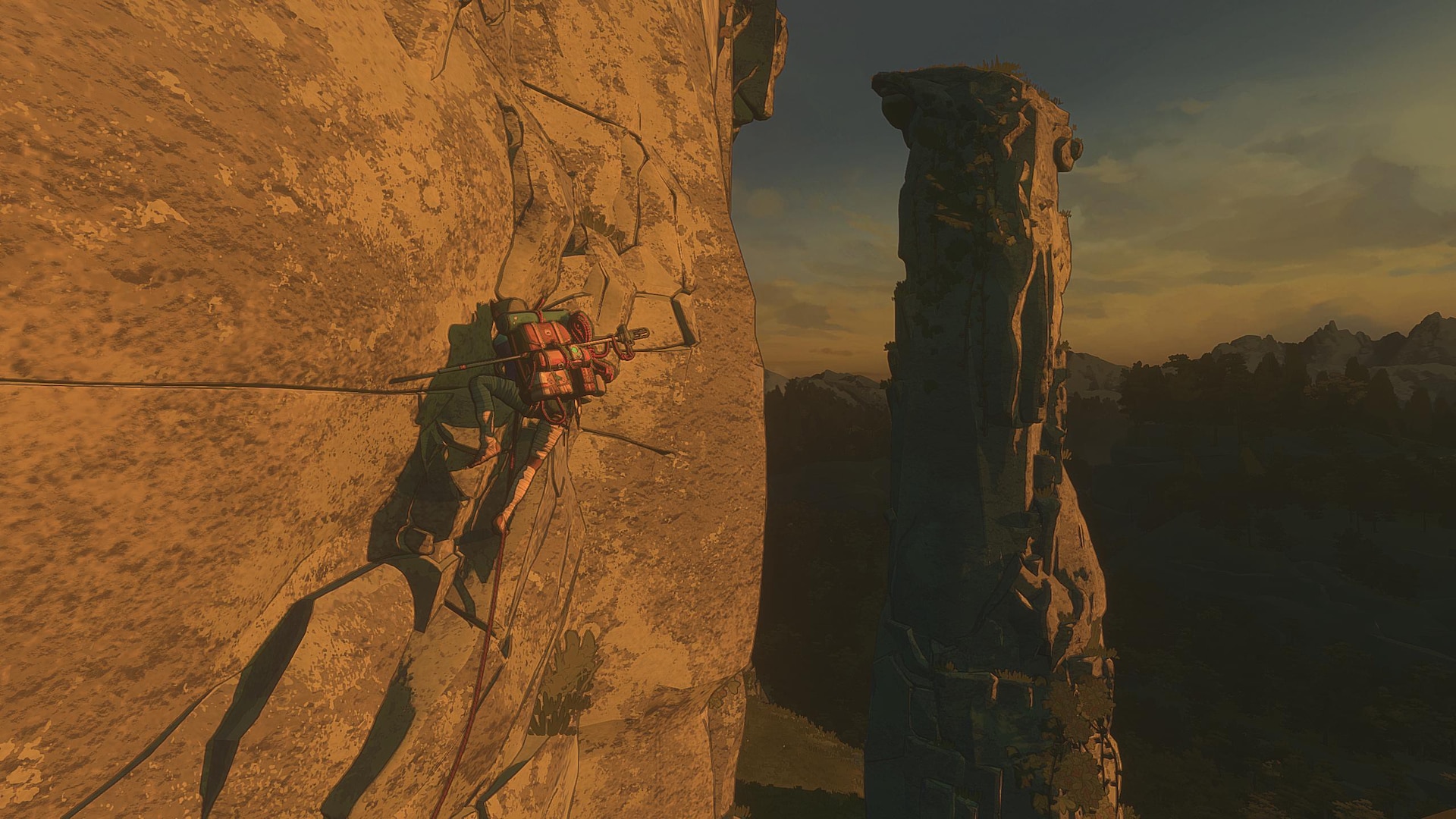
At its heart, Cairn is built around a fully manual climbing system that demands constant attention and deliberate decision-making. You control Aava by placing each of her hands and feet individually, carefully managing her body position as she ascends the rock face. There is no automated climbing animation to fall back on, no contextual “climb” button, and no highlighted route to guide you. Every movement is intentional, and every decision carries real risk.
The early hours are often punishing. The controls feel awkward at first, and it is easy to misjudge reach, stability, or stamina consumption. The game does provide instruction, but it does not attempt to shield players from discomfort or failure. Learning Cairn is not about memorizing inputs or following tutorials—it is about developing spatial awareness and an intuitive understanding of how the body interacts with the environment.
Once that understanding begins to form, the game opens up in remarkable ways. Rock faces stop looking like abstract geometry and start reading like physical problems. Subtle variations in texture, angle, and spacing become meaningful. You learn to anticipate how far you can stretch, when it’s safe to rest, and when pushing forward is a mistake that will cost you later.
Stamina management is inseparable from movement. Every action drains energy, but inefficient climbing drains it far faster. Hanging from overhangs, making unnecessary adjustments, or panicking in unstable positions can quickly leave you exhausted. Recovery is possible, but only when you find genuinely secure footing. This creates a deliberate rhythm of movement, pause, assessment, and continuation that defines the entire experience.
What makes this system especially compelling is how it rewards foresight. Many failures in Cairn do not occur because of a single bad input, but because of a series of small decisions that compound over time. Choosing to push a little further instead of resting, skipping a piton placement to save resources, or taking a slightly riskier route can all come back to haunt you minutes—or hours—later.
Falls are treated with appropriate seriousness. A small slip might cost stamina and composure, but longer falls can erase significant progress or end the attempt outright if you haven’t secured yourself properly. Most failures feel earned, the direct result of overconfidence, impatience, or poor planning rather than random chance. When mistakes happen, the game is usually clear about why.
That clarity is crucial, because the physics system, while generally reliable, is not flawless. On rare occasions, limb placement or body positioning can behave unpredictably, leading to frustration in moments where precision is critical. These instances are uncommon, but because the game places such high stakes on every action, they stand out more sharply than they otherwise would.

Beyond climbing itself, Cairn incorporates a restrained set of survival mechanics that support, rather than overshadow, the core experience. You manage a limited inventory of pitons, ropes, chalk, food, water, and medical supplies. These tools do not make the climb easier; they make it safer. Every item introduces a trade-off. Carrying more supplies increases your margin for error but adds weight, making movement more difficult. Traveling light improves agility but leaves little room for mistakes.
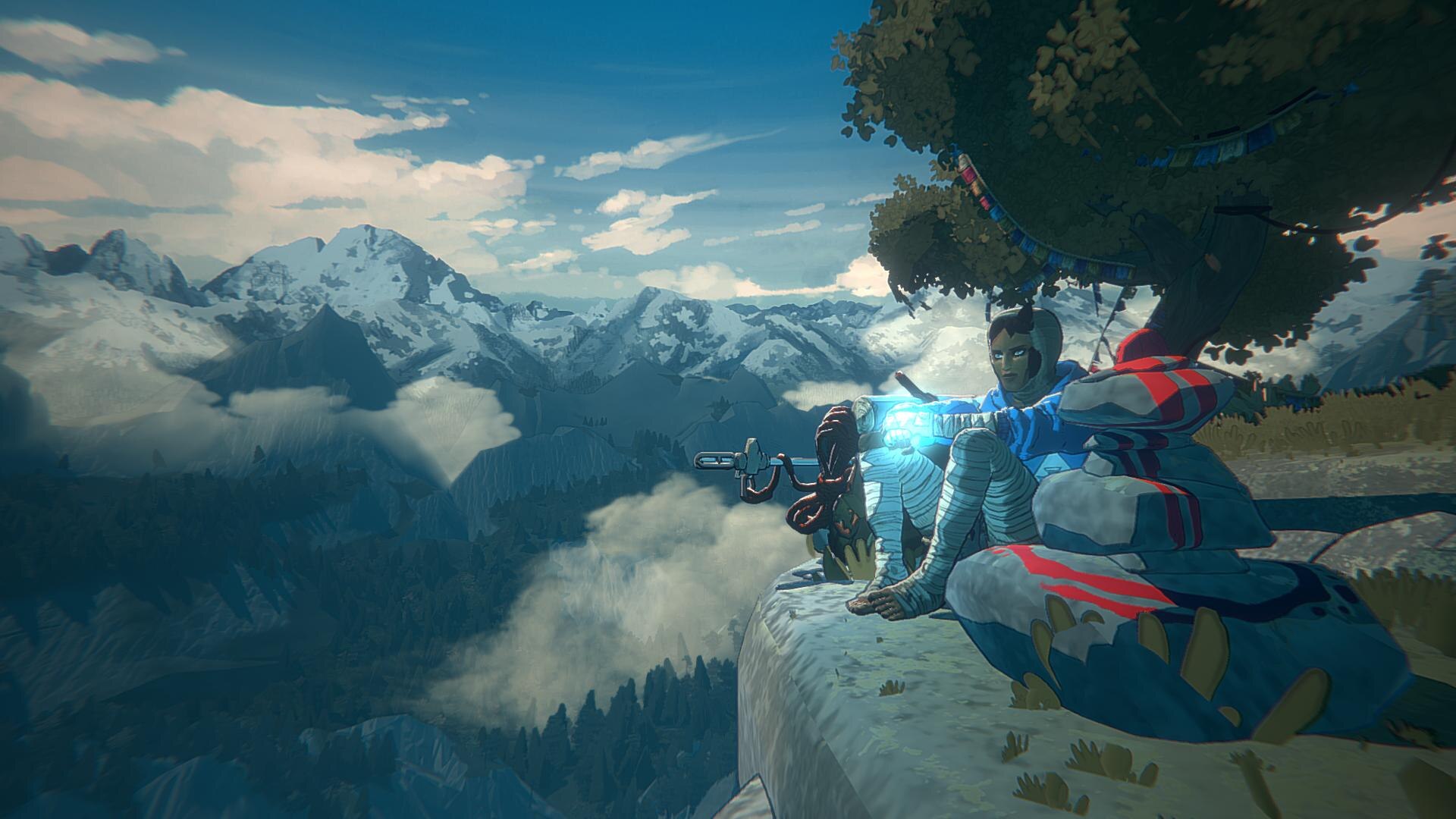
Camps play a central role in structuring the climb. These bivouacs act as rest points and checkpoints, but they also serve as moments of psychological release. Reaching one after a long, exposed ascent provides genuine relief. The slow, deliberate process of resting, reorganizing supplies, and preparing for the next section reinforces the game’s emphasis on planning, restraint, and respect for the mountain.
Story and Narrative
Cairn tells its story quietly and with remarkable restraint. There are no extended cutscenes, no dramatic confrontations, and no exposition-heavy dialogue sequences. Instead, narrative elements are woven into the climb itself, emerging through environmental details, found objects, and occasional radio communications.
You play as Aava, a professional climber attempting to summit Mount Kami, a peak that has defeated everyone who came before. As you ascend, you encounter traces of those previous attempts—abandoned equipment, notes left behind, and subtle signs of failure. These fragments offer glimpses into past ambitions and mistakes without ever spelling out their meaning.
What makes this approach effective is its trust in the player. The game never tells you how to feel about these discoveries. It does not frame them as cautionary tales or heroic sacrifices. They simply exist, inviting reflection rather than instruction.
Aava herself is a deliberately understated protagonist. Her internal thoughts surface sparingly, often at moments of exhaustion, doubt, or quiet resolve. This allows the player to inhabit her role without being overwhelmed by constant narration. Silence plays a crucial role here, reinforcing the isolation of the climb and leaving space for personal interpretation.
Thematically, Cairn explores ambition, obsession, solitude, and the cost of pushing oneself beyond reasonable limits. It does not present the summit as a guaranteed triumph, nor does it frame failure as moral weakness. Instead, it treats climbing as a deeply personal pursuit—one that can be meaningful, destructive, or both.
The mountain remains indifferent throughout. It does not reward determination, nor does it punish hubris in dramatic ways. It simply exists, and the game never lets you forget that indifference.
Visuals and Performance
Visually, Cairn adopts a stylized but grounded aesthetic that prioritizes clarity, scale, and atmosphere over realism for its own sake. Rock faces are detailed enough to convey crucial gameplay information without becoming visually overwhelming. Lighting is used carefully, helping define depth, texture, and mood.
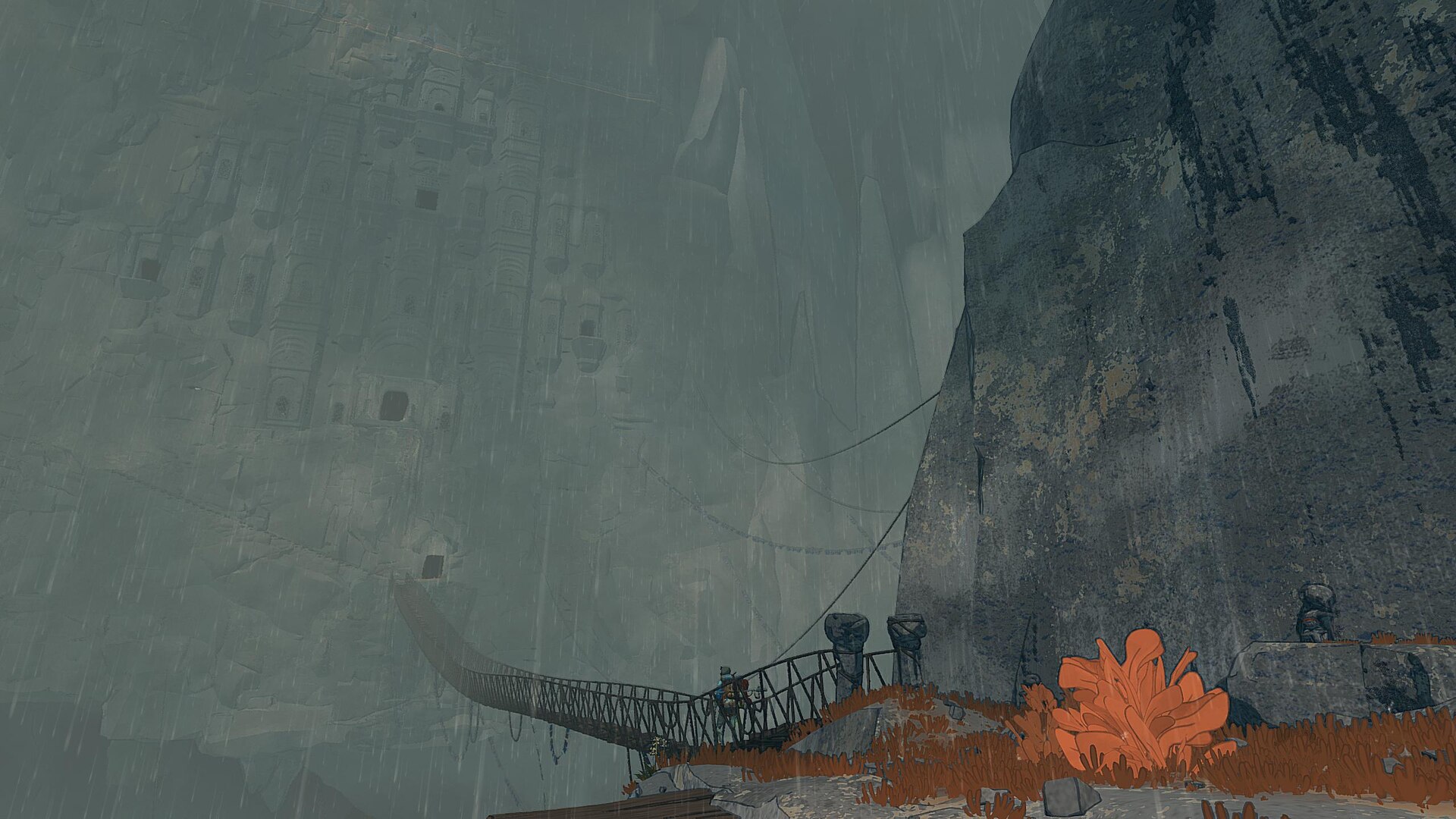
Mount Kami itself is impressively designed. The environment evolves naturally as you gain elevation, with early sections offering space to learn and later areas demanding confidence, efficiency, and discipline. Routes feel physically plausible, and the terrain communicates danger intuitively.

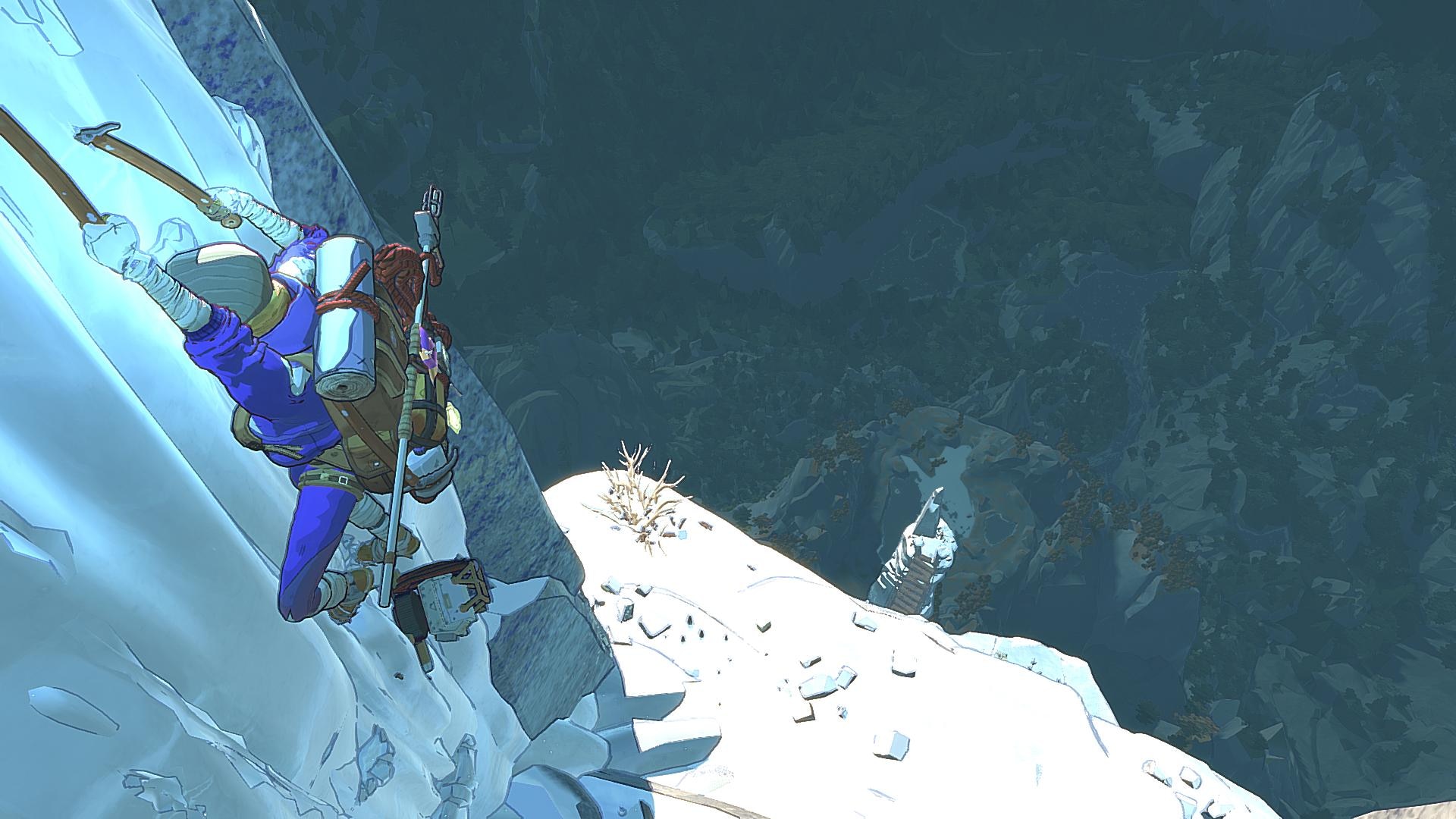
Verticality is one of the game’s greatest strengths, and it permeates nearly every aspect of the experience. The ability to look back down at previously climbed sections reinforces not only a sense of progress, but also a stark awareness of vulnerability. You can see just how far you’ve come, how exposed you are, and how a single misstep could undo all your effort. Heights feel intimidating not because the game exaggerates them visually, but because the consequences are grounded in the mechanics—falling isn’t abstract, it’s meaningful.
Every ledge, every overhang, every tenuous handhold communicates risk, and the higher you go, the more that tension compounds. This sense of verticality isn’t just visual; it shapes how you plan each move, assess each hold, and pace yourself, making the climb feel both physically and psychologically demanding in ways few games manage to convey.
On PC, performance is solid. Frame rates are stable, load times are short, and the game runs smoothly across a wide range of systems. Mouse input allows for precise hold selection, which is particularly valuable during complex climbs, though some players may prefer a controller for broader movement control. Control customization is available and essential given the game’s demands.
Sound and Music
Sound design in Cairn is subtle, restrained, and highly effective. The scrape of hands against stone, the shift of weight, the steady rhythm of breathing, and the ever-present wind all contribute to a strong sense of physical presence. These sounds are not merely atmospheric; they provide constant feedback that reinforces immersion.
Music is used sparingly and with clear intention. Rather than accompanying every moment, the score appears selectively to underline emotional beats or moments of transition. Much of the game unfolds in near silence, allowing the environment itself to dominate the soundscape.
This restraint enhances the feeling of isolation and ensures that musical moments retain their impact. When the score does emerge, it feels earned rather than imposed.
Difficulty and Accessibility
Cairn is unapologetically challenging. Even on more forgiving difficulty settings, it demands focus, patience, and a willingness to learn through repeated failure. The game does not rush to reward the player, and it does not attempt to smooth over frustration.
This design choice is central to its identity, but it will not appeal to everyone. Players looking for a relaxed or casually accessible experience are likely to struggle, particularly during the opening hours. The learning curve is steep, and the game expects you to engage with its systems fully.
Accessibility options exist but are limited. The reliance on precise limb control, sustained concentration, and fine motor input may pose challenges for some players. This is a conscious trade-off in service of realism, but it does narrow the potential audience.
Final Verdict: 8.5/10
Cairn is a game that reveals its strengths slowly, asking for patience and attention rather than offering immediate gratification. What can initially feel rigid or unwelcoming gradually clarifies itself as intentional design—a commitment to treating climbing as a serious, demanding pursuit rather than a backdrop for spectacle.
Its greatest strength is its focus. Every system exists to support the climb, and that clarity gives Cairn a strong sense of identity. The game demands effort and tolerance for failure, and progress can be slow, but success feels earned in a way few games attempt. Achievements are not celebrated through rewards or cutscenes, but through the quiet satisfaction of overcoming risk through preparation and restraint.
Emotionally, Cairn resonates by aligning the player’s experience with Aava’s. Fatigue, doubt, and resolve are felt rather than explained, reinforced by a mountain that remains indifferent throughout. This approach will not appeal to everyone, but it gives the game a rare sense of honesty.
Cairn does not aim for broad appeal. Instead, it offers a focused, uncompromising experience that rewards those willing to engage with it on its own terms. For players who value precision, atmosphere, and meaningful challenge, it stands as a quietly powerful achievement.