LORT is a cooperative action roguelite that prioritizes systemic interaction, emergent gameplay, and flexible player decision-making over traditional narrative or meticulously balanced difficulty. Developed by Big Distraction, it is structured around repeated runs through procedurally generated content where the outcome of each encounter can shift dramatically based on weapon choices, upgrade acquisition, and player coordination.
What distinguishes LORT from other titles in the roguelite genre is its emphasis on cooperation and adaptability. While many games in this space balance tightly around solo play or linear difficulty scaling, LORT allows encounters and progression to respond dynamically to player behavior. This design creates a system in which the mechanics themselves generate variation and challenge, rather than relying on rigid scripting or preset difficulty curves.
Even in its Early Access state, LORT demonstrates a coherent design philosophy. The game is not fully polished, and some systems remain uneven, particularly for solo players. However, the foundation is clear: the developers are focused on a multiplayer-driven experience where experimentation, improvisation, and responsive mechanics define the core gameplay loop.

Gameplay and Mechanics
At its base, LORT follows the familiar roguelite cycle: enter a run, fight enemies, acquire upgrades, manage resources, and eventually fail—or succeed under increasingly challenging circumstances. Each run is procedurally generated, ensuring that encounters, enemy types, and upgrade opportunities vary significantly. This unpredictability is central to the game’s design and shapes player engagement across repeated sessions.
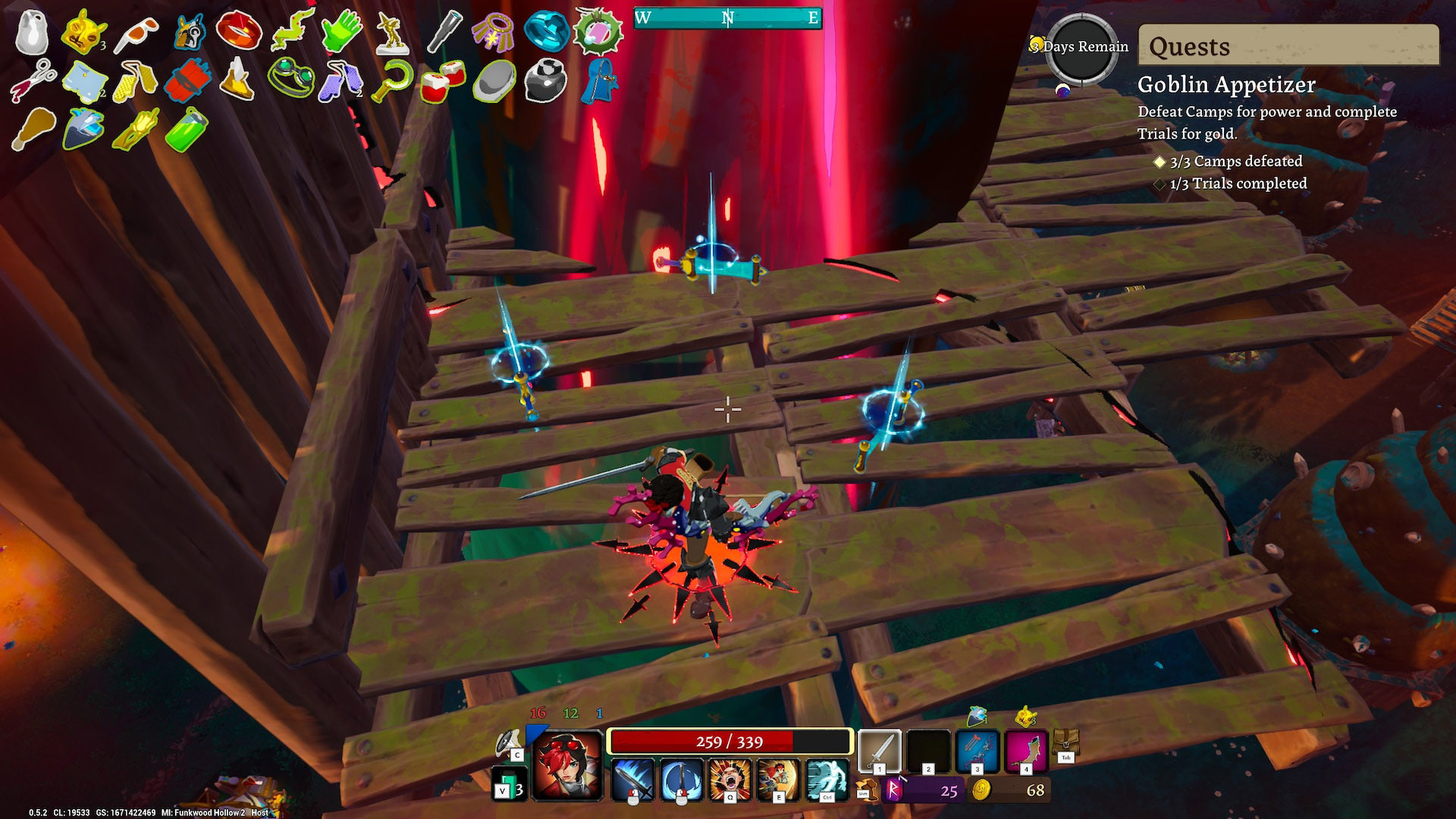
Combat is deliberately continuous and intense. Enemies spawn in large numbers, often in combinations that require players to prioritize targets, manage positioning, and adjust tactics on the fly. The pacing is brisk, and the game rarely provides extended lulls in action. This creates a sense of urgency, but it also requires that players remain consistently aware of spatial relationships and the state of the battlefield.
Weapon systems are designed to encourage flexibility and experimentation. Players can switch between melee, ranged, and magic-based options mid-run without penalty, allowing them to adapt to the specific power-ups and upgrades available. This reduces the cost of experimentation, a design choice that aligns with the game’s philosophy of emergent gameplay.
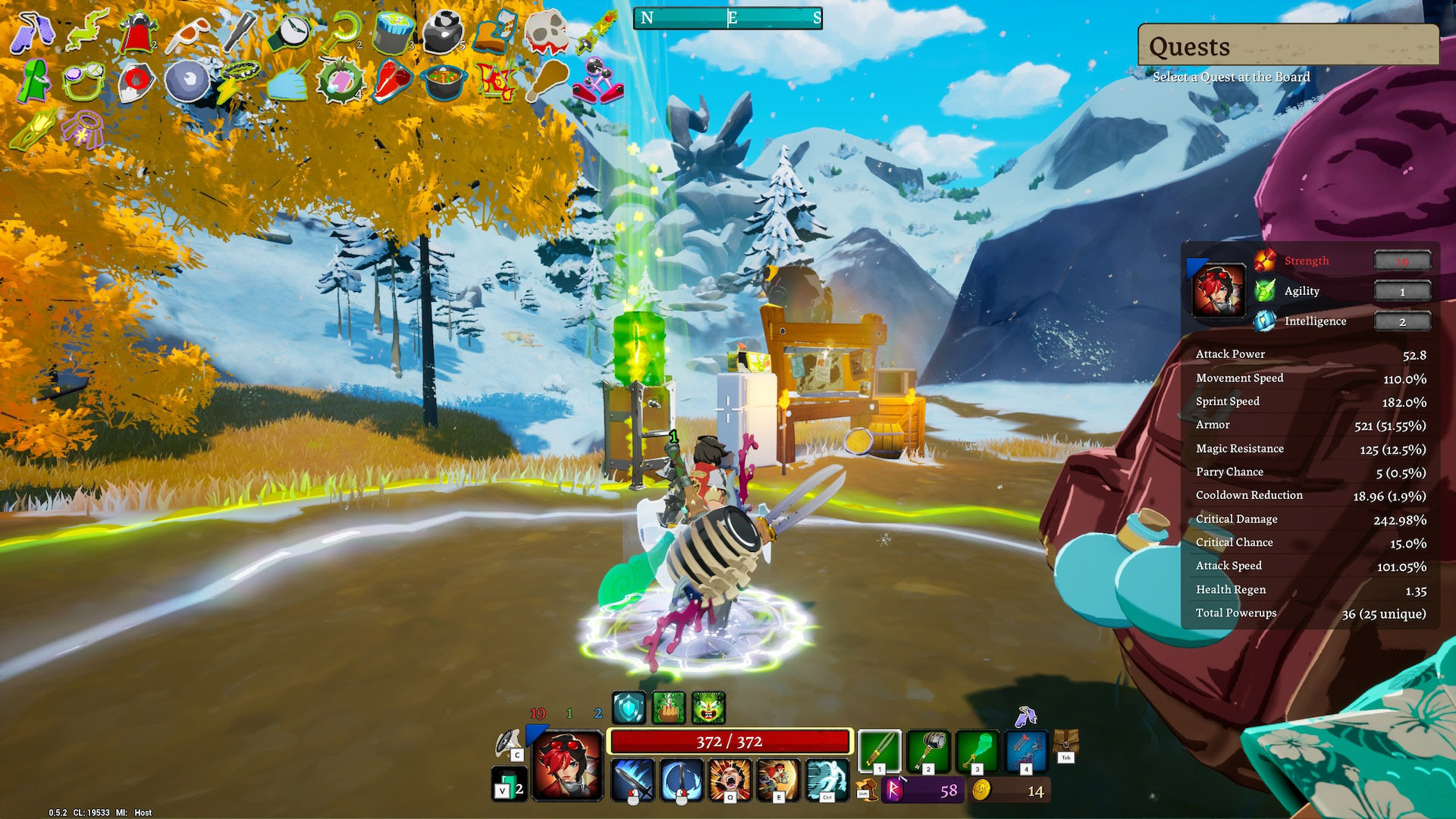
The power-up system is particularly noteworthy. Unlike many roguelites that provide incremental stat boosts, LORT’s upgrades often transform core mechanics, altering attack patterns, movement, or resource management. Effects stack freely and interact in complex ways, creating emergent synergies that can dramatically shift a run’s trajectory. For example, a single upgrade may enhance projectile speed, while another modifies enemy behavior, together creating a unique dynamic that forces the player to reconsider strategy mid-run.
Over the course of a run, these elements lead to a pronounced escalation of player capability. Early encounters often require careful observation and measured responses, but mid- and late-game scenarios can shift toward high-intensity, high-impact action. This escalation is central to LORT’s design, as it keeps each run engaging while providing tangible feedback on player choices.
Cooperative Design
Cooperative gameplay is the context in which LORT is most effective. The game supports up to eight players in a single session, with enemy counts, encounter complexity, and environmental hazards scaling to match the party size. This scaling is substantial and creates a distinct dynamic depending on the number of participants.
One of the game’s key design decisions is the lack of rigid class or role enforcement. While emergent roles often develop naturally—some players gravitating toward area-of-effect abilities, others toward high burst damage, and still others prioritizing survivability—these roles remain flexible and contingent upon the choices made during a run. This allows players to experiment with unconventional strategies without being penalized.
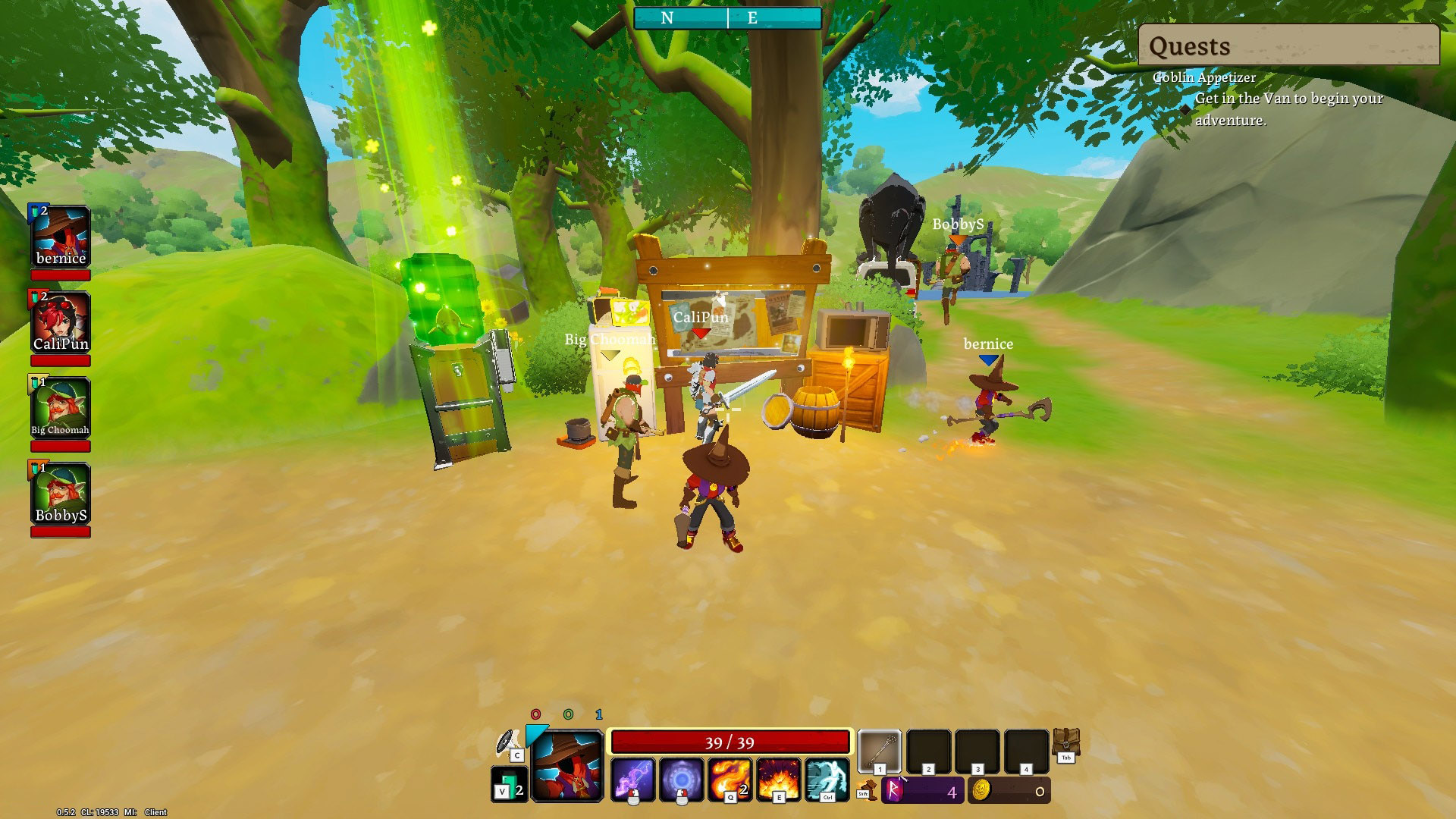
In cooperative sessions, this flexibility allows for emergent teamwork and improvisation. Build combinations that interact in unexpected ways can create unique outcomes, encouraging players to communicate, observe, and adapt continuously. Even in less coordinated groups, the game remains accessible due to revival mechanics and forgiving encounter design, which allow players to recover from mistakes without derailing the run entirely.
Solo play exposes certain limitations of the design. Without additional players to distribute pressure or to provide complementary abilities, encounters become more punishing, and some of the emergent strategies seen in multiplayer sessions are unavailable. Difficulty spikes are more noticeable, and the pacing can feel less fluid. While solo play is technically supported, the game is clearly optimized for cooperative engagement.
Progression and Replayability
Replayability in LORT is primarily system-driven. Procedural generation ensures that enemy placements, environmental hazards, and upgrade sequences vary across runs. Combined with the stacking, interactive power-up system, this results in high variability, even across multiple consecutive sessions.
Meta-progression exists but is currently modest in scope. Players unlock additional options and incremental advantages that carry over between runs, but these systems are designed to supplement rather than replace the emergent variability of procedural encounters. This allows players to feel a sense of long-term growth without undermining the importance of moment-to-moment decisions during individual runs.
For players who value experimentation and mechanical discovery, this approach is effective. However, it may feel insufficient for those who prioritize persistent long-term progression or strategic optimization. Future updates could expand meta-progression to provide additional incentives without compromising the focus on emergent gameplay and cooperative improvisation.
Presentation and Audio
The visual design of LORT is functional and clear, prioritizing readability over detailed or realistic rendering. Character and enemy models are distinct, and visual effects effectively communicate ability impact, hit detection, and environmental hazards. This clarity is particularly important given the density of combat and the complexity of simultaneous actions on screen.
The art style is consistent and deliberately restrained. While it does not rely on high-detail environments or technical visual flourishes, it successfully supports gameplay and aids comprehension. Animations are clean, effects are visible, and visual cues are reliable.
Audio design complements this visual clarity. Sound effects provide clear feedback on attacks, abilities, and environmental interactions, helping players respond to threats in real time. Music maintains pacing and tension but remains unobtrusive. Together, visual and audio design create a coherent and practical presentation that supports player engagement without overshadowing gameplay.
Strengths and Limitations
The primary strength of LORT lies in its cooperative systems and emergent gameplay. The combination of scalable encounters, flexible builds, and interactive power-ups fosters varied and engaging sessions. Players are encouraged to experiment, respond to evolving conditions, and discover synergies between abilities and environmental factors.

These same design choices also expose the game’s limitations. Solo play lacks the same level of strategic depth, pacing, and flexibility. Difficulty tuning can feel uneven, particularly when runs are dependent on specific power-up combinations. The meta-progression system is functional but limited, offering only modest incentives for extended engagement.
As an Early Access title, LORT has technical and balance-related rough edges. Performance fluctuations in large cooperative sessions, minor bugs, and occasional uneven encounters are present, but these issues reflect ongoing development rather than inherent design flaws. The core systems are coherent, and the developers appear actively engaged in refining the experience.
Technical State and Early Access Considerations
From a technical standpoint, LORT performs reliably under typical conditions, though high-intensity encounters with multiple players can occasionally cause frame rate dips or minor performance inconsistencies. These issues are not severe, but they are notable in comparison to more polished full-release roguelites.
Difficulty remains an area of active iteration. Some encounters are appropriately challenging, requiring observation and adaptation, while others can feel abrupt or disproportionately punishing, especially for new or solo players. The developers’ ongoing adjustments suggest that balance and tuning are priorities for future updates.
Early Access also leaves room for additional content, refinement of meta-progression systems, and further optimization. The current build provides a solid foundation, but certain systems—particularly solo scaling and long-term progression—could benefit from further development.
Final Verdict: 7/10
LORT is a cooperative action roguelite with a clear and coherent design philosophy. Its strengths lie in flexible, emergent gameplay systems, scalable cooperative encounters, and an expressive power-up system that encourages experimentation and adaptation. These elements combine to produce runs that are both variable and engaging, particularly when played with multiple participants.
While Early Access limitations and underdeveloped solo support prevent the game from fully realizing its potential, the underlying systems are robust and purposeful. For players seeking a cooperative roguelite that prioritizes strategic flexibility, experimentation, and emergent outcomes over strict balance or rigid progression, LORT offers a solid foundation with significant room for growth.