Avatar: Frontiers of Pandora is Massive Entertainment’s attempt to translate the scale, atmosphere, and visual identity of James Cameron’s Avatar universe into a fully explorable open-world game. Instead of retelling the events of the films, the developers chose to create an original narrative set in the Western Frontier, a previously unseen region of Pandora. This decision allows the game to expand the universe in meaningful ways while giving players a fresh perspective unburdened by expectations tied to the movies’ main characters.
On PC, the game positions itself as a premium experience built around immersion. From the outset, it is clear that Pandora itself is meant to be the focal point, with gameplay systems designed to encourage exploration and environmental interaction. While the ambition behind the project is evident at every turn, the game occasionally struggles to balance its breathtaking setting with familiar open-world design conventions.

World Design and Visual Presentation
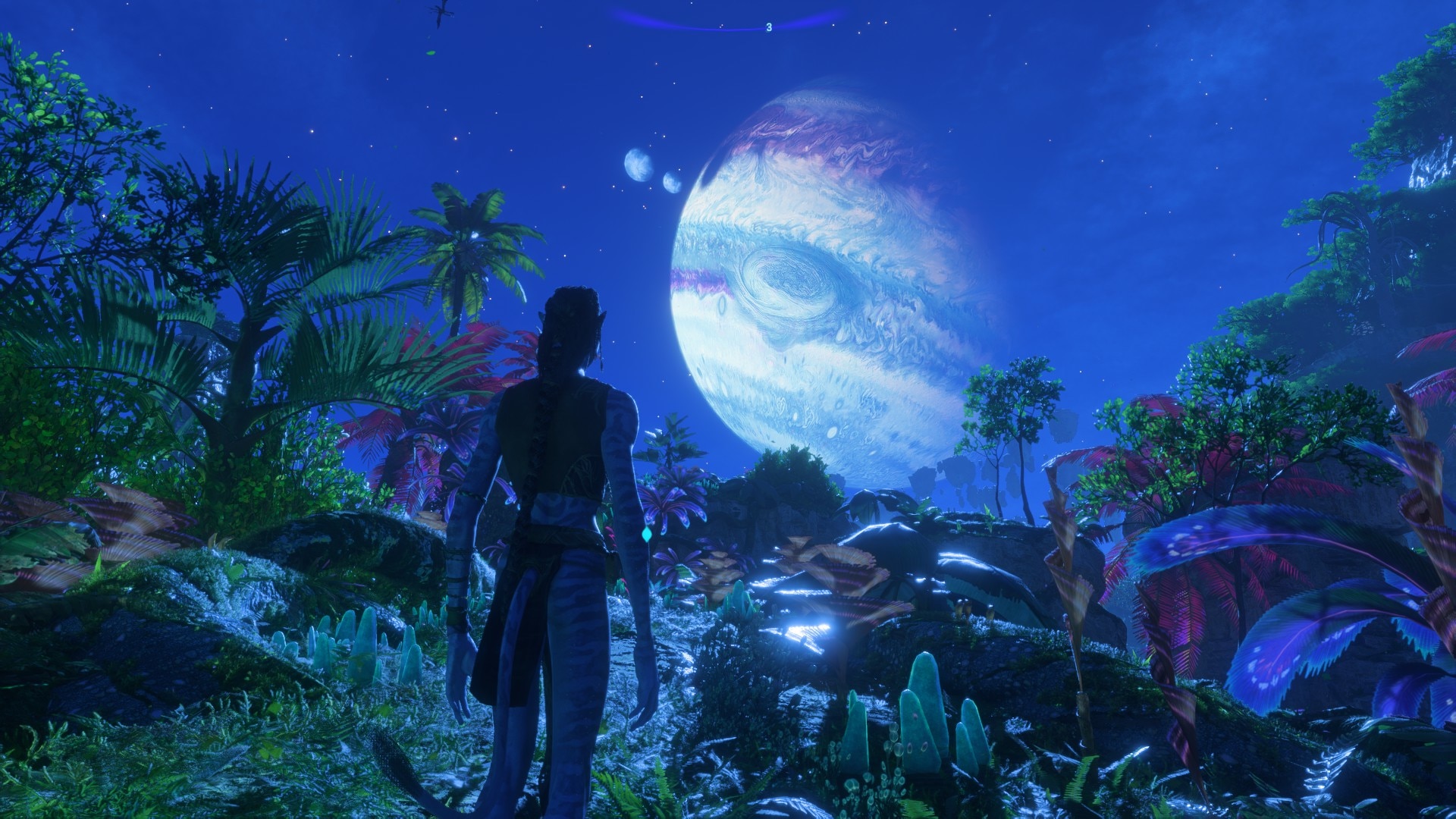
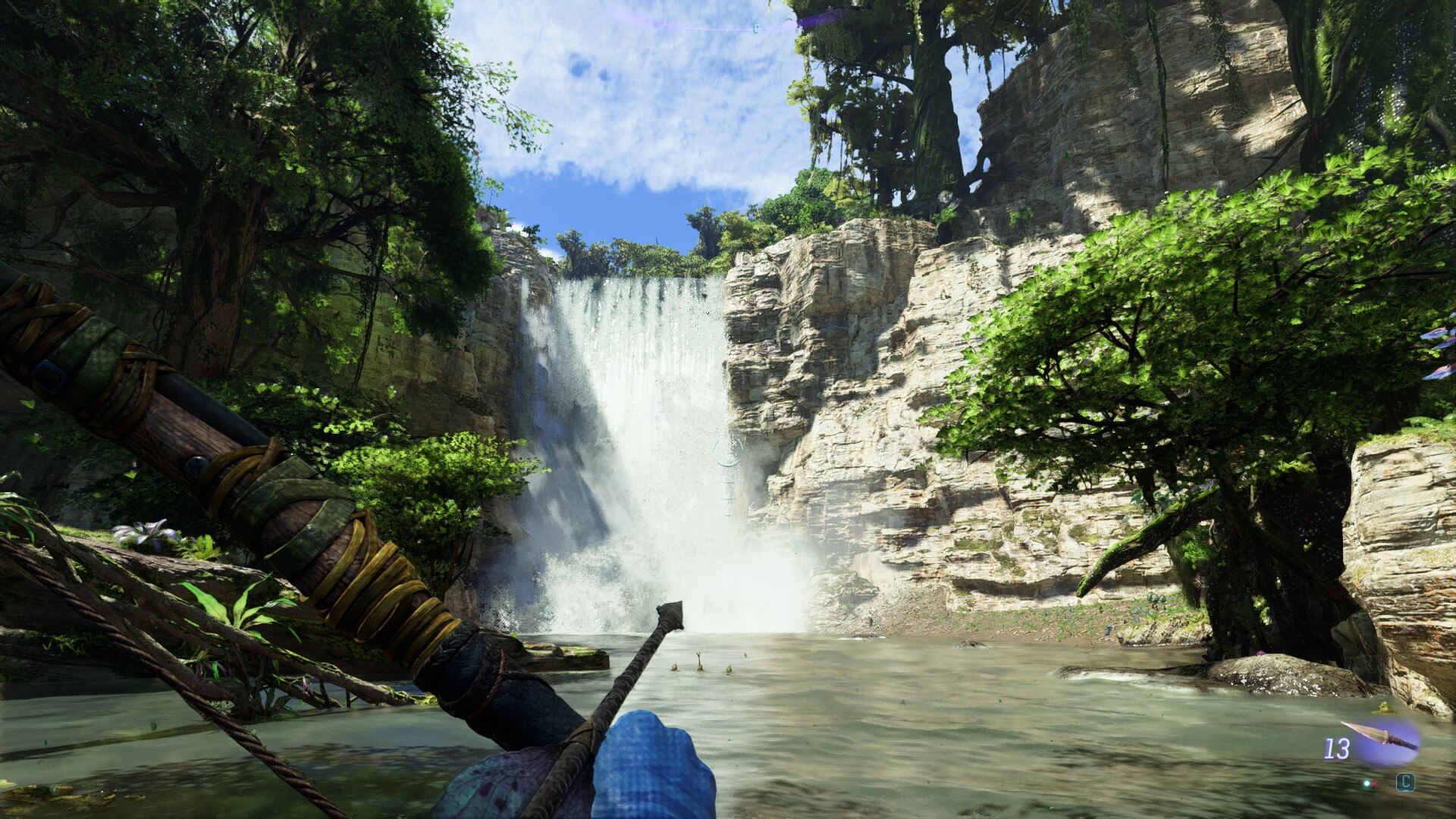
Pandora is the game’s greatest achievement and the element that consistently leaves the strongest impression. The Western Frontier is richly detailed and visually diverse, offering dense jungles, towering cliffs, open plains, and floating rock formations that emphasize vertical exploration. Each biome feels carefully constructed, with its own wildlife, vegetation, and environmental rhythms.
The Snowdrop engine plays a significant role in bringing this world to life. Vegetation reacts dynamically as you move through it, animals behave in believable ways, and environmental details subtly reinforce the idea that Pandora is a living ecosystem rather than a static map. Lighting is particularly effective, with shifting weather conditions and time-of-day transitions that dramatically change how areas feel.
Night exploration stands out as a highlight, as bioluminescent plants illuminate the terrain in striking blues and purples, creating moments that feel almost cinematic. Sound design complements the visuals, layering distant wildlife calls, rustling foliage, and ambient effects to reinforce immersion.
On PC, the visual experience scales well with hardware, offering exceptional fidelity at higher settings. However, this fidelity comes at a cost. The game is demanding even on capable systems, and players with mid-range hardware may need to rely on upscaling technologies or compromise on visual settings to maintain smooth performance.
Gameplay and Mechanics
Traversal and movement form the backbone of Frontiers of Pandora, and they are consistently enjoyable. The first-person perspective emphasizes scale, making environments feel larger and more imposing while reinforcing the physicality of movement. Sprinting through forests, climbing rock faces, and leaping between platforms all feel responsive and intuitive.
The introduction of Ikran flight significantly expands the sense of freedom. Flying across Pandora not only improves traversal efficiency but also highlights the game’s vertical world design. These sequences often feel liberating, offering sweeping views of the landscape and reinforcing the sense of scale that defines the experience.
Combat is more uneven by comparison. Encounters combine stealth and direct combat using a mix of traditional Na’vi weapons and scavenged human technology. While this contrast fits the narrative and setting, combat mechanics themselves lack depth over time. Enemy variety is limited, and AI behavior rarely forces players to rethink their approach once basic strategies are established.
Structurally, the game adheres closely to familiar open-world frameworks. Side activities, resource collection, crafting systems, and outpost-style objectives are polished but conventional. Environmental restoration mechanics—where areas visibly recover after RDA facilities are dismantled—are thematically effective and visually satisfying, though they remain mechanically simple and largely unchanged throughout the game.

Narrative and Writing
The story centers on a Na’vi protagonist raised by humans, exploring themes of identity, belonging, and cultural rediscovery. This setup fits naturally within the Avatar universe and provides a compelling emotional foundation, particularly in the early stages of the game. Worldbuilding is handled with care, especially when it comes to Na’vi culture, spirituality, and their connection to the land.
Many of the game’s strongest narrative moments are delivered through environmental storytelling rather than exposition, allowing players to learn about the world through exploration and observation.
The main narrative arc, however, is largely predictable. Characters fulfill their roles effectively but rarely develop beyond their archetypes, and antagonists lack complexity. Dialogue can occasionally feel overly explicit, reducing the subtlety of emotional beats. Side quests often exist to support gameplay systems rather than deepen character relationships or narrative themes, which can affect pacing and engagement.
While the story aligns well with the franchise’s themes, it serves more as a framework for exploration than a driving force in its own right.
Technical Performance on PC
At launch, PC performance was one of the game’s most criticized aspects. Players reported inconsistent frame rates, long loading times, and stability issues, particularly on mid-range systems. The game’s reliance on advanced graphical features made optimization a challenge for many setups.
Subsequent updates have improved overall stability and performance, addressing several of the most common complaints. Upscaling technologies such as DLSS and FSR play a crucial role in achieving playable performance, especially at higher resolutions.
On high-end PCs, the experience can be smooth and visually impressive, delivering the level of fidelity the game clearly aims for. On less powerful systems, however, achieving consistent performance often requires careful tuning and visual compromises. While the situation has improved since launch, the game remains technically demanding and occasionally unforgiving.

Post-Launch Support and Content
Ubisoft has invested heavily in post-launch support, steadily refining the experience through patches, feature updates, and additional content. Many early issues have been addressed, and quality-of-life improvements have made the game more accessible and enjoyable over time. The addition of features such as third-person mode and New Game+ adds flexibility and replay value, allowing players to experience the game in different ways.
Narrative expansions further flesh out the Western Frontier, adding context to existing storylines and extending the life of the game. While these updates do not fundamentally change the core gameplay structure, they meaningfully enhance the overall package and demonstrate a long-term commitment to improving the experience.
Final Verdict: 7.5/10
Avatar: Frontiers of Pandora is at its best when it allows players to simply exist within its world. Pandora is beautiful, immersive, and consistently rewarding to explore, and the game’s traversal systems make movement feel fluid and purposeful. The sense of scale and environmental detail is among the strongest seen in modern open-world games.
At the same time, familiar design conventions, limited combat depth, and a predictable narrative prevent the game from fully capitalizing on its potential. The PC version delivers impressive technical ambition but demands capable hardware and a willingness to fine-tune settings.
For fans of the Avatar universe and players who value atmosphere, exploration, and visual spectacle, Frontiers of Pandora offers a compelling and often memorable journey—especially after its post-launch improvements. For those seeking mechanical innovation or deeply layered storytelling, it remains a polished but ultimately conventional open-world experience.