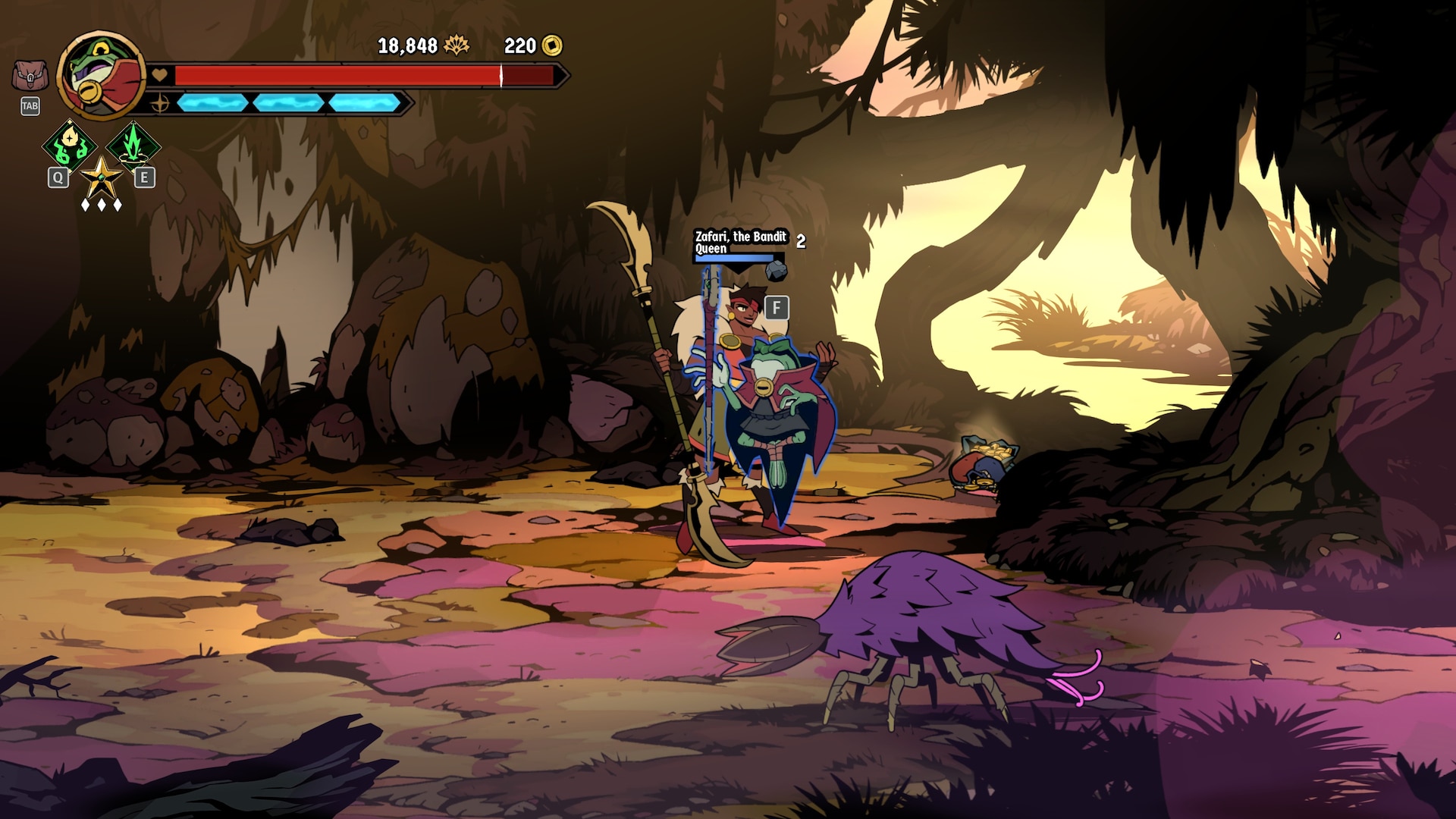
The beat-’em-up is one of gaming’s oldest genres, but it has rarely been as vibrant as it is now. The resurgence sparked by titles like Streets of Rage 4 and Teenage Mutant Ninja Turtles: Shredder’s Revenge has prompted developers to revisit the formula with renewed ambition. Absolum, the latest release from Guard Crush Games and Supamonks, stands out among this new wave by blending the familiar immediacy of classic brawlers with the systemic depth and replayability of modern roguelites. Rather than feeling like a mashup of genres, Absolum presents itself with strong creative identity—a fully realized “rogue-’em-up” that understands what makes each of its influences work and successfully combines them into something distinct.

Story and Structure
While Absolum includes a clear narrative—one centered around a rebellion rising against an oppressive regime that has outlawed magic—the story is primarily contextual. It’s not a narrative-driven experience in the traditional sense. Instead, the framing provides just enough world-building to justify the settings, characters, and escalating stakes of each run. The lore is delivered with a light touch through environmental details, character briefings, and occasional event encounters, creating a sense of a living world without slowing the game’s pace.
What truly elevates the structure is the decision to abandon a fixed linear progression. Instead of the classic eight-stage formula common in arcade brawlers, Absolum utilizes a branching, node-based roadmap reminiscent of modern roguelites. Each run takes you through a sequence of handcrafted regions, but the order, conditions, and encounters vary. One path might lead through monster-filled caverns where enemies ambush from offscreen platforms, while another might route you through ancient ruins filled with environmental traps and elite minibosses. Special event rooms—ranging from narrative encounters to risk-reward challenges—give players meaningful decisions that influence how the run unfolds.
This structure does more than add variety; it subtly encourages adaptation. Absolum doesn’t rely on the fully procedural generation that often leaves roguelites feeling repetitive. Instead, it uses curated content shuffled into dynamic configurations, preserving artistic cohesion while keeping each run fresh. Over time, players begin to recognize types of encounters but never exactly how they will combine, which keeps the game engaging for dozens of hours.
Gameplay and Combat
Combat is where Absolum truly shines, delivering a system that is easy to learn but rich with nuance. Movement is fast and responsive, with a strong emphasis on positioning, timing, and controlled aggression. Light attacks flow naturally into heavy finishers, aerial maneuvers link seamlessly into ground combos, and each character’s special abilities provide unique ways to manipulate space or reset the tempo of a fight.
One of the game’s most impressive design achievements is how distinct each character feels. Rather than relying on stat differences or slight variations in move properties, Absolum gives its roster mechanical identities. The sword-wielding protagonist plays with measured, rhythmic strikes and precision counters. The armored guardian uses slower, crushing blows and defensive stances to punish aggression. The arcane caster relies on spacing tools, evasive movement, and burst damage. These differences make switching characters feel like learning a new playstyle rather than simply a new move set.

Arcana abilities serve as the game’s major innovation. These short-cooldown magical techniques are woven into the combo structure and function more like secondary attacks than meter-dependent supers. Each arcana has a role: some extend combos, some knock enemies into advantageous positions, some create zoning opportunities, and others serve as defensive resets. The cadence of combat often revolves around cycling these abilities, forcing players to think a few seconds ahead as they consider how cooldowns align with enemy patterns.
Enemy design is equally thoughtful. Early foes introduce the fundamentals, but later regions demand mastery of spatial awareness and crowd control. Shield-bearers who block frontal assaults, teleporting sorcerers who disrupt combos, and heavy bruisers with armor states all force players to adapt their rhythm. Encounters frequently mix enemy types to create layered threats, turning each room into a small tactical puzzle. While the genre typically rewards brute-force aggression, Absolum thrives on controlled pacing and reactive decision-making—making its combat satisfying not just for its immediacy, but for its depth.
Co-op play enhances the experience by adding synergy between abilities. Two players coordinating arcana combos can juggle enemies in ways impossible alone. However, the screen can become visually dense, and on rare occasions, important telegraphs can get lost in the chaos. Even so, co-op remains a highlight, especially for players who enjoy the social energy of classic arcade brawlers.
Presentation and Audio
Aesthetically, Absolum is among the most polished 2D action titles of the year. The hand-animated visuals radiate personality, with fluid character animations, detailed environments, and expressive enemy designs that contribute to a cohesive fantasy world. Each region feels distinct, achieving a sense of place through color, architecture, and atmospheric effects.
Character readability—a challenge in busy brawlers—is handled well. Attack wind-ups are clearly animated, hit effects are bold without being intrusive, and enemy silhouettes remain easy to identify even during chaotic encounters. During co-op, the visual clarity can strain under the weight of simultaneous effects, but solo play maintains strong readability throughout.
The sound design is equally impressive. Every hit lands with satisfying impact, reinforced by layered effects that differentiate between weapon types, magical attacks, and enemy armor states. The soundtrack blends orchestral fantasy tones with energetic percussion, dynamically shifting as encounters escalate. The audio feedback is finely tuned to support player performance, subtly emphasizing parries, perfect dodges, and combo finishers.
Collectively, the presentation gives Absolum a premium feel—one that exceeds expectations for a mid-sized production and competes comfortably with the industry’s heavy hitters.
Roguelite Progression
The progression system in Absolum strikes an impressive balance between long-term growth and run-to-run improvisation. Between attempts, players spend collected resources to unlock new characters, expand arcana libraries, enhance base stats, and access cosmetic rewards. This steady sense of advancement helps alleviate the sting of defeat and encourages experimentation with new builds.

During runs, temporary upgrades add another layer of strategy. These can significantly alter playstyles—such as enhancing specific combos, boosting elemental arcana, or granting new movement options. Choices matter: investing heavily in arcane cooldown reduction, for instance, can turn a character into a spell-slinging whirlwind, while a focus on physical modifiers might create a relentless melee bruiser. Because upgrades appear unpredictably, players must learn to adapt their plans on the fly.
The branching map reinforces this improvisational nature. Each route offers different types of challenges and rewards, making pathing decisions strategic rather than cosmetic. Opting for a difficult elite encounter early might unlock powerful upgrades that reshape the rest of the run; choosing a safer path could offer resources for long-term progression. The interplay between immediate survival and future investment is the driving force behind the game’s addictive loop.
Importantly, Absolum avoids the pitfalls of overreliance on RNG. While randomness exists, it never completely overrides player agency. Good play can salvage bad luck, and smart routing can compensate for suboptimal upgrades. This balance is crucial—it keeps the roguelite format from feeling unfair while preserving the excitement of discovery.
Final Verdict: 8.5/10
Absolum is a standout entry in the evolving landscape of modern beat-’em-ups. It successfully merges the immediacy and impact of classic brawlers with the strategic depth and replay value of roguelites, without diluting what makes either genre compelling. Its combat is fast, expressive, and skill-driven; its structural design encourages constant experimentation; and its presentation boasts a level of artistry and polish that elevates the entire package.
While occasional visual clutter in co-op and a lightweight narrative prevent it from reaching absolute perfection, these issues are minor compared to the strengths on display. Whether you are a longtime fan of the genre or a newcomer looking for a fresh action experience, Absolum delivers one of the most engaging and replayable brawlers of the year.