Where Winds Meet, the debut effort from Everstone Studio, is one of the most ambitious attempts in recent memory to marry the sprawling freedoms of open-world action RPGs with the operatic intensity of wuxia cinema. This is a game striving to deliver more than just a playground of martial arts spectacle. It aims to offer a cultural aesthetic, a historical mood, and a narrative atmosphere seldom explored with such commitment in mainstream games—especially in the PC space, where wuxia titles often skew toward niche audiences.
What emerges is a bold, visually mesmerizing adventure with an impressive command of motion, style, and world design. Yet it’s also a project whose reach occasionally exceeds its grasp. Technical rough edges, pacing inconsistencies, and the familiar pitfalls of live-service architecture prevent Where Winds Meet from achieving unqualified excellence. Still, when its systems align, the game becomes something rare: a playable martial-arts epic that feels both intimate and mythic.
World and Setting
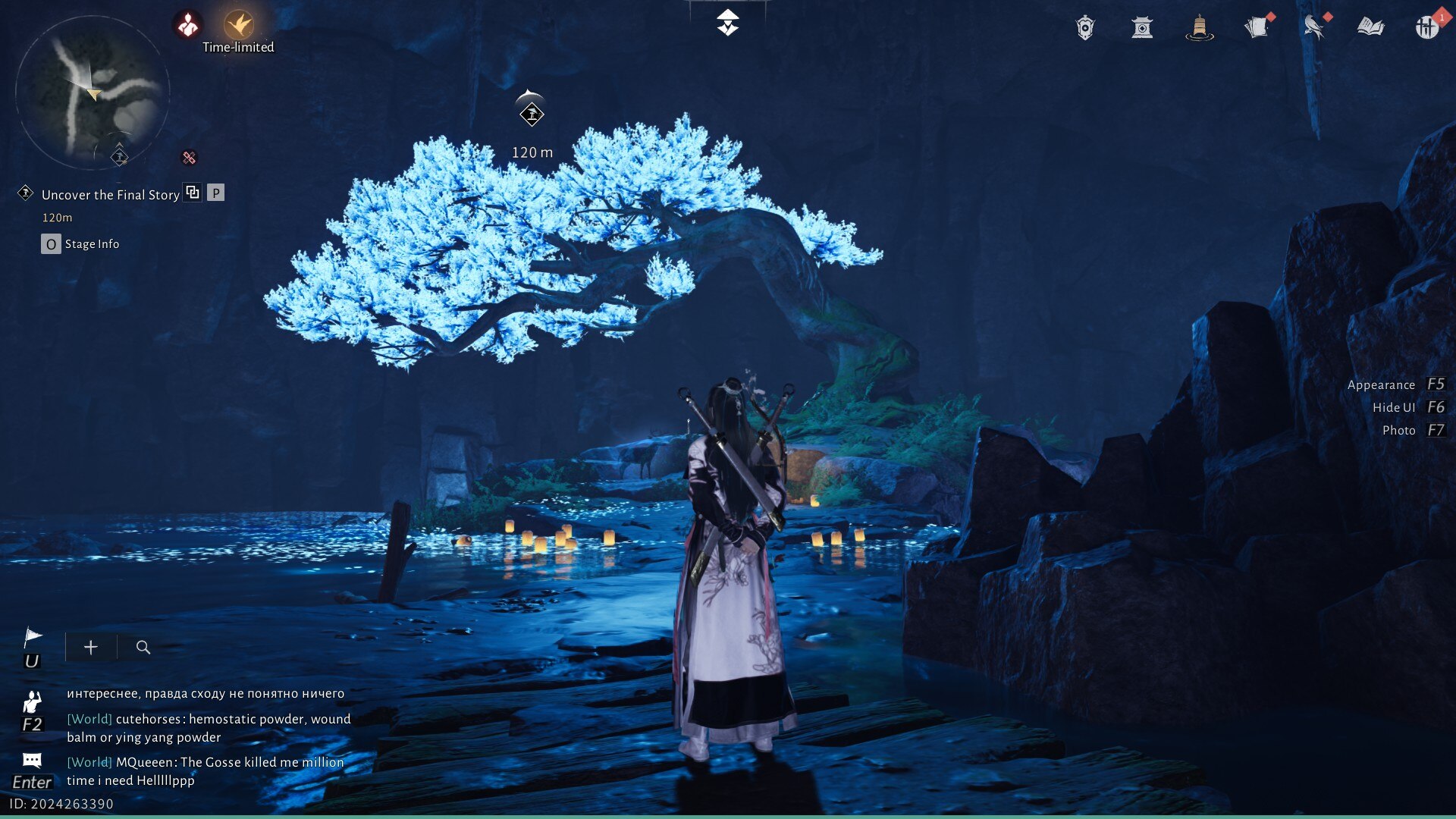
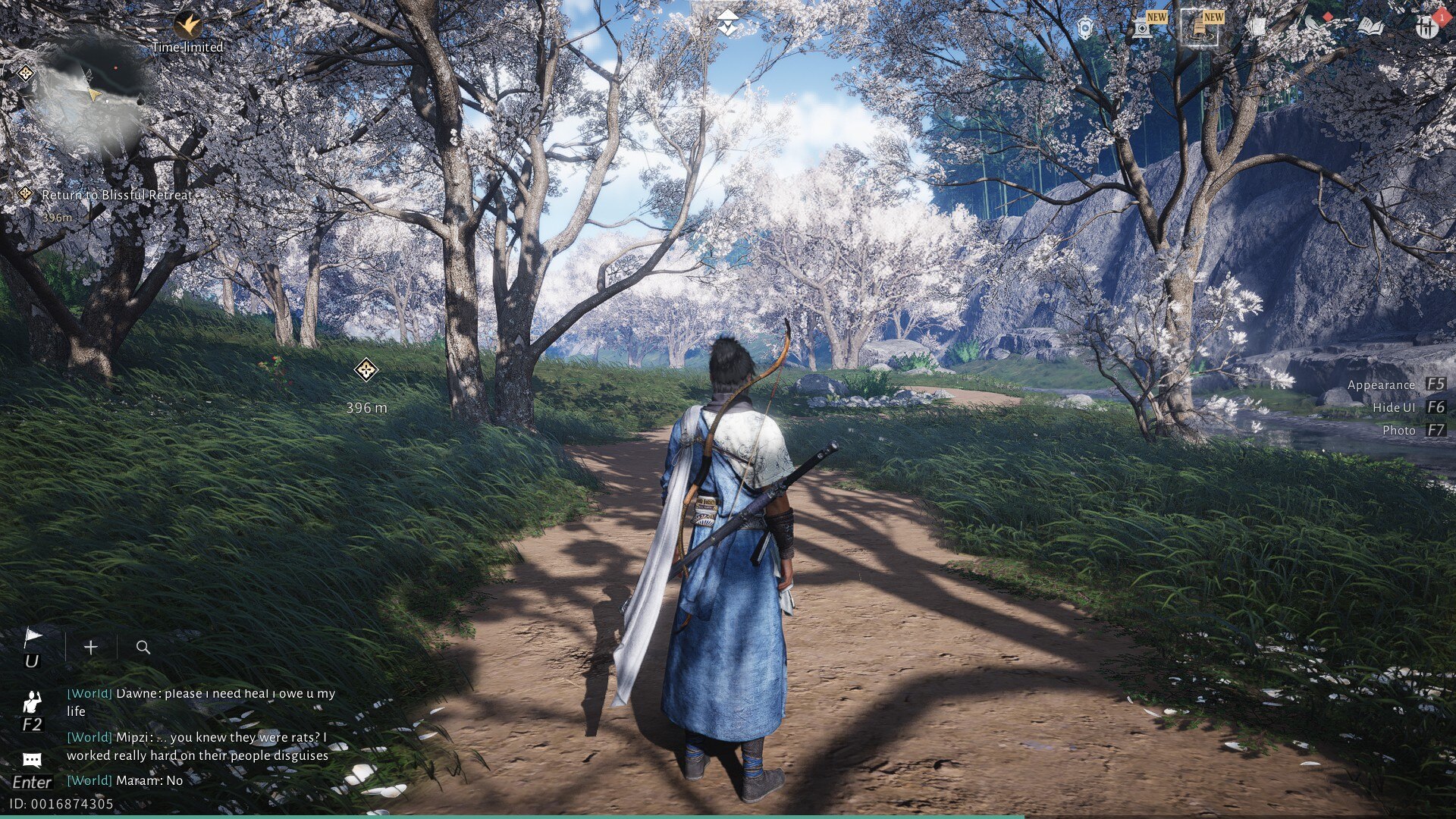
Everstone’s depiction of late-Tang and Five Dynasties China is not a literal recreation of history but rather a painted reinterpretation of it—an idealized dream of an era defined by political fragility, philosophical conflict, and spiritual ambiguity. The world feels forged from poetry as much as geography. Mountain ranges twist like brushstrokes. Rivers glide with a painter’s softness. Fortresses, teahouses, bamboo groves, ancient temples, and secluded monasteries emerge from the landscape as though placed for maximum thematic resonance.
What elevates this setting is its density of cultural detail. Street performers recite folk tales beside lantern-lit bridges, while wandering monks debate the nature of virtue. Artisans demonstrate their crafts with tactile authenticity: potters shaping clay, calligraphers practicing strokes, herbalists grinding ingredients. Even small rural villages convey a sense of continuity and tradition, with women weaving silk indoors as farmers exchange gossip in muddy courtyards.
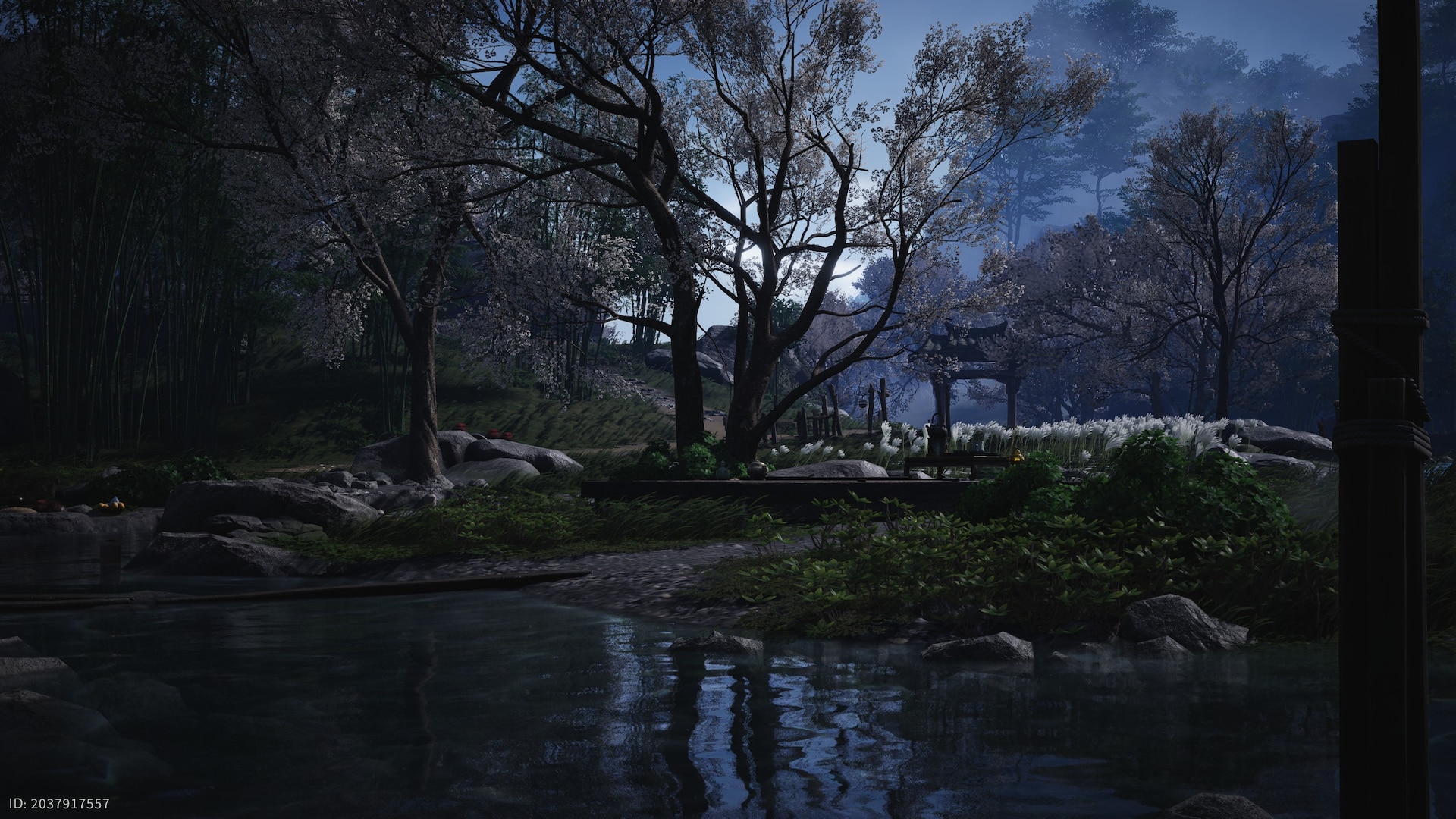
The game’s environmental soundscape reinforces this immersion. Flutes and guqin melodies drift naturally from inns; wind rustles through bamboo forests with serene rhythm; battlefields echo with the unsettling quiet of abandoned armor and toppled banners. Dynamic weather accentuates mood rather than merely altering visibility. Morning fog clings to forest floors, while evening storms transform rooftops into slippery dueling stages. The environmental storytelling is rarely heavy-handed, choosing instead to trust players to absorb atmosphere organically.
NPC population density is substantial for a free-to-play open world, though occasional repetitiveness in animations reminds you of technical limitations. Still, the world rarely feels hollow. Its visual and cultural texture is robust enough to sustain curiosity even in long exploration sessions.
Exploration and Traversal
Few modern open-world games capture movement with the same combination of elegance and responsiveness found here. Where Winds Meet treats locomotion not as a functional means of crossing ground but as a performance of identity. You don’t simply run from one objective to another—you leap along treetops, glide on gusts of wind, sprint across rooftops, scale vast cliff faces, and balance on suspended ropes with instinctive grace.
Parkour integrates seamlessly with vertical world design. Cities are layered with navigable balconies, pagoda roofs, market stalls, and hidden upper walkways. Rural regions encourage experimental traversal—bouncing from rock to rock across riverbeds or using tree branches as improvised highways. The controls are forgiving without feeling automated; skilled players can chain movement options into fluid sequences that evoke the spirit of classic wuxia films.
Importantly, traversal supports gameplay rather than functioning as pure spectacle. Hidden shrines, rare herbs, and secluded hermits are deliberately placed off conventional paths. Many side quests assume players will naturally explore vertically or laterally rather than following straightforward routes. Even stealth missions benefit from movement variety, allowing multiple infiltration paths that reward creativity.
It’s rare to see a game make sheer movement feel like a reward in itself, yet Where Winds Meet achieves this with remarkable consistency.
Gameplay and Combat
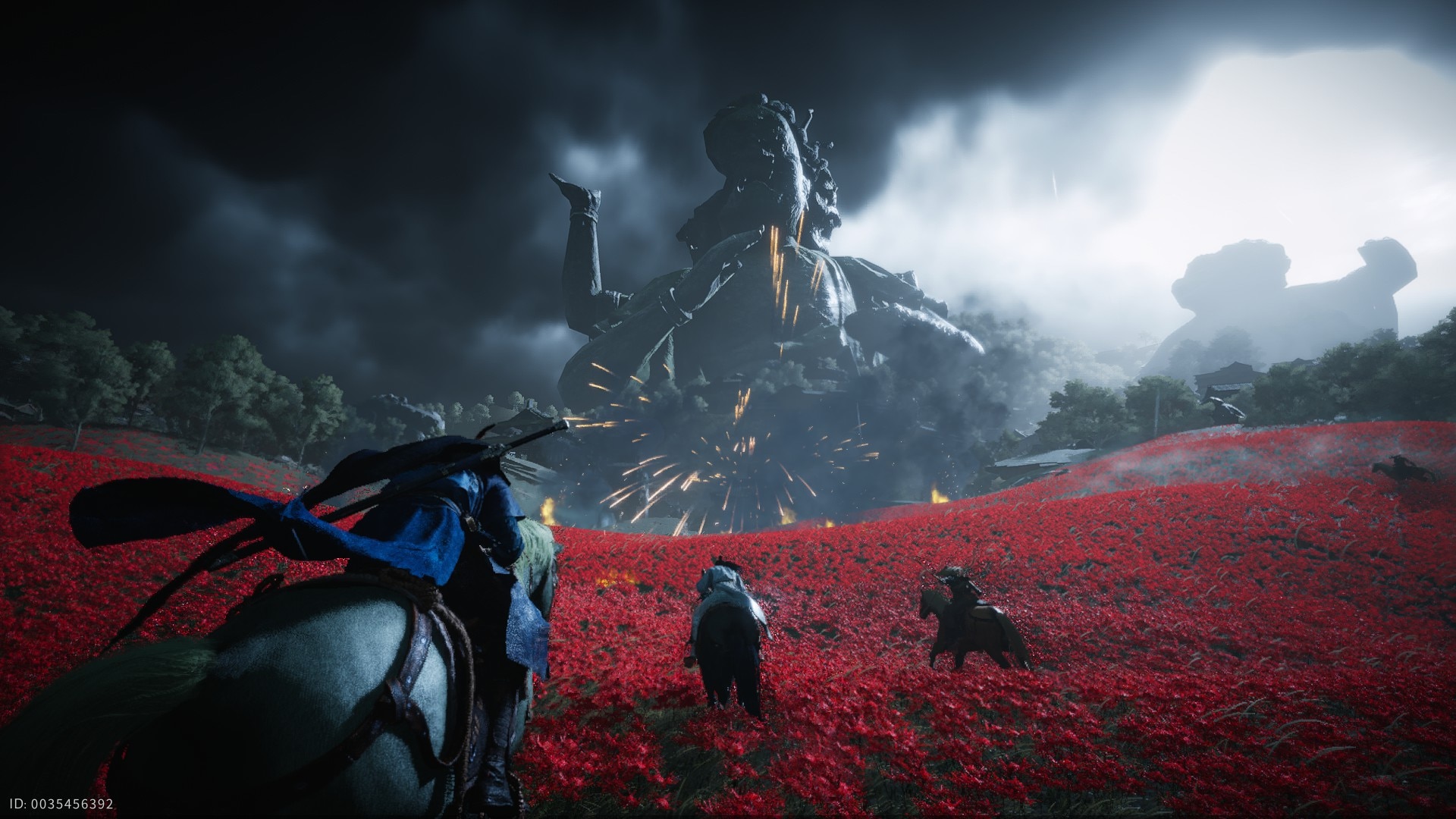
Combat is where Everstone’s dedication to wuxia philosophy becomes most apparent. Battles unfold with the theatrical cadence of choreographed cinema but retain the mechanical demands of a modern action RPG. Every strike, parry, and stance shift carries weight and expression, revealing a system deeply informed by martial-arts principles rather than generic action-game templates.
Weapons feel distinct not only in damage profiles but in philosophy. Swordplay emphasizes controlled breathing, tight footwork, and a balance between measured defense and explosive counters. Spear combat rewards distance management and rotational momentum. Umbrellas function as both shield and blade, creating unusual defensive rhythms. Fans invite deceptive attacks, feints, and shifting tempo.
Stance switching introduces tactical depth, allowing players to adopt postures focused on counterattacks, evasion, sustained damage, or crowd control. Mystic martial techniques—such as qi-empowered leaps, shockwave punches, or rapid aerial slashes—enhance expression without overwhelming realism. Everstone wisely avoids turning combat into a superhero fantasy; mystical abilities amplify martial mastery rather than negate it.
Enemy design is uneven but occasionally brilliant. Duelists, assassins, and elite martial artists offer some of the most engaging battles in the genre. Standard enemies, however, often lack behavioral variety, making prolonged sessions feel repetitive unless you deliberately lean into style-driven combat rather than optimal play.
Boss encounters remain the pinnacle. These fights feature cinematic angles, reactive enemy AI, environmental hazards, and unique mechanics that demand attention. They’re framed not merely as obstacles but as narrative punctuation marks—clashes of ideology as much as skill.
Story and Quests
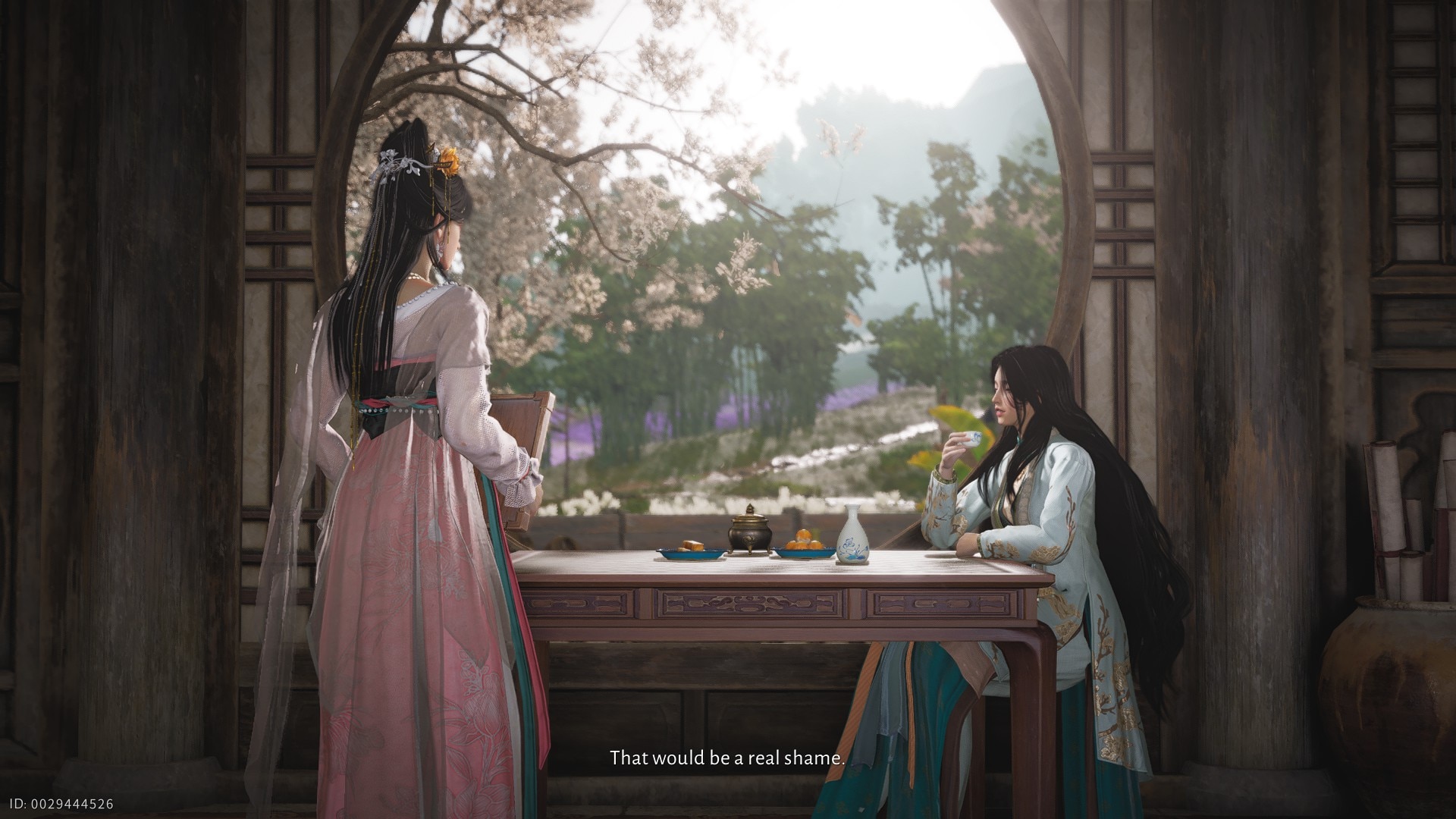
The narrative framework centers on a wandering swordsman navigating the moral and political fractures of a collapsing dynasty. The thematic focus on identity, honor, societal decay, and personal redemption is well established early on, and the main quest generally delivers strong pacing and emotional resonance. Key cutscenes are directed with careful composition, often using silence and subtle gestures to convey character motivations.
Side quests, however, vary wildly. Some are delightful micro-stories that display genuine empathy for ordinary lives—a grieving artisan seeking closure, a young scholar struggling with duty vs. desire, a pair of siblings caught between conflicting moral paths. These moments often mirror themes from classical wuxia literature, and they enrich the world without overstaying their welcome.
Other quests, unfortunately, lean into formulaic design: escort tasks, generic monster clearances, or errands clearly intended to encourage interaction with profession systems. None of these are offensive, but they occasionally dilute the emotional momentum built by stronger storytelling segments.
Profession gameplay—medicine, hunting, trading, blacksmithing—adds thematic breadth but rarely integrates organically with narrative arcs. Instead, these systems operate like parallel tracks: useful, enjoyable, but narratively detached.
The writing is at its best when exploring philosophical tension: the conflict between martial valor and political pragmatism, the blurred line between justice and vengeance, and the moral uncertainty of living through dynastic collapse. Moments like these remind you of the literary heritage the game draws from.
Graphics and Performance
From a visual standpoint, Where Winds Meet is a showpiece. The combination of stylized realism and painterly color palettes creates a visual identity distinct from the high-fidelity photorealism pursued by many PC games. The attention to fabric physics, lighting transitions, water simulation, and particle effects elevate everything from casual exploration to major combat sequences.
Character models are expressive, with clothing layers that react subtly to movement. Facial animations strike a workable balance between stylization and nuance, though occasional stiffness betrays the limitations of the game’s engine.
Performance on high-end PCs is generally stable, but mid-range systems may encounter stutter during rapid traversal or crowded city scenes. Everstone’s streaming system is ambitious, and while it usually succeeds, it isn’t immune to frame pacing issues. Server synchronization can cause intermittent input delay during co-op or world events, particularly during peak hours.
Load times are short on SSDs, but mechanical drives struggle noticeably. The game is clearly engineered with modern storage expectations in mind.
Despite these issues, the sheer visual confidence and artistic cohesion keep the presentation compelling.
Monetization and Progression
The free-to-play model is handled with surprising restraint. Cosmetic items, emotes, and visual enhancements dominate the shop, and while convenience boosts exist, they do not gate content or undermine progression. Seasonal events introduce premium cosmetics but avoid pay-to-win pitfalls.
A battle pass offers predictable rewards and is balanced to be achievable for consistently active players. Long-term progression does lean toward grind-heavy loops typical of MMO-lite titles, but the game’s generous pacing ensures that casual solo players can complete the main narrative without friction.
The monetization remains one of the game’s most pleasantly unintrusive elements, especially compared to industry norms.
Online Features and Community
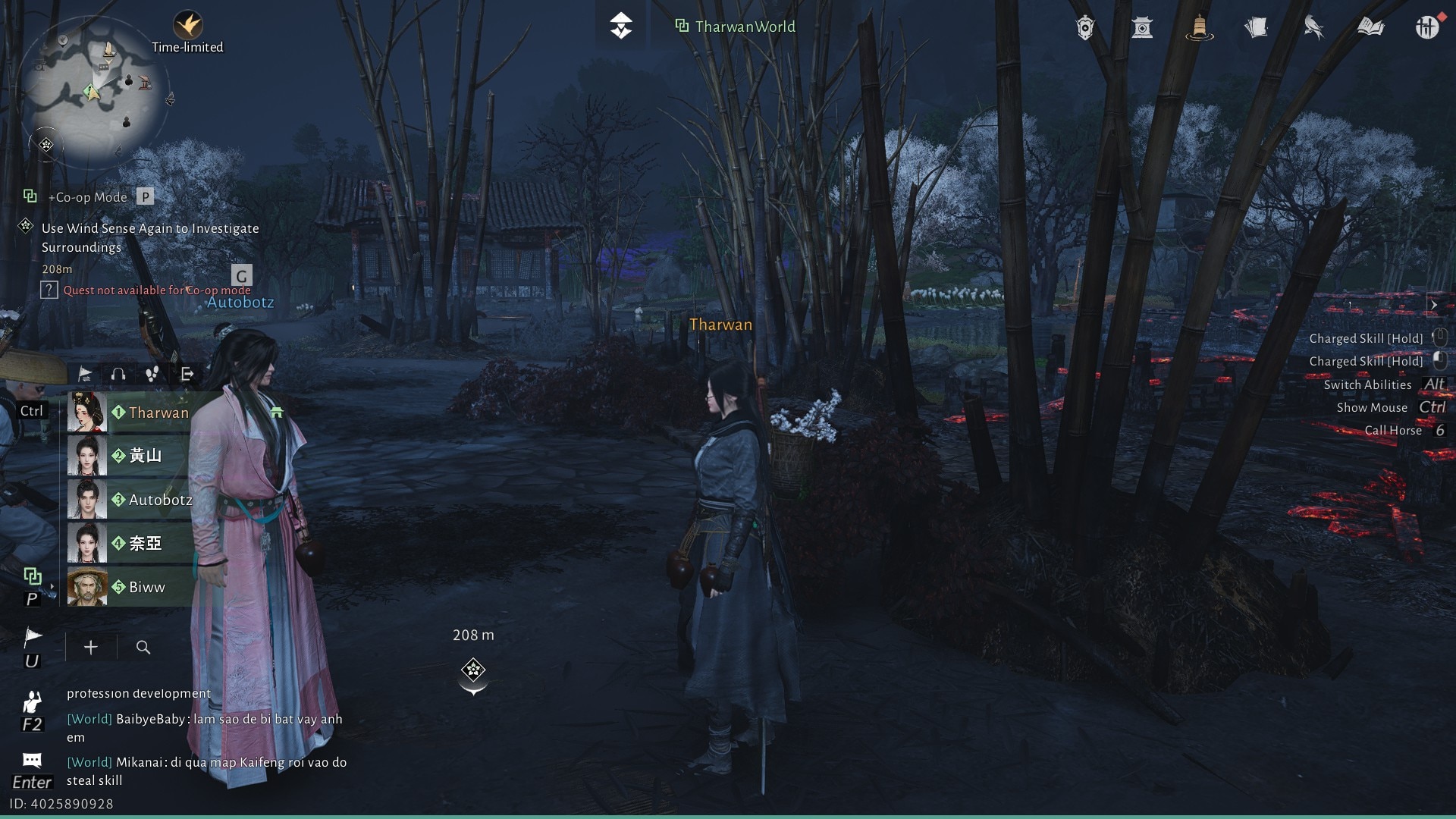
Where Winds Meet incorporates a social infrastructure that blends lightweight MMO elements with traditional single-player exploration. World bosses, weekly challenges, co-op dungeons, social hubs, and guild halls give players opportunities to engage with the community without making such engagement mandatory.
Player creativity flourishes in unexpected ways. Fashion exhibitions, parkour challenges, duel tournaments, and photo-mode competitions have quickly become core community activities. Everstone’s tools for role-play are surprisingly robust, enabling everything from impromptu street theater to large-scale guild storylines.
The social features aren’t groundbreaking, but they’re thoughtfully implemented and provide a stable backbone for long-term engagement.
Final Verdict: 7.5/10
Where Winds Meet stands out as one of the most earnest and artistically confident wuxia-inspired RPGs in years. Its movement and combat systems deliver an unprecedented sense of stylistic freedom, while its world is crafted with a degree of cultural and visual care rarely seen in free-to-play titles. The narrative hits memorable highs, and the audiovisual presentation achieves a distinctive beauty.
Yet technical inconsistencies, uneven side content, and the demands of a long-term progression model prevent the game from reaching its full potential—at least at launch. Still, what Everstone Studio has built is a foundation worthy of admiration and one with immense room to grow. If the team maintains steady updates and continues refining weaker systems, Where Winds Meet could easily become a defining entry in the modern wuxia canon.