
When Ubisoft Mainz announced that the Anno series would journey backward into antiquity, many fans wondered whether the franchise’s trademark economic depth and systemic complexity could thrive in an era defined by legionnaires, aqueducts, and imperial politics. Anno 117: Pax Romana answers that question with confidence. It embraces the classical world not merely as a visual backdrop, but as a strategic canvas that reshapes nearly every aspect of how players build, govern, and negotiate their way to prosperity.
The result is the most artistically ambitious, broadly accessible, and narratively guided entry in the series yet — though not without compromises that will matter differently to newcomers and veterans alike. From its detailed environments to its nuanced cultural mechanics, the game demonstrates a clear vision for transporting the Anno experience into antiquity.
Setting and Atmosphere
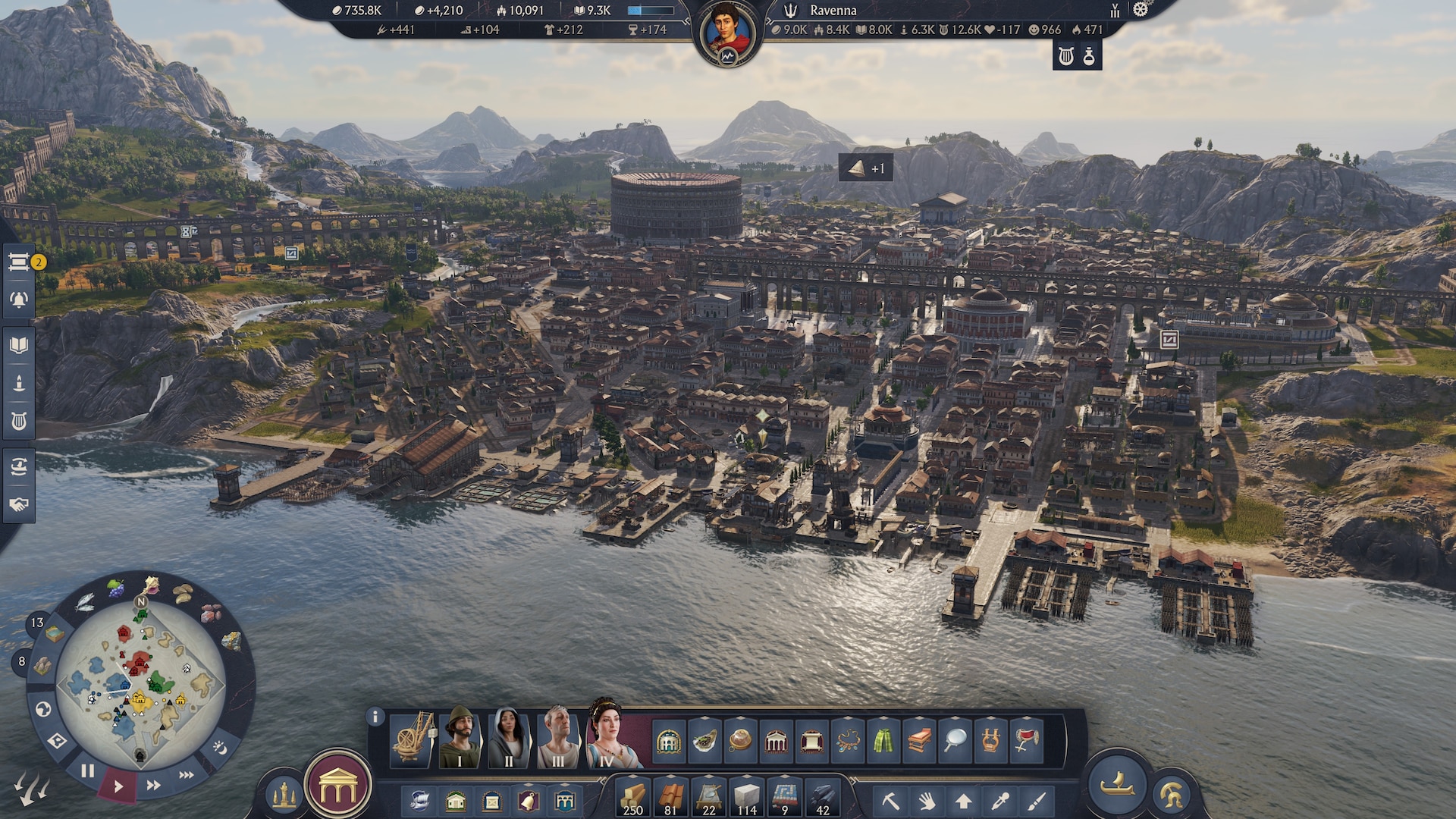
The shift to Rome is transformative. Rather than the early industrial energy of Anno 1800 or the maritime frontiers of earlier titles, Anno 117 immerses players in the paradoxes of the Roman Peace — a world simultaneously stable and volatile, cultured and brutal, ordered yet perpetually on the edge of uprising. Cities convey a sense of grandeur and permanence, but local tensions, border disputes, and economic pressures continually remind players that even the mightiest empires must carefully balance power and diplomacy. Seasonal changes, dynamic weather, and flowing citizen behaviors further enhance the feeling of a living, breathing empire.
You begin as a newly appointed Roman governor, tasked with developing and pacifying two distinct regions. Latium offers the quintessential Roman aesthetic, with marble forums, bustling marketplaces, patrician villas, temple complexes, and an architectural style that grows more ornate with each citizen tier. Roads feel planned and orderly, and the flow of laborers, artisans, and patricians creates a believable urban ecosystem. This region plays to traditional Anno strengths, emphasizing dense production layouts, heavy trade, and advanced manufacturing chains. The meticulous design of Latium allows players to experiment with optimization and urban planning while feeling fully immersed in the grandeur of Rome.
Albion, by contrast, is atmospheric and wild, featuring forested hills, fogbound marshes, and Celtic settlements that lend the region an entirely different tone. Infrastructure must adapt to challenging terrain, resources are spread across wider areas, and Romanization is not guaranteed. Albion forces players to balance local traditions and imperial authority, introducing gameplay that blends city management with cultural diplomacy. The contrast between the structured efficiency of Latium and the untamed unpredictability of Albion provides variety, ensuring that expansion is never repetitive.
Both regions feel meticulously designed, and the visual fidelity is exceptional. Citizens gather, argue, celebrate, and perform work animations that make the settlements feel organic, while environmental storytelling — from bustling ports to quiet countryside villages — reinforces immersion. The soundtrack complements the visuals perfectly, combining choral arrangements, percussive tribal rhythms, and solemn Roman marches, making each region audibly distinct and reinforcing the cultural differences that players must navigate. Sonically and visually, this is the most atmospheric Anno to date.
Gameplay and Mechanics
Mechanically, Anno 117 sits on the more accessible side of the Anno spectrum, but beneath its streamlined systems lies satisfying strategic depth. Production chains, citizen tiers, and trade networks remain central pillars, yet each now interacts with the cultural and regional dynamics of the empire.

The citizen tiers progress from Laborers, who require basic goods like bread, water, and simple housing, to Artisans, who demand olive oil, wine, and pottery. Further tiers, such as Patricians and Civic Officials, introduce luxury goods like fine wine, jewelry, and imported spices, as well as advanced services like schools and temples. Meeting these needs requires carefully balanced production chains that stretch across both Latium and Albion, forcing players to manage logistics, storage, and transport efficiently.
Roman-era production chains are a highlight. Olive presses supply oil for local consumption and trade, wine estates produce luxury goods for higher-tier citizens, pottery kilns feed construction and trade demands, and legionary forges craft weapons and armor for both defense and expansion. While slightly more streamlined than in Anno 1800, these chains still offer opportunities for optimization, including combining production buildings with storage and transport hubs to minimize inefficiency. The regional differences between Latium and Albion add another layer of complexity, as Albion’s dispersed resources and resistant populace require players to plan transport routes and settlement layouts strategically.
Perhaps the most distinctive addition is the cultural governance system. Every decision — from taxation and religious investment to architectural choices and military deployment — shifts your province along a spectrum between imperial integration and cultural accommodation. Favoring Romanization may increase efficiency and unlock advanced buildings but provoke unrest in culturally distinct regions. Conversely, accommodating local traditions preserves stability but can limit economic growth. These mechanics ensure that city-building decisions carry meaningful consequences beyond simple resource management.
The active pause system complements these mechanics, letting players stop time to plan complex expansions, adjust production layouts, or respond to events without being overwhelmed. Planning mode, overlays for citizen needs and production flows, and diagonal road placement make urban design more expressive and less rigid than in previous entries, allowing players to create visually coherent and efficient settlements.
Narrative and Campaign Structure
The campaign unfolds through a mix of voiced story missions, administrative dilemmas, political intrigue, and region-specific arcs. The writing is competent and historically grounded, though it rarely achieves dramatic or emotional resonance. Characters such as senators, tribal chieftains, and military commanders function largely as archetypes, providing guidance, context, and objectives rather than memorable personal narratives.

Where the campaign excels is in emergent situational variety. Border tensions can escalate into rebellions, famine can drive local unrest, senatorial oversight forces careful management, and cultural leaders petition for autonomy. Espionage, smuggling, and religious conflict add further depth, giving the campaign structure without overshadowing the city-building experience. This balance works particularly well for Anno fans who enjoy sandbox strategy, though players seeking a rich, story-driven adventure may find the narrative secondary.
Combat and Expansion
Combat in Anno 117 is functional but not a central focus. Land engagements involve legionaries, auxiliaries, siege engines, and scouts, with minimal emphasis on formations or terrain strategy. Naval battles introduce slightly more tactical considerations, thanks to ship types, positioning, and choke points, yet remain secondary to economic and diplomatic gameplay.
The strategic weight of military forces lies less in direct combat and more in influence. Forts, stationed legions, and diplomatic leverage shape regional outcomes, offering players a more nuanced approach to expansion and control. While the system suits the city-building emphasis, those expecting robust, RTS-style warfare will likely find it lightweight.
Performance, Stability, and Accessibility
Graphically, Anno 117 is demanding, particularly in late-game cities packed with citizens and complex infrastructure. High settings, especially with enhanced lighting, can strain GPUs, while rapid camera movement or large-scale events may cause performance dips. Ubisoft has addressed some issues through patches, but midrange hardware users may still need to tweak settings for optimal performance.
Stability at launch is generally solid, though occasional multiplayer desyncs, rare crashes during autosaves, and minor texture pop-in can occur. Accessibility is a strong suit: the game includes colorblind options, scalable UI text, persistent tooltips, adjustable notifications, contextual help panels, fully remappable controls, and the active pause feature. These features ensure that a wide range of players can engage comfortably with the game.

Endgame and Replayability
As cities mature, Anno 117 shifts focus toward strategic optimization, cultural mastery, and regional influence. By the late game, players must manage multiple production chains simultaneously, ensuring that luxury goods reach Patricians while supporting military supply lines for legionary outposts. Large-scale construction projects, such as amphitheaters, aqueducts, and monumental temples, not only improve citizen satisfaction but also reinforce regional cultural identity.
Diplomacy becomes increasingly important. Players can influence neighboring Celtic settlements through trade, religious outreach, or military presence. Espionage and smuggling missions offer alternative methods to sway allegiance without direct conquest. The military’s role remains largely strategic: stationed legions deter rebellion, secure trade routes, and protect borders, while forts and defensive infrastructure stabilize provinces without constant intervention.
Replayability is further enhanced by the cultural governance system. Players can pursue diverse strategies, such as fully Romanizing their territories to maximize efficiency, embracing local customs to maintain stability, or adopting a hybrid approach to balance both. Coupled with the distinct challenges of Latium and Albion, these choices create significant variation in playthroughs. Even seasoned players will find value in experimenting with different production layouts, governance strategies, and diplomatic approaches, ensuring that no two campaigns feel identical.
Endgame also encourages micro-optimization and city beautification. Expanding infrastructure while maintaining citizen happiness, managing trade surpluses, and constructing visually cohesive urban environments provide long-term goals beyond simple survival. The combination of strategic depth, cultural nuance, and visual design makes the late-game as engaging as the early expansion phase, rewarding careful planning and foresight.
Final Verdict: 8/10
Anno 117: Pax Romana is a confident, polished entry in the series. Its accessible design, flexible strategic options, and exceptional visual and auditory presentation make it appealing for newcomers and veterans seeking a more relaxed yet meaningful city-building experience. Combat is lightweight, narrative depth is modest, and technical performance requires attention on higher settings, but these shortcomings are minor compared to the breadth of content, governance mechanics, and the immersive historical world.
Ultimately, the game delivers the slow-burn satisfaction that defines Anno. Watching a Roman metropolis evolve under careful guidance, balancing economy, culture, and politics, is both compelling and rewarding.
A meticulously crafted, historically grounded city-builder that balances accessibility with strategic depth, offering a richly realized Roman world even if some systems feel gentler than in previous Anno titles.


