Every once in a while, a game comes along that asks you not to conquer, but to care. The Last Caretaker by Channel37 belongs to that rare category — a slow, deliberate, and deeply atmospheric survival-adventure that transforms routine into reflection. It’s a game less about triumph than endurance, less about discovery than preservation.
From its opening minutes, The Last Caretaker establishes a tone of quiet melancholy and meditative focus. You awaken in the decaying remains of a once-grand estate — its purpose unclear, its corridors heavy with dust and memory — and are tasked with keeping it alive, even as everything around you slowly fades. The game’s premise may sound minimalistic, but beneath that simplicity lies a profound emotional core: an exploration of isolation, responsibility, and the stubborn human instinct to hold on.
Built on Unreal Engine 5, the PC version of The Last Caretaker showcases meticulous craftsmanship, blending tactile world design with subtle storytelling and technical restraint. Channel37 has created a game that moves at its own rhythm, refusing to rush or explain, and yet rewards those willing to listen — to the hum of failing machines, to the echo of the wind, and to the silence that remains.
Story and Themes
At its heart, The Last Caretaker is a meditation on duty, loss, and the slow unraveling of purpose. You are the final custodian of an isolated complex — a structure caught between ruin and remembrance. No one remains to give orders, no messages come from the outside world, and no clear timeline explains when or how civilization fell away. Yet, each day begins the same: you wake, you assess what’s broken, and you try to keep the systems running just a little longer.
The game never relies on exposition. There’s no cinematic opening, no lore codex, no neat explanation waiting in the wings. Instead, Channel37 lets the story emerge through detail and implication. Every object feels like a clue: a rusted toolkit, a faded portrait, a scrawled warning half-erased by mold. Notes left by previous caretakers hint at a lineage of predecessors who also performed this thankless task — some dutiful, others unravelling. Through these fragments, you piece together an invisible history of devotion and decay.
As you explore, patterns begin to form. The estate seems almost sentient — groaning, sighing, and shifting subtly between cycles. Some doors open only after systems are restored; others reveal scenes that shouldn’t be possible. The building itself becomes a reflection of the caretaker’s mind: a physical manifestation of persistence in the face of inevitable decline.
Thematically, The Last Caretaker explores the tension between preservation and futility. It asks: what does it mean to care for something that cannot be saved? Are you maintaining order, or simply delaying oblivion? The game’s greatest strength is its ability to let players answer these questions through action rather than dialogue. Repairing a pump, refueling a generator, or cleaning a corridor are never just gameplay tasks — they’re small acts of defiance against entropy.
And yet, moments of beauty punctuate the gloom. Sunlight breaking through a cracked window; a music box still playing a broken tune; a garden that inexplicably blooms despite neglect. These moments elevate The Last Caretaker beyond desolation into quiet grace — proof that meaning can persist even in decay.
By the end, the story resolves not through revelation, but through acceptance. You may never learn the full truth of what happened to the world, or even to the caretaker. What matters is that you kept the lights on — that you cared, even when no one was left to notice. In its restraint, The Last Caretaker achieves something remarkable: it transforms maintenance into metaphor, and silence into storytelling.
Gameplay and Mechanics
The Last Caretaker blends light survival mechanics with exploration and environmental puzzle-solving. Its core loop revolves around maintenance: repairing, cleaning, scavenging, and restoring order to the estate’s failing systems. Each in-game day brings a fresh list of tasks — from restarting water pumps to patching electrical circuits or sealing structural breaches. What begins as simple upkeep slowly evolves into strategy as resources dwindle and new hazards emerge.
There’s no combat in the traditional sense. Instead, the tension lies in resource scarcity and the quiet encroachment of time. Systems degrade faster than you can fix them. You’ll often have to decide what to let fail — the heating in the dormitories or the lighting in the western hall. The consequences of neglect are subtle but tangible: corridors become unsafe, certain areas freeze or flood, and sound design shifts to reflect your choices.
Exploration is deliberate and methodical. The estate is divided into interconnected zones — from boiler rooms and hydroponic gardens to collapsed libraries and forgotten tunnels. Each space is distinct, filled with tactile environmental puzzles that feel organic rather than arbitrary. Restoring power to one wing might grant access to another, creating a slow-blooming sense of progress that mirrors the caretaker’s determination.
Stealth and survival elements appear sparingly but effectively. Strange, distorted silhouettes sometimes appear in the distance — echoes of former caretakers or perhaps manifestations of guilt and memory. You’re encouraged to avoid rather than confront them, using darkness and silence as your only defenses. The resulting tension is psychological, rooted in atmosphere rather than aggression.

Crucially, The Last Caretaker understands pacing. Its gameplay rhythm — task, reflection, exploration — feels meditative rather than repetitive. Success doesn’t come from mastery but from patience and observation. The world reacts quietly to your persistence: repaired systems stay functional longer, while neglected areas spiral into ruin. Every small action has weight, and by the later chapters, the estate’s condition feels like a mirror of your resolve.
Atmosphere and Presentation
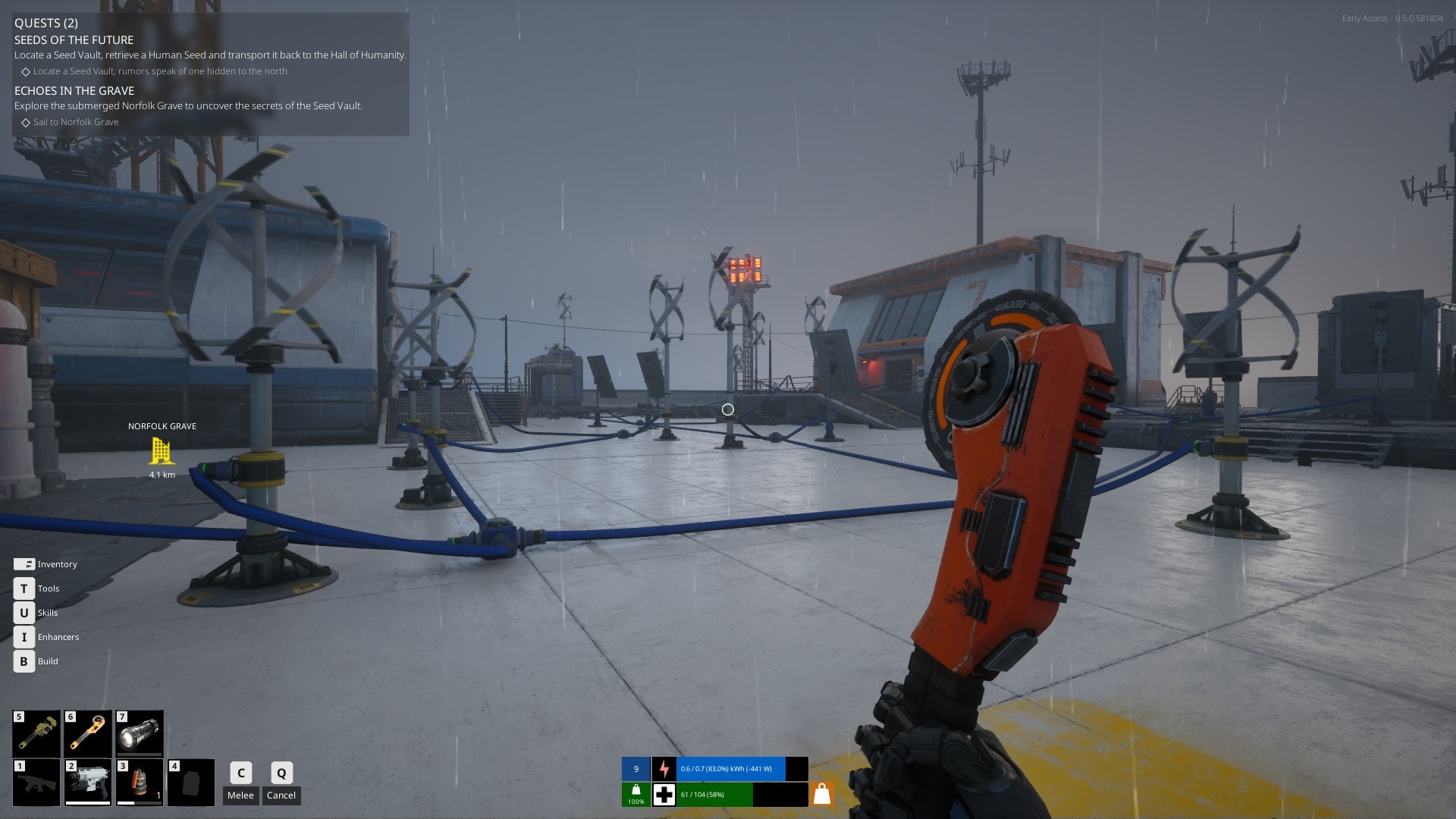
Visually, The Last Caretaker is striking without ever feeling showy. Channel37 uses light, texture, and silence to create an environment that feels both tangible and haunted. The estate’s surfaces are richly detailed — peeling wallpaper, corroded machinery, dust particles illuminated by shafts of light. Every hallway tells a story through decay.
The lighting system is integral to gameplay and tone. Light is both resource and symbol: it reveals beauty, but it also exposes you to danger. In darkness, the estate feels infinite; under light, it becomes fragile and intimate. The subtle interplay between these two states defines the visual experience.
The PC version shines in its technical performance. Even on moderate setups, the frame rate remains stable, load times are short, and the draw distance is impressive. Channel37 clearly optimized the game for immersion rather than spectacle — textures are realistic but never over-rendered, allowing the player’s focus to remain on atmosphere.
Audio design is exceptional. The distant hum of power lines, the hiss of leaking pipes, the rhythmic creak of floorboards — every sound grounds you in the space. The score, composed by longtime indie collaborator Aaron Duley, is sparse and haunting, alternating between ambient drones and delicate piano motifs. Music fades in and out like memory, underscoring moments of discovery or exhaustion without ever commanding attention.
The combination of audio and visual design produces a world that feels lived in — not a set, but a breathing organism. Few indie games capture such cohesion between environment and emotion.
Narrative Delivery and Pacing
The Last Caretaker unfolds at a measured, deliberate pace. Each new day begins with a quiet checklist of tasks and a lingering sense that the estate is slipping further beyond repair. At first, this repetition feels mechanical — but as the hours pass, subtle variations appear. A sound you’ve never heard before. A new note left where there was none. A corridor that looks slightly altered. These small changes give the illusion that the building is evolving, reacting to your efforts or your failures.
Dialogue is minimal and fragmented. You’ll occasionally hear distorted recordings from previous caretakers, and sometimes, faint echoes that might be your own voice. The writing is restrained yet poetic, choosing ambiguity over clarity. Channel37’s restraint gives players space to interpret the story rather than forcing a single perspective.
Pacing is slow, but intentionally so. The game’s rhythm mirrors the caretaker’s psychological state — methodical, obsessive, occasionally disoriented. For players willing to embrace that tempo, it becomes hypnotic. Each routine feels like a heartbeat, steady but fragile, and by the final act, the weight of repetition becomes the game’s emotional core.
Technical Performance
The PC version of The Last Caretaker is impressively stable. Channel37 has achieved excellent optimization across hardware tiers. On a mid-range system, the game maintains a solid 60 frames per second at high settings, with dynamic lighting and volumetric effects performing smoothly.

Controls are crisp and intuitive, with full support for both keyboard/mouse and controller setups. Input latency is minimal, and UI design is elegantly minimalist — tools and resources are managed through an unobtrusive radial interface that reinforces immersion.
Accessibility features include adjustable text size, customizable key bindings, subtitle options, and brightness scaling. However, more advanced features — such as colorblind modes or expanded sound cue assistance — are limited. The developers have noted plans to expand these options post-launch.
Bugs are rare. During testing, only minor clipping issues and occasional lighting glitches were observed, none of which affected gameplay. Overall, the PC version feels refined and thoroughly tested — a rarity for atmospheric indie releases of this scale.
Length and Replayability
A standard playthrough of The Last Caretaker lasts between 8 and 12 hours, depending on how deeply you explore and how much of the estate you choose to restore. Multiple endings exist, though they are subtle — tonal rather than mechanical, reflecting how much care you gave to the world rather than what choices you made in dialogue.
Replayability is limited but meaningful. The estate’s layout and environmental storytelling reward curiosity; you’re unlikely to uncover every hidden note, log, or artifact in a single run. A second playthrough can reveal new perspectives and small narrative variations tied to your maintenance decisions.
Still, The Last Caretaker is designed less for replay value and more for reflection. It’s the kind of experience you complete once and carry with you — a story that lingers not in achievements or collectibles, but in the atmosphere it leaves behind.
Final Verdict: 7/10
The Last Caretaker is a triumph of restraint and atmosphere. Channel37 has created a deeply human experience — one that transforms small, repetitive actions into acts of emotional storytelling. It’s a game about keeping things running when everything else has fallen apart, about finding grace in routine and meaning in silence.
It won’t appeal to everyone. Its pace is glacial, its mechanics subdued, and its story intentionally fragmented. But for players who crave meditative, mood-driven experiences — those who find beauty in decay and patience in solitude — this is a rare gem.
It’s not about saving the world. It’s about tending to what’s left of it — and in that act, finding something quietly transcendent.