For more than a decade, Europa Universalis IV has stood as the definitive grand strategy experience — the kind of game that could devour hundreds of hours and still feel like you’d only scratched the surface. It wasn’t just about building empires; it was about shaping the very idea of statehood across centuries of history. Following that act was always going to be perilous.
Europa Universalis V (EU5), developed by Paradox Tinto, doesn’t try to reinvent what came before. Instead, it dives deeper into the simulation, reworking the bones of the series into something at once familiar and startlingly new. The result is both dazzling and daunting: a game that offers more agency, more texture, and more consequence — but also more to learn, more to manage, and more to wrestle with.
This is Paradox’s most ambitious world yet. It’s also one of its most demanding.
A Living World of Estates and Populations
At the heart of EU5 lies its defining innovation: the population system. Every province on the map — and there are thousands — now hosts distinct social groups, or “pops,” representing different estates and strata within your realm: nobles, clergy, burghers, peasants, tribesmen, artisans, and more.
These pops aren’t just flavor text. They live, work, migrate, and revolt. Their loyalty shifts depending on how you govern, tax, conscript, or legislate. They have cultures and religions that may not align with the state’s, creating a constant tension between the ruler’s ambitions and the people’s will.
In EU4, internal management was mostly abstract. Stability, legitimacy, and unrest were numbers you nudged upward or downward. In EU5, they emerge from human dynamics. A merchant uprising might be sparked by restrictive tariffs. A famine might send waves of displaced peasants across borders, upsetting the delicate balance of your provinces. Religious minorities might resist conversion not through static penalties, but through organized resistance and migration.
It’s an enormous step toward realism — and complexity. You’re not ruling an empire of numbers anymore, but a world of competing needs. This isn’t merely a game about expansion; it’s a game about management, and the friction between growth and governance defines every campaign.
The Art of Governance
Paradox has expanded the estate system introduced in EU4 into a robust political engine. The Nobility, Clergy, Burghers, Peasantry, and Crown are no longer passive modifiers — they’re active power blocs that shape how your country functions. Each has unique privileges, demands, and thresholds for loyalty and influence.
If your Nobility grow too powerful, they might resist reforms that curtail feudal privileges. If your Burghers are neglected, trade and taxation suffer. The Clergy can rally your population under a religious banner — or fracture your nation if heresies spread. It’s not about keeping everyone happy; it’s about navigating shifting allegiances and managing crises before they explode.
This dynamic lends EU5 a compelling narrative rhythm. Every choice feels loaded with political context. Raising taxes or passing reforms isn’t a mechanical decision — it’s a political gamble that might stabilize your economy but ignite social unrest. The resulting stories feel emergent, not scripted: civil wars sparked by estate conflict, reforms pushed through under duress, or fragile coalitions that hold a nation together by the thinnest thread of compromise.
Diplomacy
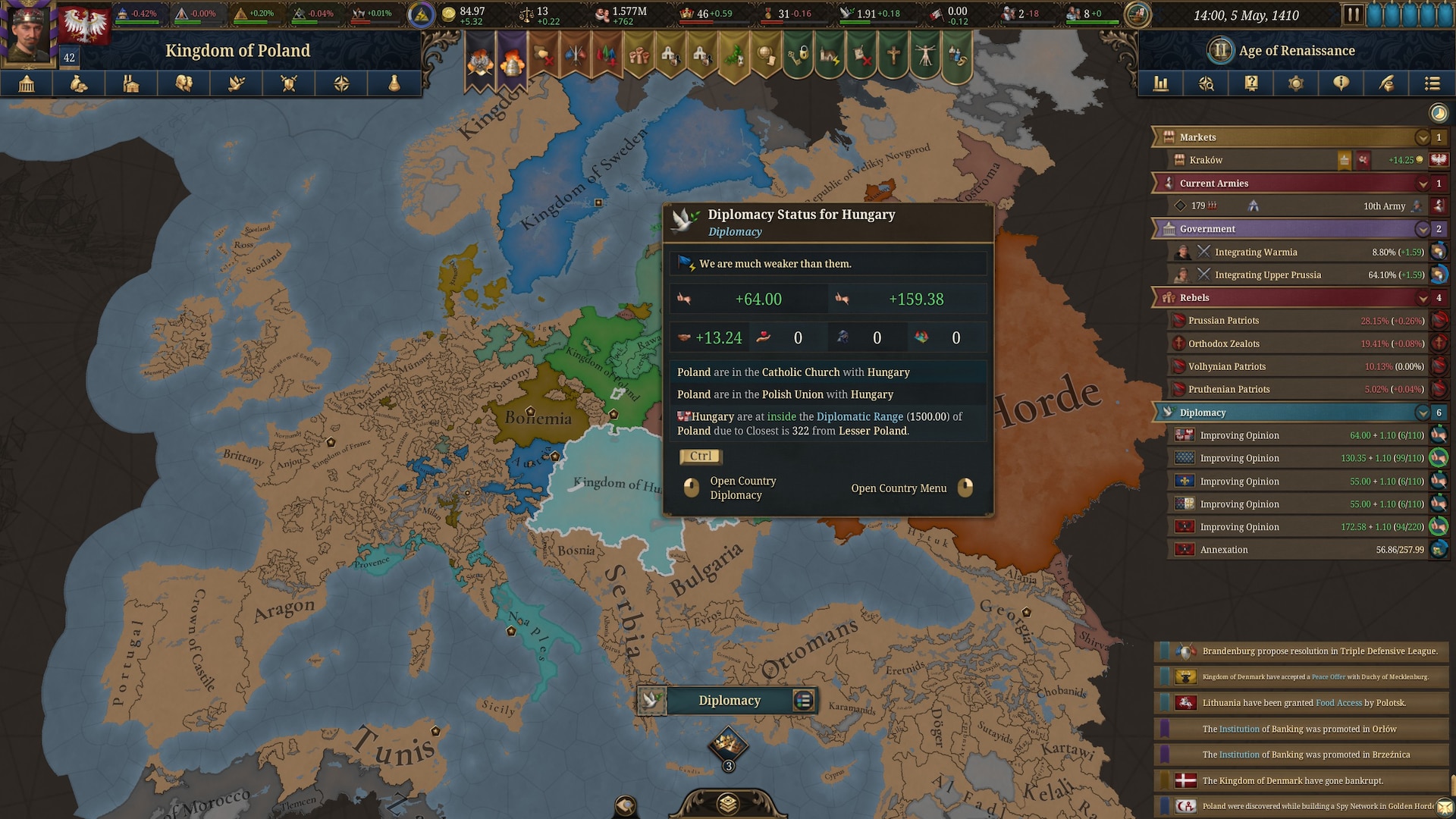
Diplomacy in Europa Universalis V feels more alive than ever. Traditional systems — alliances, royal marriages, vassalization — remain, but they’re woven into a new web of factional politics and historical personality.
Every nation now acts not as a monolith but as a constellation of internal pressures. A monarchy’s nobles might favor alliances with other aristocracies; republics may prefer trade pacts. AI nations display stronger historical tendencies — France is aggressive but fractured, England cautious but opportunistic — and the interplay of regional ambitions creates constant strategic tension.
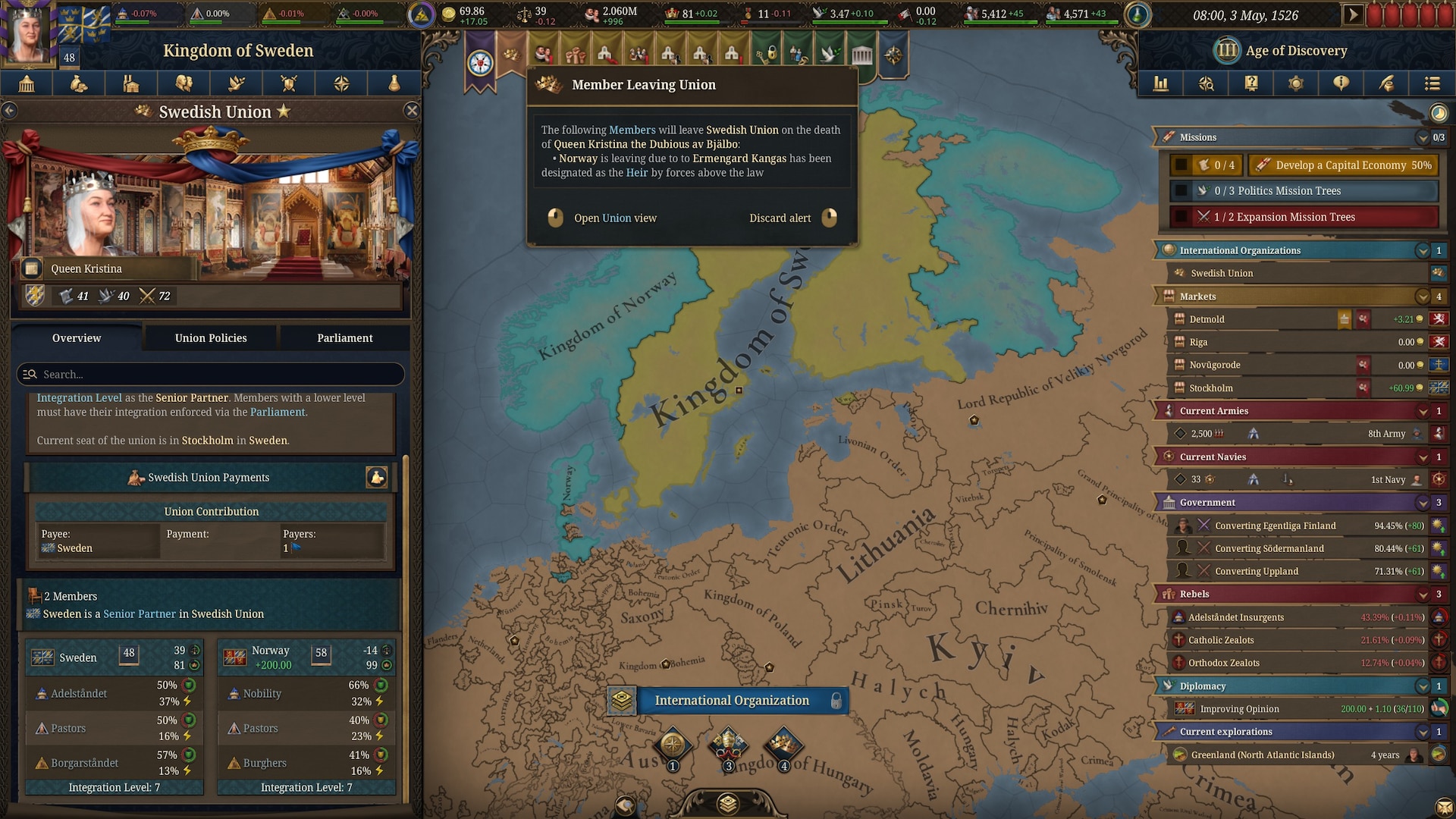
Coalitions, federations, and unions are more dynamic too. The Holy Roman Empire, long a web of modifiers and events, now feels genuinely alive: a complex arena of diplomacy where legitimacy, influence, and population loyalty all shape outcomes. Playing within the HRE can be maddeningly intricate, but also thrillingly authentic.
There’s a quiet brilliance in how EU5 lets diplomacy bleed into domestic management. Sending your daughter to marry a foreign prince can calm the nobility — or anger the clergy. Forming a trade pact might please your burghers but invite jealousy from rival merchants. Decisions reverberate across systems, and the result is a geopolitical simulation that feels organic and unpredictable.
The Economy
Economy in Europa Universalis V is less about abstract income streams and more about flows of goods and people. Each province produces tangible resources — grain, textiles, copper, sugar, silk — that are consumed, traded, or stockpiled by your pops.

This creates feedback loops that make the world economy feel alive. A shortage of food can trigger famine; a glut of luxury goods can spark inflation or social resentment. Supply and demand are visible, trackable, and manipulable — if you have the patience to understand them.
Trade routes are now subject to logistical constraints. Goods must move along supply lines, and blockades or piracy can have devastating local effects. Controlling a port isn’t just about naval dominance; it’s about safeguarding the arteries of your empire.
At times, it feels closer to Victoria 3 than to Europa Universalis IV, but that’s a compliment. The economic model adds tangible stakes to expansion. You no longer conquer simply because a province is “rich”; you do it because you need its iron, its access to ports, or its population to fuel your armies.
Warfare
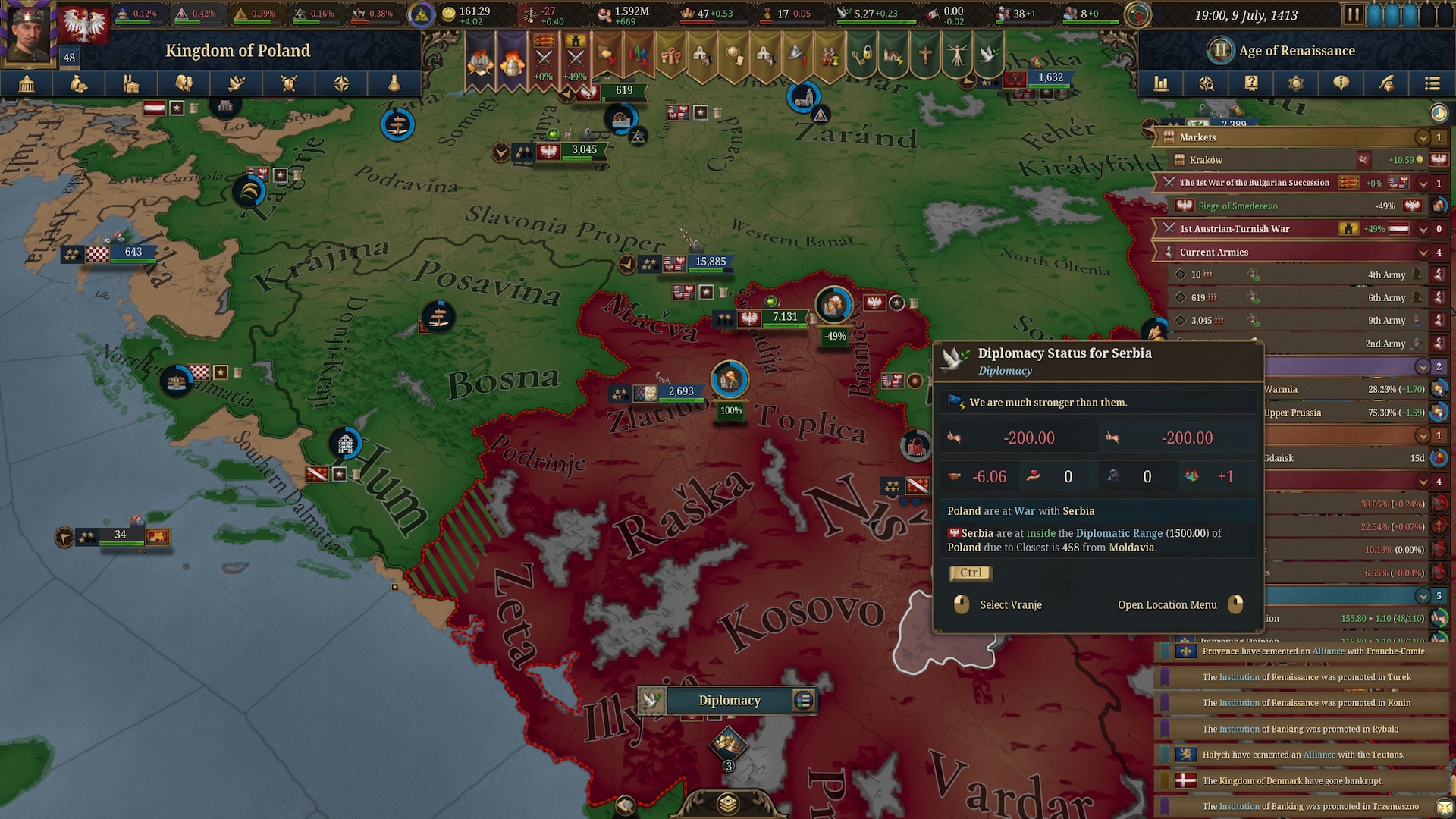
Warfare in EU5 is more deliberate and less forgiving. Armies require supply lines, and those lines can be cut. Marching through hostile terrain without planning logistics leads to starvation, mutiny, and ruin.
The shift from instant reinforcement to sustained logistics changes everything. Campaigns feel slower, more attritional, and far more grounded. You’ll think twice before chasing a retreating army across the Alps or invading North Africa in midsummer without provisions.
Battles themselves remain semi-abstract, resolved by dice rolls modified by tactics, leadership, and terrain, but the context surrounding them has changed. The best generals now win before a battle is fought — by managing supply, terrain, and morale. It’s a subtler kind of strategy, less about raw force and more about foresight.
Naval warfare also sees meaningful upgrades. Fleets require maintenance, and naval blockades can cripple economies in ways unseen in earlier titles. Control of the seas genuinely matters now, especially for colonial powers dependent on transoceanic trade.
Exploration and Colonization
Colonization, one of EU4’s most divisive systems, receives a major overhaul in EU5. Exploration is no longer a matter of sending abstract “colonists” to color in the map; it’s a logistical, diplomatic, and moral undertaking.
Explorers must be funded, supplied, and supported by your state’s economy and political factions. Fail to do so, and expeditions can collapse mid-journey. Natives are more than passive populations — they have societies, trade systems, and political agency. Colonization is less a matter of “click to expand” and more an ongoing negotiation (or confrontation) that carries moral and political cost.
These changes add weight to expansion. The colonial game is slower but richer, rewarding planning over spamming. There’s a genuine sense of discovery again — of charting the unknown, rather than painting the map your color.
Technology and Progress
The technology and idea systems have been streamlined but made more flexible. Instead of fixed “idea groups,” EU5 offers a modular system of institutions, doctrines, and reforms that evolve over time.
You might begin as a feudal monarchy and gradually modernize into a constitutional state, or double down on aristocratic privilege to maintain stability. Technological progress is influenced by population literacy, urbanization, and trade exposure — meaning isolationist or agrarian empires will naturally lag behind.
It’s a subtle system, but it ties beautifully into the game’s overarching simulation. Progress isn’t just something you unlock — it’s something your society earns through centuries of adaptation.
The World and Its Details
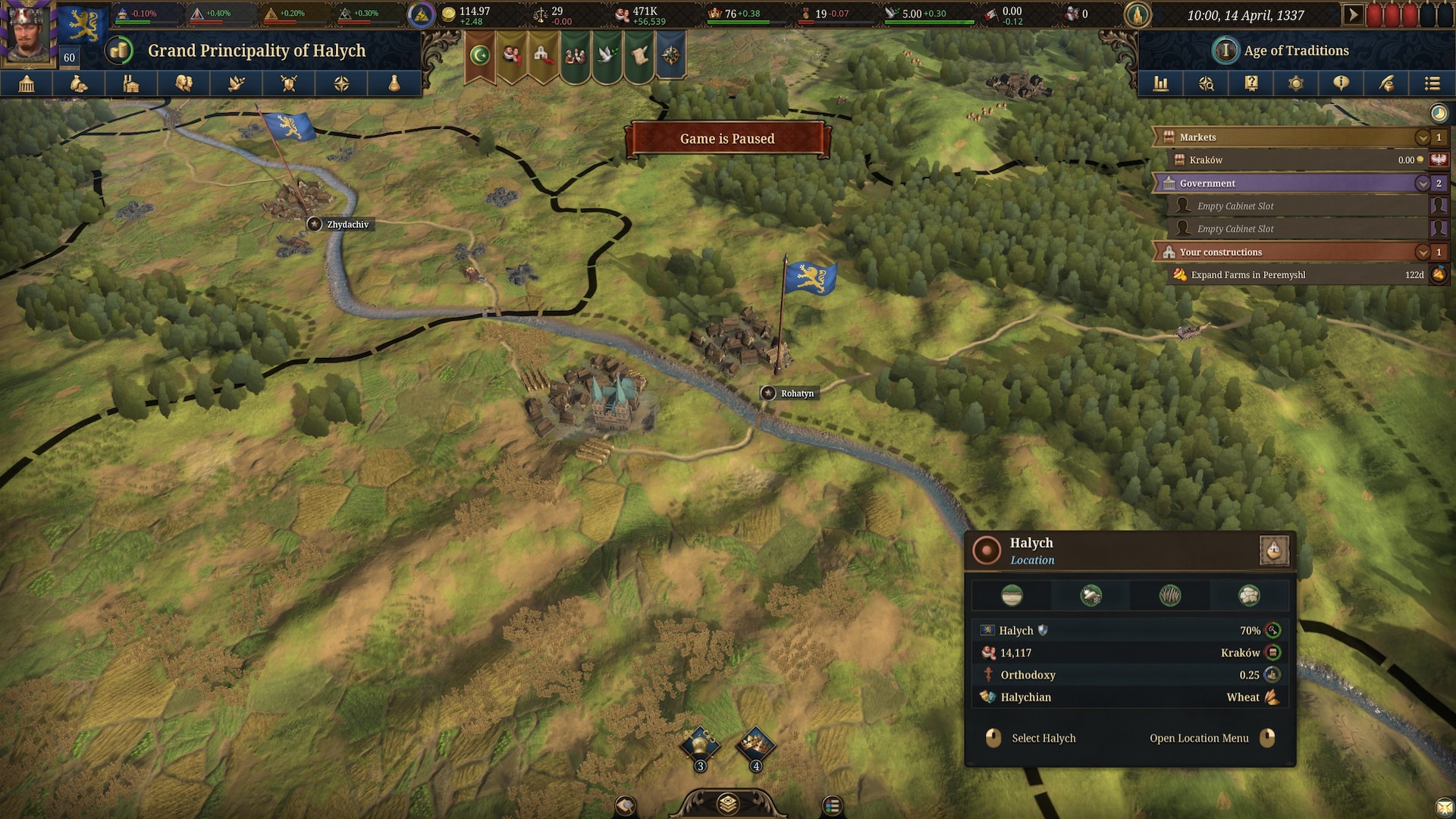
Visually, Europa Universalis V is a step forward. The map is more than just a canvas of borders; it’s a living world, with visible infrastructure, terrain, and population centers. Rivers shimmer, cities expand, and trade fleets bustle across oceans.
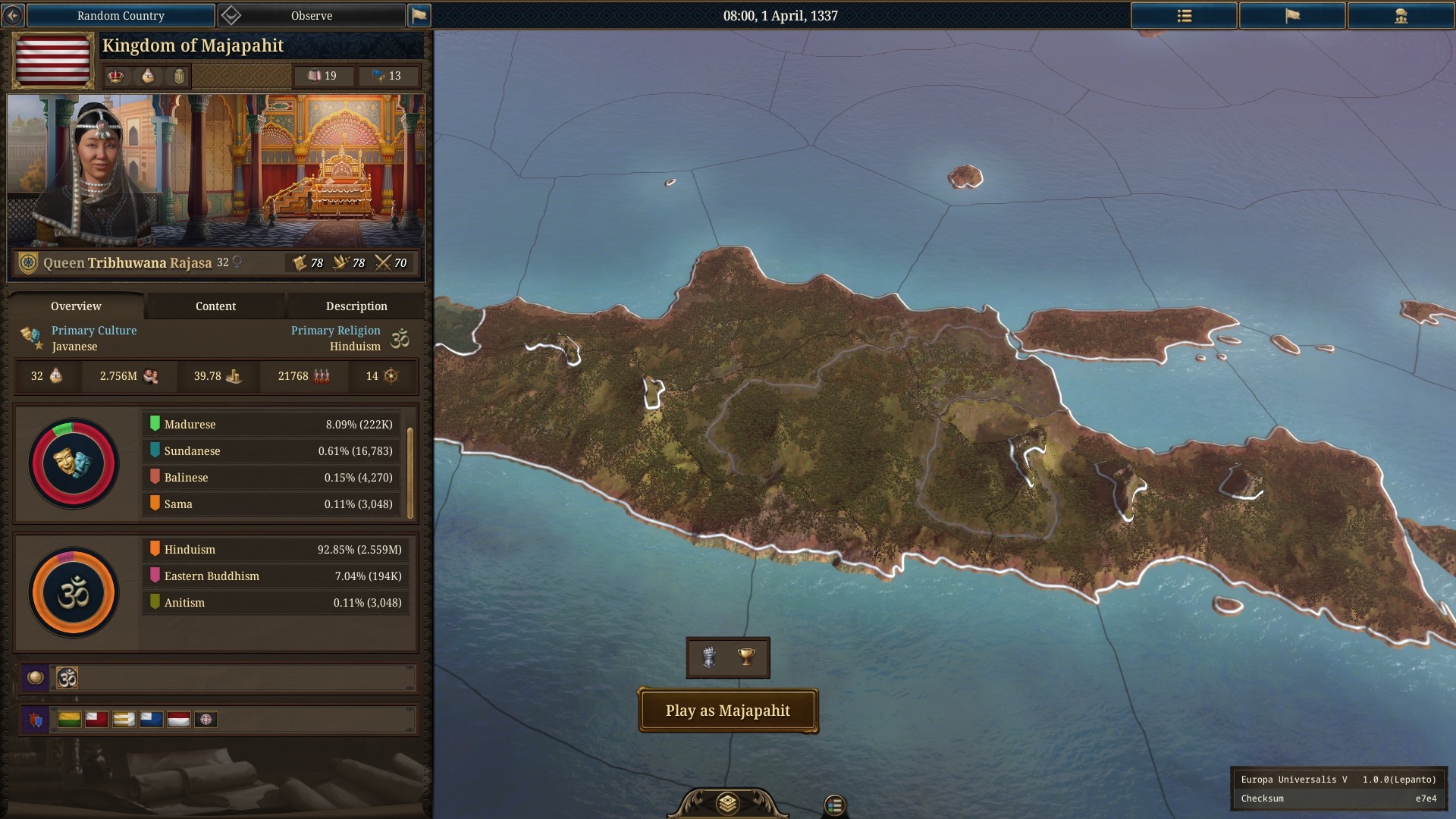
The UI — often Paradox’s Achilles’ heel — has been partially tamed. Information is better organized, tooltips are contextual, and menus flow more naturally. Yet the sheer density of data still overwhelms. There are moments when the interface feels like a control panel for a nuclear reactor: logical, powerful, but intimidating.
The soundtrack deserves special praise. Paradox’s in-house composer, Andreas Waldetoft, once again delivers a sweeping score that shifts gracefully from solemn choral tones to martial anthems. It lends the game an almost operatic grandeur.
Performance and AI
As with most Paradox titles at launch, EU5 isn’t perfectly optimized. Midgame performance is solid, but once your empire sprawls across continents and thousands of pops are being simulated, framerates can stutter. On high-end hardware, it’s manageable — but expect slowdowns by the 18th century.
AI, meanwhile, remains the weakest link. It’s competent tactically but lacks long-term vision. Rivals can fail to exploit opportunities, alliances can stagnate, and wars sometimes fizzle into inconclusive white peaces. The complexity of the new systems has clearly outpaced the AI’s strategic logic, though Paradox has pledged ongoing updates.
The DLC Question
It’s impossible to discuss a Paradox game without acknowledging the elephant in the room: the DLC model. EU5 launched with a “Premium Edition” that includes planned expansions and cosmetic packs, suggesting a familiar roadmap.
The good news: the base game feels far more complete than EU4 did at launch. There’s a full world, robust mechanics, and dozens of nations with unique mission trees. The bad news: history suggests that EU5’s true potential will only unfold over years — and hundreds of dollars’ worth of DLC. It’s both a strength and a weakness of the Paradox ecosystem.
Final Verdict: 7.5/10
Europa Universalis V is both a culmination and a recalibration of everything Paradox has learned about grand strategy. It’s a sprawling, demanding, and sometimes unwieldy masterpiece that dares to make history personal.
By focusing on populations, politics, and logistics, Paradox Tinto has created a world that feels alive in ways no strategy game has before. It’s not perfect — the AI needs work, performance will frustrate, and the learning curve remains brutal — but for those willing to invest, there’s nothing else like it.
Where Europa Universalis IV simulated the rise of nations, Europa Universalis V simulates the rise of society. It’s not about painting the map — it’s about managing the fragile balance of human ambition that underpins every empire.
And that’s a story worth reliving, again and again.