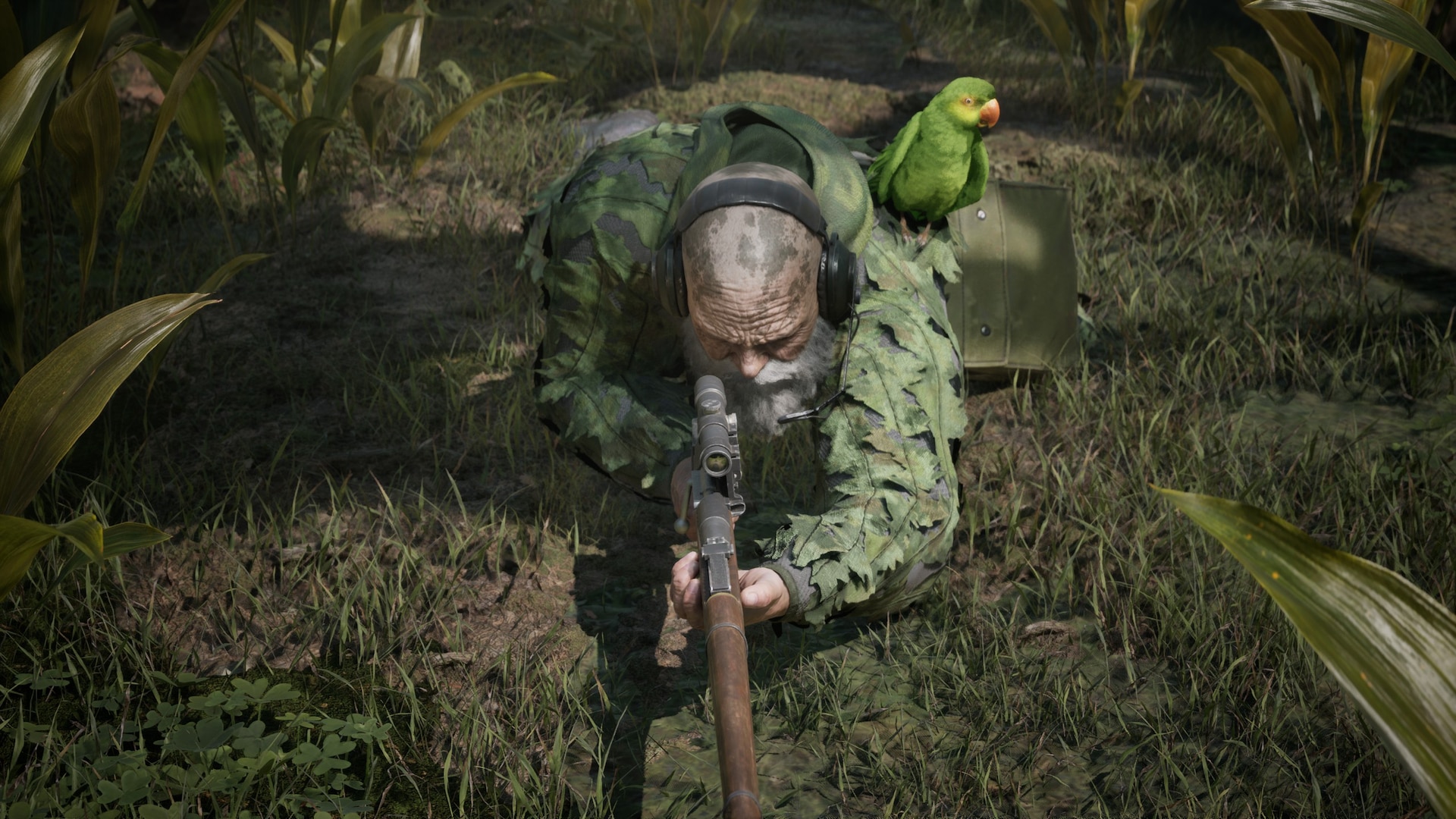
Few remakes carry as much cultural weight as Metal Gear Solid 3: Snake Eater. Revered as one of the most iconic stealth-action titles ever made, its legacy rests on a gripping Cold War narrative and gameplay systems that demanded patience and improvisation. Metal Gear Solid Delta: Snake Eater arrives as a full Unreal Engine 5 remake, and on PC it walks a fine line between preservation and modernization. The result is a game that often dazzles with its storytelling and atmosphere, but also stumbles in the areas where PC players tend to look most closely: technical options and platform-specific polish.
Story, Characters, and Atmosphere
The story remains unchanged, and that is a strength. Naked Snake’s infiltration into the Soviet jungle still stands as one of gaming’s most memorable journeys, a blend of military espionage, political intrigue, and personal tragedy. The original performances return intact, which means David Hayter’s delivery and the rest of the cast’s work continue to resonate as strongly as they did two decades ago. Modern lighting, motion capture, and facial animation lend added nuance to these familiar scenes, allowing emotions to register more subtly than the PlayStation 2 hardware could manage.

What makes Snake Eater’s story endure is its balance of larger-than-life theatrics with grounded, personal stakes. Boss battles against eccentric enemies like The End or The Fury remain surreal and operatic, yet the emotional core of the narrative — Snake’s relationship with The Boss — resonates as powerfully as ever. The remake doesn’t tamper with this formula. Instead, it emphasizes the human dimension of its characters, letting the technology underline the sorrow, loyalty, and betrayal at the heart of the drama.
The environments, too, carry more presence. The jungle feels oppressive and alive, full of insects, shifting weather, and natural soundscapes that support both atmosphere and gameplay. As a setting, it is less a backdrop and more a character in its own right, shaping how players move, hide, and plan. Even after multiple hours, the game’s atmosphere keeps you on edge, making the hostile wilderness feel as much an antagonist as the soldiers hunting you.
Gameplay
Konami has chosen not to reinvent the experience but to carefully modernize it. The survival systems — manual healing, stamina management, and camouflage adjustments — remain intact, reinforcing the tension and resourcefulness at the heart of the game. These mechanics can feel unforgiving to newcomers, but they are essential to what made Snake Eater distinctive. Choosing the wrong camouflage or failing to heal an injury properly can turn a simple encounter into a desperate scramble, but overcoming those hurdles makes success more satisfying.
What has changed is the handling. Movement, aiming, and camera control have been reworked to meet modern standards, making sneaking and close-quarters encounters feel far smoother than in the original. Players can opt for the Legacy control style, which mirrors the 2004 experience, or switch to New Style, which introduces an over-the-shoulder perspective akin to more recent stealth titles. The choice makes the remake more flexible, ensuring it can accommodate both returning fans and new players.

Boss fights, always a hallmark of the series, remain highlights. Whether you’re stalking The End across acres of jungle or bracing yourself for the emotionally devastating showdown with The Boss, these encounters showcase the game’s unique rhythm — moments of tension punctuated by sudden, unforgettable spectacle. They remain faithful to the original design, though the sharper visuals and smoother mechanics make them feel more immediate and intense.
Visuals and Sound
Visually, Delta makes excellent use of Unreal Engine 5. Character models are striking in their detail, weather effects add drama to key sequences, and the dense foliage of the jungle is rendered with a richness that underscores the sense of immersion. The lighting system in particular deserves praise; cinematic shadows and reflections give each scene weight and atmosphere. Cutscenes benefit the most from these improvements, often looking like they were storyboarded for a modern spy thriller rather than a remaster of a 20-year-old game.
Sound remains one of the game’s strongest assets. The jungle hums with ambient life, footsteps and distant voices provide tactical cues, and the orchestral score carries the same emotional power it always has. With positional audio enabled, the experience becomes even more engaging, enhancing both immersion and gameplay awareness. Few remakes manage to capture the aural identity of their source material this faithfully, and here the result is a soundscape that is as evocative as it is functional.
Performance on PC
This is where the PC version falters. The game benefits from the graphical overhaul, and performance is stable on mid- and high-end hardware, with 60 frames per second achievable at high settings on most modern GPUs. However, the PC build is constrained by a locked 60 fps cap at launch, which feels restrictive in an era when high-refresh monitors are standard. Native ultrawide support is either absent or inconsistent, with field-of-view and HUD scaling requiring community workarounds. Similarly, PC-standard features such as DLSS or FSR upscaling, frame generation, and robust HDR options are missing from the menus.

While these shortcomings do not make the game unplayable, they give the impression of a port that was not fully tuned for the platform’s strengths. Players willing to mod or wait for patches will likely see improvements over time, but those expecting a fully featured PC experience out of the box may be disappointed. For a game of this stature, that shortfall stings. When PC players see a remake, they hope not only for upgraded visuals and controls, but also for a release that embraces the platform’s technical potential. Here, Delta delivers competence but not excellence.
As with many modern releases, launch week brought reports of crashes on certain setups, along with some animation quirks and performance inconsistencies. Konami has released patches to address stability and gameplay regressions, which is a positive sign. Even so, the most pressing issues for the community remain the framerate cap and the lack of robust display support, both of which have yet to be addressed officially. Modders have already stepped in to unlock higher framerates and fix ultrawide support, a testament both to the dedication of the PC community and to the shortcomings of the official release.
Final Verdict: 8/10
Metal Gear Solid Delta: Snake Eater is, at its core, a deeply respectful reconstruction of one of gaming’s defining works. The narrative, atmosphere, and survival-driven stealth remain just as powerful as they were in 2004, while the updated controls and visual overhaul make the game more accessible and cinematic than ever. On PC, however, the experience is held back by the absence of features that have long been standard on the platform.
In the end, the remake succeeds in preserving the spirit of Snake Eater and introducing it to a new generation. It is an evocative, haunting, and technically impressive journey that still manages to feel relevant two decades later. Yet until its PC-specific shortcomings are resolved, it stops just short of being the definitive edition many hoped it would be.