Few strategy franchises carry the same weight as Commandos. First launched in 1998 with Commandos: Behind Enemy Lines, the series pioneered the real-time tactics subgenre, demanding careful observation, precise execution, and a ruthless willingness to restart after failure. The games were unforgiving, but they rewarded creativity and mastery in ways few others could match.
After years of absence, Commandos: Origins attempts to revive and reintroduce this formula. Developed by Claymore Game Studios, it serves as both a prequel to the original trilogy and a modernization of the mechanics. The result is a faithful, detail-rich stealth tactics experience that hits the right nostalgic notes, while adding just enough quality-of-life features to be approachable for today’s players. But it’s also a cautious game—one more interested in celebrating the past than redefining it.

Gameplay
The heart of Commandos has always been its specialists, and Origins faithfully restores the original six. The Green Beret remains the team’s blunt instrument, relying on silent knife takedowns, physical strength, and the ability to climb terrain or hide bodies in safe spots. The Sniper offers long-range precision, but his ammunition is deliberately scarce, making each shot a valuable resource rather than an easy solution. The Sapper leans into explosives and sabotage, excelling at setting traps or blasting through defenses when subtlety gives way to necessity. The Driver thrives in controlling vehicles and heavy weapons, turning machinery into extensions of the squad’s arsenal. The Marine brings versatility in water-heavy maps, with amphibious movement, diving gear, and his signature harpoon gun. Finally, the Spy remains a fan-favorite, slipping into enemy uniforms to move undetected, distract guards, or bypass checkpoints that would otherwise be impenetrable.
The interplay between these roles is where the game shines. A successful plan often requires carefully chaining abilities: perhaps the Spy distracts an officer, allowing the Green Beret to silently dispatch a sentry, while the Sniper eliminates a lookout from afar. These mechanics remain satisfyingly distinct, and the missions often demand the use of multiple characters in creative tandem.
A key addition is the “Planning and Execute” system. Players can queue up multiple character actions, then trigger them simultaneously. This feature drastically reduces the frantic micromanagement that plagued earlier entries, allowing for elegant, synchronized solutions—such as knocking out two guards at once while a third is quietly dispatched elsewhere.
The game remains unforgiving. One mistake—being spotted, leaving a body visible, mistiming an action—can unravel an operation. But generous quick-save/quick-load functionality ensures that experimentation is encouraged rather than punished. The rhythm of play—scout, save, execute, fail, reload, and adjust—remains as addictive as it was in the originals.

Campaign and Mission Design
The campaign spans 14 missions, each lasting between one and two hours depending on approach. Missions cover a broad geographic range—snowy fortresses in Norway, desert outposts in North Africa, occupied French towns, and heavily guarded naval docks.
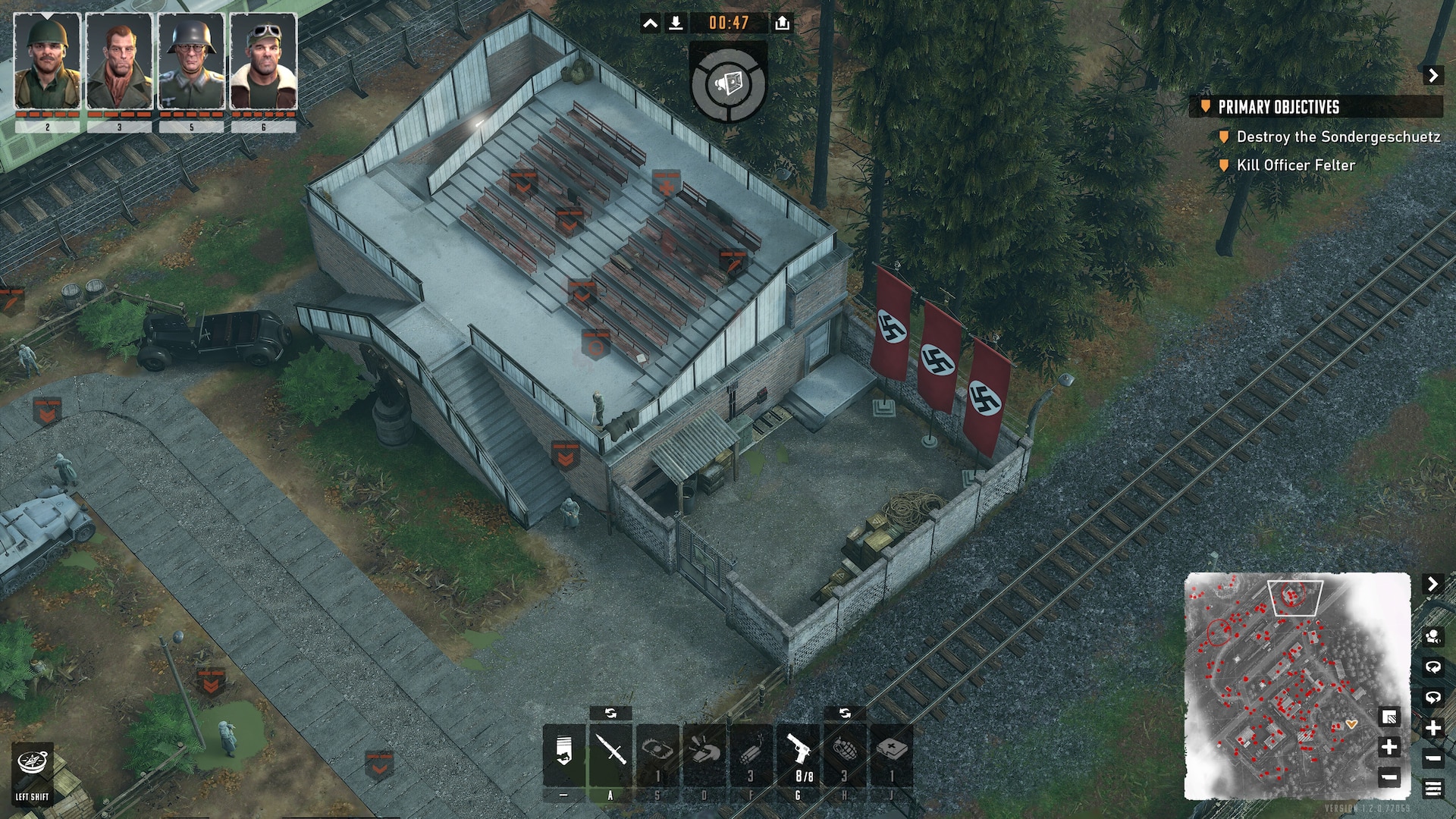
Each mission is a carefully constructed puzzle-box. Enemies patrol in predictable patterns, vision cones overlap like deadly Venn diagrams, and terrain offers multiple entry points and chokepoints. As in the classics, the goal is not brute force but surgical disruption: distract one guard, silently remove another, and gradually peel apart the defenses until a path to the objective emerges.
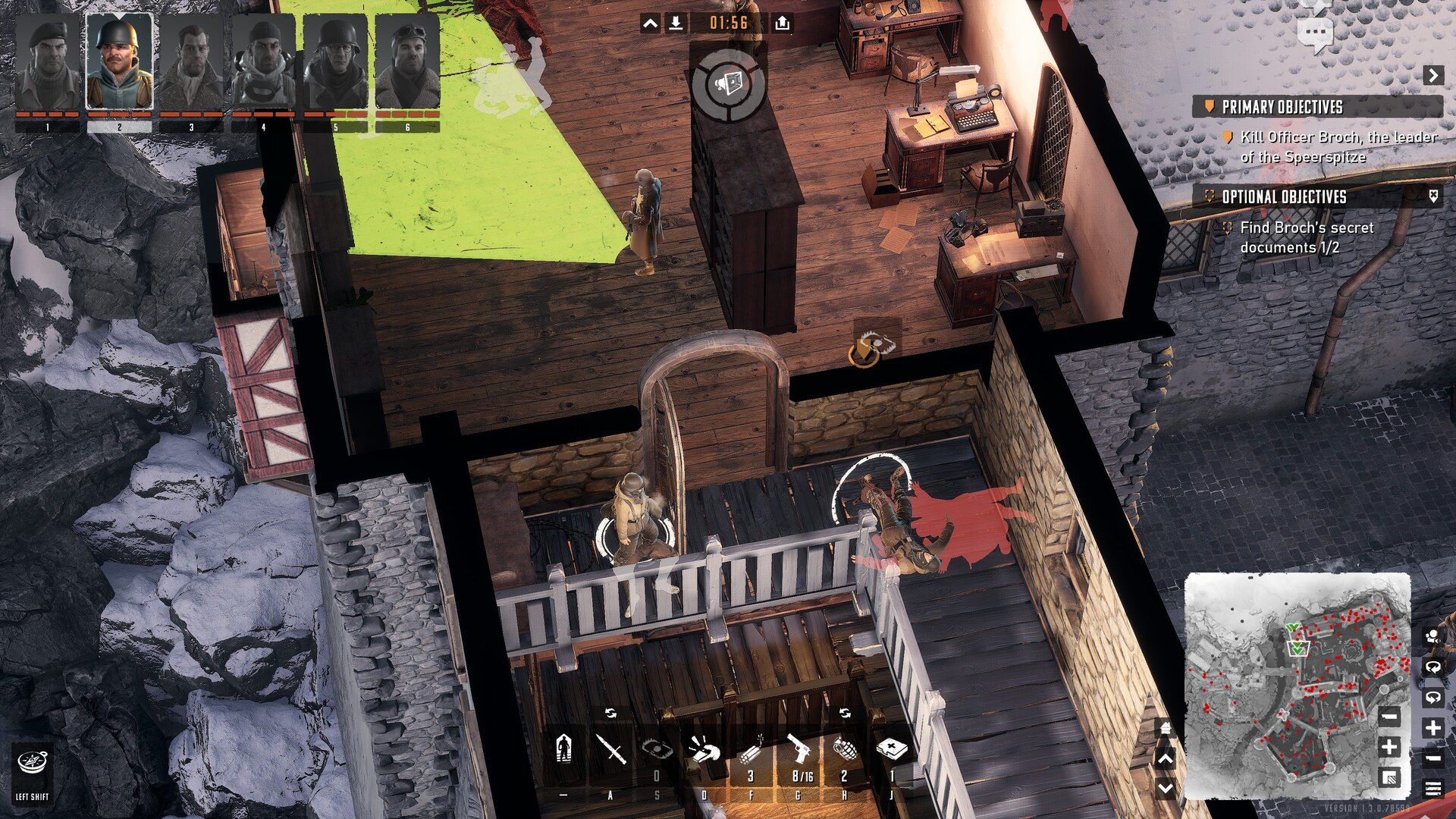
One of the game’s strengths is map variety. A mission infiltrating a frozen submarine base feels radically different from navigating a sun-drenched desert airfield. Environmental props—vehicles, alarms, barracks, and watchtowers—provide both obstacles and opportunities. Some missions encourage stealthy infiltration and sabotage, while others hinge on timed assaults and coordinated extractions.
The pacing, however, can be uneven. Several missions lean too heavily on sheer scale, extending their runtime not by offering new tactical wrinkles but by requiring the player to dismantle vast networks of guards. While fans of the original may appreciate the challenge, modern players may find these segments repetitive compared with the more inventive design seen in titles like Desperados III or Shadow Gambit.
Graphics
Visually, Commandos: Origins adopts a fully 3D engine with a rotatable and zoomable camera. It is not a graphical showcase, but the clarity of design is commendable. Environments are sharp, with easily readable sight lines, and period detail is solid without overwhelming the screen with clutter. Character models are distinct enough for readability, though animations can occasionally feel stiff. The overall look favors practicality and clarity over visual spectacle, which suits the tactical demands of the game.
Audio
The audio design is one of the game’s quiet triumphs. Ambient effects—footsteps crunching on snow, the distant hum of machinery, muffled conversations between enemy soldiers—create an atmosphere of tension and believability. The orchestral score swells at key moments but wisely retreats into subtlety during infiltration, letting the player’s own nerves provide the soundtrack. Voice acting is serviceable, if uneven, but generally effective at giving each commando a distinct identity. Taken together, the audio enhances immersion without drawing attention away from the careful planning at the game’s core.

Performance
On PC, performance is generally stable. Framerates remain smooth even in crowded missions, and loading times are reasonably fast. Some technical quirks do exist, including occasional camera clipping when zooming into tight interiors and pathfinding hiccups when multiple units are given simultaneous commands. These issues are minor rather than disruptive, but they do break immersion at times and remind the player that this is a carefully budgeted revival rather than a blockbuster production.
Cooperative Mode
Perhaps the most notable addition in Origins is its cooperative mode. Available both online and locally, co-op allows two players to share control of the squad across missions. This fundamentally changes the game’s pacing. Where single-player offers a methodical, puzzle-solving rhythm, co-op transforms missions into acts of real-time teamwork. Communication becomes essential: one player distracting a patrol while the other sneaks past, or carefully timing dual takedowns across different parts of the map.
It is not revolutionary, but it feels natural—an addition that fits the game’s theme of a specialist squad operating behind enemy lines. For players willing to coordinate, it can elevate already tense missions into memorable, shared experiences.
Final Verdict: 7/10
Commandos: Origins is, above all else, a faithful revival. It succeeds in reintroducing a classic franchise with respect and care, preserving the intricate, demanding stealth gameplay that defined the originals while sanding down some of the rough edges. Its strengths lie in authentic mission design, distinct specialist roles, and a solid planning system that encourages stylish execution.
Yet the game also reveals its limitations. In a post-Mimimi era—where Shadow Tactics, Desperados III, and Shadow Gambit expanded what real-time tactics could be—Origins feels conservative. It pays tribute to the past rather than pushing boldly into new territory.
For longtime fans, this is a welcome return to form, a reminder of what made the series legendary. For newcomers, it is an approachable entry point into one of strategy gaming’s most iconic legacies. But for the genre as a whole, it is more of a respectful echo than a defining step forward.