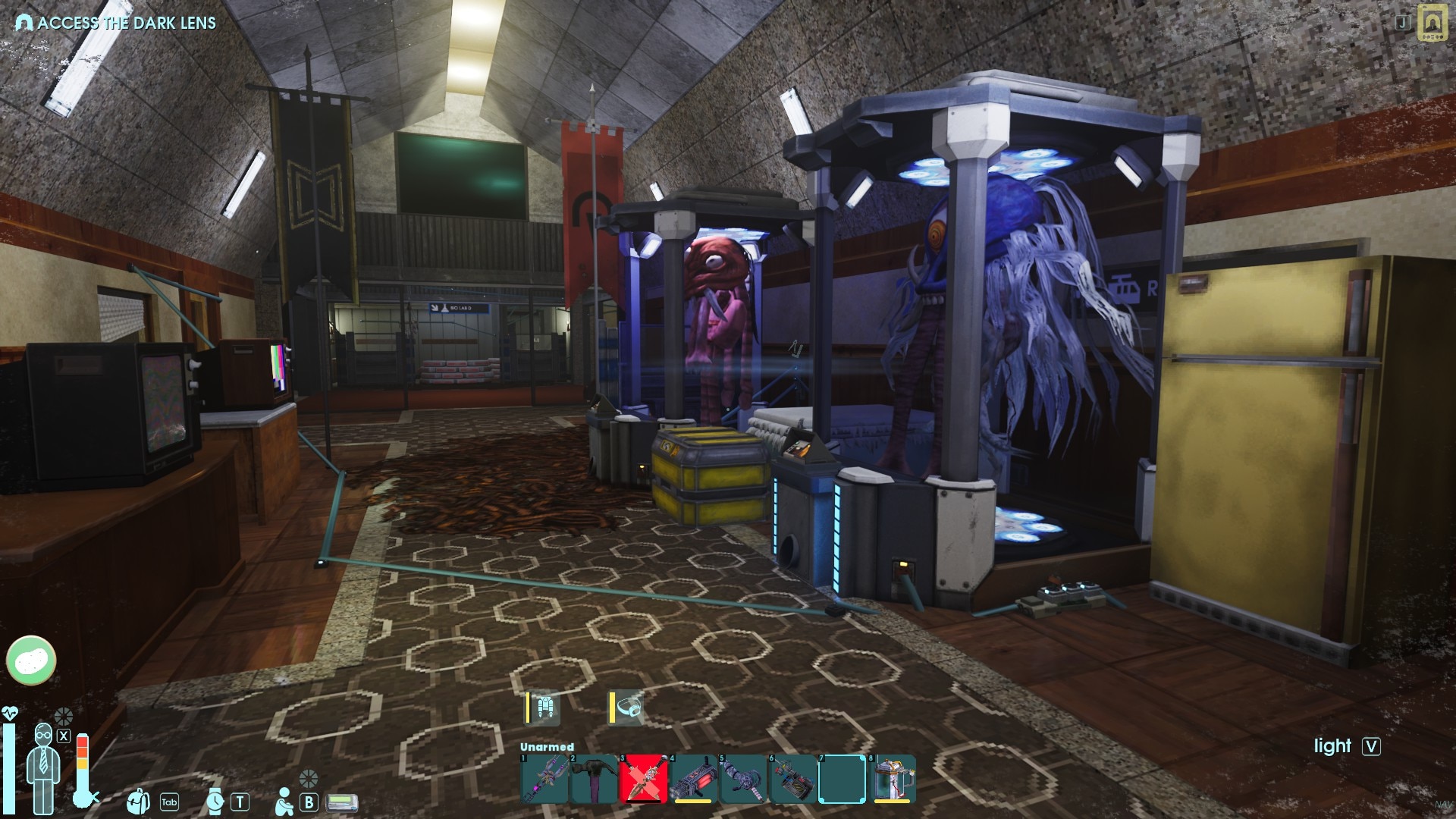
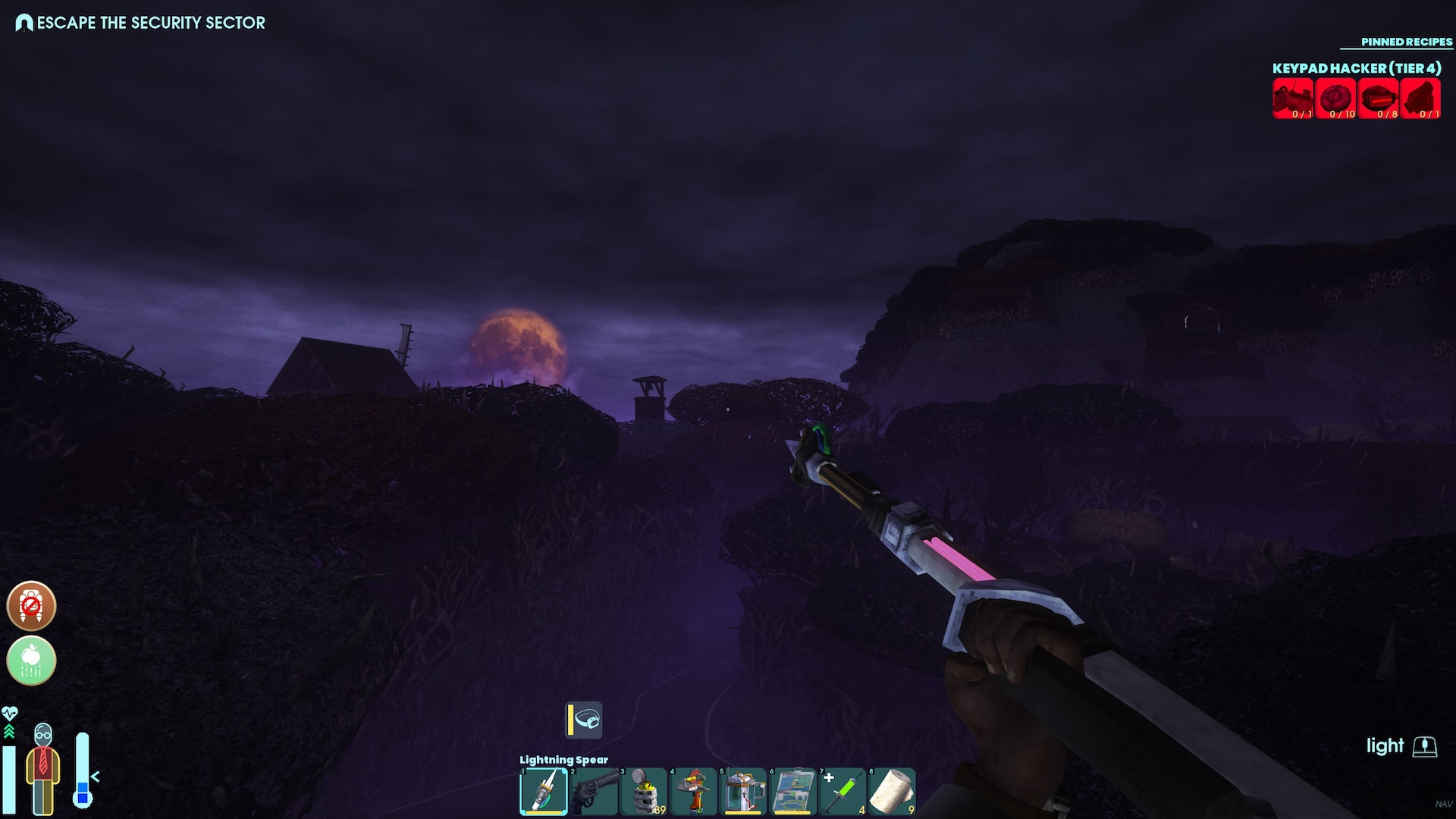
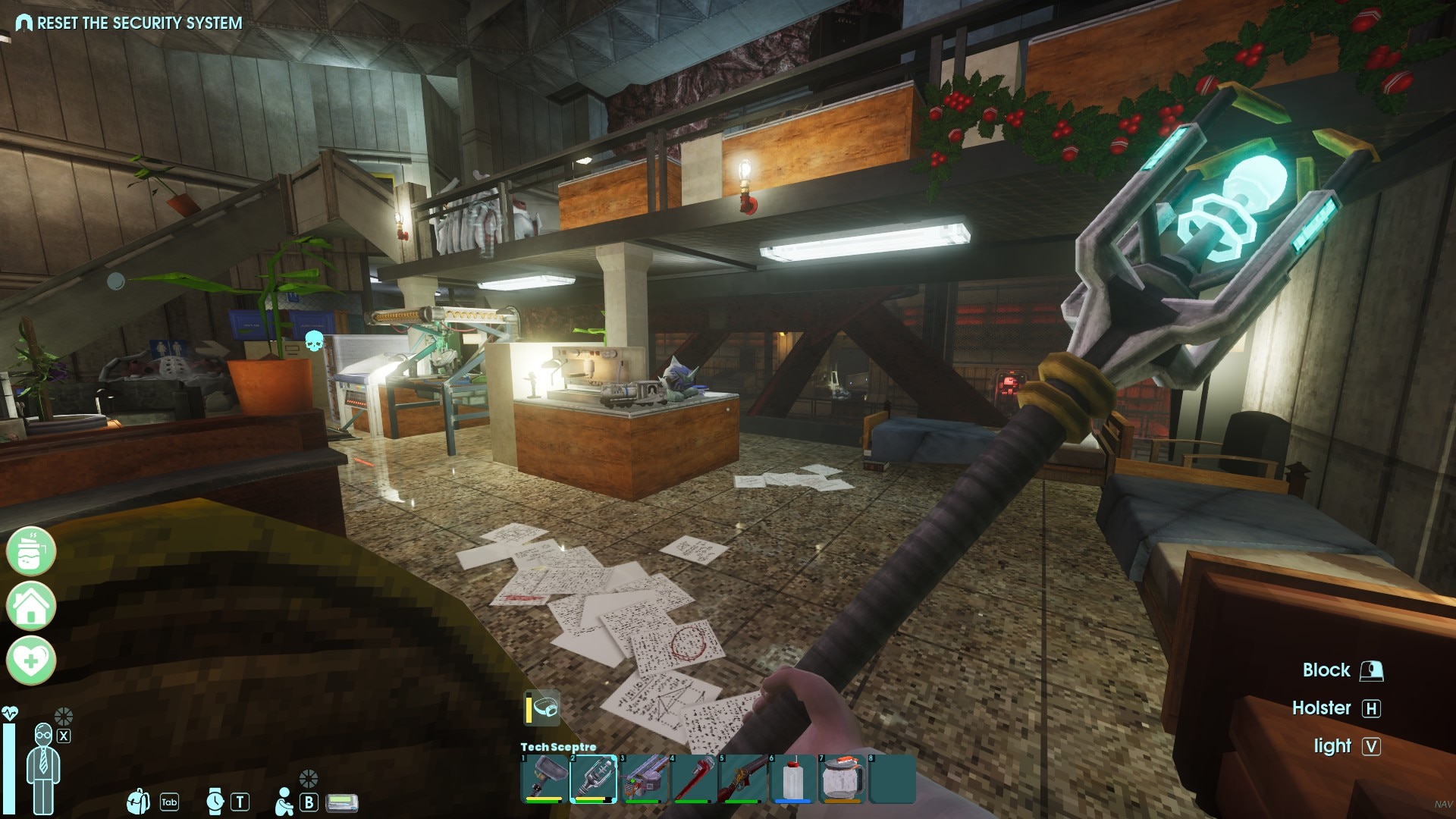
Survival games tend to lean heavily on familiar terrain: forest biomes, procedural maps, hunger meters, and zombies. Abiotic Factor breaks that mold with a bold and refreshingly weird take on the genre. Set inside a sprawling, crumbling research facility overrun with interdimensional anomalies, the game blends sci-fi storytelling, deep crafting, base building, and co-op play in a setting reminiscent of Half-Life, SCP, and Control.
After a strong Early Access run, the game’s full 1.0 release shows that Deep Field Games wasn’t just making another survival sandbox—they were making a genre standout.

Story & World-Building
You play as a stranded scientist inside GATE, a secret government facility researching anomalous phenomena. When a containment breach opens rifts to other dimensions, chaos erupts. Armed with little more than your scientific know-how and office supplies, you must scavenge, survive, and ultimately escape.
What sets Abiotic Factor apart isn’t just the setting—it’s how well that setting is realized. The world feels handcrafted, with dense environmental storytelling, written logs, audio tapes, and dozens of small narrative threads that stitch together a surprisingly compelling sci-fi mystery. Think Black Mesa, but with a touch of dry humor and bureaucratic absurdity. One moment you’re repurposing a toaster into a weapon, the next you’re uncovering a hidden lab sealed behind a vending machine.
The game balances tension and levity with impressive nuance, making its world not just believable—but worth getting lost in.
Survival with a Lab Coat
Abiotic Factor applies classic survival mechanics—thirst, hunger, crafting, exploration—but contextualizes them in a way that feels logical and fresh. You’re not building log cabins in the woods; you’re converting break rooms, server clusters, and janitorial closets into makeshift bases using scavenged tech and science gear.
Crafting is detailed and rewarding. You can assemble dozens of unique tools and devices, from plasma cutters to interdimensional beacons, with a clever system that prioritizes functionality over filler. Food matters too, with buffs granted from properly cooked meals. Scavenging vending machines for soda or building a hydroponics rig in a converted conference room is par for the course here.
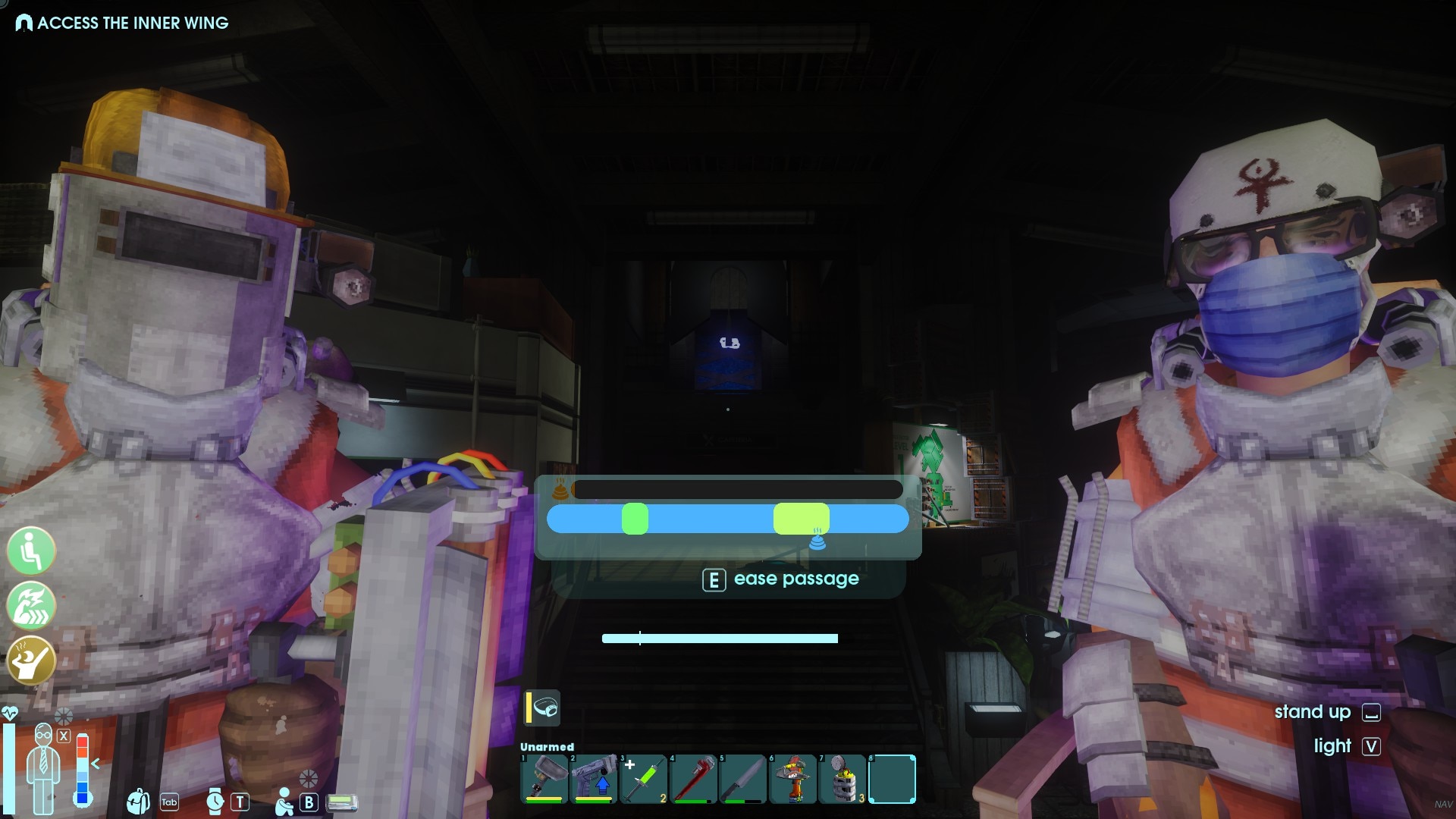
Role Specialization
Before the chaos begins, you choose a specialization—such as Theoretical Physicist, Botanist, or Field Technician. These roles provide distinct gameplay advantages and shape your progression. A chemist might have easier access to explosives and serums, while an engineer excels at trap-building and automation.
As you explore, you’ll also unlock passive traits and perks tied to your actions. The more you cook, the better chef you become. It’s a satisfying loop that rewards playstyle without overwhelming you with min-maxing.
Exploration & Anomalies
The game’s structure is linear in its macro design, but rich in lateral discovery. Each sector of the facility is themed, with increasingly bizarre and dangerous environmental challenges. You’ll crawl through overgrown greenhouses, icy labs, and time-warped data centers, with no shortage of hidden passages or secret stashes.
Occasionally, you’ll venture into “portal worlds”—strange pocket dimensions filled with rare resources and lethal anomalies. These are some of the game’s most striking moments, pushing the boundaries of its surreal tone while serving core progression needs.
Combat & AI
Combat is one of Abiotic Factor’s weaker points. Melee feels clunky and sometimes inconsistent, while ranged weapons—though fun conceptually—suffer from stiff aiming and occasional hitbox oddities. AI enemies, particularly humanoid opponents like the militant faction “The Order,” can behave erratically, occasionally shooting through walls or failing to take cover.
That said, combat is not the game’s main focus. It’s more of an occasional hurdle than a constant mechanic. Once you adjust expectations, it becomes another layer in an otherwise engaging gameplay loop.

Multiplayer & Replayability
Up to six players can tackle the game cooperatively via online or LAN. Multiplayer shines particularly bright: different player roles can complement each other, allowing for division of labor and creative base-building. Whether you’re running “The Train” (a procedurally-generated loot dimension) or fortifying your makeshift stronghold against dimensional incursions, the game supports real collaboration without forcing it.
Solo play is equally viable. In fact, playing alone can make the horror elements hit harder and encourages deeper immersion into the story and systems.
Replayability is strong, especially with the variety of roles, randomized anomalies, and multiple crafting paths. While the world is static rather than procedurally generated, its dense design ensures plenty of discoveries across multiple runs.
Visuals & Performance
Built in Unreal Engine 5, Abiotic Factor looks sharp without being overly demanding—though it can challenge mid-tier hardware. Players with GTX 1660-class cards can expect decent performance on medium settings, while RTX 3070 or better unlocks full visual fidelity. There are minor stutters in some sectors, particularly when transitioning between large areas, but overall optimization has improved dramatically since Early Access.
The visual style leans into retro-futuristic industrial design with a slightly stylized palette. Creature designs are varied and memorable, and lighting plays a key role in establishing the game’s eerie, unstable atmosphere.
Final Verdict: 8.5/10
Abiotic Factor is one of the most inventive survival games in recent memory. It blends meticulous worldbuilding with deep crafting mechanics and an unmistakable sense of identity. While some rough edges remain—particularly in its combat—it’s a polished, feature-complete experience that dares to be different. Whether you’re in it for the science, the story, or the co-op chaos, it’s a journey worth taking.
A sharp, smart, and strange survival sim that rewards curiosity and collaboration. An easy recommendation for sci-fi fans and survival veterans alike.