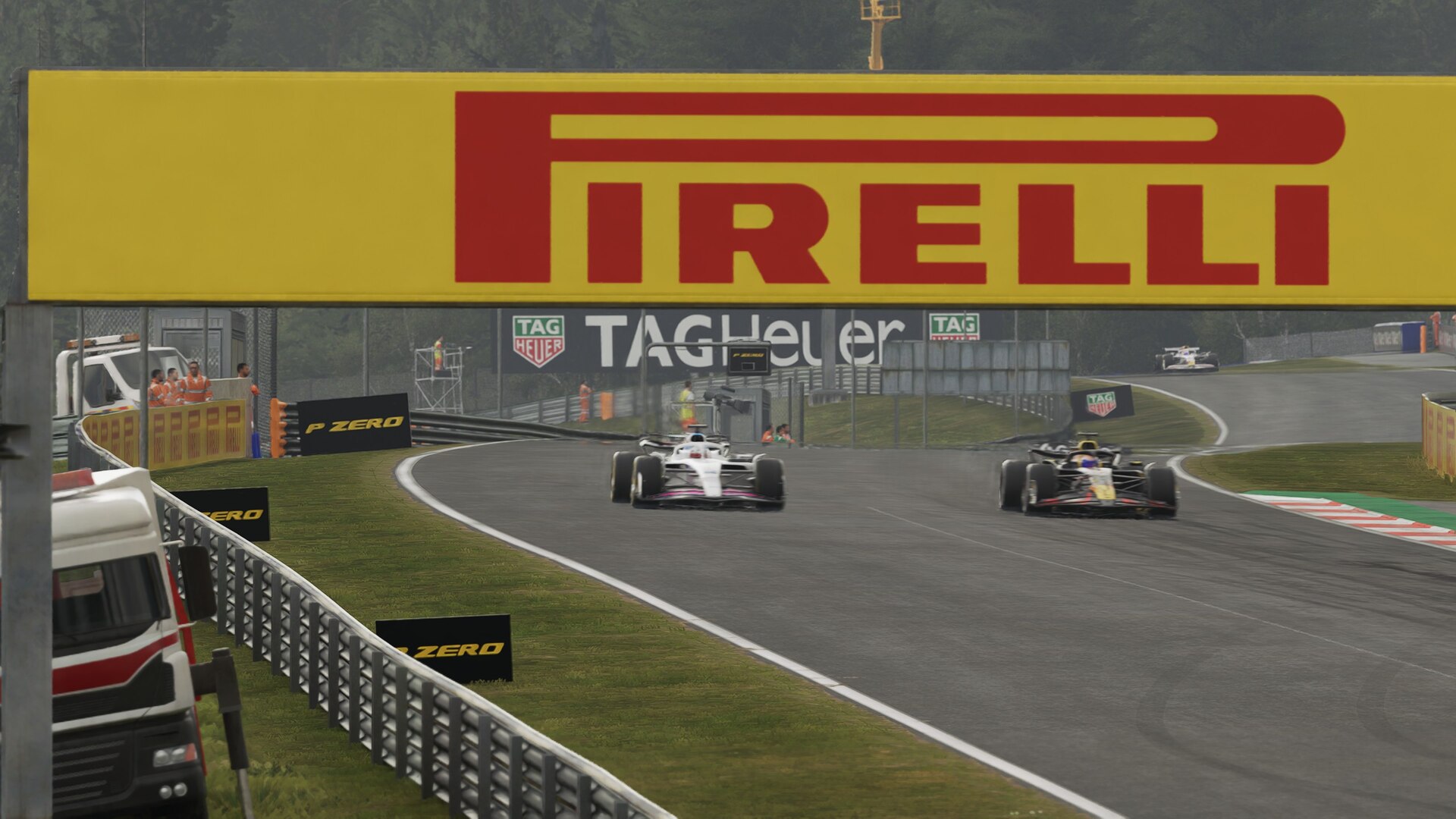
With F1 25, Codemasters and EA Sports deliver their most feature-rich and visually advanced Formula 1 title to date. While the game introduces several meaningful improvements—particularly in physics, career depth, and visual fidelity—it stops short of a complete reinvention. For newcomers, it’s a compelling starting point. For returning players, the question is whether these upgrades justify another annual purchase.

Handling and Physics: A Noticeable Step Forward
The most immediately felt change in F1 25 is its overhauled handling model. Codemasters has tuned the physics for a more grounded and realistic driving experience. Cars now exhibit more nuanced behavior when braking, cornering, and dealing with kerbs. Traction management, weight transfer, and tire wear feel far more authentic, particularly when using a racing wheel.
Wheel users will appreciate the increased fidelity, though gamepad players may notice less responsive steering, particularly in high-speed sections. Codemasters’ ongoing efforts to strike a balance between realism and accessibility remain evident, but controller feedback could still use refinement.
AI has seen improvement as well, now displaying smarter defensive moves, overtaking logic, and race strategy. That said, occasional quirks—like erratic first-lap behavior and overly cautious braking zones—still remind us that there’s room to grow.
My Team Evolution
The My Team mode has undergone its most significant redesign since its debut. You’re no longer a driver-owner; instead, you assume the role of team principal, recruiting two drivers and managing every facet of team operations.
The updated morale system, deeper R&D progression, and driver management mechanics lend greater depth to the experience. Race weekends feel more dynamic thanks to pre-race decision-making, facility management, and reputation systems. It’s a robust and engaging mode that simulates the managerial complexity of running an F1 outfit.

Braking Point 3
The narrative-driven Braking Point returns with a new storyline centered around the fictional Konnersport team. Featuring high-quality cinematics, motion capture, and a branching dialogue system, Braking Point 3 impresses in presentation.
While the story is largely well-paced and emotionally resonant, mid-race scripted objectives can occasionally break immersion. Still, it’s a welcome reprieve from traditional modes and adds cinematic flair.
Visuals and Presentation: Raising the Bar
F1 25 is easily the most visually impressive entry in the series, especially on PC. Thanks to LiDAR-scanned circuits, tracks like Suzuka, Bahrain, and Imola look exceptionally lifelike, with enhanced elevation, lighting, and environmental detail.
For high-end PC users, the addition of path tracing brings realistic reflections and lighting, transforming night races into visual spectacles. Performance remains stable at 1440p with ray tracing on, although enabling path tracing at higher resolutions demands powerful hardware (RTX 4070+ recommended).
However, the visual jump is inconsistent across circuits. Tracks not updated with LiDAR scanning feel comparatively dated, creating a noticeable disparity in quality.
New Features and Gameplay Variety
One of the more intriguing additions is support for reverse track layouts, available on circuits like Silverstone and Zandvoort. These are more than mirrored maps; AI has been retrained, pit lane entries reconfigured, and braking zones redesigned to accommodate reversed flow. It’s a fun, if slightly gimmicky, twist that adds some replay value.

Also new is Challenge Career, a scenario-based mode focused on leaderboard competition and short-form gameplay. While not a core feature, it’s a welcome change of pace.
The game also teases future integration with the upcoming F1 film starring Brad Pitt, letting players race as the APXGP team with film-inspired liveries and drivers—though this content will be rolled out post-launch.
PC-Specific Features
PC players benefit from several exclusive enhancements:
- VR support: Compatible with SteamVR and OpenXR, offering a more immersive experience, though clarity and aliasing still need work.
- Triple monitor and ultrawide support: Excellent out of the box, ideal for sim racing setups.
- Custom HUD, Steam Workshop integration, and advanced graphics settings round out the PC offering.
Performance is generally strong, though occasional stutters—particularly on tracks like Spa—may still occur.
Criticism
Despite its improvements, F1 25 doesn’t escape criticism:
- Annual fatigue: Some players may find the game too similar to F1 24, especially if they aren’t interested in the narrative or team management additions.
- Controller steering remains less responsive compared to previous years.
- AI bugs, though reduced, are still present.
- Customization tools are still lacking compared to other modern sports titles.
- Microtransactions in the form of Podium Passes and cosmetic purchases remain a sticking point.
Final Verdict: 8/10
F1 25 successfully refines the core F1 game experience with stronger driving physics, enhanced presentation, and deeper career modes. For dedicated fans or newcomers, it represents the most complete Formula 1 simulation available today. However, for players coming from F1 24, the improvements—while meaningful—may not be enough to justify the full-price upgrade. It’s a solid evolution, but not a revolution.