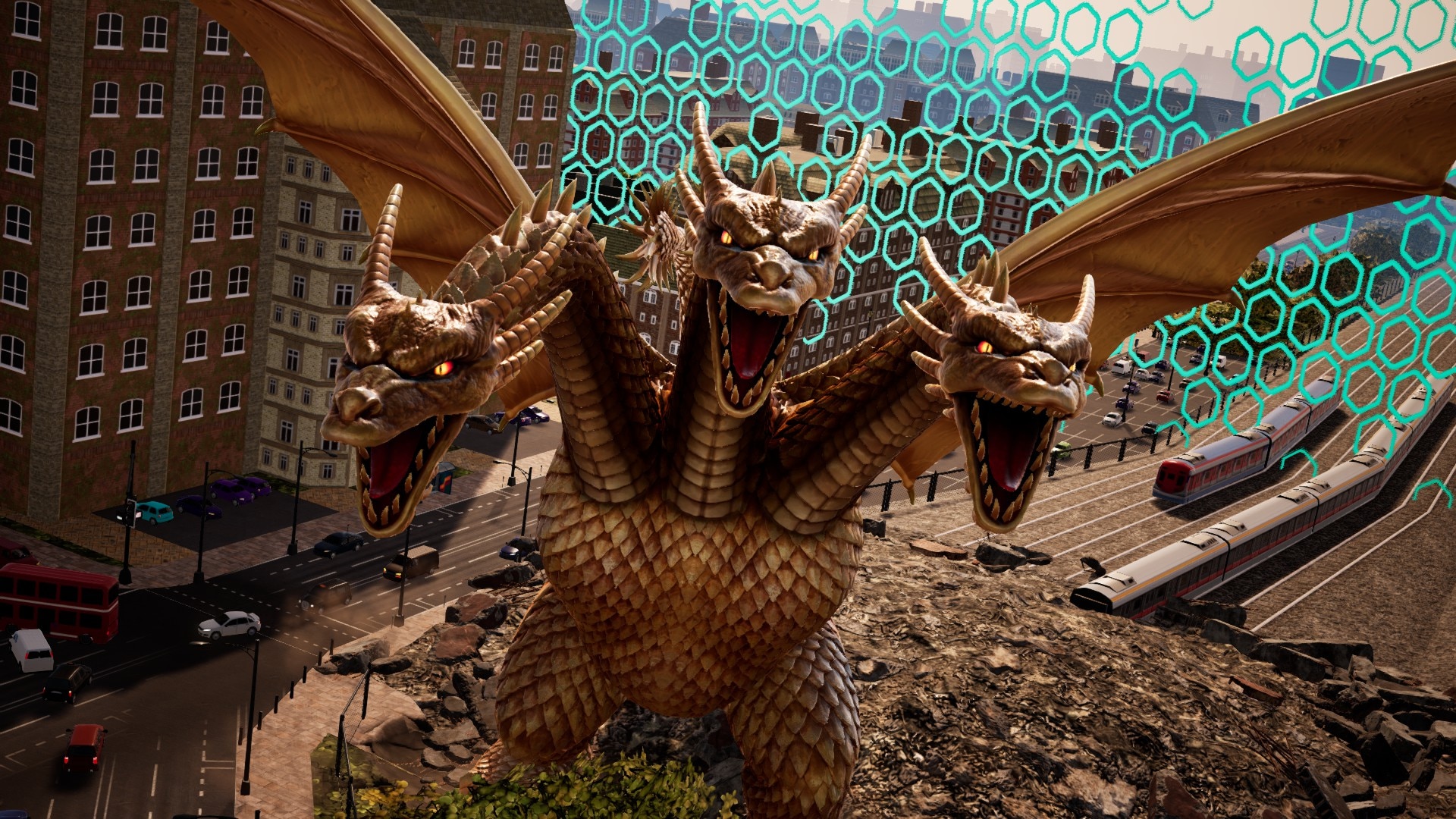
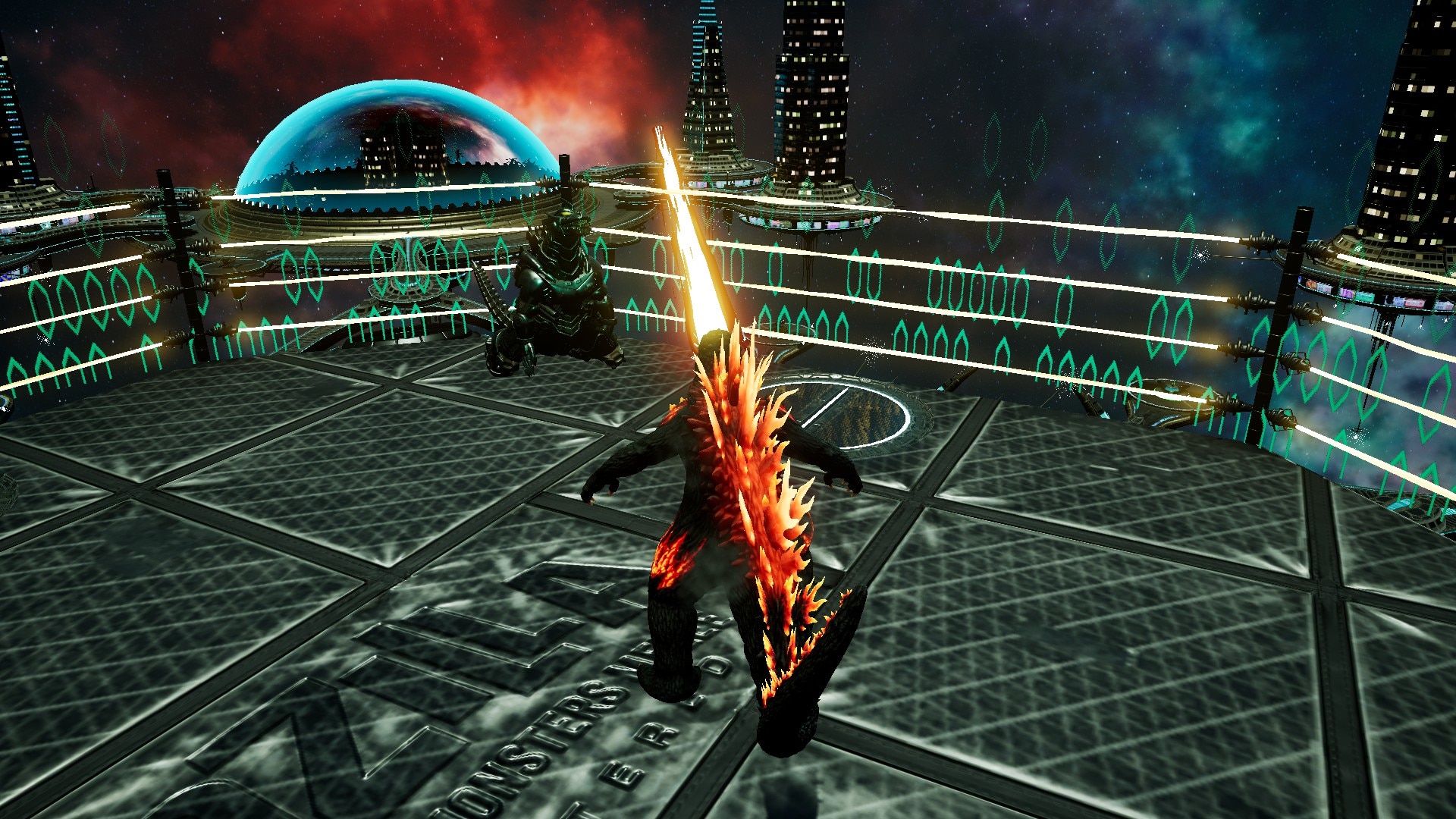
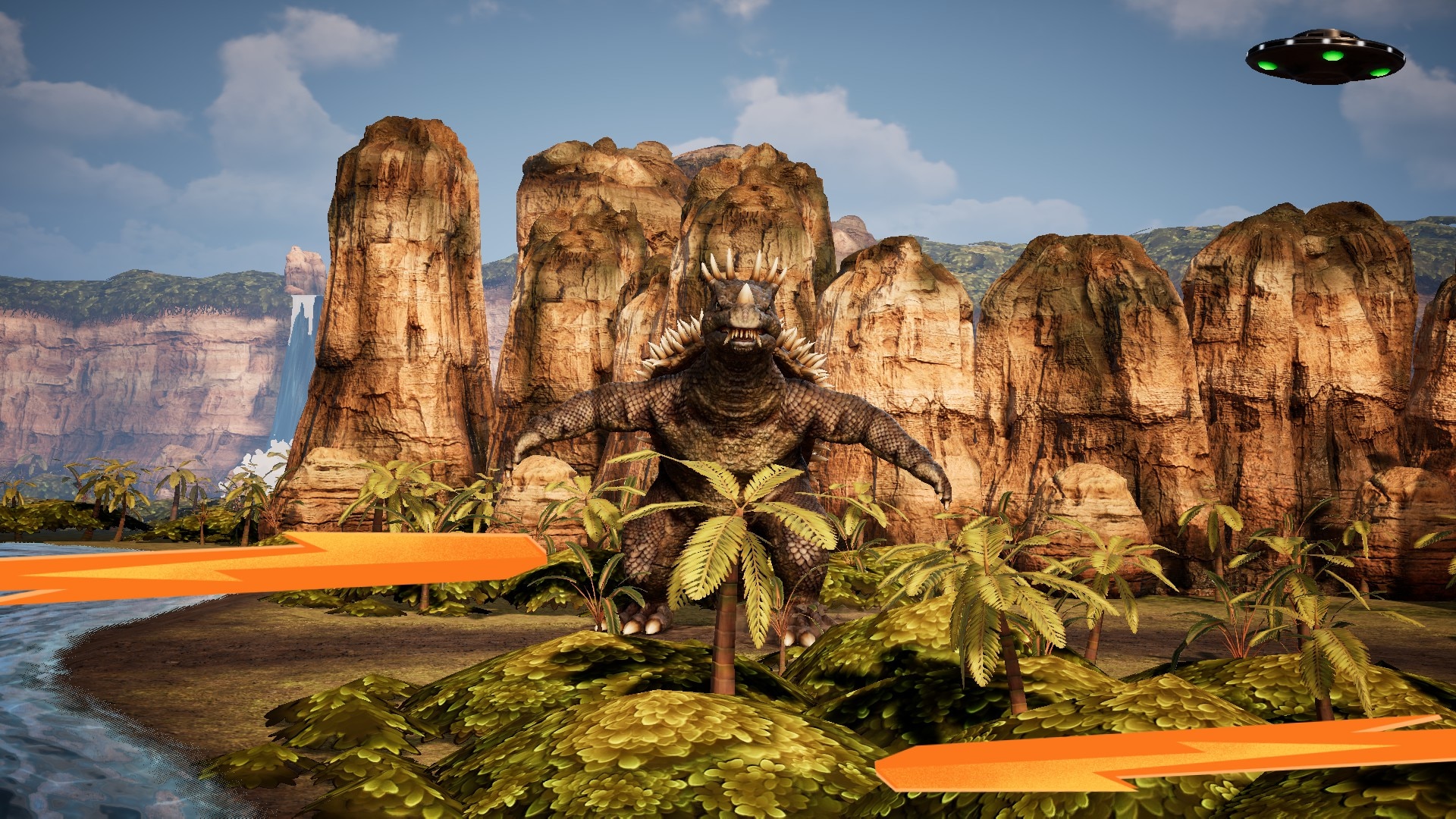
Some games are built around elaborate combat systems, carefully balanced competitive play, or sprawling campaigns. Godzilla: Destroy All Monsters Melee Remastered has a much simpler ambition: put Godzilla and a collection of his most recognizable enemies in a destructible city and let them fight. Originally released in 2002, this arena fighter returns with rebuilt visuals, modern platform support, additional single-player content, and online multiplayer, bringing a cult-favorite kaiju brawler to PC and contemporary consoles.
The appeal is easy to understand. There is something inherently entertaining about controlling a towering monster, throwing another creature through a skyscraper, and watching the surrounding city collapse during the fight. The remaster preserves that straightforward premise rather than attempting to turn the original into something it was never intended to be. However, bringing a game from the early 2000s to modern hardware also means confronting the limitations of its original design. The combat remains relatively simple, the single-player structure can become repetitive, and unlocking the full roster still requires a considerable amount of playing.
The result is an entertaining but uneven revival. When the action is moving and several monsters are tearing through a city together, the game delivers the oversized spectacle its premise promises. When it asks players to repeat familiar activities for hours, its limited depth becomes considerably harder to overlook. The remaster makes welcome improvements, but its greatest strengths and weaknesses remain closely tied to the game that originally appeared more than two decades ago.
Gameplay and Mechanics
At its core, Destroy All Monsters Melee Remastered is a three-dimensional arena fighter in which giant monsters battle across enclosed environments. The controls are designed around immediate, accessible actions rather than elaborate fighting-game techniques. Players can punch, kick, grapple, throw opponents, unleash ranged attacks, and activate more powerful abilities. The monsters share a broadly similar foundation, but their individual moves and characteristics give each creature some personality and encourage experimentation.
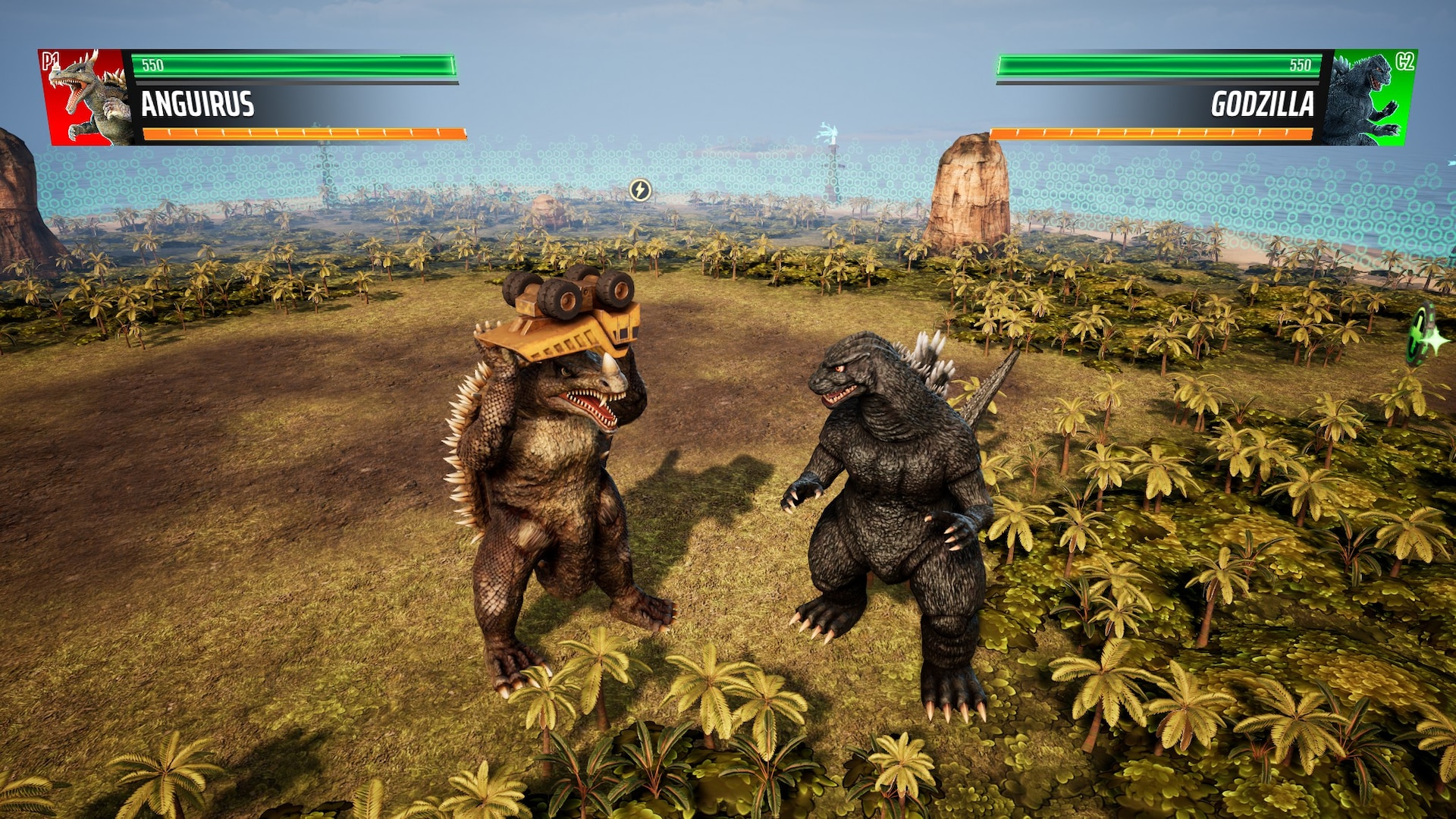
Combat works best when players learn to alternate between close-range attacks and ranged pressure. Charging directly at an opponent can be effective, but a well-timed energy blast or powerful special move can quickly change the direction of a fight. Different monsters also have particular strengths that influence how they should be used. Some are better suited to direct physical confrontations, while others have abilities that make keeping their distance or repositioning more practical. Learning these differences introduces a modest strategic element without making the game difficult to understand.
Rage Mode provides some of the most satisfying moments in combat. These powerful attacks give each monster access to particularly destructive abilities, often accompanied by elaborate animations and effects. They also create a welcome sense of escalation, allowing an encounter that begins with basic punches and kicks to develop into an exchange of energy beams and heavy attacks. The spectacle is particularly effective when these abilities connect against the backdrop of a collapsing city.
Each monster also has a move list that encourages players to experiment beyond the most obvious attacks. Combos rely on accessible button combinations rather than the complicated motion inputs and canceling systems found in more technical fighting games. This makes the combat relatively easy to learn while still giving players room to discover different combinations of strikes, grabs, throws, and special attacks. Anguirus, for example, can punish opponents that attack his guarded back, while Gigan can teleport to reposition himself during combat. Megalon’s underground movement also provides a less conventional way to approach opponents. These differences help the roster feel more varied than its shared combat foundation might initially suggest.
Nevertheless, the fighting system is not particularly sophisticated. The range of available actions is limited compared with modern fighting games, and there is little emphasis on complex execution or lengthy combos. Some encounters can devolve into repeated use of particularly effective attacks rather than rewarding a broad understanding of each character’s abilities. Positioning matters, but movement and attack timing do not always feel as responsive as they should.
Much of this comes down to the deliberate weight of the monsters. Their size is reflected in their movement and attacks, which helps establish the sensation of controlling enormous creatures. However, that weight can occasionally make them feel cumbersome. Stronger moves often commit a monster to an animation, leaving little room to adjust once an attack has begun. This can make it difficult to change direction or respond quickly when an opponent moves out of reach. Attacks are satisfying when they connect, but the slower pace can become frustrating when it interferes with the flow of a fight.
The important distinction is that the game prioritizes accessible, theatrical combat over competitive precision. Its fighting system works when treated as a way to stage entertaining monster battles, but players looking for a technically demanding fighter with a high skill ceiling will find relatively little to master beyond the fundamentals.
Destruction and Environmental Interaction
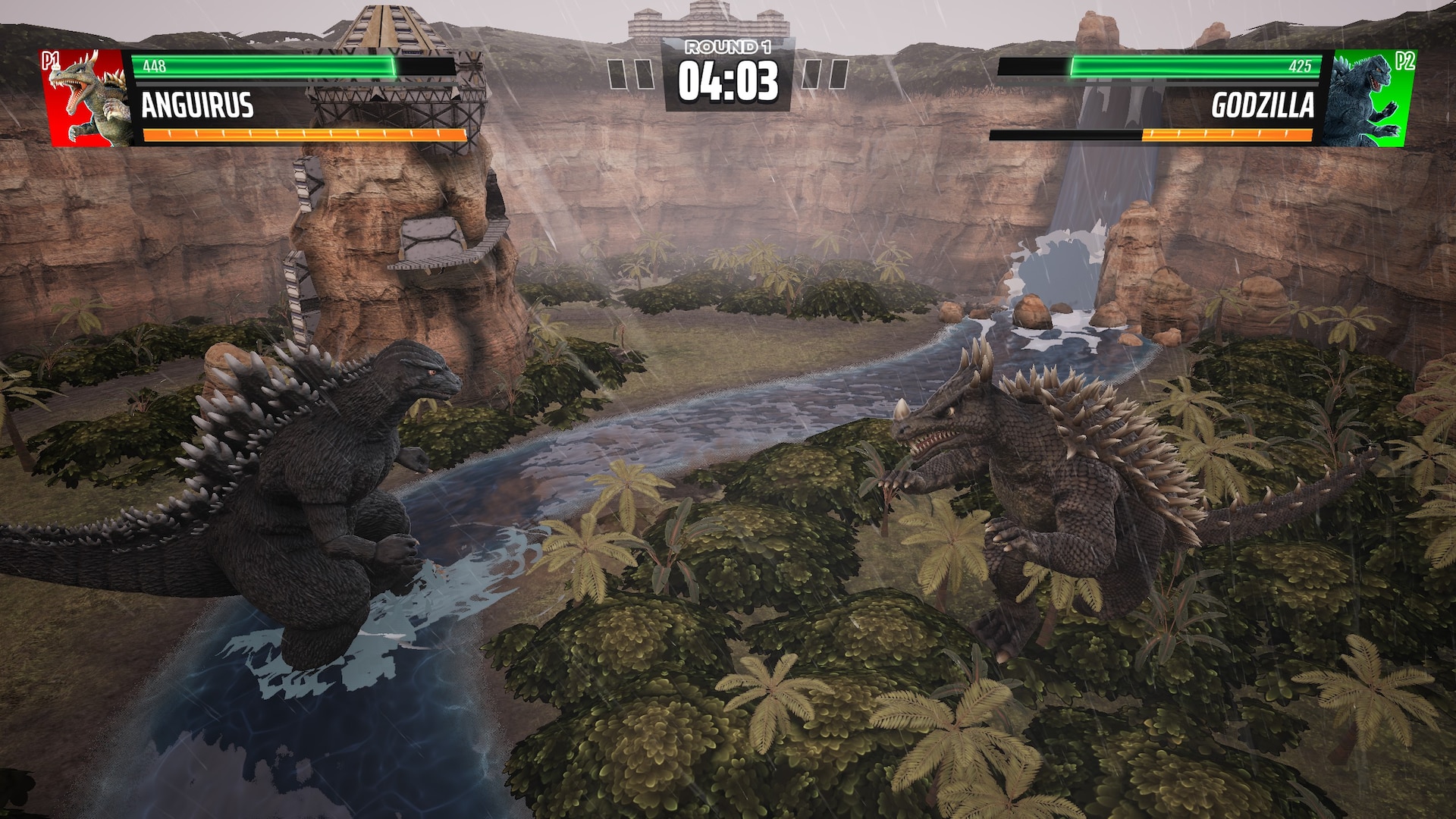
The destructible environments remain among the game’s strongest features. Fighting in a city is not simply a matter of exchanging attacks against a detailed backdrop. Buildings collapse, streets fill with debris, and the surrounding landscape gradually changes as battles progress. The destruction gives the arenas a sense of activity that conventional fighting games rarely offer, while reinforcing the appeal of controlling creatures capable of leveling entire city blocks.
Players can also use the environment offensively. Buildings and other objects become improvised weapons, allowing monsters to inflict damage without relying entirely on their standard movesets. Throwing a piece of the scenery at an opponent is often more entertaining than landing another ordinary punch, particularly when the impact sends the other creature crashing into additional structures. Larger objects can cause substantial damage, making environmental interaction more than a visual gimmick.
There are eight locations in total, ranging from recognizable urban environments to Monster Island and the alien mothership. Day and night variations provide additional visual differences, helping prevent successive matches from looking completely identical. The settings offer enough variety to keep the action visually interesting, although their fundamental purpose remains the same: they are enclosed spaces in which monsters can fight and cause destruction.
The destruction also has a mechanical purpose beyond providing weapons and visual spectacle. In Destruction mode, the military responds as the damage increases, sending forces into the area to stop the monster’s rampage. The response becomes more dangerous as the destruction continues, eventually introducing heavier vehicles and tanks equipped with freeze weapons. These units can interfere with the player’s progress, but their presence also creates additional opportunities for chaos. It is a relatively simple system, yet it gives the destruction a little more purpose and makes the city feel less like a collection of objects waiting to be smashed.
The system does have limitations. The cities are not fully simulated environments, and destruction does not transform the arenas into radically different spaces. Certain interactions can also look awkward, particularly when monsters pass through some structures rather than colliding with them convincingly. Much of the enjoyment comes from watching familiar buildings collapse rather than developing elaborate strategies around a changing battlefield. The environments provide satisfying feedback, but they do not fundamentally deepen the combat.
Even so, this is an aspect of the original concept that holds up particularly well. There is something inherently entertaining about watching two enormous monsters turn an otherwise ordinary city into a battlefield, and the remaster gives those moments a more appealing presentation.
Monsters and Character Roster
The roster includes 12 playable kaiju drawn from the wider Godzilla universe. Familiar faces such as Godzilla, Anguirus, Gigan, Megalon, Rodan, and King Ghidorah provide the main attractions, alongside other creatures that give longtime fans additional reasons to explore the game. For a licensed fighting game, the selection has an obvious appeal: it offers the opportunity to settle matchups that would otherwise exist only in the films.
Each monster has a recognizable appearance and individual abilities intended to reflect its particular characteristics. However, the underlying combat system is largely shared, with differences emerging through specific moves, strengths, and special abilities rather than completely separate fighting styles. Rodan’s aerial movement, for example, gives it a different feel from a more ground-oriented monster, while creatures built around heavy attacks encourage a more direct approach. Anguirus and Gigan also have distinctive abilities that reward players who spend time learning their individual mechanics.
The remastered presentation makes the roster particularly enjoyable to explore. The monsters retain their recognizable silhouettes and defining features, while the rebuilt models provide additional detail. Their animations and signature attacks also help distinguish the creatures during combat, which is important when several monsters occupy the same arena.
However, the number of playable characters does not necessarily translate into an equally substantial range of gameplay experiences. Some fighters feel more distinct than others, and repeated matches reveal how much the roster relies on variations of the same basic combat structure. Players expecting every monster to have a radically different playstyle may be disappointed.
The unlocking system introduces another complication. Only four monsters are initially available, leaving the remaining characters to be accessed through the game’s research system. The remaster improves this process by allowing players to choose which monsters, locations, and gallery items to pursue instead of forcing them through a single fixed sequence. That flexibility is welcome, although certain unlocks still depend on completing specific objectives and meeting additional prerequisites.
There is also a Tournament Mode option that is particularly useful for players who want immediate access to the full roster. It allows the available characters to be used in local matches without completing the normal unlocking process. The trade-off is that research and character progression are disabled, and the mode is not available for online multiplayer. Its placement within the settings rather than among the main menu’s regular game modes is also unnecessarily obscure. Nevertheless, it is a useful alternative for local multiplayer sessions and makes experimenting with the entire roster considerably easier.
The roster is ultimately modest by modern standards, and the normal unlocking process can make the initial selection feel unnecessarily restrictive. The game is at its best when players can experiment with different monsters, so making that experimentation dependent on repeated play works against one of its main attractions.
Single-Player Content and Progression
The single-player offering provides several ways to approach the game, although none fundamentally changes its structure. Adventure mode is the main attraction for solo players, presenting a series of monster battles connected by a straightforward science-fiction storyline. The Vortaak, an alien race, have invaded Earth and taken control of its monsters, leaving the player to fight through the opposition and eventually confront Showa Mechagodzilla. The premise fits comfortably within the franchise, but the story is primarily a reason to move from one fight to the next.
Each monster has its own Adventure route, although the overall progression remains largely familiar between characters. Most campaigns culminate in a confrontation with Showa Mechagodzilla, while the Showa Mechagodzilla campaign itself concludes with a battle against Mecha-King Ghidorah. These encounters provide a more substantial test than ordinary fights, but the repeated use of the same principal opponent limits the sense that each monster’s campaign tells a distinct story.
Other modes provide welcome alternatives. Destruction mode emphasizes environmental damage, asking players to wreak havoc rather than focus exclusively on defeating an opponent. Survival mode challenges players to fight through successive encounters, placing greater emphasis on managing health and surviving as long as possible. Custom Battle allows players to create their own matches and adjust the setup to suit the encounter they want, while Practice mode provides an opportunity to become familiar with individual monsters before entering more demanding fights.
The remaster also adds two variations to the Adventure structure. Adventure Gauntlet pits players against two opposing monsters simultaneously, creating a considerably more demanding challenge than the standard one-on-one encounters. Defeating opponents allows players to progress through successive stages, but the numerical disadvantage makes positioning and health management particularly important. Adventure Challenge offers character-specific encounters with different objectives and situations. These challenges provide more variety than simply repeating the standard campaign and can be considerably more difficult, giving experienced players an additional reason to explore the game.
These additions help give the single-player experience more variety, but they do not completely conceal the repetition inherent in its structure. Most activities eventually return to the same basic loop of attacking enemies, collecting power-ups, and moving to the next encounter. Once players have experienced the main mechanics, the different modes offer relatively few surprises, although the character-specific challenges provide a welcome exception.
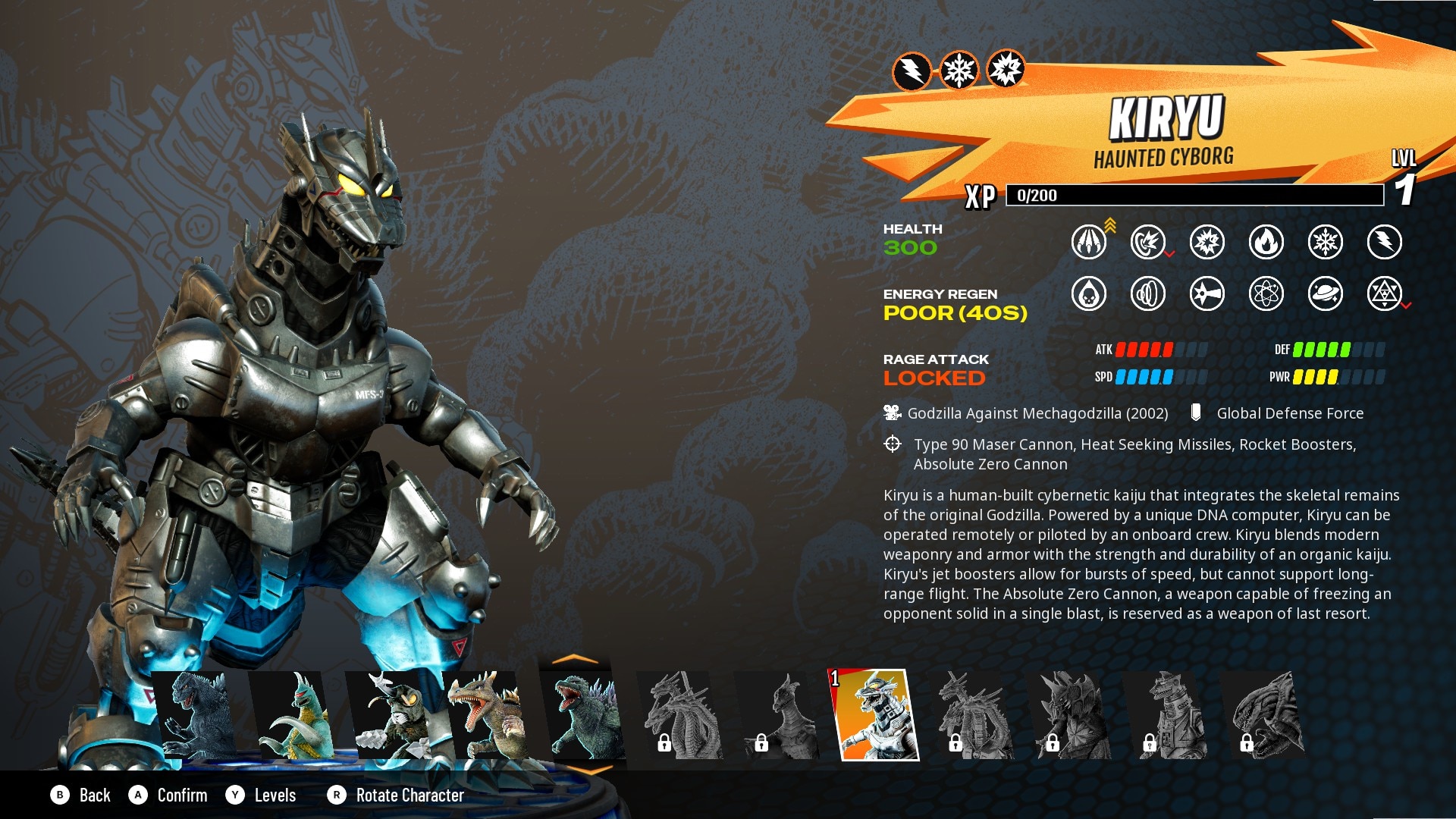
Progression is one of the more substantial changes in the remaster. Individual monsters gain experience and improve as they are used, with character levels increasing their statistics and gradually unlocking additional abilities. This system is separate from the research process used to access more of the game’s content. Research Points are earned through battles and can be invested in Projects through the G-Force research system to unlock additional monsters, arenas, and gallery items. Players can choose which content to prioritize, giving them greater control over the order in which they expand their collection.
Rumors add another layer to the process. These objectives must be discovered or completed to make certain Projects available, meaning that not every unlock can be pursued immediately simply because the player has enough Research Points. Some Projects have additional prerequisites, so expanding the roster and gallery can involve completing particular modes, meeting objectives, and investing the rewards earned along the way. The system provides more flexibility than a fixed unlock sequence, but it can also make progression feel unnecessarily complicated.
The two progression systems give players separate reasons to keep fighting, but they also create a noticeable grind for anyone who wants to access everything. Some monster-specific abilities, including Rage attacks, require individual character progression, meaning that choosing a favorite kaiju does not necessarily provide immediate access to its complete moveset. Survival mode is particularly useful for accumulating Research Points because it provides increased research rewards, although it does not award character experience. This encourages players to alternate between modes, but it can make progression feel like a chore when working toward specific unlocks.
The single-player experience is therefore better suited to shorter sessions than an extended campaign. A few matches can deliver exactly the kind of uncomplicated entertainment the premise promises. Spending hours pursuing every unlock, however, exposes how little the underlying experience changes over time.
Multiplayer and Competitive Play
Multiplayer is where Destroy All Monsters Melee Remastered has the greatest opportunity to shine. The game supports local battles for up to four players alongside newly introduced online multiplayer. That combination makes the remaster more accessible than the original release, particularly for players who no longer have the same hardware or a group of friends available for regular local sessions.
Four-player matches suit the game’s strengths particularly well. With several monsters occupying the same arena, the action becomes less predictable, and the limited combat system is less of a concern because the entertainment comes from the overall chaos. Players can interrupt one another’s attacks, exploit moments of distraction, throw opponents into buildings, and turn an ordinary fight into a chain of destructive encounters. The spectacle is often funnier and more memorable than anything the single-player campaign produces.
Local multiplayer also makes the straightforward controls an advantage. Friends do not need extensive experience with fighting games to participate, and the basic premise is immediately understandable. Even someone unfamiliar with the franchise can pick a monster, start attacking, and enjoy the spectacle. That accessibility makes the game particularly well suited to casual gatherings.
Online multiplayer is an important addition, although it is more limited in format than local play. Online matches focus on one-versus-one quick matches rather than supporting the same four-player battles available locally. This provides a useful way to challenge other players without sharing a screen, but those hoping to recreate the full chaos of a four-monster local match online should be aware of the distinction.
The fundamental combat system is simple enough to work in short online sessions, but it is not particularly deep as a competitive game. Players who enjoy learning complex matchups or pursuing a demanding ranked ladder may find little reason to remain invested once the novelty wears off. Multiplayer cannot compensate indefinitely for a small roster and repetitive mechanics, either. The game is likely to provide its best experiences when players bring their own rivalries and sense of fun to the matches. Without that social element, battles can begin to feel much like the single-player encounters.
Even with these limitations, multiplayer is a meaningful reason for the remaster to exist. It preserves the original game’s party-friendly appeal while providing another way to play with people who are not sitting in the same room. For players primarily interested in recreating the experience of a group of friends controlling giant monsters, this is arguably the game’s strongest feature.
Graphics and Presentation
The remaster rebuilds the original game’s visuals with modern technology, producing a noticeable improvement over its early-2000s presentation. The most obvious changes can be seen in the monsters, the clarity of the environments, and the way destruction is presented during battles. The familiar designs remain recognizable, but the additional detail makes the roster more appealing on contemporary displays.
The updated presentation benefits the arenas as well. Cities and other locations have a cleaner, more defined appearance, making it easier to distinguish buildings, landmarks, and objects that can be used during combat. Day and night variations add visual diversity, while the effects accompanying energy attacks and Rage Mode abilities help give major encounters a more dramatic feel.
The interface has also received attention. Character information, monster statistics, and individual move lists are more accessible, making it easier to understand each creature’s strengths and learn its available attacks. These improvements are practical rather than transformative, but they make the game more approachable, particularly for newcomers who have never played the original.
There is still an artificial quality to some of the visuals. The monsters can look overly polished, and the updated rendering does not always preserve the rougher character of the original presentation. This is not necessarily a fatal problem, since the game has always leaned toward exaggerated spectacle rather than realism, but the visual improvements do not automatically make every scene more convincing.
More importantly, the updated graphics cannot disguise the limitations of the underlying game. The animations and combat interactions still reflect an older design, and some movements can feel awkward when the camera is trying to keep up with several large creatures. The overall presentation is considerably more appealing, but the game does not suddenly feel like a modern fighting game simply because its assets have been rebuilt.
The audio helps maintain the atmosphere. Monster cries, impacts, collapsing buildings, and energy attacks contribute to the sensation of a city being torn apart. The familiar sounds of Godzilla and his opponents fighting are an essential part of the experience, and the effects generally support the action well. The English voice work and announcer presentation, on the other hand, can feel dated. Japanese is available for the interface and subtitles, but the absence of full Japanese voice audio may disappoint players looking for a completely Japanese-language presentation.
One particularly welcome addition is Director Mode, which allows players to take greater control over the camera during battles. It provides an opportunity to adjust the presentation of an encounter and capture more cinematic shots of the monsters fighting. Players can adjust the camera and playback speed, making it possible to frame particular moments more carefully. This is a relatively small feature in gameplay terms, but it suits the franchise surprisingly well. Godzilla films have always placed considerable emphasis on the visual spectacle of enormous creatures battling against cityscapes, and the ability to frame those moments gives fans another reason to experiment with the arenas.
Overall, the remaster makes a convincing effort to modernize the game’s appearance without abandoning its identity. The results are strongest when the monsters are trading attacks amid collapsing buildings, which remains the central visual attraction.
Technical Performance on PC
The PC version brings the remaster to Steam with support for modern Windows systems, adjustable graphics options, keyboard and mouse controls, and gamepad support. It also includes online multiplayer and Steam achievements, making it a more convenient release than the original console versions. However, the published hardware requirements are worth considering before purchasing.
The minimum specifications call for a 64-bit version of Windows 10, an Intel Core i7-9700 or AMD Ryzen 5 3600 processor, 16GB of RAM, DirectX 12, and an NVIDIA GTX 1650 with 4GB of VRAM. The recommended configuration moves to Windows 11, an Intel Core i7-10700K or AMD Ryzen 5 5600X, 32GB of RAM, and an NVIDIA GTX 1070 or GTX 1080 with 8GB of VRAM. The installation requires approximately 8GB of available storage.
These requirements are relatively demanding for an arena fighter whose underlying mechanics date back to 2002, even allowing for the rebuilt visuals and environmental effects. The 32GB recommended memory requirement is particularly notable, as it is higher than many players might expect for a relatively compact fighting game. That does not necessarily mean the game is poorly optimized, but it does make the official specifications worth checking rather than assuming that an older gaming system will handle it comfortably.
Controller support is particularly relevant here. The combat was designed around a straightforward collection of attacks, movement options, and special abilities, and a traditional gamepad is a natural fit. Keyboard and mouse controls are also available, with configurable key bindings, giving PC players an alternative if they prefer that setup. However, the controller remains the more comfortable choice for this type of arena brawler.
Steam Deck compatibility is another consideration. The game’s compatibility status is listed as unknown, so players interested in handheld PC gaming should not assume that it has been verified for Valve’s device. Its relatively small installation size may make it seem like a natural candidate for handheld play, but that alone does not establish how well it performs on the hardware.
The PC release is a welcome addition, but the platform-specific package is not a major selling point in itself. Its modern controls, graphics options, and Steam integration make the game convenient to access, while the underlying experience remains largely consistent with the console versions. For PC players, the more important question is whether the straightforward combat and progression systems provide enough entertainment to justify the purchase.
Replay Value and Longevity
The game’s longevity depends heavily on what players want from it. For Godzilla fans, the appeal of controlling familiar monsters and staging battles across recognizable environments can sustain interest well beyond the initial campaign. Unlockable characters, additional locations, gallery items, character progression, and the Adventure challenges provide reasons to return, while local and online multiplayer offer the potential for many more matches.
However, having content to unlock is not the same as having genuinely varied content to experience. The remaster offers several modes and a dozen playable monsters, but most activities draw from the same limited collection of combat mechanics. Unlocking everything can take considerable time without necessarily providing a corresponding increase in variety. Players who enjoy completing collections may appreciate the progression system, whereas those who simply want access to their favorite monsters could find the process unnecessarily drawn out.
Tournament Mode provides a useful alternative for local players who want to experiment with the complete roster without spending hours unlocking individual characters. Its limitations prevent it from being a complete solution to the progression grind, but it does make the game more immediately enjoyable when the main attraction is simply choosing a monster and starting a fight.
Multiplayer remains the most promising route to long-term enjoyment because human opponents introduce unpredictability that the single-player modes cannot consistently provide. Director Mode also adds a small but enjoyable extra for fans who like experimenting with the presentation of their battles. Even then, the game’s modest mechanical depth places a natural limit on how long its combat is likely to remain engaging. This is best approached as a game to revisit for occasional bouts of monster-on-monster destruction rather than one that demands a long-term commitment.
At its announced launch price of $29.99, the remaster is primarily appealing to fans of the franchise and players who expect to make regular use of its multiplayer features. The amount of content is respectable for a relatively straightforward arena fighter, but the repetitive structure and progression requirements make the value proposition less convincing for anyone primarily interested in a substantial solo experience. Its appeal is specific, and the price is easier to justify when the opportunity to play with friends is part of the package.
Final Verdict: 7/10
Godzilla: Destroy All Monsters Melee Remastered succeeds at preserving the appeal of a simple, distinctly early-2000s kaiju fighting game while making it more accessible on modern hardware. Its rebuilt visuals give the monsters and environments a welcome facelift, the destructible arenas remain entertaining, and the addition of online multiplayer provides another reason to return. The expanded single-player options, improved interface, and Director Mode also give the remaster more to offer than a straightforward visual update. Most importantly, the basic premise still works: watching Godzilla battle his most recognizable adversaries is enjoyable even when the mechanics behind the spectacle are relatively uncomplicated.
The weaknesses are equally clear. Combat lacks the depth and precision of a more sophisticated fighting game, its deliberately heavy movement and committed attacks can occasionally feel cumbersome, and the single-player modes become repetitive despite the additional challenges. The progression system provides reasons to keep playing, but unlocking the full roster and individual abilities can require more grinding than the experience warrants. Tournament Mode helps alleviate that frustration for local matches, although it does not solve the problem for online play. The remaster is a substantial presentation update with useful additions, not a fundamental redesign of the original game.
For longtime Godzilla fans, those shortcomings may be easier to overlook. The opportunity to control a collection of familiar kaiju, destroy cities, and challenge friends gives the game a specific appeal that few other fighting games can replicate. Players approaching it without any attachment to the franchise, however, may find that the novelty wears off before the unlockable content runs out.
Ultimately, Godzilla: Destroy All Monsters Melee Remastered is a worthwhile revival of an entertaining but limited arena fighter. It is most enjoyable in short sessions and multiplayer matches, where the spectacle matters more than mechanical complexity. Those looking for a deep single-player experience or a demanding competitive fighter should temper their expectations, but fans who simply want to see giant monsters smash their way through a city will find plenty to enjoy.